
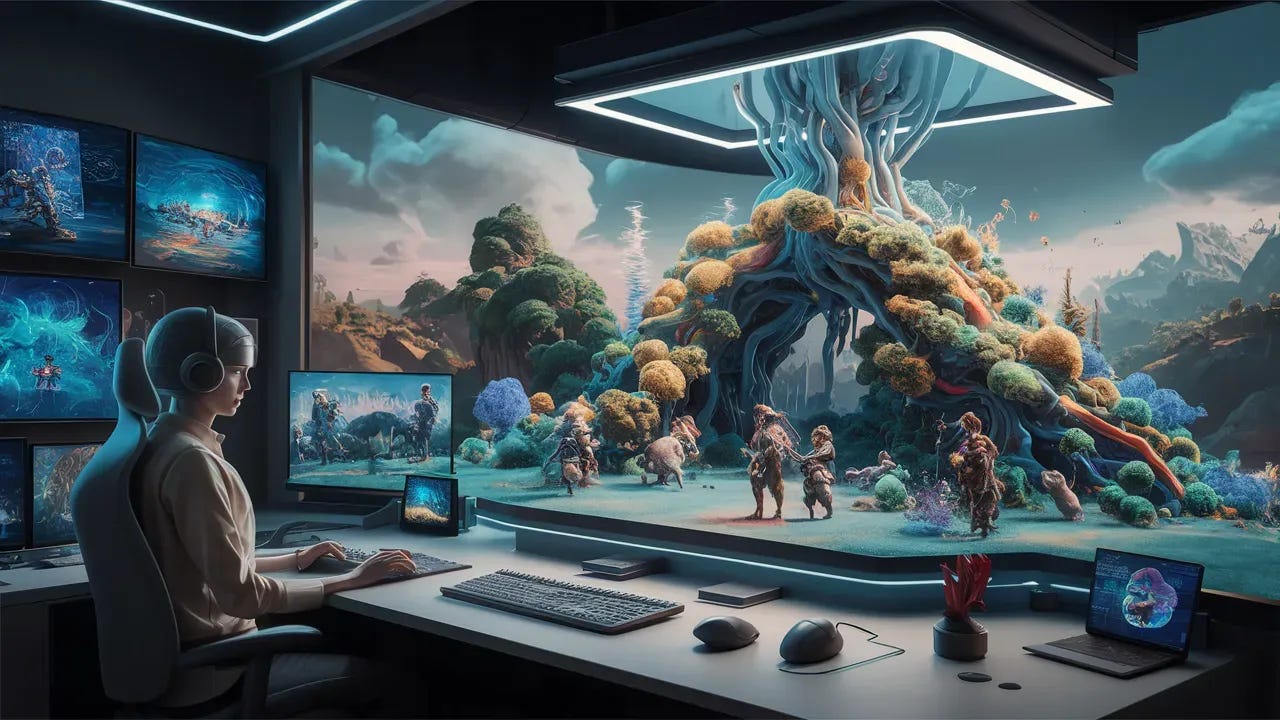
World models transform environments from static scenes into interactive systems—where rules, physics, and structure adapt in real time to intent and action.
A quiet but fundamental shift is underway in AI and spatial computing. For decades, intelligent systems were trained on static representations of the world — datasets, videos, simulations, logs — on the assumption that intelligence could emerge through observation alone. That assumption is breaking. World models are now interactive, generative, and explorable in real time. They don’t just describe environments — they simulate them, adapt them, and respond.
In a world-model-driven stack, intelligence emerges through interaction:
perception informs action
action reshapes the environment
feedback closes the learning loop
As world models mature, creation itself shifts. We move from authoring content to orchestrating living systems — environments that evolve alongside agents and creators.
A world model is an internal, generative representation that allows an intelligent system to simulate, predict, and act within an environment over time.
Technically, a world model learns:
spatial structure — where things are
temporal dynamics — how things change
causal rules — why they change
action consequences — what happens if I do X
This turns environments into simulatable, editable, and interactive systems — not just data.
The key transition is subtle but profound:
Worlds are no longer pre-built assets.
They are adaptive systems.
Instead of training agents inside fixed environments, systems can now generate and evolve the environment as learning unfolds. The environment itself becomes part of the intelligence loop.
Different organizations are approaching world models from distinct angles. These efforts are not redundant. Each optimizes for a different constraint of the same underlying problem: how intelligence operates inside space.
When intelligence moves beyond perception and language into action, world models stop being abstract — they become embodied.
DeepMind’s approach emphasizes interaction-first learning. Instead of learning from static data, agents learn by acting inside environments that respond to exploration and intent in real time.
This creates a closed learning loop where:
perception informs action
action changes the environment
the environment provides new feedback
feedback updates the model
Learning no longer depends on passive exposure.
Interaction itself becomes the training process.
Learning through exploration rather than datasets
Closed-loop feedback between agent and environment
Rapid variation of environments for robust learning
Training robots directly through action, prediction, and correction
NVIDIA approaches world models through high-fidelity simulation tightly grounded in real physics. Their work focuses on ensuring that simulated environments behave like the physical world.
This is critical for robotics and autonomy, where models trained in simulation must transfer reliably to real-world operation.
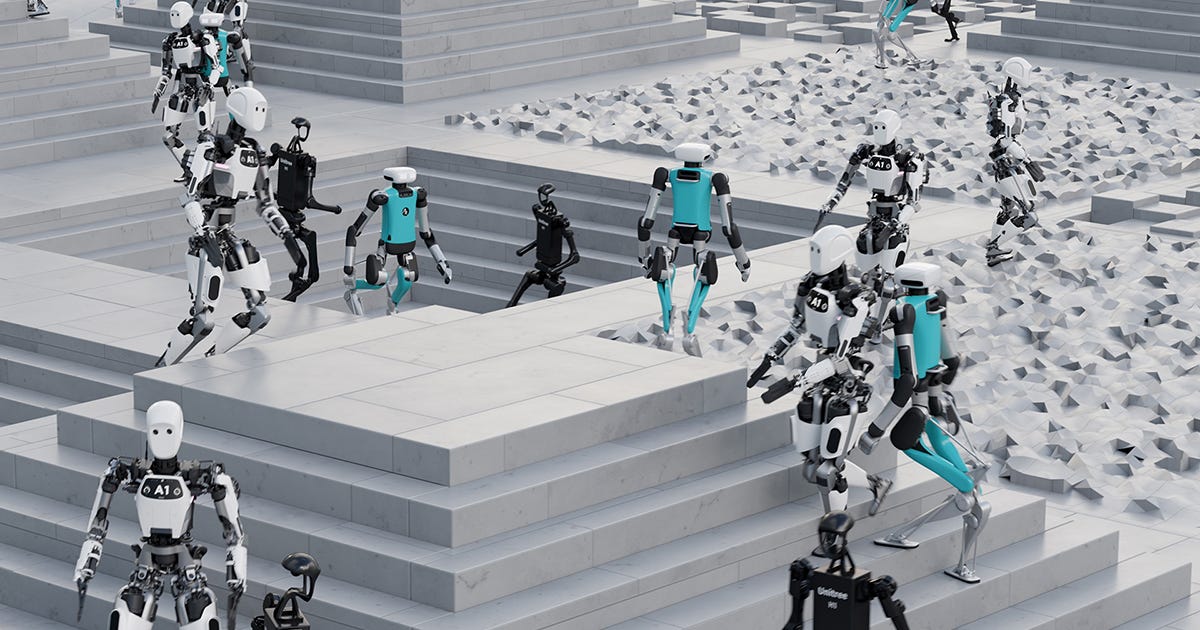
NVIDIA — Physically Grounded Simulation
Here, world models are not just interactive — they are physically trustworthy.
Safe pre-deployment training for robots and autonomous systems
Synthetic data generation at massive scale
Digital twins that mirror real environments
Multi-agent learning in physics-constrained spaces
Reducing the gap between simulation and reality.
NVIDIA makes world models reliable enough for the physical world.
Meta’s world-model research centers on embodiment — how intelligence emerges through a body moving in space and interacting with others.
Their focus is not only on objects and physics, but on:
spatial perception
human–AI co-presence
shared environments
social interaction
This connects world models directly to XR, presence, and collaborative spaces.
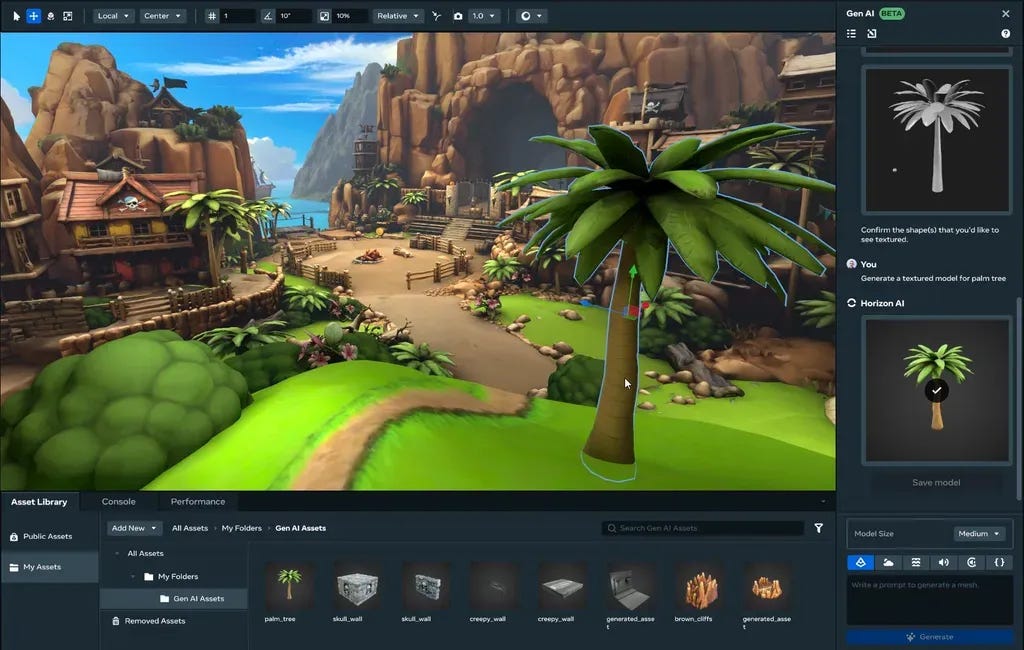
Meta — Embodied and Social Worlds
Spatial understanding through movement and perception
Shared environments where humans and AI coexist
Interaction-driven learning inside social spaces
Worlds designed for presence, not just simulation
Understanding intelligence as something that emerges through a body in shared space.
Meta makes world models spaces where humans and AI can learn together.
Runway brings world models into creative workflows. Instead of focusing on physical realism, the emphasis is on speed, expressiveness, and artistic control.
Here, world models become tools for creators — enabling rapid world ideation and story-driven environments.
This expands world modeling beyond research labs into design and media creation.
Rapid generation of expressive environments
Creative control over dynamic worlds
Story-driven, editable spatial systems
Accessibility for artists, not just engineers
Making world creation accessible beyond researchers and roboticists.
Runway shows that world models are not only for learning — they are for creating.
World Labs explores world models as a foundation for general reasoning across environments.
Their focus is on:
persistence of worlds over time
causality across actions
transfer of learning from one environment to another
long-horizon reasoning
This treats world models as memory systems for intelligence.
Persistent environments that agents remember
Cross-task generalization between worlds
Planning based on causal understanding
Long-term reasoning inside spatial contexts
World models as a substrate for general intelligence, not task-specific behavior.
World Labs focuses on giving intelligence a world it can remember and reason within.
Asking “which approach is better?” misses the point.
What we are seeing is not competition around a single solution, but multiple efforts converging on the same emerging layer from different directions.
Each effort optimizes for a different axis of how intelligence operates inside space:
Interaction → DeepMind
Physical realism → NVIDIA
Embodiment and presence → Meta
Creative expression → Runway
Generalization and persistence → World Labs
These are not alternatives. They are complementary pieces of the same stack.
The future will not be defined by a single dominant platform.
It will be defined by composable systems that integrate these strengths into shared environments where intelligence can act, learn, and evolve.
Game worlds are becoming training grounds for intelligent agents.
World models only become impactful when they are embedded into real systems:
Game engines
XR applications
Robotics pipelines
Agent frameworks
Real-world workflows
This is where world models stop being research and start becoming infrastructure.
The most important innovations will emerge from integration, not isolated breakthroughs.
Game worlds, simulations, and spatial tools are rapidly becoming training grounds for intelligent agents — places where perception, planning, and action exist in the same loop.
Consider a game engine used simultaneously by humans and AI agents:
agents learn navigation and planning, environments adapt dynamically, and human players reshape the world through interaction.
Over time, the world itself becomes a shared memory and training ground—not a static level.
As world models mature, we move toward systems that:
Learn continuously from interaction
Adapt environments dynamically to intent
Allow humans and AI to share the same worlds
Treat space itself as an interface for intelligence
In this emerging paradigm:
environments train agents
agents reshape environments
humans collaborate with both
Worlds become active participants in learning, not passive backdrops.
This is the framing I’m working from at Varun Innovates — tracking how world model concepts move from research papers into actual development stacks, and where the meaningful integration points are for spatial and XR applications. The applied questions are what I find most useful to focus on: which game engines are closest to supporting agent-in-world loops, which XR frameworks are ready to consume world model outputs, and where the abstractions are still too leaky for practical use. That work is ongoing at VeeRuby.
This is not a product trend.
It is an infrastructure evolution in how intelligence is built and deployed.
World models are becoming what operating systems once were:
a foundational substrate upon which everything else is built.
They define not just what intelligence can do, but where and how it is allowed to exist.
The most meaningful work ahead is not just better models —
it is better integration between intelligence, interaction, and space.
No posts
Comments
Nothing yet. Say the first thing.
Sign in to join the conversation.