

Hey, welcome back to the VWV Bulletin! We hope you had a restful winter break and have had a great start to the new semester! This week, we’re covering the latest news and moves in VC and tech. Let’s get into it! 🕺
📌 For this semester, keep up with our content if you’re interested in:
Demystifying & breaking into VC
Finding opportunities in the start-up world
Keeping up with VC investment news at Brown & beyond (pro tip: this is essential to breaking in and finding opportunities)
Enjoy the Bulletin!

As we begin the spring semester, we want to acknowledge the events of December 13. We hope that over winter break and the first couple of weeks of the semester, everyone has had time to be with loved ones, rest, and take care of themselves and one another.
Community is at the heart of Brown, and in moments of harm and uncertainty, it is what holds us together. Within that broader community, Van Wickle Ventures exists to support founders and builders, and we remain committed to being a steady presence as you reconnect, return to campus, and continue your work. We do so with Brown Ever True, the Brown’s recovery effort focused on healing and supporting well-being.
As we resume this newsletter, we do so with intention and care. It will continue to be a place for thoughtful reflection, learning, and opportunity, grounded in the understanding that community comes first.
Ever True,
Van Wickle Ventures
Just last week on Wednesday, the Fed decided to hold rates steady between 3.5 and 3.75%. This decision mainly stemmed from new data regarding economic growth and labor-market stabilization, said Fed Chair Jerome Powell. On the topic of the Fed, President Trump also nominated Kevin Warsh to be the next chair of the Federal Reserve, following Powell’s term end. If Warsh is approved to be the next Fed Chair, it is expected that he will constantly be under scrutiny, as he is expected to align with Trump’s wishes of a lower interest rate, contrary to what many economists believe.
In the past week, the S&P 500 also hit all-time highs, even surpassing $7,000, with the strong earnings from tech companies. Companies like ASML, Apple, Meta, and others exceeded expectations. On the other hand, commodities gold and silver, respectively, also hit all-time highs, surpassing $5,300 and $120 a troy ounce.
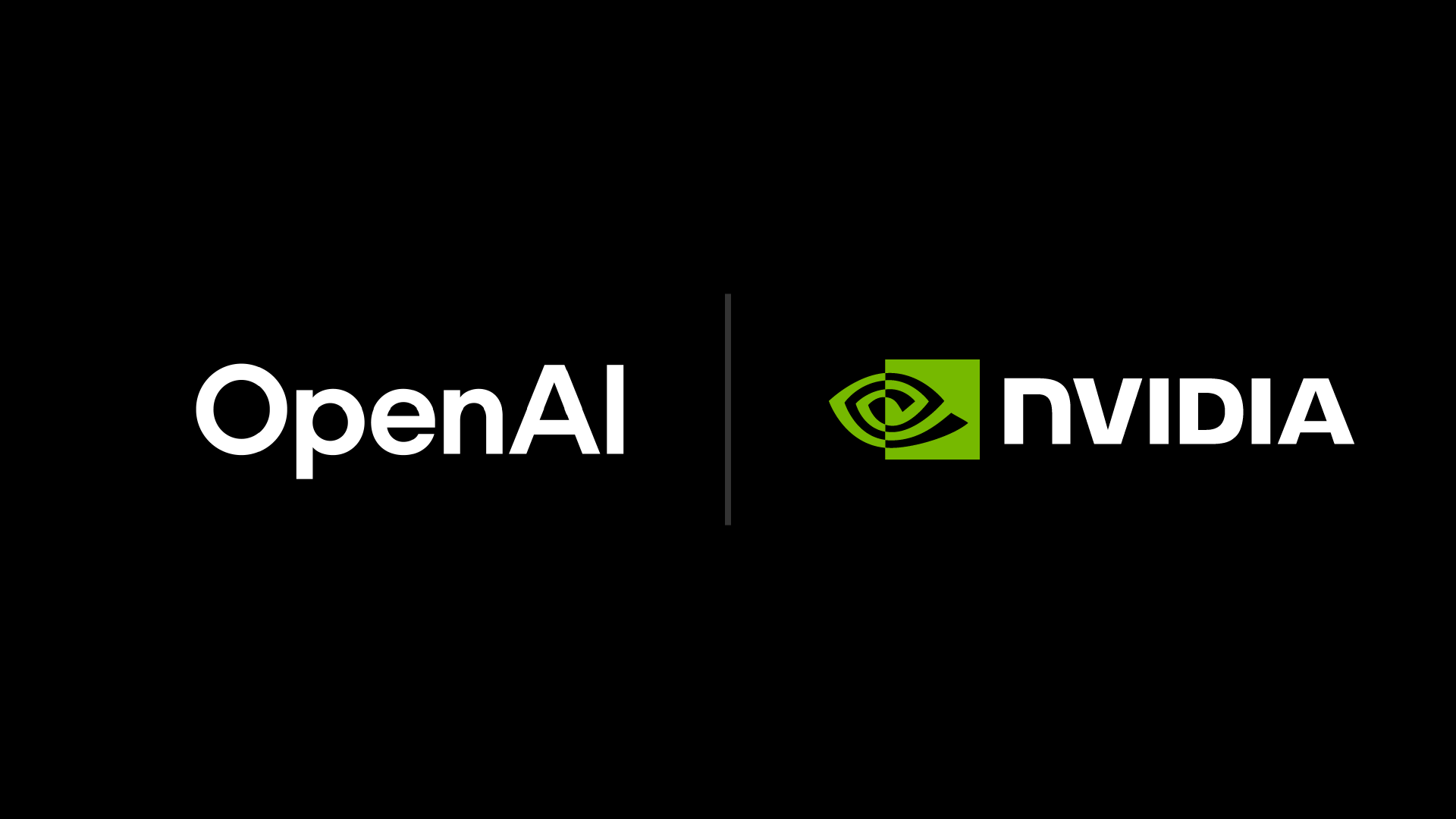
A few months ago, NVIDIA and OpenAI publicly touted what sounded like one of the largest corporate investments ever announced: up to $100 billion, invested over time, as OpenAI brought massive new data-center capacity online. It was repeated in press releases, amplified in interviews, and treated by markets as a real commitment—not a hypothetical.
Now, that figure is quietly evaporating. Nvidia’s CEO Jensen Huang is no longer standing by the number, explicitly saying any investment would be “nothing like that,” while stopping short of offering a clear replacement figure. The original agreement was never finalized, faced internal pushback at Nvidia, and is being replaced by a much more conventional contribution, likely $20–30B, folded into OpenAI’s current fundraise rather than layered on top of it. The investment is still enormous, but it’s categorically different from a multi-year, $100B infrastructure-aligned commitment.
At the same time, Amazon has emerged as a potential anchor investor, reportedly discussing up to $50B as part of a $100B round, which would make it the single largest contributor. SoftBank is also rumored to be circling. The math here matters: once you add Amazon, SoftBank, Microsoft, and others, there simply isn’t room for NVIDIA to do anything close to what was originally implied. The result is a reframing of the entire narrative, from a bespoke NVIDIA-OpenAI mega-partnership to a competitive, multi-party capital raise dominated by cloud and platform players.
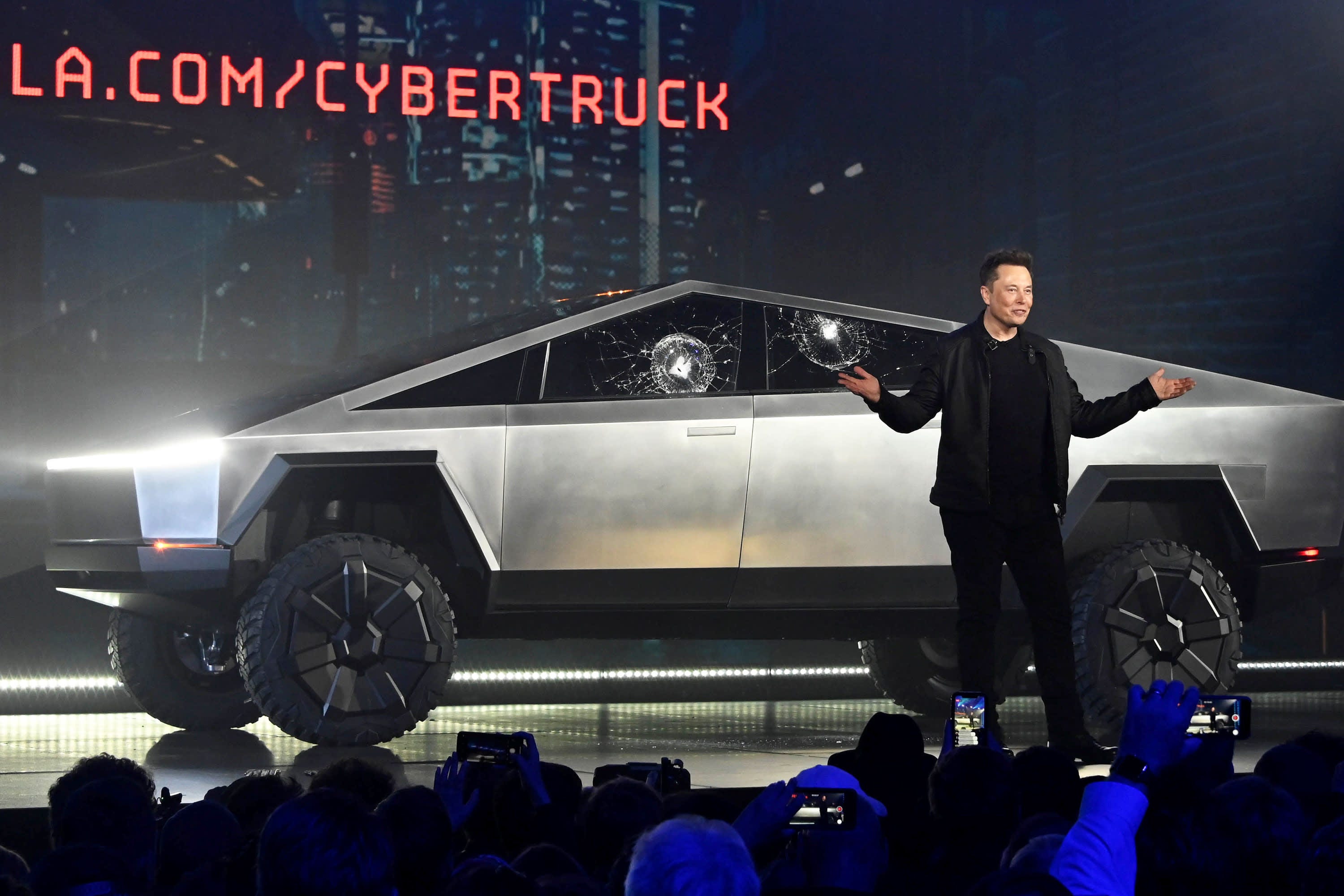
Three weeks after xAI announced a massive $20B Series E, we learned something important: Tesla put $2B into the round. On paper, it looks like another strategic investor joining a stacked cap table alongside Fidelity, Qatar Investment Authority, and strategic backers like Nvidia and Cisco. In reality, it’s one of the most circular and controversial AI deals we’ve seen yet.
That’s because Tesla shareholders explicitly voted against authorizing this investment last year. While more votes were cast in favor than against, Tesla’s bylaws count abstentions as “no” votes, meaning the proposal failed. Tesla went ahead anyway. In its shareholder letter and earnings call, the company justified the move by tying it directly to Master Plan Part IV—positioning the investment as essential to Tesla’s push to bring AI into the physical world through vehicles, robotics, factories, and energy systems.
Operationally, the overlap is already deep. Tesla supplies Megapack batteries to power xAI’s data centers. xAI’s Grok chatbot is being integrated into Tesla vehicles. And xAI has told investors it plans to build AI systems for humanoid robots—specifically ones like Tesla’s Optimus. The $2B check simply formalizes what already exists through a new “framework agreement” for future AI collaboration. This isn’t Tesla backing a promising startup; it’s Tesla doubling down on Elon Musk’s internal AI stack.
At the same time, SpaceX is exploring what could become the largest IPO in history: a raise of up to $50B at a valuation near $1.5T. The company has reportedly been in discussions with Wall Street heavyweights, including Goldman Sachs, JPMorgan Chase, Morgan Stanley, and Bank of America, to lead the deal.
The timing is classic Musk: mid-June, reportedly aligned with both his birthday and a rare planetary alignment. But the fundamentals matter more. SpaceX was valued at roughly $800B in a December 2025 secondary sale, and investor appetite has surged alongside Starlink’s growth, higher launch cadence, and a reopening IPO market after years of drought.
Complicating the picture is Musk’s broader consolidation strategy. SpaceX has already invested $2B in xAI, and multiple reports suggest Musk is exploring a merger or tighter integration between SpaceX, xAI, and possibly Tesla ahead of the IPO. The pitch is straightforward: combine rockets, satellites, AI models, data, energy, and compute into a single vertically integrated platform that could justify a valuation premium far beyond traditional aerospace or software comps.
That’s what makes the merger chatter unusual. Any real transaction would almost certainly delay a public listing. Which raises the question: is this idle experimentation, or early-stage contingency planning in case the IPO narrative needs reinforcement?
Secondary markets are already reacting. Demand for SpaceX shares has surged, employees and early investors are cashing out at elevated prices, and bankers are openly describing the offering as a potential reset moment for tech listings.
The strategic logic isn’t completely unhinged. SpaceX has openly discussed putting data centers in orbit, powered by solar energy. Folding in xAI would give those hypothetical space-based servers an immediate customer: AI models hungry for compute. Tesla adds energy storage, robotics, and manufacturing scale, useful if the endgame includes AI-powered factories, humanoid robots, and eventually Mars.
There’s also a softer financial angle. SpaceX revenues can be lumpy. Adding xAI (and its social-media-adjacent assets) could smooth the public-market story, even if it adds losses. A Tesla–xAI merger arguably fits even better, especially after Tesla’s $2B investment, but that’s also the option Musk has the least unilateral control over.
And then there’s Door #3: merge everything. SpaceX. Tesla. xAI. Maybe even The Boring Company. At that point, it stops looking like a company and starts looking like a founder-controlled holding platform for physical AI.
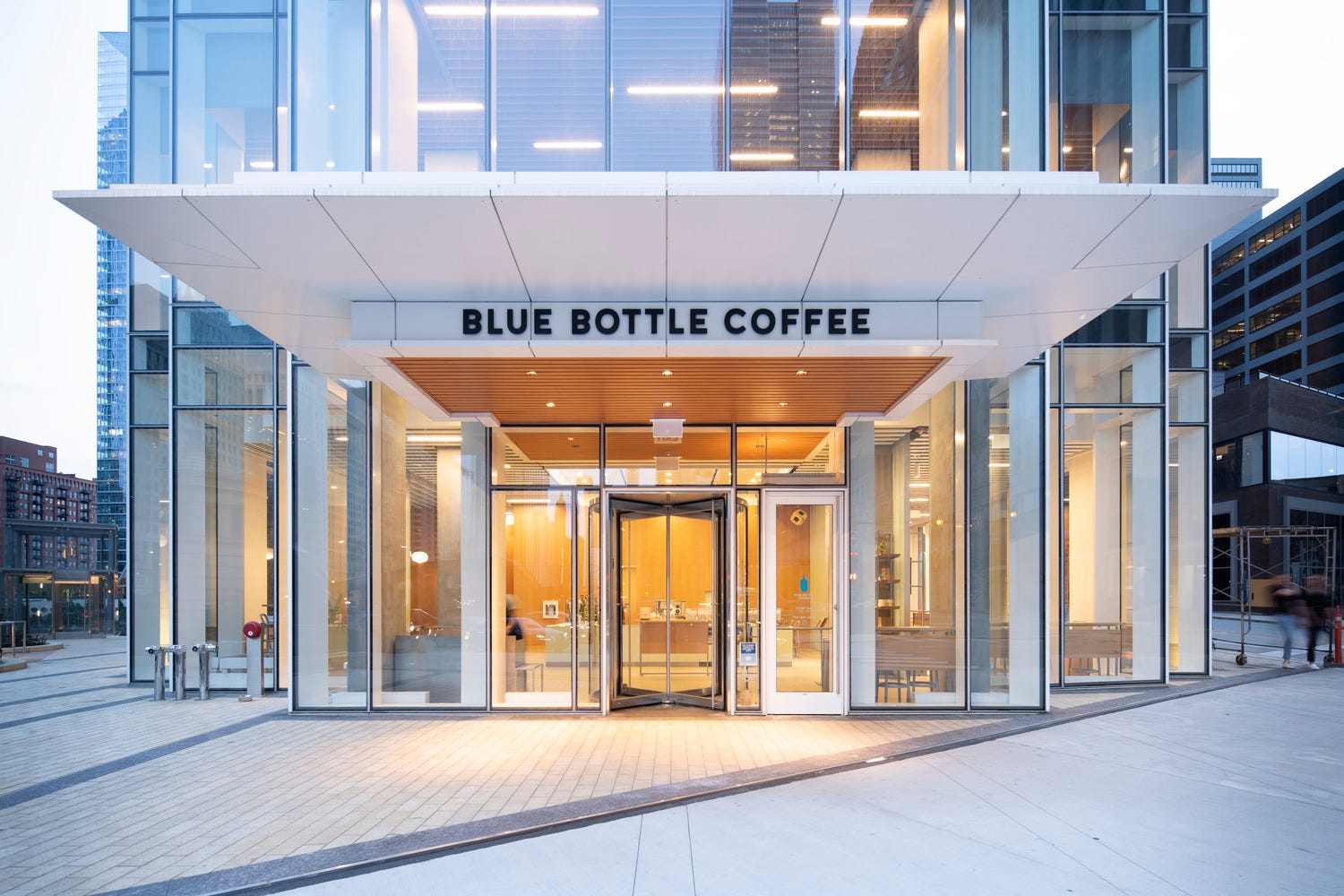
Blue Bottle Coffee was founded in 2002, and it didn’t look like the kind of company that would attract venture capital. Its founder, James Freeman, began by roasting small batches of coffee and selling them at farmers markets. He was obsessed with freshness and flavor at a time when specialty coffee was still niche in the U.S. What Blue Bottle had early on was something investors love: a product that created genuine loyalty. Customers weren’t just buying coffee, they were buying into a philosophy of quality, ritual, and design.
As Blue Bottle expanded beyond its original locations, venture capital became a key accelerant. After 6 years of operating in 2008, the company raised $5 million, and another $20 million 4 years down the line. For Blue Bottle, venture funding allowed it to do things such as open premium locations in expensive urban markets, invest in meticulous store design, build a strong brand identity, and develop a national supply chain without compromising quality.
Unlike many consumer brands that chase growth at all costs, Blue Bottle used its VC funding strategically. Rather than flooding the market with stores, it focused on controlled expansion, entering cities like New York City, Los Angeles, and later international markets with a consistent, high-end experience. This approach aligned well with venture investors who saw Blue Bottle not just as a coffee company, but as a scalable lifestyle brand.
The company’s trajectory eventually attracted global attention and earned a majority acquisition from Nestlé for $700 million. With the help of Nestlé, Blue Bottle Coffee gained access to international distribution and operational muscle while allowing it to retain its artisanal image. This move highlights an important VC lesson: venture capital isn’t always about an IPO. Sometimes the end goal is acquisition by a strategic partner that can take the brand to a scale founders couldn’t reach alone.
We love our website, and want to make sure it is accurate and up-to-date. Please let us know through this form if you are a part of the VWV team (Investment Committee, Advisors, Alumni) and have changes you wish to make to your personal profile.
That’s it for this week, feel free to email me eason_zhang@brown.edu with any thoughts or inquiries! 💌
Follow us:
Instagram: @vanwickleventures
Twitter: @VanWickleV
No posts
Comments
Nothing yet. Say the first thing.
Sign in to join the conversation.