
Reading Design for a Better World by Don Norman feels less like consuming a book and more like being gently — and repeatedly — confronted.
Confronted with how artificial our designed world has become.
Confronted with how normalized that artificiality feels.
And confronted with how rarely we stop to question the second-order effects of our design decisions.
Norman invites us to notice what we usually ignore: cities optimized for cars, houses disconnected from climate, lawns engineered to look “natural” while rejecting everything that actually grows there.
We call weeds “problems.”
We call insects “plagues.”
But rarely ask: what system did we design that made them so?
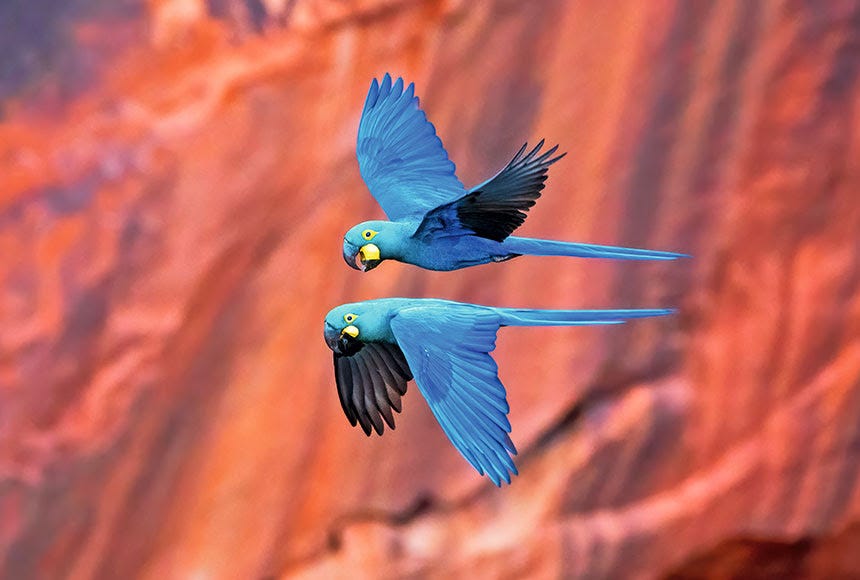
This reflection took me back to Brazil, to the story of the arara-azul-de-lear — a bird made famous by pop culture, but deeply misunderstood in real life.
Its story is not about extinction alone. It’s about substitution. About replacing ecosystems with “efficient” systems. About treating living beings as edge cases in a design that was never meant to include them.
Electric grids, livestock, monoculture farming — each decision made sense in isolation. Together, they created collapse.
And that’s the uncomfortable mirror Don Norman holds up for designers today.
We are now designing not only products and interfaces, but agents, systems, and AI that act autonomously inside complex environments. If we repeat the same isolated thinking, the consequences won’t just be bugs — they’ll be systemic failures.
Designing for a better world is not about better intentions.
It’s about broader accountability.
The question is no longer can we build it?
It’s what ecosystem will it change once it exists?
Thank you for reading,
Need a hand with your design team?
I only work with 2–3 clients a year, helping them level up their Figma Design Systems, Product Strategy, Community, and Marketing. If that sounds like what you need, just hit reply and tell me a bit about your project. Let’s chat.
Got this email from a friend?
Lucky you. Subscribe here and you’ll get these design sparks every other Friday.
Want more in-between issues?
I drop thoughts, rants, and experiments on LinkedIn and Xwitter (yes, I still call it that). Come say hi.
No posts
Comments
Nothing yet. Say the first thing.
Sign in to join the conversation.