
Mixology is UXHack’s Weekly newsletter covering interesting topics in UX, Products and AI, along with Curated Jobs, Events and useful Resources.
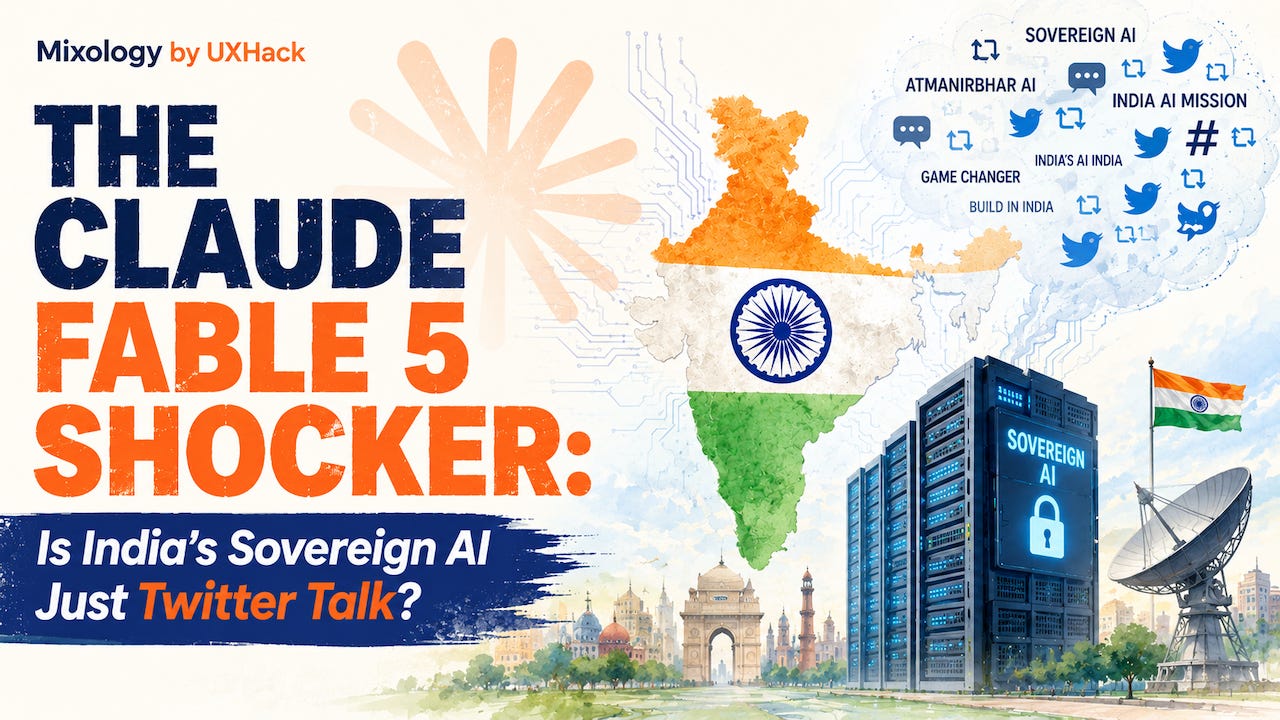
Imagine building your entire product roadmap on the world’s most advanced AI model, only for it to vanish overnight. That nightmare became a reality when a US export-control directive forced Anthropic to abruptly disable Claude Fable 5 and Mythos 5 globally, just three days post-launch.
This sudden cutoff has reignited a fierce discussion on India’s Sovereign AI strategy. Tech leaders are sounding the alarm on the risk of relying entirely on foreign AI infrastructure. But let’s be real: products don’t get built over Twitter talks.
While grand visions of building a homegrown frontier LLM make for great social media engagement, the ground reality of execution is incredibly complex. Training foundation models from scratch requires astronomical compute power, deep capital, and highly specialized talent.
Just look at Ola’s Krutrim AI, whose consumer assistant Kruti recently went offline, highlighting the massive operational hurdles of maintaining stable models. Instead of chasing vanity metrics, should Indian teams focus on open-source foundations or specialized middleware?
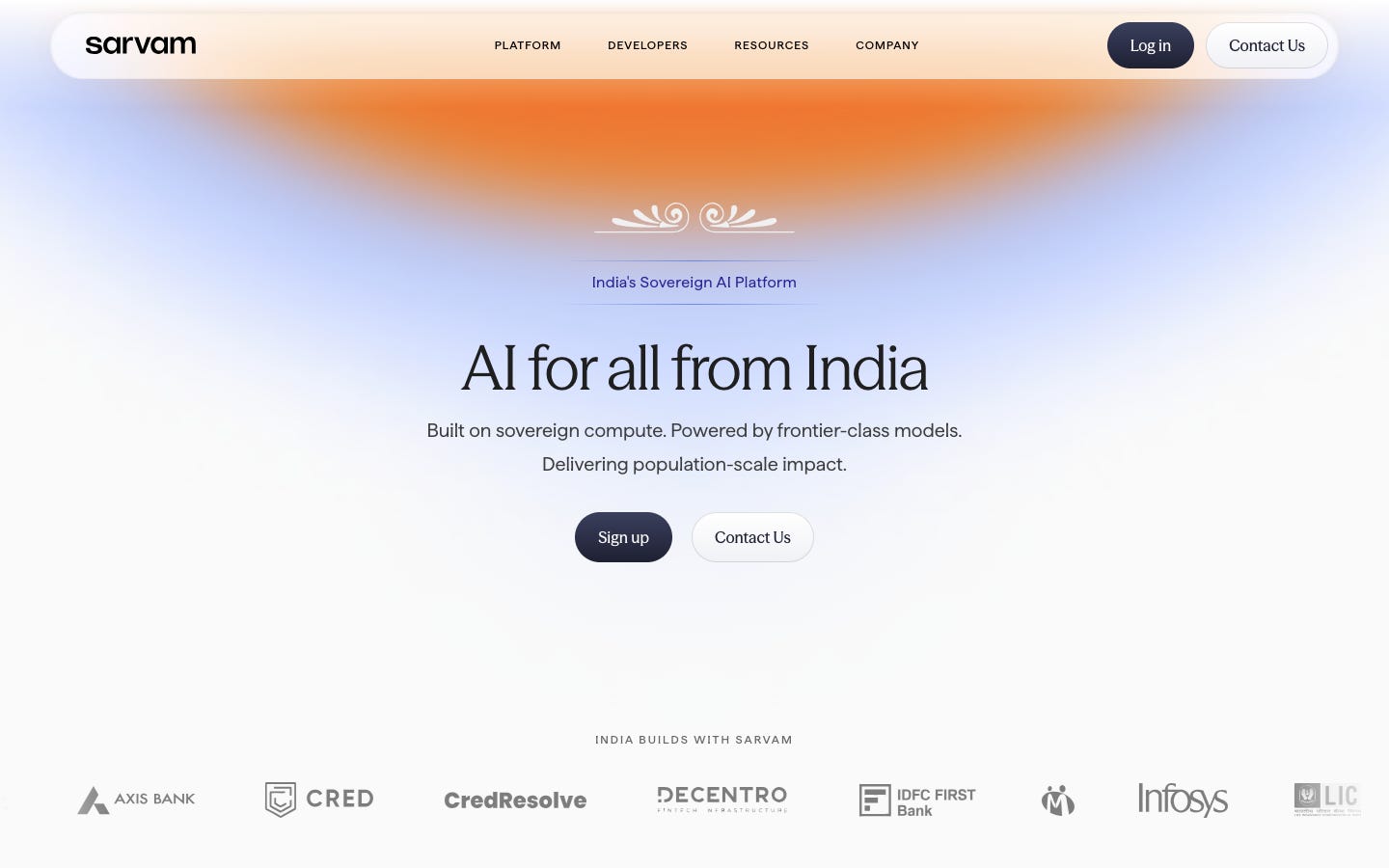
Pragmatic players like Sarvam AI are showing the way by building voice-first models tailored for local context instead of competing on brute-force scale.
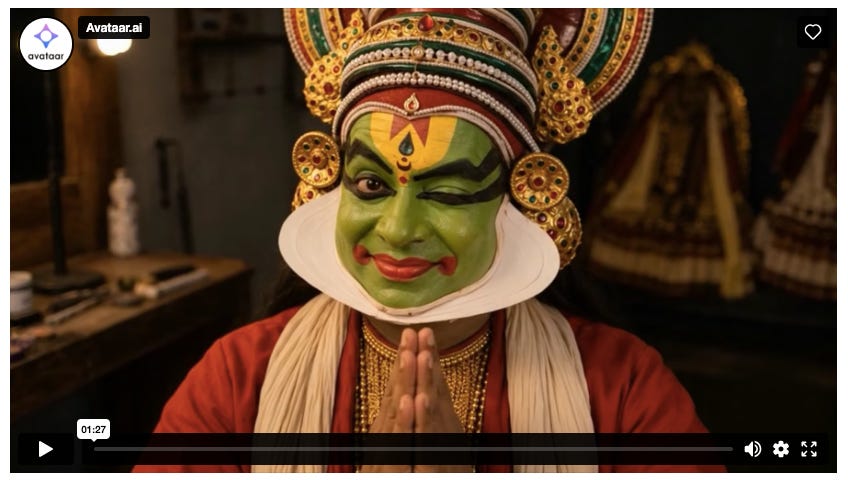
India has also just launched Varya, an open-source, government-backed AI video model that is 20 times cheaper than global rivals. It generates culturally accurate, high-definition Indian-themed videos in just 45 seconds using a highly efficient 4-step distillation process.
This is the kind of frugal, practical innovation that India thrives on.
For PMs and designers, this episode is a massive lesson in dependency mapping. If your core UX depends entirely on a third-party API that can be yanked away by a foreign regulator, you aren’t building a resilient product - you are building a house of cards.
How are you designing your UX to handle AI service fallbacks?
Sources & Citations:
👉🏻PS: Have an interesting read to recommend to 9900+ readers? You can also recommend your own article/video/case study. Tell us here.
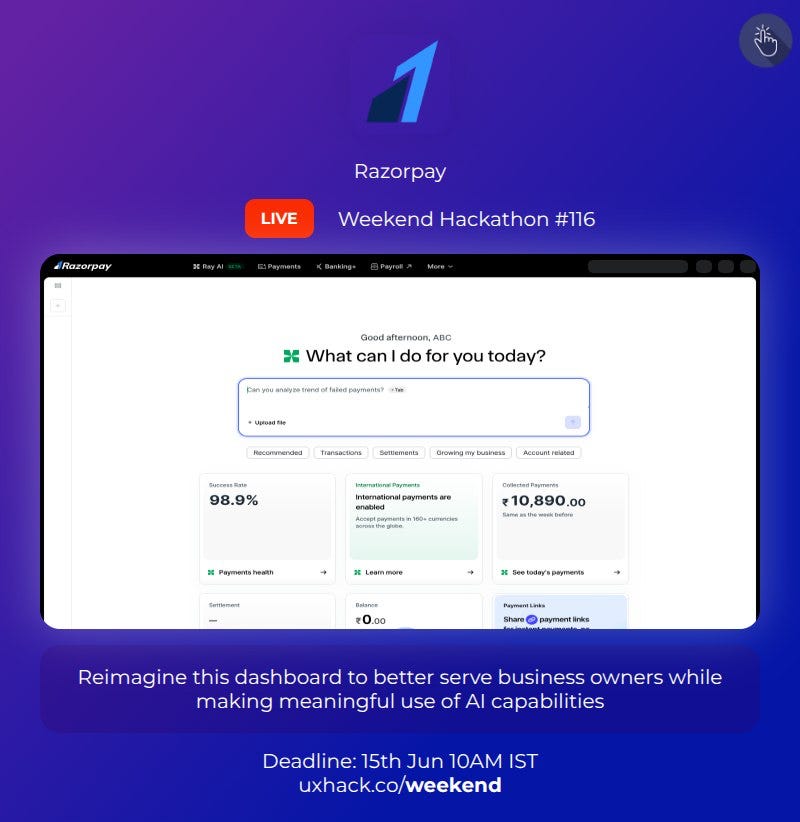
👉🏻 Product: Razorpay
Context: Reimagine this dashboard to better serve business owners while making meaningful use of AI capabilities.
UI/UX Designer at Salesforce | Bengaluru
UX Designer at Google | Bengaluru
Group Product Manager at Harvey | Bengaluru
Manager-Digital Product Management at American Express | Bengaluru
✅For Your Learning & Productivity
UXHack Eldorado - Get access to our repository of 50+ Case Studies on Notion, Figma, Zomato, Netflix etc. Read up 500+ Solutions submitted by PMs & Designers from Gojek, Disney+Hotstar, Meesho, JusPay and more

Comments
Nothing yet. Say the first thing.
Sign in to join the conversation.