
Welcome to the UXBeginner newsletter!
Yes, lately AI has been dominating the headlines - including that of my own Substack. But today I’m going to go at it from another angle.
In my Money for Humans newsletter, I argued that when it comes to personal finance, “will beats skill.”
Today let’s explore how this concept applies to product design - especially if you’re a designer hesitant about AI.
A few weekends ago, I visited a friend’s place and found myself staring skeptically at his Roomba. You know, that circular robot vacuum that promises to clean your floor while you lounge on the couch eating Cheetos?
“Does it actually suck up the crumbs?” I asked, eyebrows raised.
“Most of them,” he said. “But that’s 90% more than I’d do.”
And that got me thinking about something far beyond robot vacuums.
People have similar hesitations about AI in UX design:
Does it really work? Is it just hype? And most urgently… Will it replace me?
Here’s some perspective from a UX coach who’s coached hundreds of career transitioners:
The real barrier to AI adoption isn’t skill, it’s willingness.
Will beats skill. Every single time.

Have you heard the saying, the cobbler’s son has no shoes?
It refers to the phenomenon that someone with a specific skill is often so busy assisting others that their own affairs go unattended.
A Michelin-star chef might microwave a frozen burrito at home because she’s too exhausted from work.
UX equivalent? A designer who hasn’t updated their portfolio in years.
And now, when it comes to AI, it’s up to technologists - and yes, designers are technologists - to use this new powerful tool.
Here’s a friendly career coach reminder:
What separates those who land UX jobs from those who don’t is rarely raw ability—it’s almost always their desire.
I’ve worked closely with career changers. Graphic designers, business analysts, and even attorneys. People from all walks of life hoping to make the leap into UX.
Here's something fascinating I've noticed:
Some graphic designers (seemingly a perfect fit for UX) just couldn’t make the transition. Despite their superior visual skills and relevant experience, their job search sputtered and stalled. They procrastinated, didn’t publish case studies, or endlessly refined their websites without ever launching them.
In contrast, I’ve coached lawyers and nurses with virtually zero relevant UX skills, who dove into every learning resource available. They built rough prototypes in Figma, launched imperfect websites overnight, and actively asked for feedback.
It’s interesting that sometimes, "less-qualified" candidates landed their first UX job faster.
Why? They didn’t let the fear of “not being good enough” paralyze them. They embraced the messy middle of learning. They simply wanted it more.
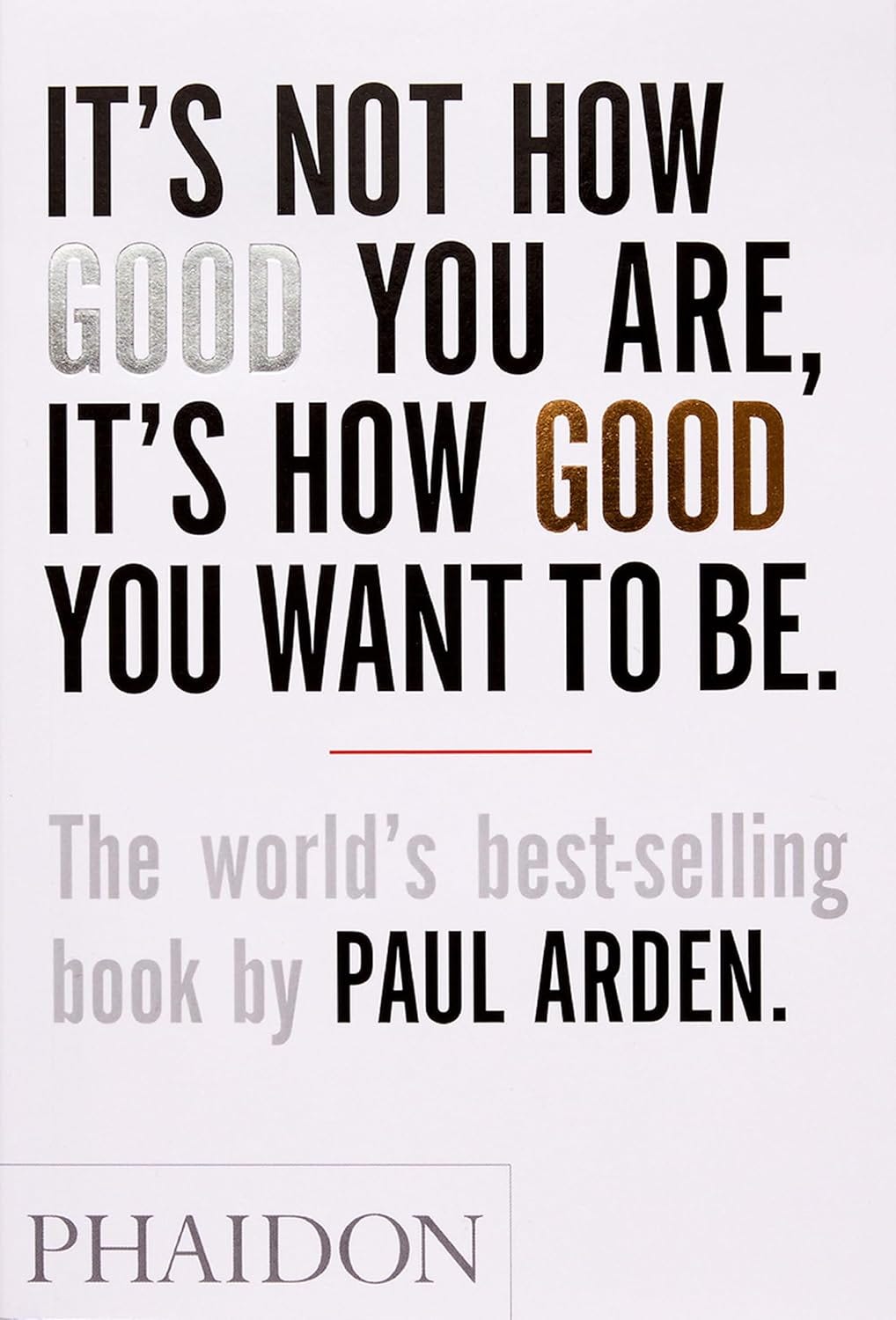
As author Paul Arden made famous in his book, “It’s not how good you are, it’s how good you want to be.”
Now let’s talk about the big, anxiety-inducing elephant in the room: AI.
Yes, people worry AI will steal UX jobs. But that’s not exactly 100% reflective of what’s happening.
The truth is more subtle. Companies aren't directly replacing UX designers with AI tools like ChatGPT. Instead, they're looking at which designers adopt AI tools to produce better work more efficiently. Designers who learn to leverage AI will simply move faster and further.
Think about it this way: Google’s existed for over 25 years.
Yet, people still ask questions easily answered by a quick search. Why?
They prefer human interaction.
They believe you'll provide better context.
They’re simply not willing to type that search themselves.
Similarly, AI tools like ChatGPT are free and widely available. But plenty of people—smart, capable, creative people—still don’t use them.
I have a friend who absolutely refuses to touch AI. He’s brilliant, hardworking, and tech-savvy. But every time AI comes up, he shrugs with disinterest.
Could he be more productive with AI? Probably.
But productivity isn't purely about capability. It’s also about willingness.
It’s incomplete to just think of AI as a competitor. Think of AI (like any tool) as an amplifier.
It’s a Roomba that sweeps up 90% of the crumbs.
But you have to be the one to press start. And yes, occasionally pick up the few crumbs it misses.
SPONSORLooking for a lighter-weight option than a full blown UX bootcamp?
Check out Interaction Design Foundation.
Their new course, AI for UX Designers, is a huge level up for modern designers.

Here’s how to shift your relationship with AI from skepticism to friendly curiosity. Three low-effort UX experiments you can do today:
Help you write case studies
Prompt: “Draft an outline for a UX case study on a travel app redesign.” Spend just 30 minutes editing and publish the draft to your portfolio or blog immediately. Watch how your procrastination evaporates.Synthesize research
Copy your interview notes into AI. Prompt it: “Summarize key user pain points and suggest design opportunities.” Boom. You've got a ready-made slide for your stakeholder meeting.Persona Magic
Give AI an existing persona narrative. Prompt: “Rewrite this persona in the first-person voice, including a memorable quote and short bio.” See your persona transform from generic to compelling in minutes.
Try one today. Just see what happens when you let AI pick up 90% of the crumbs.
Desire is your Archimedes lever—the tiny spark of motivation that moves mountains (or at least bulky boulders).
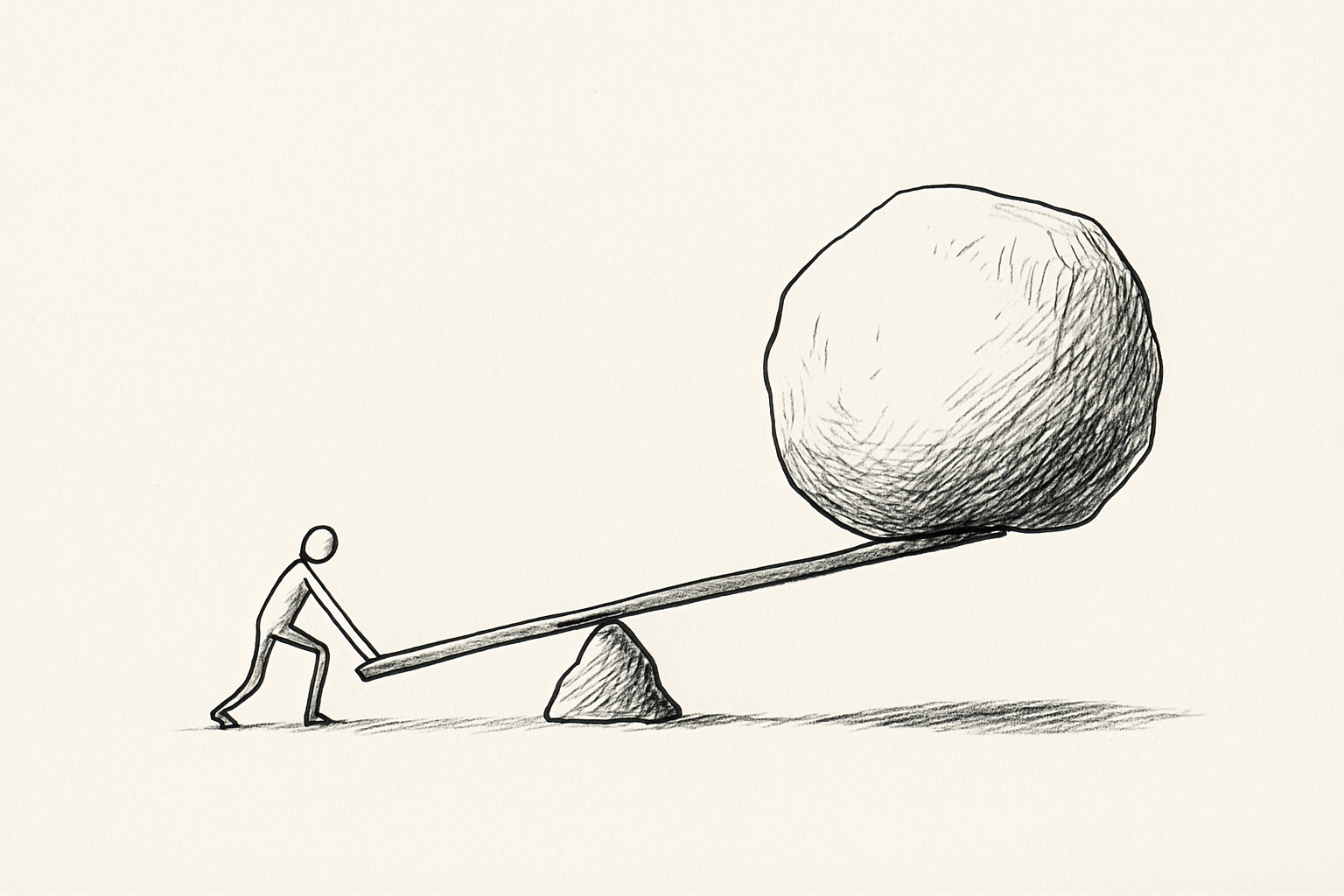
Yes, UX is challenging. Yes, AI feels intimidating. But you don’t need to be naturally brilliant or tech-savvy from the start.
You just have to want to learn, explore, and occasionally fail your way into expertise.
I have seen countless people pivot successfully into UX design, armed initially with nothing but sheer willingness. It’s not only possible; it’s surprisingly common.
If you’re reading this and feeling behind, uncertain, or overwhelmed, remember:
You don’t need perfect skills to begin. You just need enough curiosity to press "start" and see what happens.
Just like a Roomba.
What’s your Roomba moment with AI?
Tell me about a tiny, imperfect UX task you’re willing to try today using AI. Leave a comment below or reply to this email—I’d love to hear your story.
If you found this helpful, hit subscribe!
Written by Oz Chen
TIP: If you're just reading this in email, you might not have a full Substack account yet. Creating one is quick—and it unlocks comments, highlights, and DMing me directly. Try it out via the Substack app or log in at Substack.com.
No posts
Comments
Nothing yet. Say the first thing.
Sign in to join the conversation.