
Drive was conceived as a straightforward action film. Producers Marc Platt and Adam Siegel optioned James Sallis’s 2005 novel Drive after spotting a review in Publishers Weekly. Check out this excerpt from the Chapter One.
“Much later, as he sat with his back against an inside wall of a Motel 6 just north of Phoenix, watching the pool of blood lap toward him, Driver would wonder whether he had made a terrible mistake. Later still, of course, thered be no doubt. But for now Driver is, as they say, in the moment. And the moment includes this blood lapping toward him, the pressure of dawns late light at windows and door, traffic sounds from the interstate nearby, the sound of someone weeping in the next room . . .”
The first film version was set up with Hugh Jackman and envisioned as a big, splashy, Fast & Furious style movie which never managed to get off the ground.
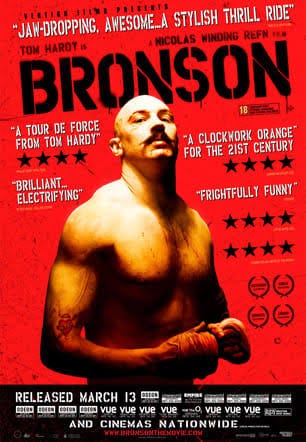
When Gosling signed on to lead, he had total creative control and was able to pick his own director. In attempt to break away from the glossy version of the script he reached out to Danish filmmaker Nicolas Winding Refn, whose had recently made the brutal prison movie Bronson. It came at a perfect time as Refn’s next film, with Harrison Ford with a Paul Schrader script had recently fallen apart because Ford cold feet over the ending of the film which had him dying at the end.
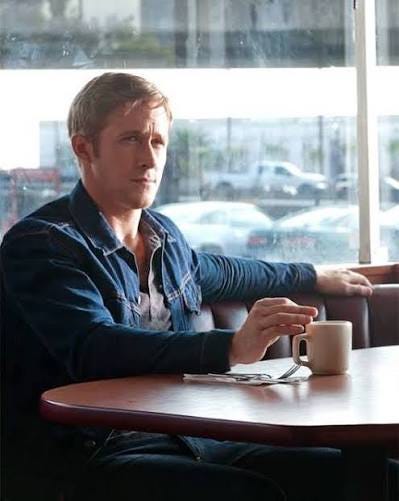
Refn has told this story for years: at their first meeting, he was running a fever and felt awful. He was full of cold medications and completely out of it.
Gosling said, “It was terrible. It was like a terrible first date. He didn’t look at me, he wouldn’t talk to me... He looked very disinterested... It was one of those dates where you know you’re not gonna get any action so you just say, ‘Check please!’”
And then the meeting became really awkward when Gosling realized the director didn’t have a ride home.
He recalls, “He doesn’t drive. I’m thinking, ‘How can this guy make a movie about driving and he doesn’t even drive!’ I have to take him home and we’re in the car and it’s awful. We’re not talking so I turn on the radio and REO Speedwagon’s I Can’t Fight This Feeling comes on and suddenly he comes to life and starts crying and singing at the top of his lungs.
“He says, ‘This is it! It’s a movie about a guy who drives around listening to music.’ It’s what I was feeling, so I knew we were onto something. The movie wouldn’t have been made if REO Speedwagon didn’t come on the radio.”
In a 2026 retrospective THR interview, Refn reflected on the making of the film. Although James Sallis’ 2005 novel Drive had already been adapted by screenwriter Hossein Amini, Refn says the version they ultimately made took shape through an unusual live-work process.
Amini moved into the Hollywood house Refn was renting while they continued rewriting the script.
Carrie Mulligan stopped by for what was supposed to be a meeting.
“The minute she walked through the door, I was like, ‘It’s you. You are her,’” Refn says. “For some reason she ended up also living at the house.”
Editor Matt Newman also moved in, cutting the film downstairs while Refn and Amini continued rewriting upstairs.
“It was like a real, what I would imagine the ’70s would’ve been like — without cocaine,” says Refn.
Refn eventually became convinced the house where everyone was living and working was haunted.
“I was super afraid of the house,” he adds. “Certainly. It was haunted.”
So unnerved was he that producer Adam Siegel would sometimes come over simply so he wouldn’t have to spend the night alone.
Refn also admits that during production, “Most everyone hated it. Up until the premiere in Cannes, there were people that wanted their name off the movie.”
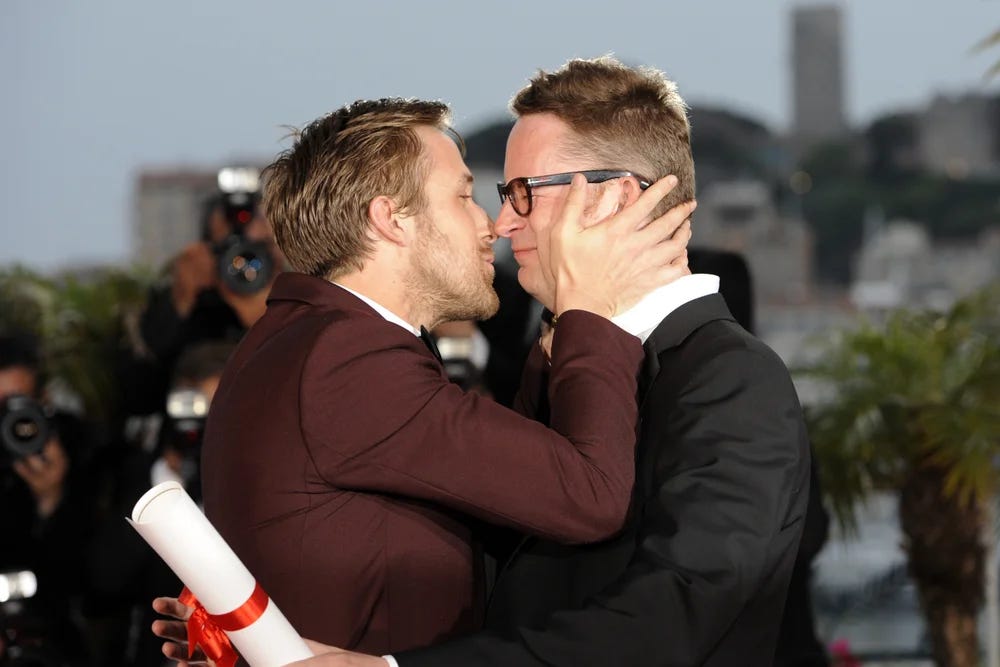
Then Cannes happened. Drive premiered in competition at the 2011 festival and received a reported 15-minute standing ovation. Refn went home with the festival’s Best Director award, and everything changed.
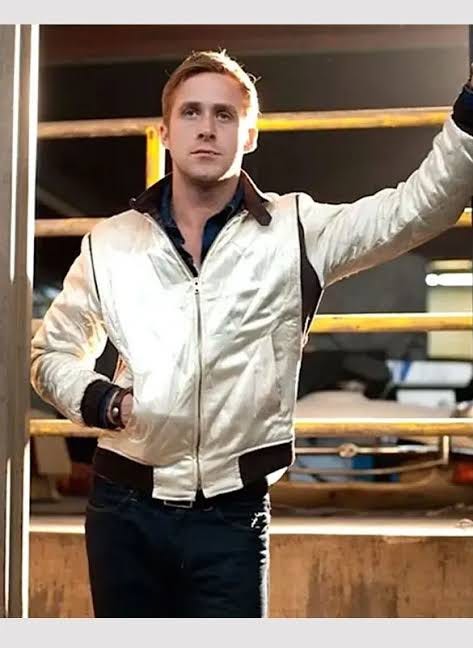
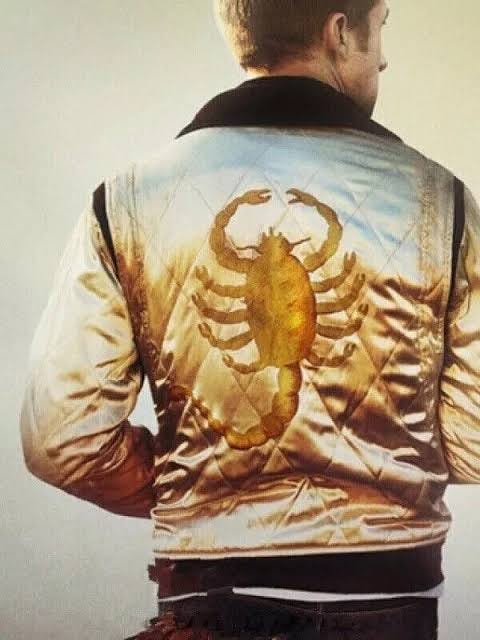
The white satin scorpion jacket is arguably as famous as the movie itself. According to costume designer Erin Benach, Gosling had already bought and was wearing a 1950s-style Korean souvenir jacket (Sukajan). The team looked at it and thought: “that’s it.”
From there, they rebuilt it, streamlining the baggy, slouchy 1950s fit into a sharp, clean silhouette, treating it like a modern superhero’s signature costume or protective armor.
The white satin was a nightmare for cinematographer Newton Thomas Sigel to light, since it could blow out an entire frame. They discussed switching to olive green or red before ultimately fighting to keep the white, landing on a subtler off-white/silver satin twill to make it workable on camera.
The scorpion itself was a separate creative decision by Refn and Gosling, referencing Kenneth Anger’s 1963 experimental short Scorpio Rising, an homage to underground/avant-garde filmmaking.
Thanks for reading Before You Watch! This post is public so feel free to share it.
“Now I wish I could do every film silent. Talking is distracting.” -Refn
Gosling went through the Hossein Amini/Refn screenplay and cut dialogue aggressively, leaning into the idea of a classic, mostly-mute Hollywood archetype (think Bullit or The Man with No Name). Bryan Cranston, playing garage owner Shannon, reportedly felt like someone had to fill the silence so he leaned hard into rambling, chatty improvisation to compensate for how quiet everyone else had become.
Refn chose Johnny Jewel of Desire and Chromatics to score the film. He wanted electronic music and to have it be abstract, on occasion, so viewers can see things from the Driver’s perspective. As Refn was going through mixer Jewel’s catalog, he picked out “Under Your Spell” and “Tick of the Clock” because he thought of Drive being a fairy tale.
Although Jewel’s music was used in the score, at the studio’s request they replaced his instrumental score at the last minute with composer Cliff Martinez, a former drummer in groups like the Red Hot Chili Peppers and Captain Beefheart and The Magic Band, and punk acts like The Weirdos and The Dickies. Refn asked Martinez to imitate the style and feel of songs he was using in the film.
Usually for me the song and the score go their separate ways. That’s usually because the selection of songs is not as focused as it was on Drive, it’s more eclectic, so it’s hard to define what the style of a score is. But with Drive it was five songs, and four of them sounded like they could have been composed by the same artist. So it was a very narrow style which was an homage to the 80s. So I thought “Ok.” At the time all the rage in software was vintage synth sounds, so it was a very easy style to incorporate. But usually I don’t [take influence form a film’s songs], though it depends to a degree on the importance of the songs. But in the case of Drive with that pink fog at the opening, and that song over the titles, it felt like the songs played a very important role in defining the style of the film. So in that case I decided to try and go in that direction, which turned out to be a good idea. - Cliff Martinez
Jewel reworked his unused soundtrack for the film into Themes for an Imaginary Film, the debut album by his side-project Symmetry
Drive was made for around $15 million and pulled in $81.4 million worldwide. It’s been credited with reviving neo-noir as a mainstream genre, cementing Gosling as a bona fide movie star, and turning Refn into one of the most talked-about auteurs of the 2010s.
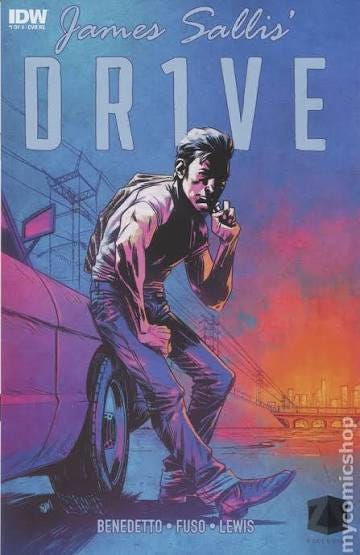
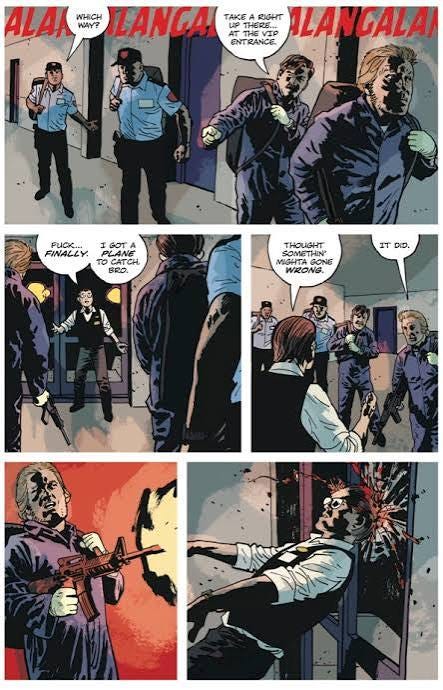
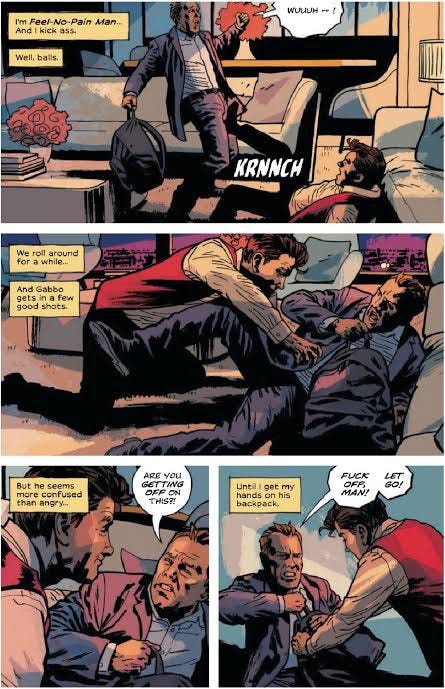
However if you are still curious about seeing how Sallis Original Book would translate to film, you can read an official IDW Comic Book adaption
Unspooled newest Video Series is LIVE
UNSPOOLED LIVE IN LA 8/25 in Los Feliz for a Special Screening of THE SECRET LIFE OF WALTER MITTY
Are you following us on Facebook?
Want Paul to sign and personalize a book just for you? It can happen
No posts
Comments
Nothing yet. Say the first thing.
Sign in to join the conversation.