
This week on Unspooled we tackled a film that Amy love, Don Bluth’s An American Tale
Producer David Kirschner conceived the original concept, but the emotional core, a Russian-Jewish immigrant mouse family fleeing persecution for America was all Spielberg. Fievel, the film’s hero, is named after Spielberg’s own grandfather, Filievel Posner, an immigrant who told him stories of the old country. The project actually began life as a pitch for a TV special before Spielberg decided it deserved to be a feature film and every way it was advertised treated it as such, this wasn’t just a “kid’s movie”.
“Make me something pretty like you did in NIMH—make it beautiful”. - Spielberg to Bluth
In 1979, Director Don Bluth frustrated with what he saw as Disney’s creative stagnation, Bluth led a mass exodus of animators out of the studio to start his own shop. That splinter group eventually became Sullivan Bluth Studios, and An American Tail was their second feature after The Secret of NIMH, made specifically to prove Bluth could deliver something big enough for Spielberg and Universal.
The world-building went through a real pivot. The first concept was an all-animal universe in the style of Disney’s Robin Hood no humans at all. Bluth pushed back, suggesting instead a hidden society of animals living alongside an oblivious human world, closer to the concept behind The Rescuers, which Bluth was an director animator on. After viewing the Rescuers Spielberg agreed and signed off immediate.
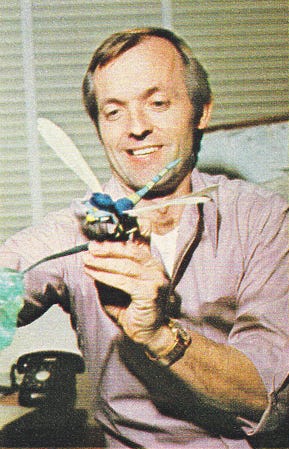
Phillip Glasser, the voice of Fievel, wasn’t found through a normal casting call. Bluth and his crew overheard him auditioning for an Oscar Mayer commercial and pulled him aside. He was seven years old, the same age as the character.
But Bluth had to convince Spielberg, “As I recall, Steven Spielberg said, ‘I’ll know when I hear the voice’. I remember when he [Glasser] sang ‘Somewhere Out There’,’ he continued. “There was a moment where he had to hit a high note that his sweet little voice couldn’t quite reach [making it crack], and Steven said, ‘That’s him! That’s him!’ He [Spielberg] loved what Phillip did, and I think the general public did also. We can draw a mouse, and we can paint it different colors, but there’s something in the voice that makes it more adorable.”
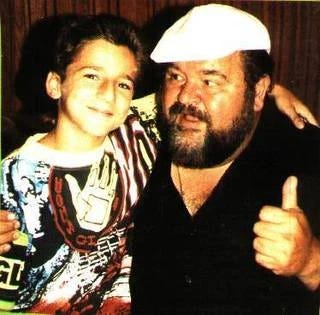
During production, Amblin and Universal expected to view the dailies and approve all major work on the film, and various outside parties also requested changes here and there. This caused the production to buckle from excessive oversight, and made Bluth feel that he was losing freedom of control over the production process. Especially since Bluth loved to storyboard his entire film, himself. To help speed up the process Bluth and his crew discovered that using a video printer greatly increased their productivity. They could videotape an action, then print out small black and white thermal images from the tape for reference for both human and animal characters, a shorthand method similar to the rotoscoping technique (called in fact xerography) used since the earliest days of animation, in which sequences are shot in live action and traced onto animation cels. They also utilized the process of building models and photographing them, particularly the ship at sea, and the “Giant Mouse of Minsk”, a technique also used in many Disney films.
But even with these techniques the film couldn’t be completed in time. Suddenly scenes had to be dropped to save time and money and new, shorter scenes had to be created to help pick up the story points lost in the process, sometimes making the story line look jumbled. Notable cuts include the Mousekewitzes journey across Europe, a scene in which they first meet Tiger and he gets stuck up in a tree, an upbeat song that Fievel was planned to sing while imprisoned in the sweatshop, and a scene that gave greater explanation of the changing of names at Ellis Island. Cuts are also responsible for baby Yasha’s apparent disappearance after the boat trip.
Spielberg’s original vision for the film was as a musical—it is said he wanted a “Heigh-Ho” of his own. The score for the film was composed by James Horner, recorded in England, and performed by The London Symphony Orchestra and the Choir of King’s College and while Bluth originally didn’t like the arrangement it turned out to fit perfectly in the final mix.
James Horner wrote the score, and Spielberg brought in the songwriting team of Barry Mann and Cynthia Weil to help produce four original songs on a four-week deadline. Nobody involved thought they were writing a radio single. Then Spielberg heard “Somewhere Out There” and became convinced it had Top 40 potential, so he recruited Linda Ronstadt and James Ingram to record a pop version for the end credits (Phillip Glasser and Betsy Cathcart sing the in-story version as Fievel and Tanya).
Producer Peter Asher revealed years later that Ronstadt and Ingram never actually sang in the same room. Their vocals were recorded separately and stitched together something trivial today with modern software, but a real technical puzzle in 1986.
The gamble paid off spectacularly: the single hit #2 on the Billboard Hot 100, and it won the Grammy for Song of the Year in 1988, beating out competition to also land an Oscar nomination (it lost Best Original Song to “Take My Breath Away” from Top Gun).
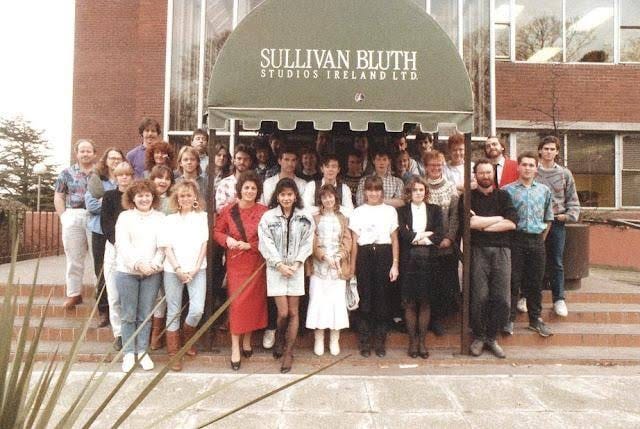
While making “An American Tail, Sullivan Bluth Studios was quietly negotiating to relocate almost the entire operation from Van Nuys, California to Dublin, Ireland. Ireland’s Industrial Development Authority offered the studio the largest government grant in the country’s history to move — in exchange for a 5% ownership stake in the company. Tension with American animation unions over below-scale wages reportedly sped up the decision.
By the time the follow-up film, *The Land Before Time*, went into production, most of the studio’s staff had relocated to a new facility near Dublin’s Phoenix Park. Don Bluth later said plainly that the Ireland deal is the only reason the studio survived to make a second film at all. Universal wanted to see whether *An American Tail* was a hit before funding anything else. That Dublin studio would go on to train a generation of Irish animators, some of whom later worked on Avatar and founded the acclaimed studio Cartoon Saloon.
Roger Ebert and Gene Siskel gave the film two thumbs down, calling it “the most downbeat children’s movie since Return to Oz,“ and that it was “way too depressing for young audiences.” Both reviewers also criticized how it gave little mention that the main characters were Jewish, or that the attack on their home at the beginning was an antisemitic one, calling it “a Jewish parable that doesn’t want to declare itself,” and felt that it “chickened out on its ethnic heritage.”
However audiences disagreed on a $9 million budget, An American Tail grossed roughly $84–85 million worldwide, becoming the highest-grossing non-Disney animated film released up to that point, a record Bluth himself would break two years later with The Land Before Time.
Merchandising in 1986 was a big deal Sears consulted on the design of Fievel to make sure it could be something easily duplicated.
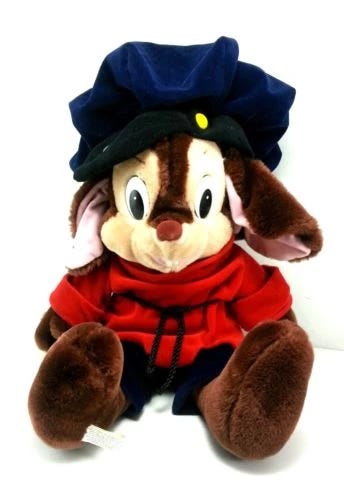
McDonald’s ran a Happy Meal promotion That was a bit tone deaf. They produced small embroidered Fievel Christmas stockings as a holiday promotion. Because the Mousekewitz family is explicitly Jewish, Jewish advocacy groups, including the Anti-Defamation League objected to a Hanukkah-adjacent character being used to sell Christmas merchandise. McDonald’s issued an apology and reworked its advertising to focus on the picture books instead, quietly dropping the word “Christmas” from later packaging and calling the stockings “ornaments.”
Thanks for reading Before You Watch! This post is public so feel free to share it.
Fievel became the on-screen mascot for Amblimation, Spielberg’s animation studio, appearing in its production logo, and he’s also been used as a mascot for UNICEF. The franchise continued with the 1991 theatrical sequel Fievel Goes West (without Bluth), a TV series called Fievel’s American Tails and had a focus on promoting reading, and frequently the solution to an episode’s conflict was found by Fievel reading. The character also appeared in public-service messages sponsored by the nonprofit Reading Is Fundamental.
At almost 88 years old, Don Bluth shows no sign of slowing down. He has established an animation school called Don Bluth University, where he teaches online courses.
Come see Unspooled Live at Los Feliz 3 for a special screening of THE SECRET LIFE OF WALTER MITTY 8/25/26
Watch the Dark Web and join our Patreon
Joyful Recollections of Trauma is available wherever you get books or listen to them (Audible & Spotify), and if you want a signed and even better, a personalized copy, I can do that too.
No posts
Comments
Nothing yet. Say the first thing.
Sign in to join the conversation.