
Hello friends,
Apologies that it’s been a few weeks without a roundup. I unexpectedly traveled to Chicago and San Francisco in the past few weeks, as well as lost my beloved cat, Maria. It’s been a rough few weeks, basically. But I have put together an extra long roundup to make up for it.
I did manage to write this book review, though, which you might enjoy.
Reviews
Book Review: Talking Classics by Mary Beard
·
Jul 17
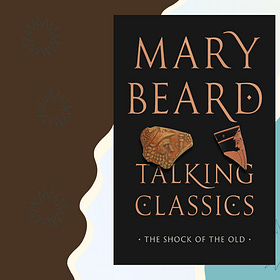
I picked up Talking Classics with a small bit of reluctance—as I mentioned last summer, there were parts of Mary Beard’s runaway hit SPQR that I didn’t love. I don’t think there was anything wrong with that book, it’s just that my sense of humor didn’t gel with hers in places. Perhaps I was too harsh on it then; that’s the risk of writing a review in th…
I also just got news that the audiobook of my book, Unruly Figures, is on sale! If you like Unruly Figures and you prefer audiobooks to physical ones, I highly recommend picking this up while it is 60% off.
If you’re watching the World Cup final today, enjoy! I’ll be cheering for Spain 🇪🇸 and would love to hear who you’re cheering for in the comments.
Now, in history acting unruly in the news…
My favorite of the week: If you’re watching The Odyssey this weekend, you might be curious—what inspired the cyclops, sirens, and other incredible creatures that Odysseus encounters?
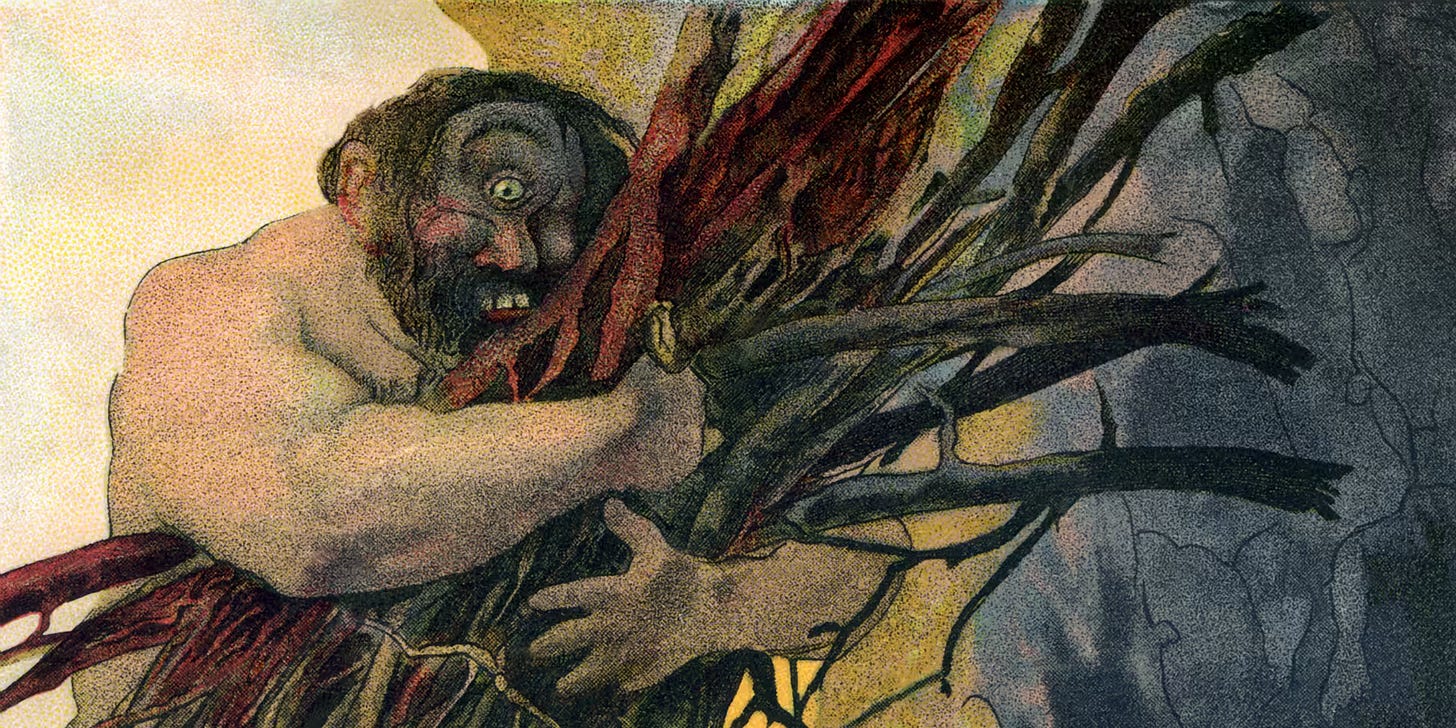
Poor Polyphemus, unaware of what awaits him in his cave. Source: Alamy. Runner-up: This database of 290,000 English Medieval soldiers traces their career trajectories to examine whether they were as undisciplined as legend says.
More in The Odyssey:
Why do people keep asking about the “historical accuracy” of Christopher Nolan’s take on The Odyssey?
For 1,000 years, a cult worshipped Odysseus and his famous journey.
On its face, it seems like a story about a lost man trying to get home. But the women of the Odyssey are the ones who shape the plot.
Before starring in Nolan’s film, this Viking longship recreation crossed the Atlantic.
The world’s oldest complete set of Roman armor might preserve the fate of its wearer.
The rise and fall of… muskrats? In the UK?
“Vagrancy” charges were used to criminalize same-sex relations in the Philippines in the early 20th century.
This 1980s Doomsday cult “ensnared the young and beautiful” of New York.
The Plague has been with us for so long that even prehistoric hunter-gatherers got it.
Very cool: Sak Tahn Waax was a Maya math whiz who left behind an “elegant” equation for our consideration. He’s also one of the first Maya mathematicians to be identified definitively.
Three newly discovered shipwrecks in Menorca’s Cave of Mysteries tell us a lot about trade in the 13th century.
Speaking of shipwrecks, new close-up images reveal the current state of Ernest Shackleton’s ship, Quest, which was found in 2024.
Terrifying: This Soviet shipwreck is a ticking nuclear bomb.
This 2,000-year-old building site has revealed the recipe for Rome’s self-healing concrete. Will it change the way we build?
Why do we divide politics into “left” and “right”? The answer lies in France.
Why did a minor naturalisation act cause an “immoral furor” in 18th-century England?
DNA testing has finally revealed the identity of a teen who fought and died in the Revolutionary War.
Similarly, DNA testing just proved that a 4,000-year-old skeleton buried near Stonehenge was a female gold worker.
That Ross Geller urge to own a monkey is an old one, apparently! This young Macaque found in a tomb might have been the pet of a wealthy Roman.
Cute: This Celtic bronze duck found in Czechia is one of the finest examples of the craft.
In writing and journalism history…
And why hasn’t “the unvarnished truth” historically played a big part in the news?
Looking back on the first presidential smear campaign.
Island Trees v. Pico was the first and only book ban case heard by the US Supreme Court.
Long famous for producing incredible painters, people often forget that the Dutch were also the largest producers of books in the 17th century.
The Catcher in the Rye was published this week in 1951, making it 75 years old.
Clothes make the man, right? So why did dark suits make up the men of the US Revolution?
Muslims have been a part of the American story much longer than is usually acknowledged.
This is punk as hell: Newly discovered gold tongues allowed dead Ancient Egyptians to talk.
Speaking of, well, speaking: The world’s languages are going through an extinction event. There has never been a better time to learn an “obscure” language!
The Spanish Civil War began on July 17, 1936. What do we remember about that day 90 years later?
The T. rex Gus is going on auction for $19 million. Archaeologists and paleontologists are worried it will limit their ability to study this important fossil.
Fossil analysis suggests that this Egyptian princess trained with a bow and arrow.
Remembering one of America’s leading conspiracy theorists.
In forgotten history…
If you grew up with Smokey Bear, you might not know that he has his roots in the US’s fear of invasion during WWII.
Who were the “munitionettes” and why are they barely remembered today?
This tiny Caribbean island made US independence possible. You probably don’t know its name.
Why has Montesquieu’s influence on the American Founding Fathers been forgotten over time?
France tried to emancipate enslaved people during the French Revolution. Napoleon undid it.
Speaking of France, a cache of firearms just found buried in Haiti might be linked to the Haitian Revolution.
If you’re interested in learning more about the Haitian Revolution, check out my book! I cover the story of Toussaint L’Ouverture, who helped lead the war against France.
Did angry, out-of-work fishermen save the American Revolution?
Rediscovering The Jewish Gazette, Ireland’s only Jewish newspaper in the 1930s, tells the story of a community battling rising antisemitism.
Looking back on the transition from coins to bank notes—maybe even Satan’s bank note.
Is there a hidden thread of postwar grief in American musicals?
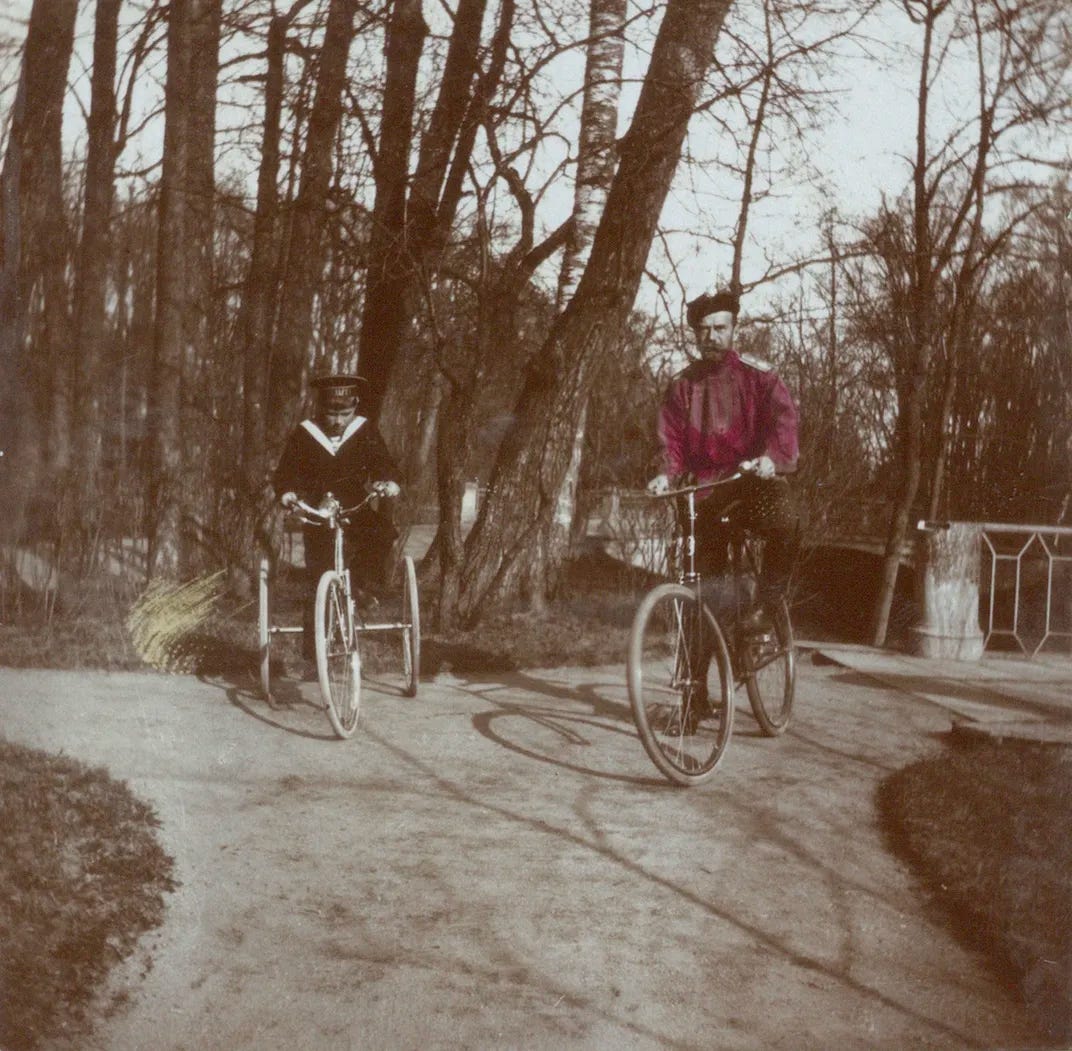
Thousands of intimate photos show the private everyday life of the Romanav family at the turn of the 20th century.
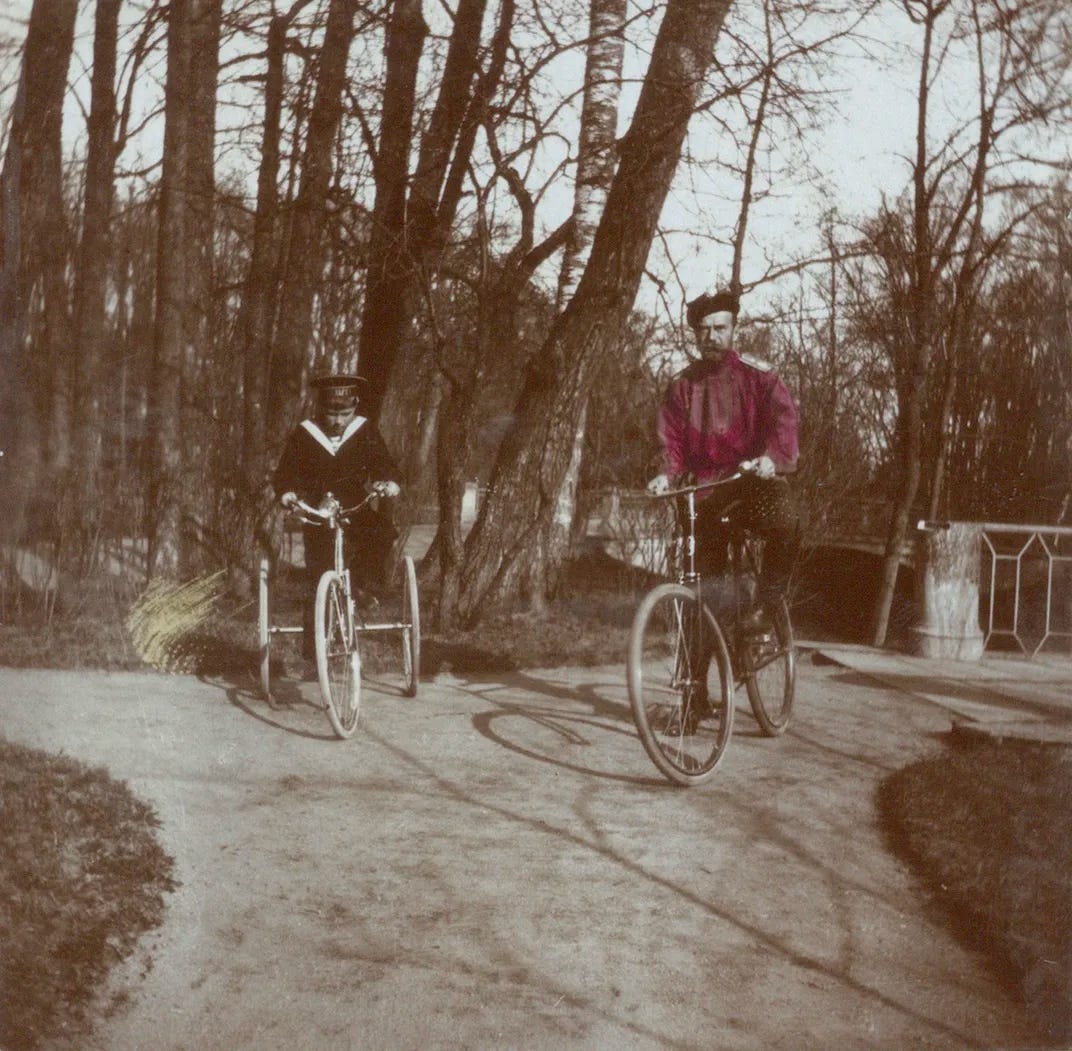
A hand-colorized photo of Prince Alexei and Emperor Nicholas Romanov riding bikes in 1913. Source: Wikimedia Commons. Once upon a time, England tested bombs in the Australian outback. Today, Australia is having to reckon with that nuclear past.
1,000-year-old Scandinavian-style houses were just unearthed in Poland.
A rare Greek hippodrome and seaside theater were just found in Libya.
The long history of people desperately trying to get better sleep.
The last battle of the American Revolution was fought in… India?
A gorgeous two-color marble statue still seems to dance 1,800 years later.
Why don’t we learn from our mistakes? A 12,000-year-old sealed chamber is about to be opened, and I just feel like we’ve had enough of opening cursed objects over the last few years.
Comments
Nothing yet. Say the first thing.
Sign in to join the conversation.