
I picked up Talking Classics with a small bit of reluctance—as I mentioned last summer, there were parts of Mary Beard’s runaway hit SPQR that I didn’t love. I don’t think there was anything wrong with that book, it’s just that my sense of humor didn’t gel with hers in places. Perhaps I was too harsh on it then; that’s the risk of writing a review in the immediate aftermath of reading.
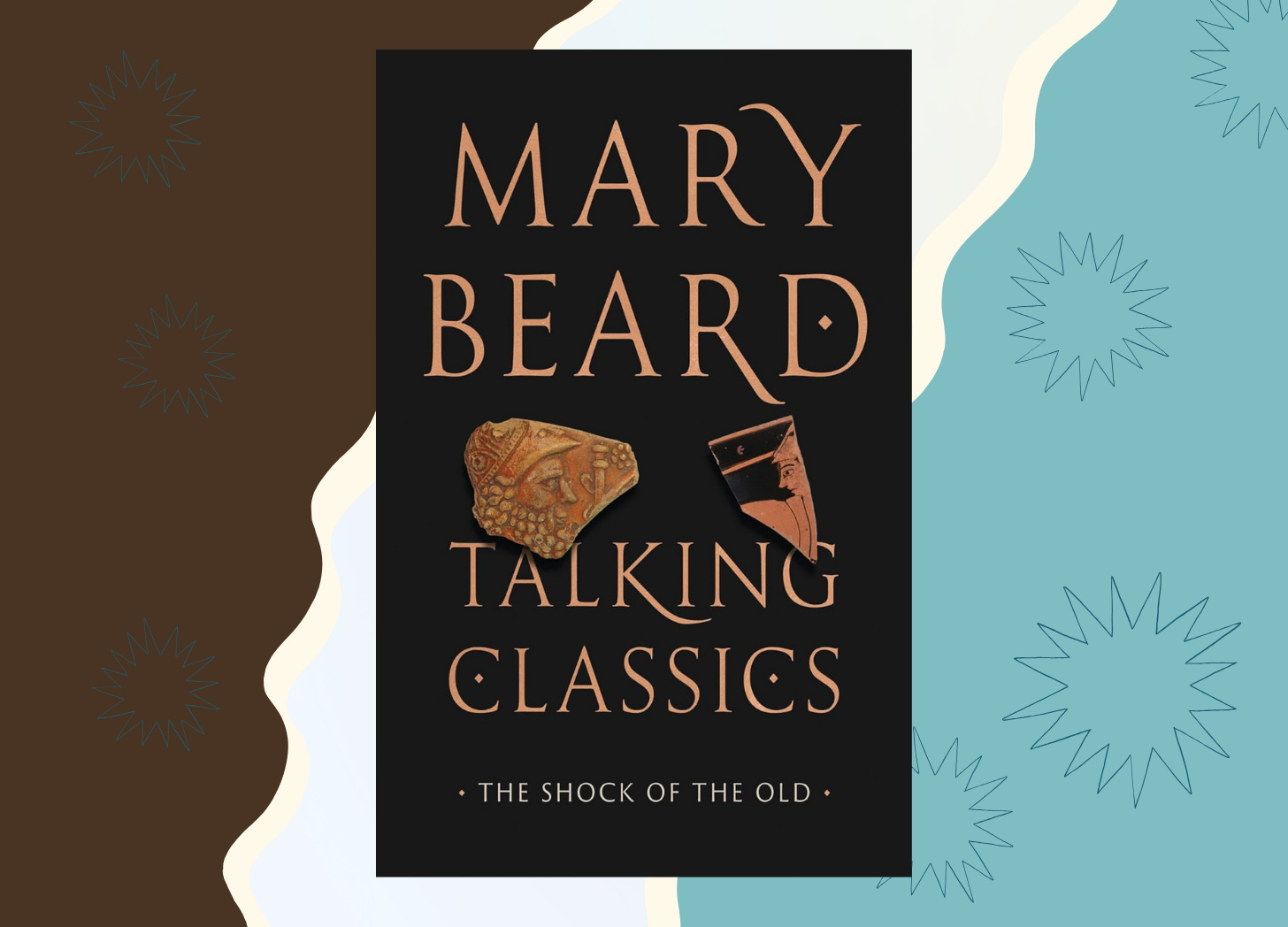
In any case, when I saw that Beard’s new book was more about her own experience of loving and teaching about the Classical period, I was intrigued. Clocking in under 200 pages, it’s a slim text that takes us from her first significant encounter with history as a child—a piece of petrified bread at the British Museum—through the questions she tried to address with her students when she taught at Cambridge. Adapted from a series of lectures she gave, her experience as a teacher is very much alive here. Never didactic, Beard gives readers the facts and lets us make our way to conclusions, gently shepherding us along.
One of the parts I found most interesting is her discussion of whether people from the past are “just like us.” She examines a mural from Pompeii, one found in a bar that features slangy speech of customers behaving in (historians think) everyday ways. She draws the illusion for us that these customers are just like modern bar customers—they flirted, they ate, they fought, they got kicked out. People never change!
But then she dives deeper—what were the codes of behavior of this bar? Were women allowed in? How did one order, and what were the customary ways to pay? Given a time machine or a Time Lord (or both), could we go back and actually “fit in”? Or would their customs be unrecognizable to us, even incomprehensible?

Another section takes us through the famous sculpture, Aphrodite of Knidos. Anyone alive today who has entered an art museum with classical art has seen a hundred nude Aphrodites in various poses—for us, any titillation once felt by her nudity has been erased by the sheer boredom of repetition. But Beard takes us through how shocking this sculpture was during its time. Until that moment, art portrayed women clothed. Why did it change? Carved in the 4th century BCE, did this sculpture constitute sacrilege as well as force viewers to participate in an ancient male predatory gaze? Or is that to put a modern lens—”male gaze”—onto something so fundamentally different from us that our values can’t hold water?
These are the kinds of questions I love. The subtitle for Talking Classics is “the shock of the old,” and Beard certainly gives us that. She rescues much of the Classical era from the sense of being dusty, foreign, or pointless. This book not only shows us why she loves the classics but also how they matter today—not just why. She invites us to consider carefully how past generations from the Victorians through the dictator Mussolini embraced Classicism, and whether statuary and columns are irredeemably tainted by their love for it.
If you’re having a Classics summer—and I seem to be; I’m simultaneously reading The Odyssey for the first time since high school—then Mary Beard’s newest consideration of the old is a necessary addition to your bedside pile.
Comments
Nothing yet. Say the first thing.
Sign in to join the conversation.