
In the spring of 2024, Dr. Martha Weiss checked her mailbox at Georgetown University and found a large envelope postmarked from Japan.1 Inside was a handwritten letter. Here is what it said:
To Martha Weiss,
Hello, nice to meet you! My name is Jo Nagai. I’m from Japan. I live in Kobe, Japan. I’m in the second grade at Ibuki Elementary school. When I found your research on the internet, I was so delighted!!
Weiss is an entomologist. Her most famous study, coauthored with Doug Blackiston and Elena Casey, showed that moths keep memories they form as caterpillars. This was remarkable, considering that when caterpillars wriggle into their chrysalis and metamorphose, their brain dissolves into goo.
The paper inspires most of Weiss’ fan mail; on this count, Nagai’s letter was no exception. But he wasn’t writing as a fan. Instead, he wanted scientific advice. He was also an entomologist, and he was going to replicate her experiment with butterflies. As he wrote:
I’ve studied swallowtail butterflies for three years . . . I’ve always thought that my butterflies could remember me, even after their metamorphosis, because they always flutter around me when I try to let them go into nature. Sadly, some say that’s impossible and ridiculous.
I have some questions to you. Have you ever experimented with swallowtail butterflies? I want to try to find if a swallowtail butterfly could remember what it learned as a caterpillar.
Weiss was delighted by Nagai’s proposal. In her reply, she encouraged him to continue his research and promised to advise him however she could.
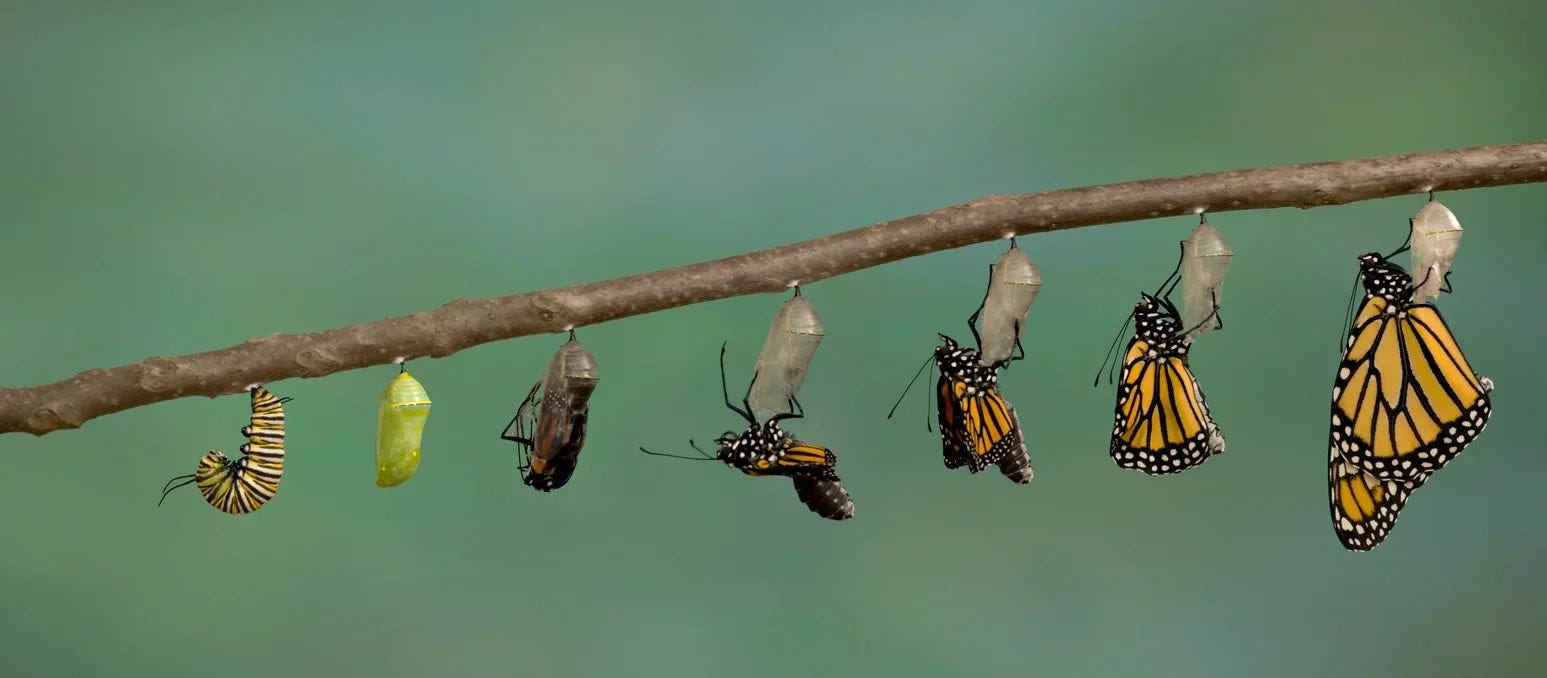
Of course, she did not expect him to actually carry out the PhD-level experiment he was proposing. To test the persistence of memory in moths, she and Blackiston had trained caterpillars to associate the scent of ethyl acetate with electric shocks, then examined whether they were still afraid of the chemical after metamorphosis. Weiss suggested Nagai test whether his butterflies could remember colors instead.
Nagai’s response arrived a couple weeks later — he thanked Weiss for her time and insisted that he would replicate her experiment properly.
They corresponded for the rest of the summer. Near the end, Nagai sent her a 33-page manuscript documenting his results. He had used lavender oil instead of ethyl acetate, and he had adapted a muscle therapy device to provide electric shocks. His results showed that butterflies, like moths, kept the memories they form as caterpillars.
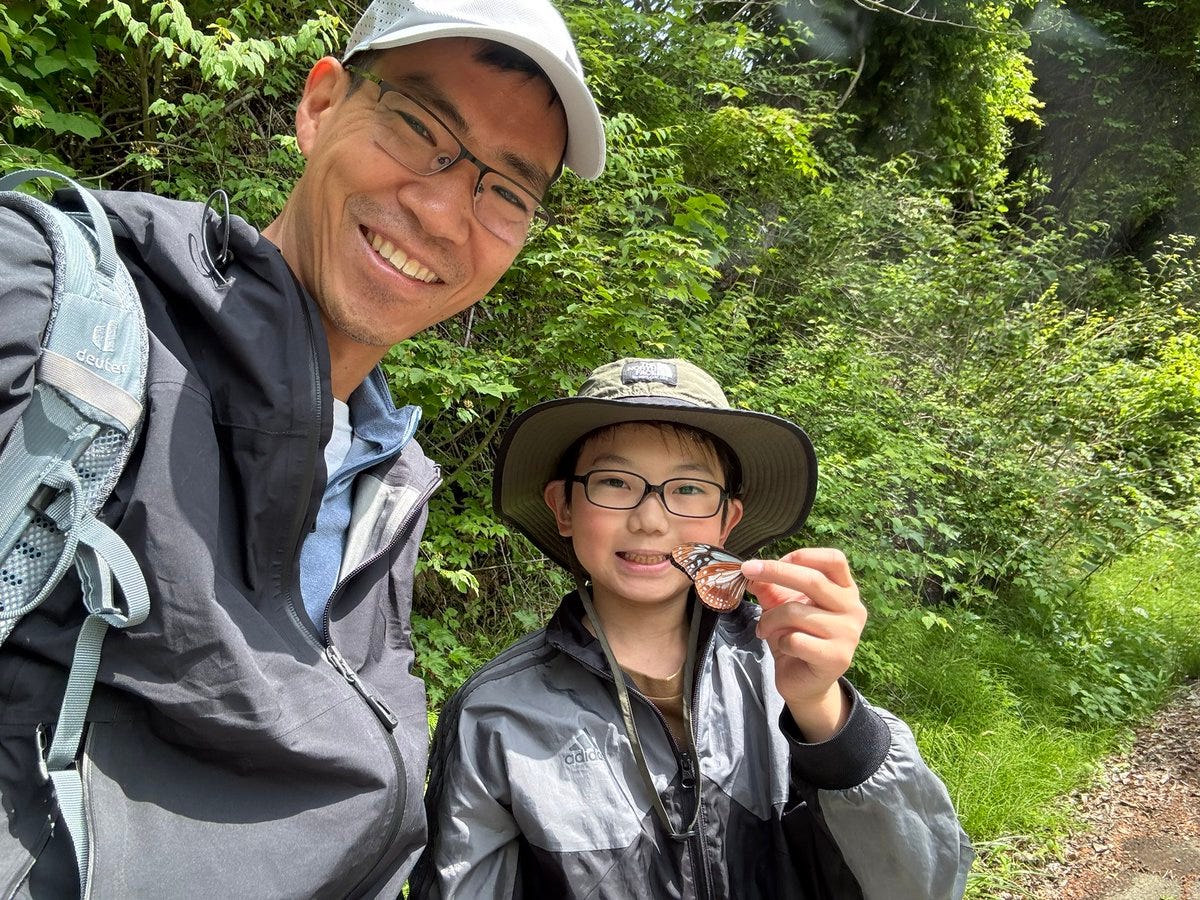
There is a long history of children contributing to mathematics and theoretical physics: my favorite is Évariste Galois, who laid the foundations for group theory at 17 and then died in a duel at 20. But off the top of my head, I can’t think of a single child or teenager — with the exception of Nagai — who has advanced our understanding of biology, psychology, or any other empirical science.
Why not?
One common explanation is that children are underdeveloped in ways that make them bad at empirical sciences. Maybe their executive function isn’t powerful enough to plan out long-term projects. Maybe they’re not good at synthesizing lots of information. Maybe they lack the metacognitive awareness to realize when their reasoning is flawed.
I’m open to this account of why children don’t write great novels. But I don’t think it’s a good account of why they never publish biology papers in Nature. Those same cognitive limitations seem like they would make mathematics difficult too. And yet, every couple of months, Quanta publishes an article documenting some teenage mathematical breakthrough that makes me want to throw my brain in the garbage disposal.
A better argument is that in mathematics and some branches of physics, it is easy to identify a problem, work on it, and know if you’ve found the answer. This doesn’t mean “easy” in the sense of “anyone can do it” — rather, it means that problems are clearly stated and widely identified, and there are procedures in place that can tell you definitively whether you’ve solved them.
Take Daniel Larsen: he is one of the aforementioned prodigies described by Quanta. In his senior year of high school, Larsen published a proof resolving a decades-old conjecture about a rare class of numbers.
So, good for Larsen. But note two things. First, he did not invent the problem he solved. Like most open problems in mathematics, it had been sitting there for decades, clearly stated, waiting for someone clever enough to crack it. Second, his solution required no experiments to verify that it was correct, because a mathematical proof is inherently either right or wrong.
In this sense, mathematics is “well-structured”: it is clear where you should start, what kinds of rules to follow, and whether your ideas are correct. According to some popular arguments, well-structured fields are perfect for young prodigies, because the only barrier to entry is raw ability. The rules of the domain are clear enough that a child can simply absorb them and get to work.
Fields like biology are instead arguably “ill-structured.” There are open problems, but you can’t actually work on them without figuring out a more specific and actionable version. Maybe you want to solve the origin of viruses — but “the origin of viruses” is something you figure out over the course of an entire research program, not a few months of desk work.
Nor do your experiments, however elegant they are, always tell you whether you’ve actually answered a question. The accuracy of a mathematical proof is not debatable. But as anyone working in the life sciences will tell you — and especially, shudders, in the social sciences — researchers can and do argue about how to interpret empirical results until the coffin door finally shuts them up. So if you want your results to be taken seriously, you need to build rigorous procedures and analyze your data like someone tall enough to look through a microscope.
I think this is a neat explanation of why we don’t have empirical prodigies. I also think it is probably wrong.
As framed, asking and answering questions in an ill-structured field seems like a skill you need to build over time. On this account, doing great biology is like writing novels — kids can’t do it well, because they haven’t built the relevant muscles.
If this is true, however, then we should also be able to imagine the following scenario. Jo Nagai — still ten years old — receives a position at Georgetown University as an independent researcher. He is free to work on whatever he wants; the university gives him some money; and he can collaborate with more experienced scientists and technicians on campus. Basically, he’s a pretty well-off PhD candidate. But even with these resources, his research fails, because children can’t perform well in ill-structured fields.
Would you bet against Nagai? I wouldn’t, and not just because he did great work without any of the above. Rather, I think the parts of empirical sciences that close them off to child prodigies — namely, the fuzziness of questions and answers — are not actually hard for young brains to handle. The barriers are not cognitive limits: they are resource limitations wearing a fake mustache and glasses. With money, facilities, and the right advice, ill-structured fields become structured just fine for the likes of children.
Obviously, empirical questions in these fields do not work as neatly as in math: empirical scientists can’t literally scan a list of actionable open puzzles and pick one. But I still doubt that it’s tough for a child to come up with a good project. Often, great researchers ask questions like little kids.
My favorite example of a scientist with this trait is Michael Levin. He’s a developmental biologist at Tufts University; many people think he’ll win the Nobel Prize someday.
Here are a few of the questions Levin has worked on over the years:
If you put eyes on the tail of a tadpole, can it see through them?
How does an embryo know which part of it will become the left side?
How sure are you that a classroom of second-graders, given the chance to watch a flatworm regenerate its tail, wouldn’t also ask whether you can make it grow another head? I’d bet on those kids coming up with the question over a bunch of grown-ups. If they did, it would be big news — having answered this puzzle, Levin may well end up with a free trip to Sweden.
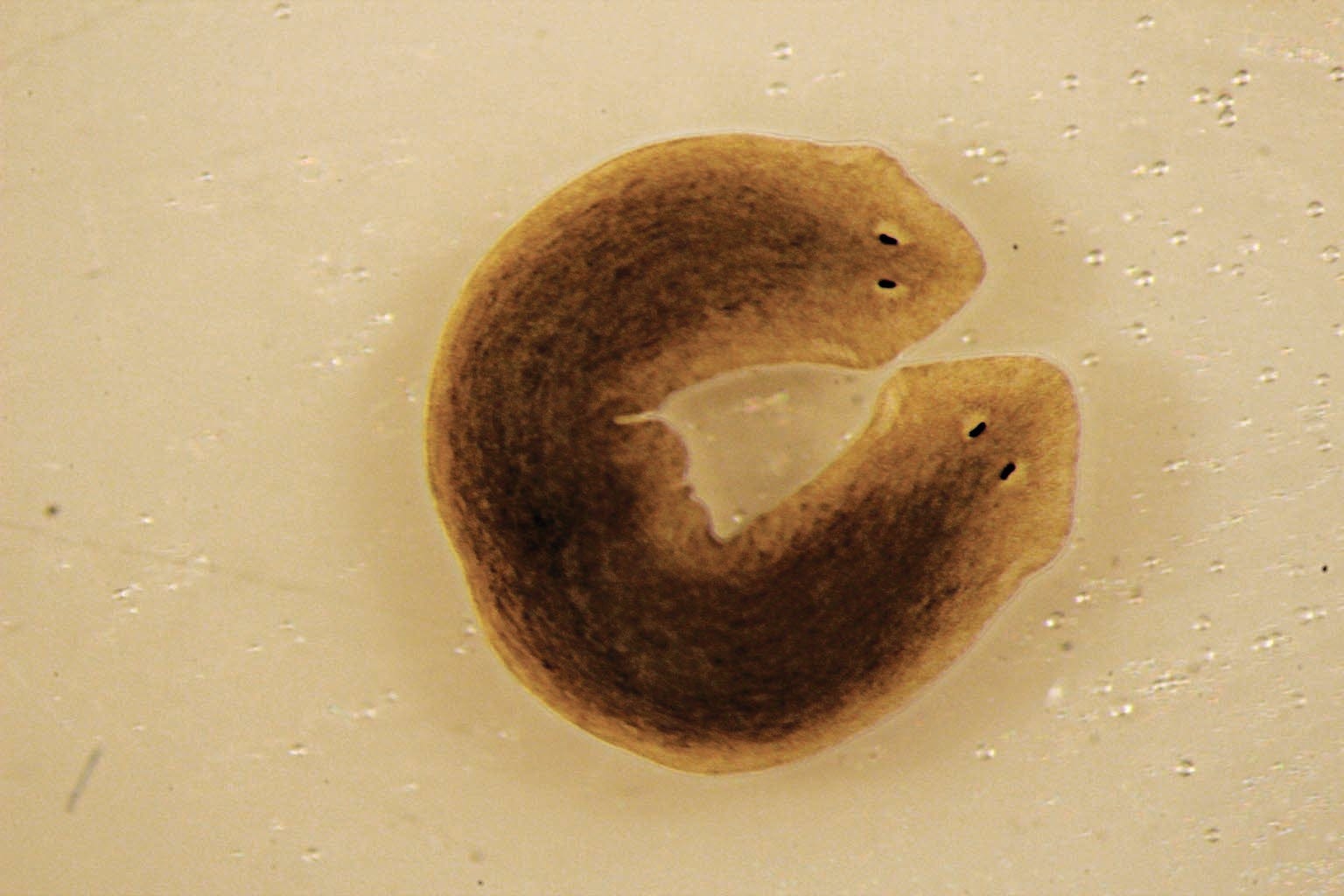
Thinking like a second-grader is the most underrated element of genius. Unfortunately, academic adulthood tends to stamp out these parts of your soul. A child-like brain can drag you to embarrassing places, and feeling embarrassed is scary; that’s probably why so few working scientists seem to maintain the spark. But those who keep that fire alive sometimes see the basic questions that people have been too scared or unimaginative to ask.
If adult scientists can succeed by thinking like second-graders, why not the second-graders themselves? In fact, extensive evidence from experimental psychology suggests that children might be even better than adults at solving problems that have weird answers.
Consider the blicket machine. Designed by the Berkeley psychologist Alison Gopnik and her colleagues, the machine lights up and plays music when clay shapes called “blickets” are placed on top of it. In one seminal experiment, Gopnik’s lab asked preschoolers and college students to figure out which arrangement of blickets would turn on the eponymous machine.
You might assume that college students would trounce preschoolers in any problem-solving task. And sometimes they did: if activating the machine required a specific blicket, the college students were better at finding the right one. But if activating the machine required a strange combination of blickets, the preschoolers trounced their wizened peers. The kids were better at coming up with unusual ideas.
Ten years later, the data supporting that thesis extends across dozens of studies. Not that this is surprising if you’ve spent much time around children.
What happens if you’re willing to entertain ideas that other people don’t even imagine in the first place? In science, something like Jo Nagai’s subsequent study — after proving that caterpillars keep their memories through metamorphosis, he wrote to Weiss and told her that he wanted to see if they would pass those memories onto their offspring. Weiss said she had never even considered that possibility.
Nagai ran the study. He was right: the offspring of his caterpillars displayed the same learned behaviors as their parents.
So, fine — children can come up with good empirical ideas. But can they answer them without supervision? For some ill-structured fields, the idea is arguably less important than the execution. Everyone has a great idea for a movie. That doesn’t make them Steven Spielberg.
In the empirical sciences, though, I don’t think it matters whether kids can design, run, and analyze the experiments entirely on their own. In my department, many graduate students (and even some professors) don’t know how to do advanced statistics. That’s fine, because we have a department statistician — he’ll meet you anywhere on campus and help you figure out how to process your data. Recently, I wondered if a bacterium could learn Pavlovian associations. I don’t know any of the techniques needed to figure that out. So I emailed an expert, and he’s helping me do the experiment. Science, like all human enterprise, relies on a division of labor.
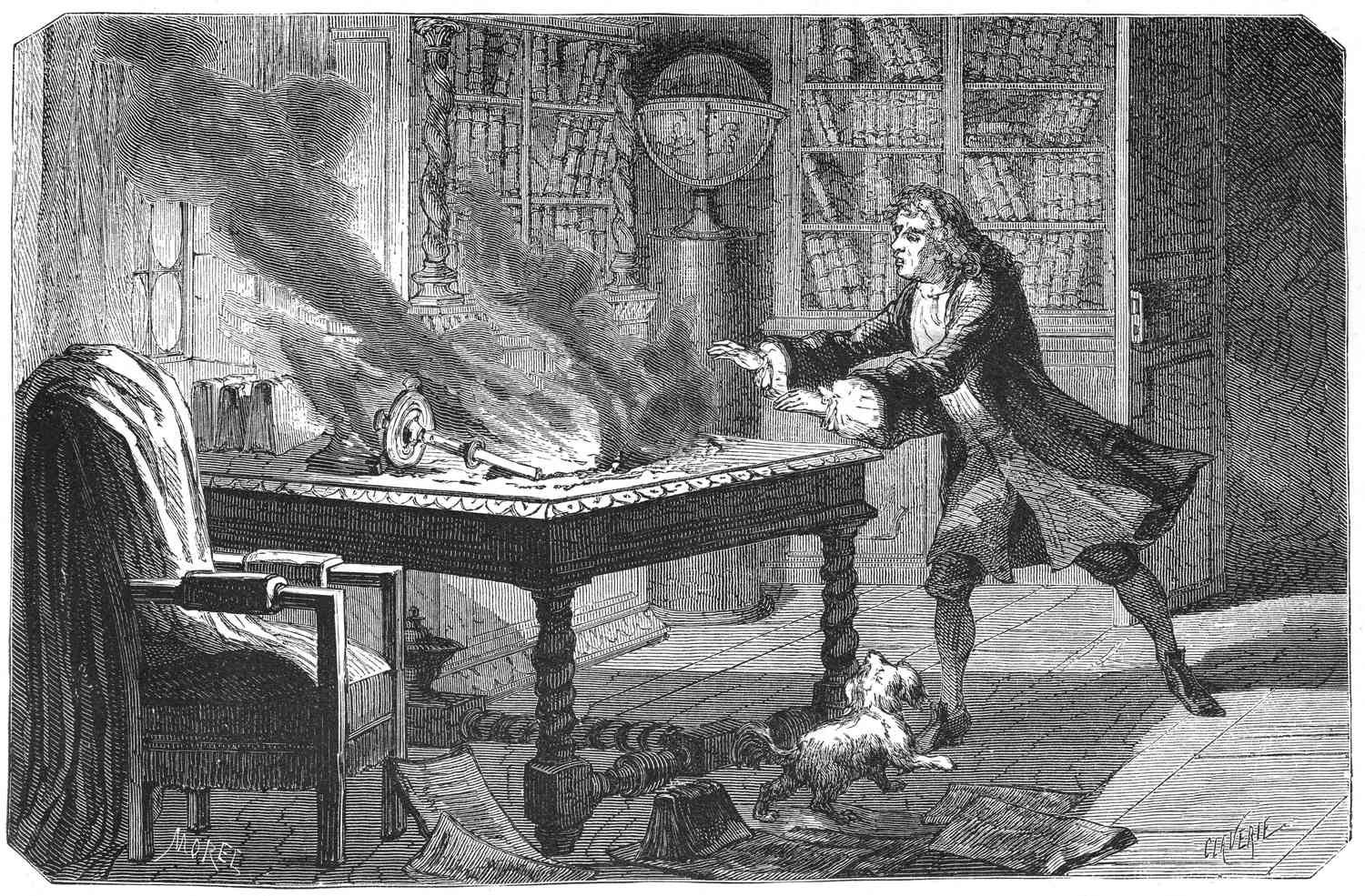
If you have to call upon those divisions, are you incapable of doing good science? Obviously, no. My brother runs a very successful company. He doesn’t personally know how to manufacture their products — that job falls to the people who run his factories — but no one would say that his lack of methodological knowledge means he can’t build a business.
If you’re agentic and can find the right people, methods are cheap. Ideas are the important part.
But if ideas are the important part, and children are great at coming up with ideas, the question remains: why aren’t there more kids like Nagai?
Because methods are cheap, but not free. If you’re ten, and you want to run a study, you need some or all of the following: money to buy equipment, advice from adults who can advise you on experimental design, access to papers locked behind paywalls, analytical support so you can actually do something with your results, and an avenue to release your work to the public.
A determined kid like Nagai can find their way around these institutional and financial obstacles. But it certainly takes a level of agency, discipline, and probably parental support that not all children possess. This is an unnecessary waste of interesting questions — the empirical sciences are in fact ill-structured for kids, but their ills seem pretty arbitrary. We could certainly use more weird ideas. How many Nagais have we already missed?
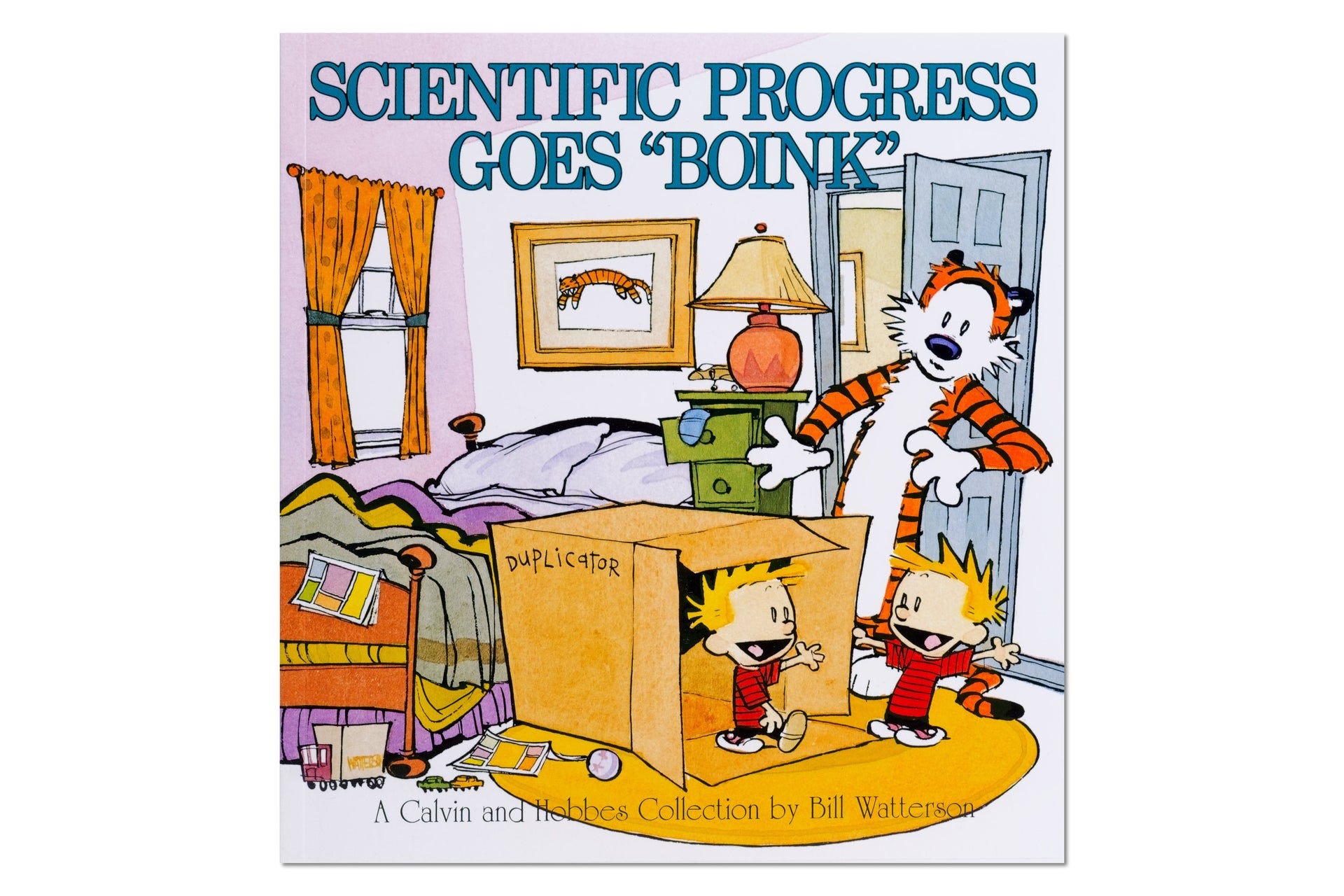
In a perfect world, we would set up a governmental fund to support the good works of the youth. You may have noticed that we don't live there. Even in our imperfect world, though, there are solutions. Programs like Emergent Ventures and 1517 Fund already offer microgrants and connections to individuals — including children — working on radical projects. The managers of these programs want young people to apply. In an interview last year, Danielle Strachman, the founder of 1517 Fund, said: “I want to be funding 11-year-olds. Because some of them are going to be ready.”
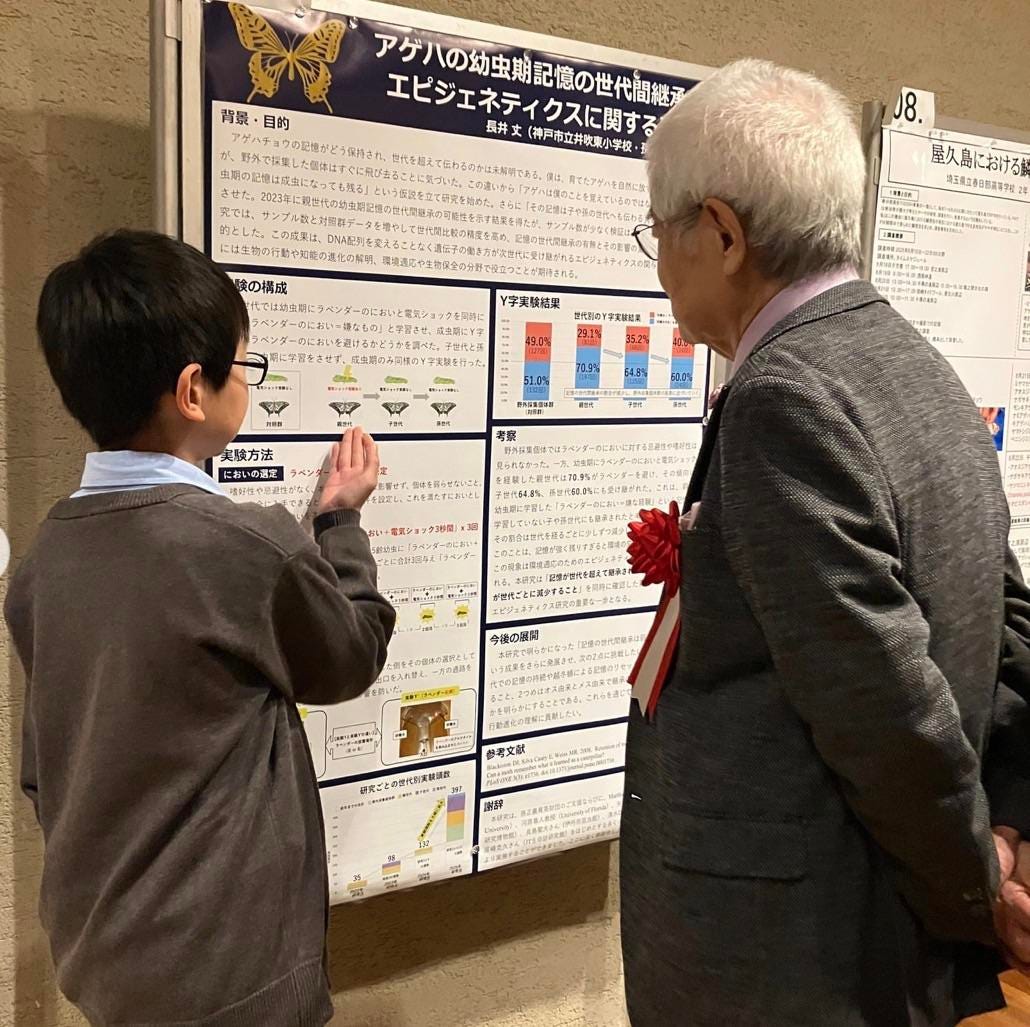
Still, these programs are small, hard to find, and there are not nearly enough of them to go around. So we should make more, far more, and advertise them outside the standard coastal circles. If we can specify them to young scientists, all the better — I’d love to see a microgrant that gives kids a stipend to run an experiment, then pairs them with a trained scientist who can help them carry it out.
For every Jo Nagai, there are ten thousand kids who can’t finagle their way into the good graces of Georgetown. We can fix that: the barrier between a complete scientific project and zilch is often small. With a few hundred dollars, you can buy twenty butterflies and a prodigy.
This description is directly adapted from a wonderful podcast episode published by Signal Hill and reposted by Radio Lab. It was produced by Weiss’ daughter, and it tells the full story of Weiss and Nagai. I highly recommend it!
No posts
Comments
Nothing yet. Say the first thing.
Sign in to join the conversation.