
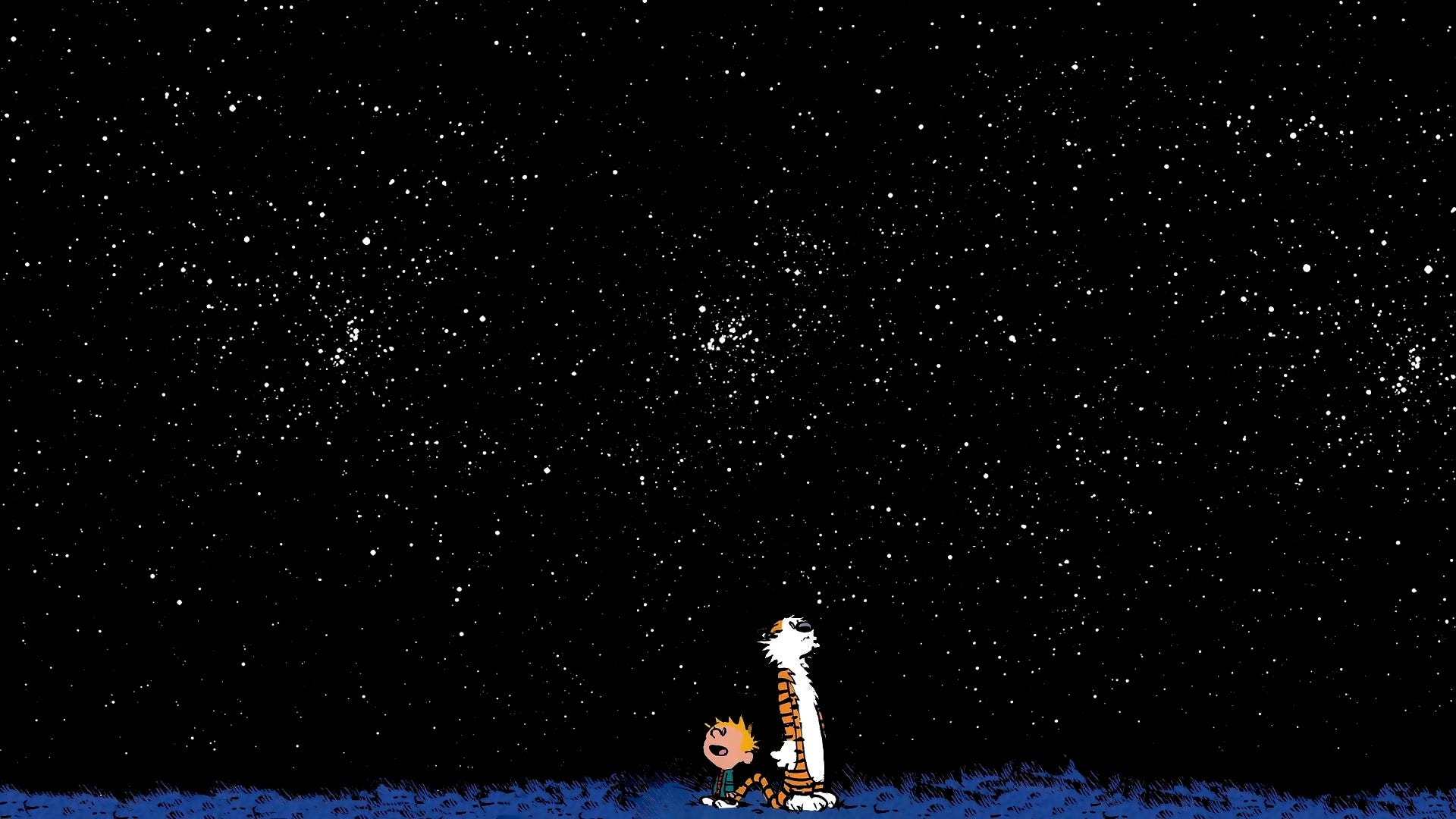
For a long time, I went to bed and imagined falling into a black hole.
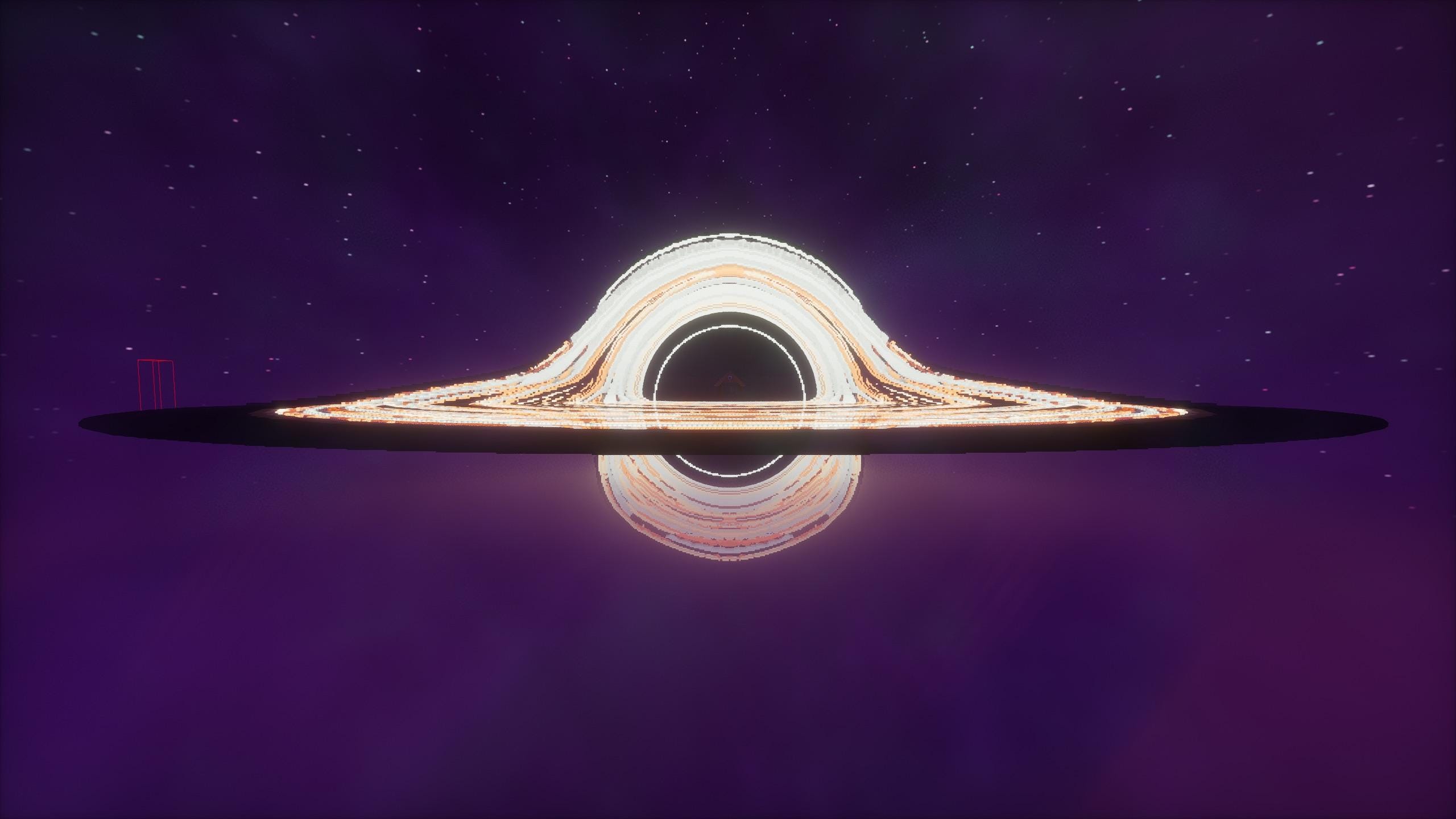
I was young. My parents had bought me a thick blue book called something like 1001 Facts About Space. One page explained that inside every black hole, as matter spiraled past the fluttering edges of rent time and space, there was a boundary called the event horizon. At that point, the force of gravity became so strong that nothing, not even light, could escape its grasp.
We don’t know what lies beyond the event horizon. We can’t know, unless we travel into a black hole ourselves — and even then, we wouldn’t be able to tell the people we left behind what we saw. Observers on the outside of the event horizon cannot receive signals from the other side.
I liked the other thousand facts, but I didn’t like the uncertainty of this one. Surely, matter couldn’t just fall, forever, into nowhere. At night, I would close my eyes and slip into the abyss; I would turn around to face the vanishing universe and watch the stars blur into a bright blue eye. And then it was dark, which didn’t make sense at all. Beyond the event horizon, there must be somewhere to go.
So I solved the puzzle. I drew a red crayon diagram of a man falling into a black hole, crossing the event horizon, and emerging into another place. I don’t remember what I thought this other place was: a different location in spacetime on the other side of a wormhole, the same black hole that the man had entered in the first place, or a new universe entirely. But I do remember showing the diagram to my barber, with whom I was very much in love, and feeling my heart race when she told my mom that I was a little Einstein.
My parents helped me mail the diagram to NASA. They never responded — for a few years, I would periodically check their website for news about black holes, certain that they had stolen my theory and would soon pass it off as their own.
Of course, to think that you can do what a century’s worth of astrophysicists could not, you must be wonderfully arrogant. Which I was; most children are, and this naiveté is probably the most important feature of their genius, the reason that they are at times capable of intellectual insights beyond the reach of adults.
By middle school, however, my baseline pretension had ballooned into a seething tower of hubris, expanded and sustained by the adult praise and dominant early grades that cripple many a gifted child.
At some point, I did poorly on a few math tests. I decided I was not a genius. So I stopped thinking about space. There were girls to impress and friendships to maintain; the stars were not meant for puny minds like mine.
Sometimes I feel like my entire life has been spent trying to turn back into the seven-year-old who thought he could tell NASA the truth.
Which is, in part, why I have lately found myself fascinated by Julian Gough, a writer-turned-cosmologist hailing from England and Ireland. Some of you may know Julian’s Substack, THE EGG AND THE ROCK: there, he writes about his theory of why the universe works the way it does, as well as the empirical predictions that follow from the theory. Others will know him, indirectly, through his “End Poem,” the verse dialogue that plays at the end of Minecraft. It is probably the most-read poem of all time.
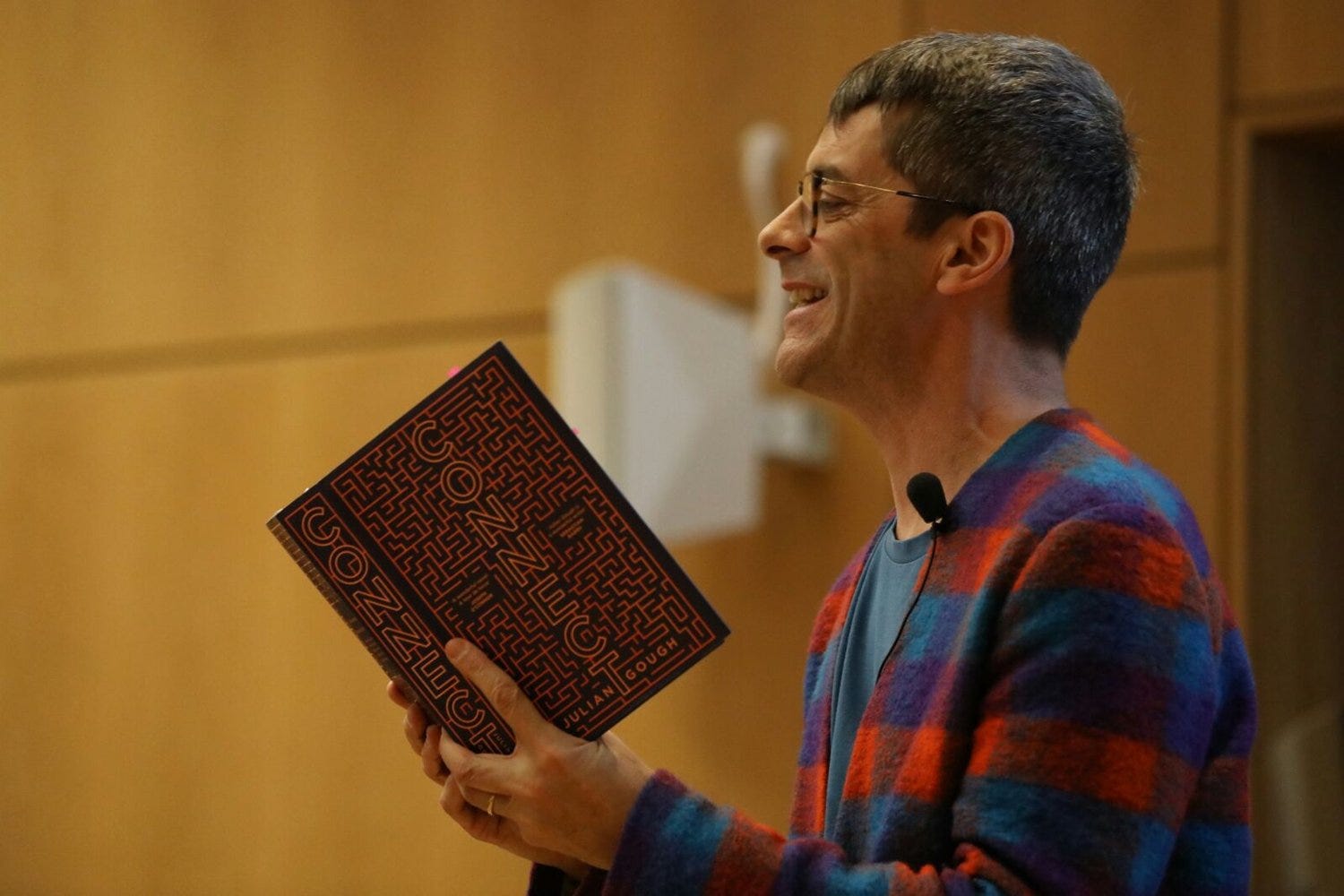
I spent this summer writing for Smithsonian magazine. I am proud of everything I published, but even before starting at the outlet, I knew I wanted to write an article that would encourage more people to pay attention to Julian. That article is out today. In it, I wanted to get readers thinking not just about his theory— though that’s the crux — but Julian himself, as a thinker. Unlike most working scientists, Julian has preserved the spirit of a child falling into black holes in his dreams. More people should live and think like him.
Julian has no academic credentials. Prior to his cosmological research, he was a novelist, poet, musician, and children’s book author.
But about a decade ago, he became obsessed with the striking fact that our universe is becoming more complex over time. Everything started as a ball of hot gas. The hot gas built out stars and galaxies, which in turn generated the planets and heavy elements necessary to sustain life, including life that is smart enough to figure out that everything started as a ball of hot gas. As Julian put it in one of our interviews: “That’s a very strange thing for hot gas to do.”
The laws of physics also seem weirdly hospitable to complexity: for instance, if certain physical constants changed even slightly, atoms wouldn’t be able to form molecules. Cosmologists generally treat this as the product of chance.
But Gough wondered whether it might instead be the product of evolution—when we observe complexity elsewhere in nature, evolution is usually the explanation. As Julian put it: “Why wouldn’t ‘evolution’ apply to universes when it applies to everything else?” He theorizes that the universe is complexifying because, like any naturally selected entity, it evolved to develop into a form that would maximize its reproductive potential.
Yes, this implies that universes can make babies. But Julian was actually not the first person to suspect that this was possible. John Wheeler and Bryce DeWitt hypothesized that the singularities within black holes — the hypothetical place where matter is crushed into a point of infinite density — unfold into Big Bangs, which also begin with singularities. It’s quite intuitive: after all, black holes are the only objects we know of that make singularities, and universes are the only objects we know of that seem to emerge from them.
Later, Lee Smolin made the obvious leap — if Wheeler and DeWitt were right, then universes could undergo a kind of natural selection. Specifically, they would optimize over time to make as many black holes as possible, just as bacteria and rabbits and people have been optimized to make as many babies as possible.
Early universes would not have been very fertile, because their physics would not yet have been fine-tuned. But so long as they could make a couple of black holes that would create baby universes with slightly different physics, natural selection would kick in. As the generations ticked by, universes would rush toward virility, and eventually reach a near-optimal point.
What might that near-optimal point look like? Presumably, something like our universe, which is estimated to contain 40 quintillion black holes. If Wheeler, DeWitt, and Smolin are right, we must lie pretty far down the evolutionary line.
The implications of so-called ‘cosmological evolution’ get even weirder. The complexification of the universe eventually settles on life. Why? Perhaps, as various futurists and philosophers have suggested, because life needs energy to survive, and certain life-forms — like humans — are smart enough to find more and more efficient ways to acquire it. The most efficient way of all is not coal, oil, solar energy, or even nuclear reactors. It is an artificial black hole.
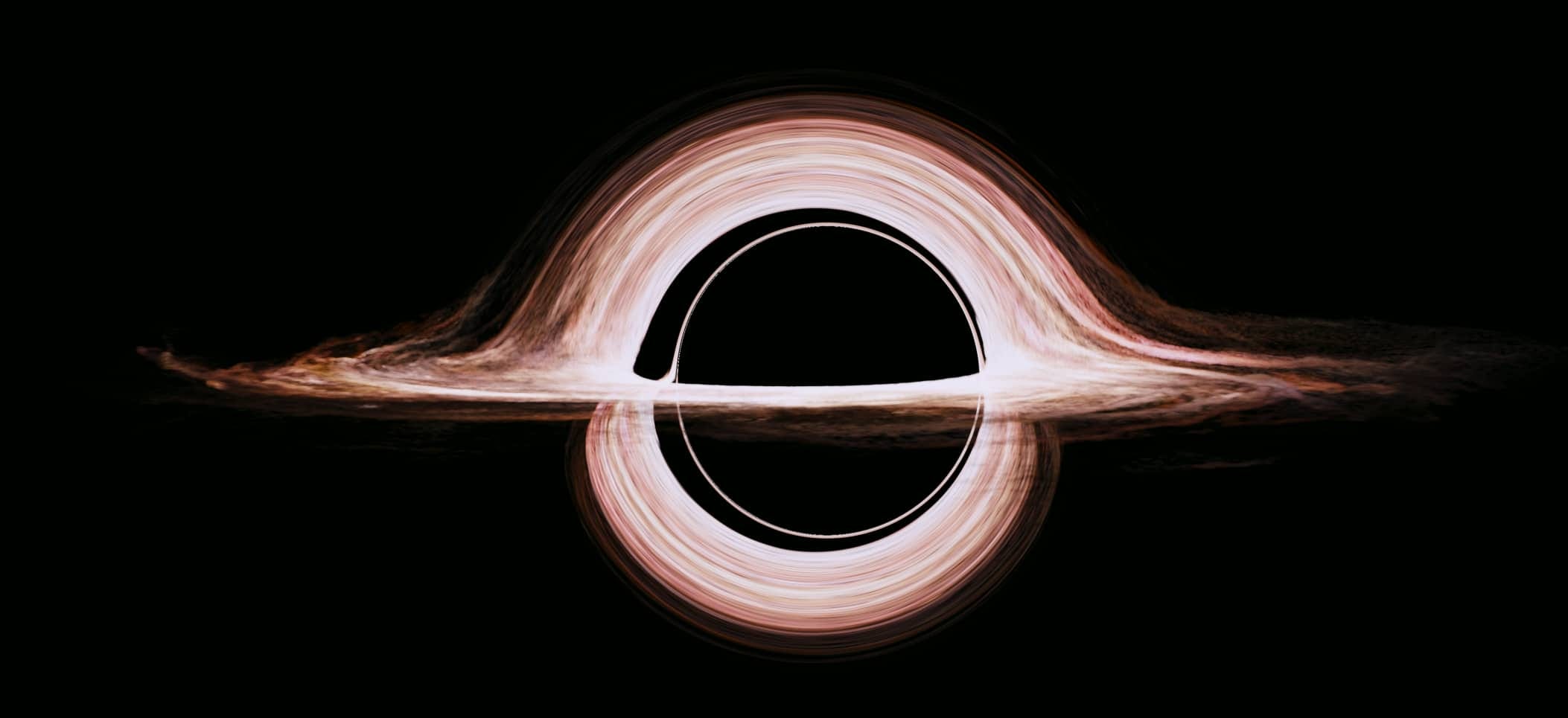
So if intelligent life can climb the energetic chain and not destroy itself in the process — so far, so good — it’ll eventually become the ultimate reproductive organ for the universe. We will make black holes to fuel our civilization, and in doing so, we will make many babies for our universe.
None of these ideas originate with Gough. He knew his revelations were hand-me-downs. But he also noticed that cosmological evolution had basically vanished from mainstream science. No one was talking about Lee Smolin. The main problem, it seemed, was that the theory did not make easily testable predictions — and without the prospect of falsification, there is only so much you can do with a great scientific idea.
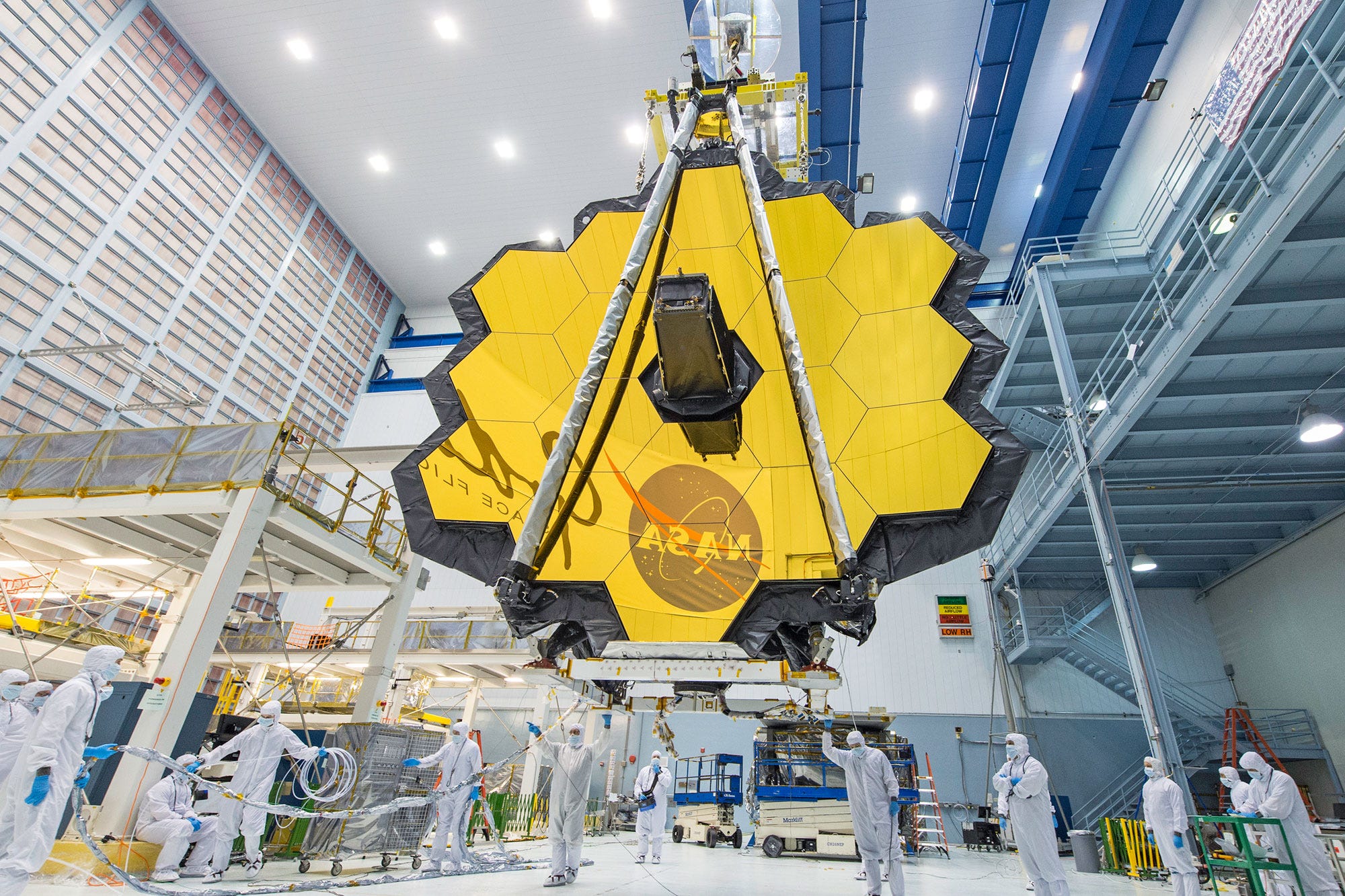
But Gough was thinking about these things three decades after Smolin: times had changed, and telescopes had gotten bigger. By 2022, the James Webb Space Telescope was preparing to send its first batch of data back to Earth. Unlike any telescope before it, Webb could see into the first billion years after the formation of the universe. If cosmological evolution made any predictions about what Webb should observe, falsification was back on the table. Gough’s first major contribution was to make that set of predictions.
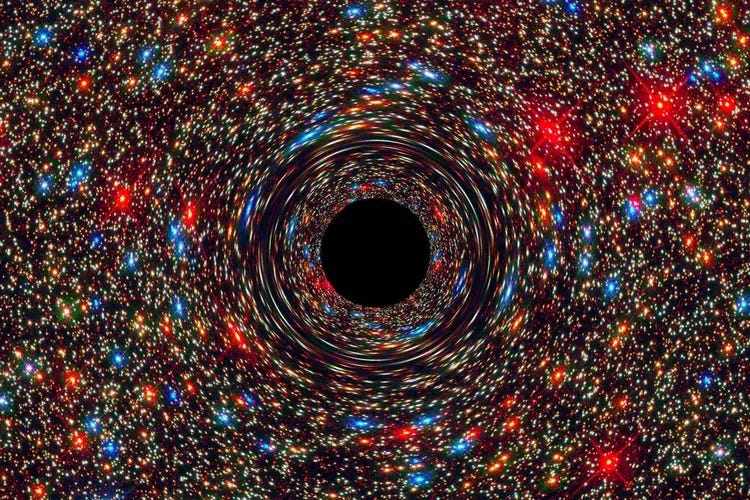
If universes evolved, Gough reasoned, their infancy might preserve the simpler reproductive mechanisms that their ancestors must have used. The form he settled on was direct collapse: the formation of supermassive black holes out of the uniform clouds of hot gas that dominated space just after the Big Bang.
Working cosmologists had already theorized that direct collapse was possible, albeit rare. Gough predicted that Webb would see it happening regularly and extremely early: giant black holes would form through direct collapse after only a couple hundred million years, and spiral galaxies would form around them.
None of these ideas required any grand leaps of genius: treat universes as evolved organisms, and these predictions all easily follow.
What they did require, however, was a grand leap of audacity. Gough had never published an academic paper. How humiliating for someone like him, a scientific nobody, to publish his predictions and end up entirely wrong. Novelist, poet, musician, crackpot — an unfortunate addition to his Wikipedia page.
Four days before JWST was scheduled to release its first batch of data, he wrote a post on Substack detailing his predictions. He was terrified. But he did it anyway.
As you probably guessed, this story has a happy ending — I wouldn’t have been able to write about it for Smithsonian if it didn’t.
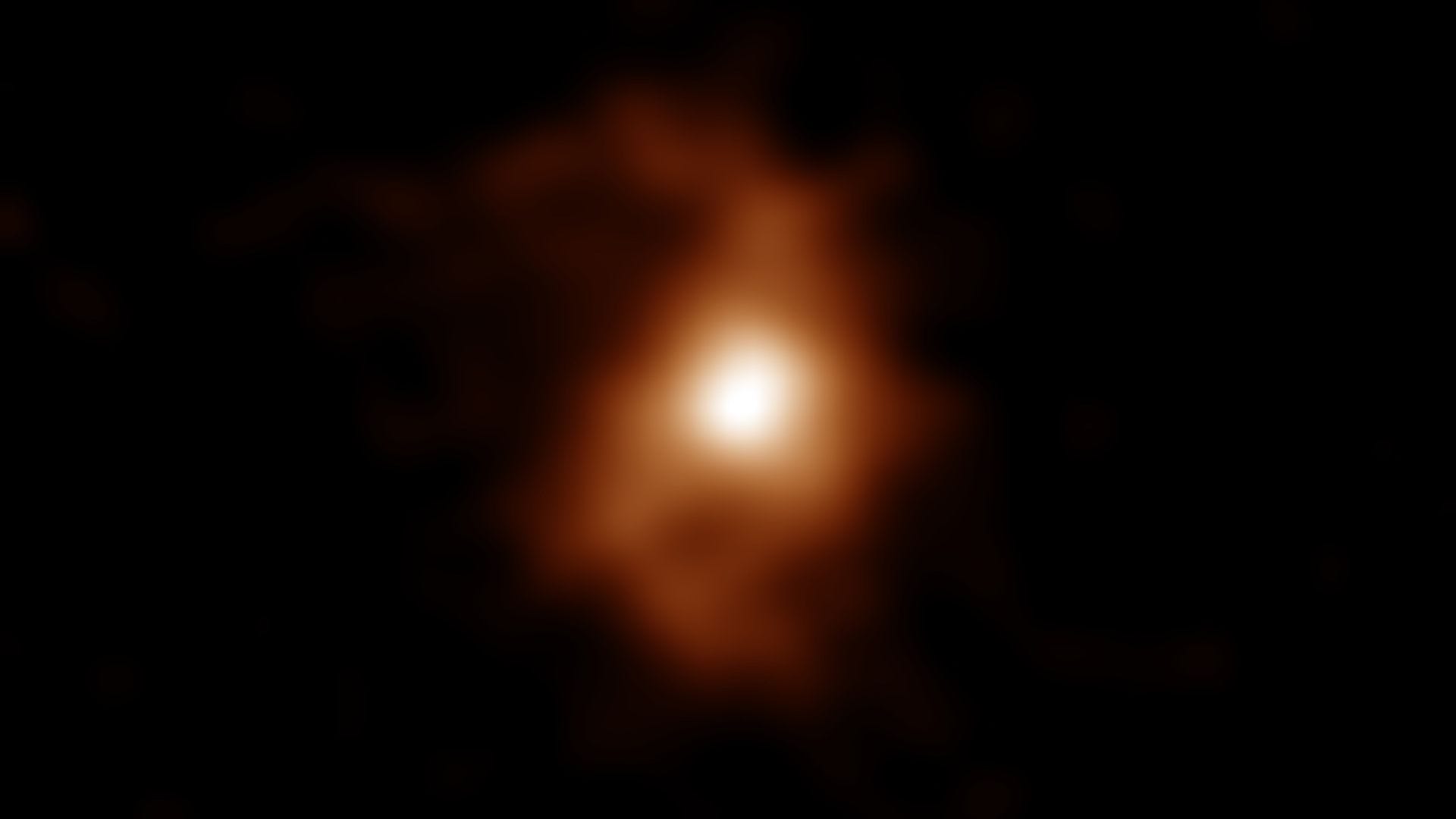
Gough’s predictions were right. Webb has found spiral galaxies forming around black holes in the first few hundred million years of the universe, including one that must have begun forming only one hundred million years after the Big Bang. In a 2025 paper published in the Astrophysical Journal, a group of scientists described these discoveries as a “conundrum [that is] part of the larger challenge to understand the stunning prevalence of massive structures and galaxies in the first few 100 million years after the Big Bang.”
Because of his public success, he has since received support from private grants like Emergent Ventures and O’Shaughnessy Ventures, and he has been endorsed by many renowned scientists. He has continued to develop his models of early universe formation, which I encourage you to read about in his words. I remain shocked that, so far, only one other mainstream outlet has written about his work.
I’m hoping that my article will encourage other institutions to take cosmological evolution seriously as the explanation for these discoveries, and in particular, other cosmologists. It is a beautiful idea. It accords with everything we know about nature. If it is true, it bears serious implications for the future of human (and alien) civilization, and maybe even the nature of morality.
But if Gough had been wrong, I still would’ve wanted to write this piece.
As I’ve discussed elsewhere, the essence of great science is contained in the curiosity, grandiosity, and naïveté that characterize the minds of children. Yet the academy crushes these qualities out of you: it rewards methods over ideas, discourages research that is important enough to potentially result in total failure, and coaxes you toward a kind of incrementalism that rapidly collapses into mere social games.
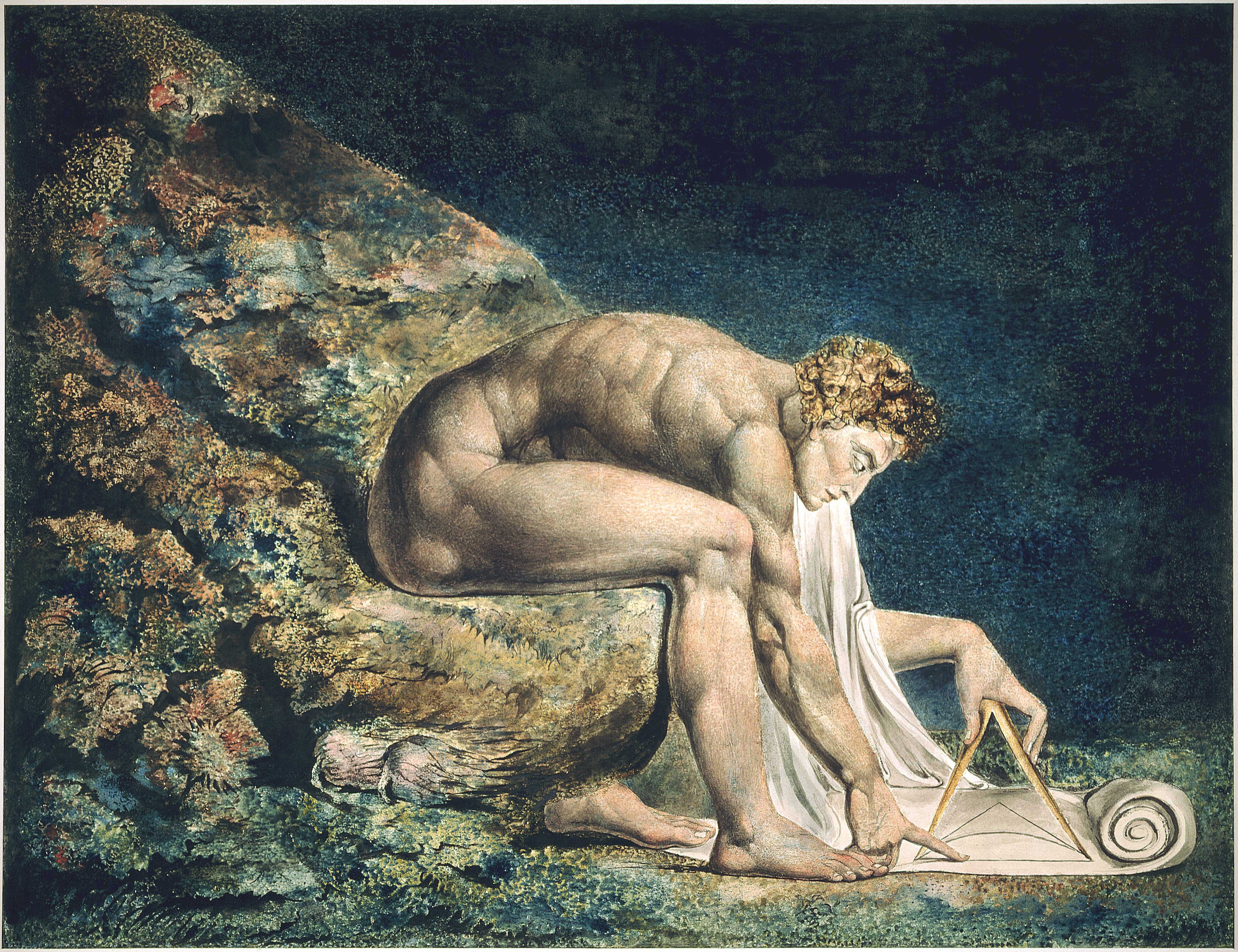
Gough is the antidote to this trend of cynical craftsmanship. He has protected the child-like spirit that all scientists—hell, all humans—should aspire to keep. If he was wrong, then fine. At least he would’ve been wrong about something worth being wrong about. I dream of a future science full of people like Gough, working rigorously to place themselves in positions that bear both the possibility of great insight and the risk of total embarrassment. Science is a strong link problem, and strong links are forged in the fires of likely humiliation.
Where will we find those willing to stick needles in their eyes, stare directly at the sun, give all of themselves to the chance of finding something true? Perhaps not in the academy, not anymore. But it is good to know that they still exist.
The personal irony — that despite abandoning my early love for astrophysics, I have now circled back to black holes — is not lost on me. They still capture my imagination; there is something about them, perhaps the scope or the circularity, that makes me think of the human self. I could probably end here with a quip about event horizons.
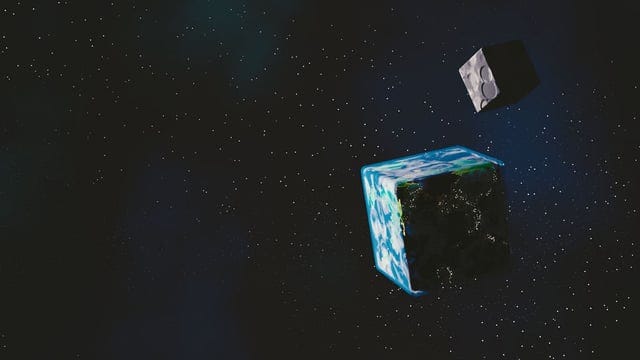
But I’d rather finish by talking about the End Poem. When I beat Minecraft for the first time, I was a teenager. I had stopped reading books and thinking about science. The End Poem, I remember well, was one of the first pieces of literature that made me feel a sense of the mystery again. “Respawn in the long dream,” Julian wrote. “Wake up.”
After one of our interviews, I had the opportunity to thank Julian for writing that poem. I also pointed out that it seems to converge on the same idea as his theory of the universe— we living things are the universe, unfolding itself into eternity. His son had wandered onto the screen; Julian was dressed in entirely neon green. He smiled and said that when he wrote the poem, he did, in fact, feel like something was speaking through him. “The universe talking to itself,” as he wrote in the poem. “Reading its own code.”
They say don’t meet your heroes. I say, pick better ones.
No posts
Comments
Nothing yet. Say the first thing.
Sign in to join the conversation.