
Quick Access
We have talked about access until we are blue in the face.
It’s a staple of our lives.
In Leaving Is Still Information and throughout Raising an Unmasked Child, I talk a lot about understanding what access looks like for your kid, and for you.
This is a quick, free tool that focuses on the in-between.
The moments when your kid doesn’t necessarily need to stay.
They don’t necessarily need to leave.
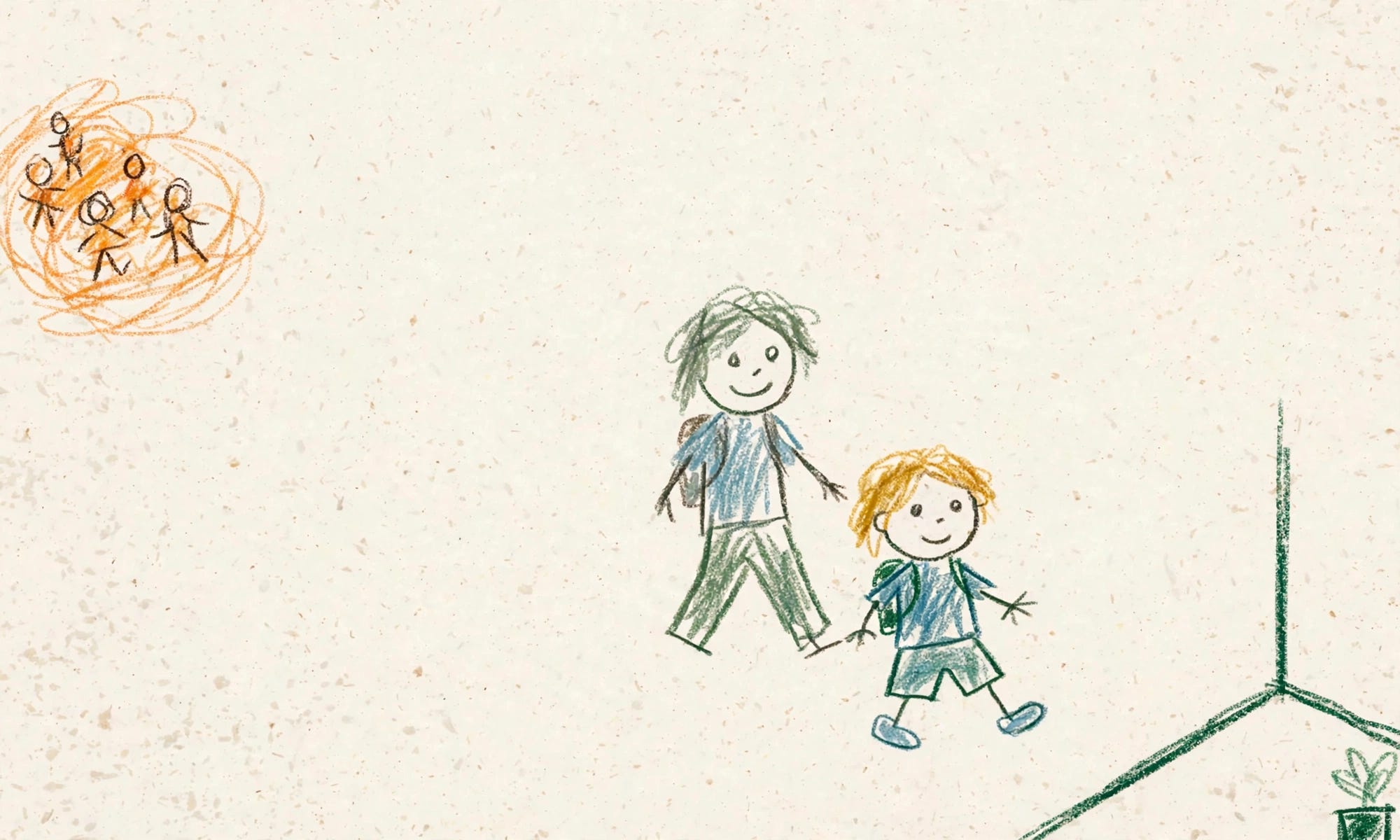
They need to step away.
Stepping away doesn’t mean we’re done.
It’s an essential part of navigating the world together as neurodivergent people.
Sometimes the social situation really matters to our kid. They want to participate. They’re upset because it’s difficult, and they’re feeling bad about it.
Sometimes we’re feeling bad too.
Stepping away is often exactly what allows our nervous systems to participate again.
This tool is about what comes next when your kid wants to stay, and can, with a little more support.
⸻
After You Decide to Step Away
You’ve already decided your kid needs to step away.
Now what?
Before moving, pause for just a moment.
Ask yourself:
□ What does my kid need most right now?
□ What will help them feel safer?
□ How can I reduce the load instead of adding more?
You don’t need perfect answers.
You only need enough information to choose the next support.
⸻
Stepping Away
Stepping away might mean:
□ going outside
□ finding a quieter corner
□ putting on headphones
□ sitting beside one safe person
□ watching instead of participating
□ getting a drink of water
□ moving your body
The way we step away matters too.
Your kid might need you to move quickly.
They might need you to slow down.
They might need silence.
They might simply need to know you’re coming with them.
Stepping away isn’t giving up.
It isn’t avoiding hard things.
It’s creating enough safety for a nervous system to regain access.
Some discomfort is part of life.
So is reducing the load when a nervous system can no longer carry it.
Sometimes stepping away is exactly what makes participation possible again.
Sometimes your kid is stepping away because they want to come back.
They want to be a part of things.
They aren’t trying to escape experiences.
They are trying to find ways to stay connected.
When we understand that, stepping away, leaving, or not going stops feeling like failure.
It becomes another way of supporting participation.
⸻
Recovery
We step away.
Then we immediately start asking questions.
We explain. We teach. We solve.
Recovery comes before reflection.
Recovery comes before problem-solving.
Recovery is part of participation.
You might notice you or your kid beginning to…
□ breathe more slowly
□ look around the room again
□ become curious
□ move with less tension
□ seek or accept connection
□ start talking again
Recovery isn’t wasted time.
Recovery is what makes learning possible.
⸻
Re-Entry
Once your kid has recovered enough to think again, the question changes.
Instead of asking,
“Are we going back?”
Ask,
“What feels possible next?”
Sometimes the answer is:
□ Let’s watch first.
□ Let’s stay for five more minutes.
□ I’ll hold your hand.
□ I’ll help instead.
□ I think I’m ready.
□ I’m done for today.
No one has to jump straight back into the hardest part.
Watching may be enough.
Five minutes may be enough.
Leaving may still be the right decision.
Re-entry shouldn’t be forced or rushed.
We want to help our kids re-enter in a way their nervous systems can actually sustain.
⸻
Social Recovery
One thing I have learned as an autistic - adhd adult is that social overwhelm doesn’t always end when we leave the room.
Sometimes our bodies need time before conversation feels possible again.
We need quiet before connection.
We need movement before words.
We need food before conversation.
We need time to stim.
We need to be alone.
Weneed one safe person before we can tolerate a group again.
This is true for your kid.
It is true for you.
Your kid’s recovery may not look like someone else’s.
If they aren’t ready to talk yet, that doesn’t necessarily mean they learned nothing.
Their nervous system may simply still be catching up.
⸻
Parent Recovery
Your body needs recovery just as much as your kid’s does.
You might find yourself replaying what happened.
Trying to figure out what you should have done differently.
Trying to make sure it never happens again.
Trying to explain it before you’ve had a chance to recover yourself.
Take care of your own nervous system before you start rewriting the story.
Stepping away doesn’t mean you made the wrong decision.
It may mean you recognized what your family needed before everyone became even more overwhelmed.
And if you did make a mistake, that’s information too.
You learned something valuable that can help next time.
⸻
Remember
We are not raising a child who never leaves.
We are raising a child who knows:
□ I can notice when my body needs support.
□ I can ask for help.
□ I can recover.
□ I can decide whether returning makes sense for my body.
□ I don’t have to abandon myself to belong.
Participation is not all or nothing.
It’s a process of noticing, learning, failing, trying again, stepping away, and trying again.
Sometimes stepping away is exactly what makes participation possible.
Continue Growing with Unmasked Parenting
Everything I write builds on this.
Paid subscribers get full access to my growing library of articles, guides, and practical tools for raising neurodivergent kids without asking them—or yourself—to disappear in the process.
Your subscription supports evidence-informed, neurodiversity-affirming work centered on access, regulation, capacity, relationships, and real family life.
Continue growing with Unmasked Parenting by becoming a paid subscriber.
⸻
Resource Note
This toolkit is informed by neurodiversity-affirming approaches to regulation, co-regulation, sensory processing, and participation. It is also shaped by my own lived experience as an autistic parent and therapist.
This tool also draws on ideas from Niamh Garvey’s Looking After Your Autistic Self, particularly her discussion of recognizing overwhelm, understanding sensory and social recovery, and creating conditions that support re-engagement rather than forcing participation.
As always, these ideas are meant to help you better understand your own child and family. There is no single “right” way to leave, recover, or return. The goal is not perfect participation. The goal is building a life where your child can stay connected to themselves while participating in ways that are sustainable for them.
Comments
Nothing yet. Say the first thing.
Sign in to join the conversation.