
Hi friends, and Happy Mother’s Day! This month marks my third Substack anniversary, and to celebrate I’m sharing a favorite post about one of my favorite subjects. (I realize that “Substack anniversary” means nothing to most people, but why not celebrate when you can?) Now on to the post:
Not so long ago, I went with my daughters to see the John Singer Sargent exhibit, Fashioned by Sargent, at the MFA Boston, a beautiful show and a joint effort with Tate Britain, looking at Sargent’s relationship with portrait painting, his clients, and their clothes. It’s organized thematically, with 50 portraits over multiple galleries, along with period dress, like Ellen Terry’s Lady MacBeth dress that was embellished with thousands of iridescent Japanese beetle wings.
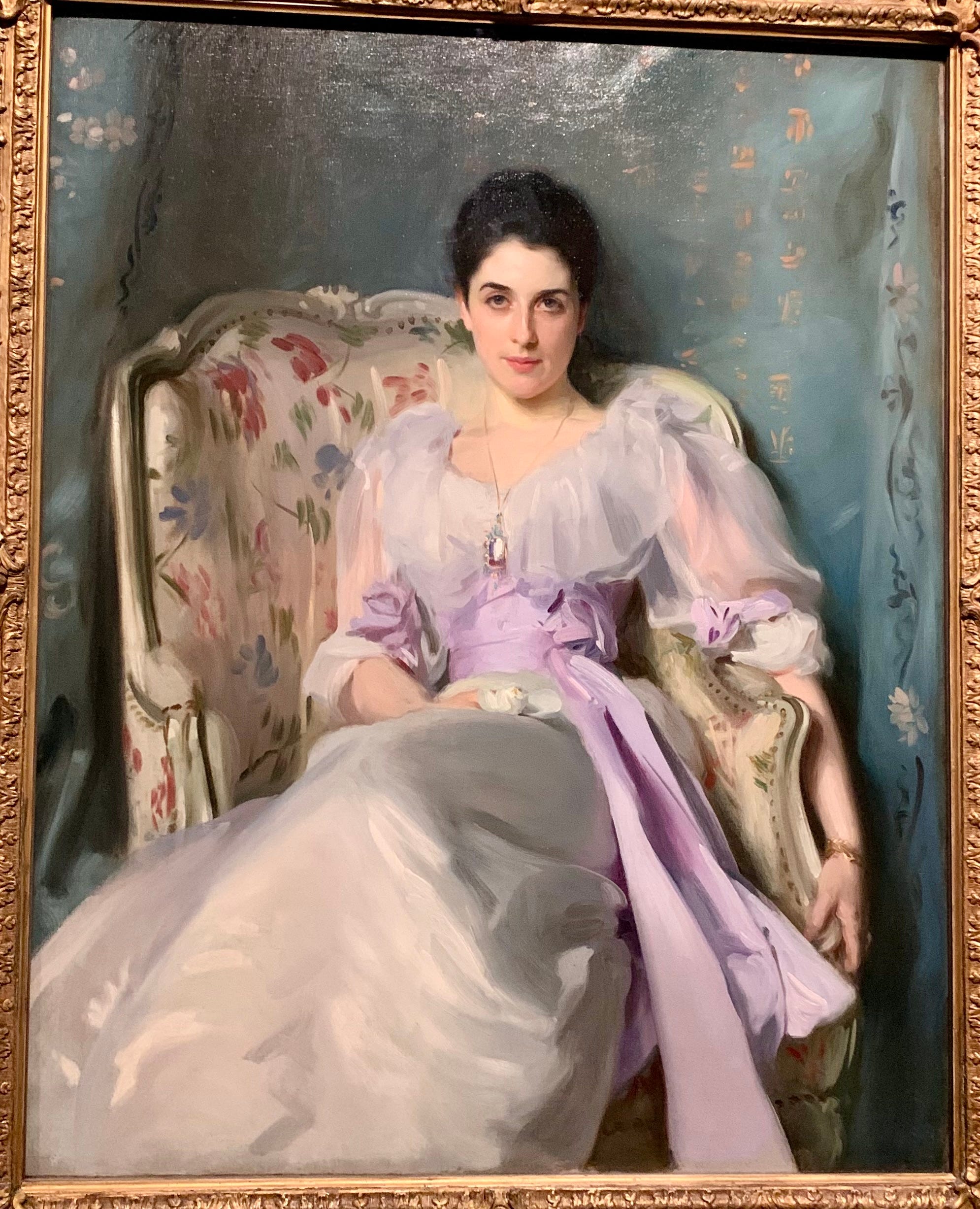
One of my favorite Sargent portraits, Lady Agnew of Lochnaw (below), was a focal point for the show.
Though I’d only seen some of these portraits in person, walking through the exhibit felt like being uncomfortably back with old friends. Uncomfortable because I spent almost seven years working on a novel (still unpublished) about Sargent and his sister Emily, who was an artist too—in any other family she’d be considered the remarkably talented child.
I first got entranced with the Sargent family at another exhibit: this one at the Corcoran Gallery in DC in 2009, a show about Sargent and his sisters’ expat youth. The Sargent parents left Philadelphia for Europe after their first child died as a toddler, and they never returned to the US. All three Sargent children, John, Emily, and Violet, were born in Europe, and never lived in the US, except for visits to family or the months when John painted his murals for the Boston Public Library and at the MFA.
As I got to know John’s work, I was struck by his artistic facility from childhood on, and the immediacy of his portraits. Soon after, I began to wonder about Emily too; she was crippled from a childhood bout of spinal tuberculosis, and wasn’t beautiful or glamorous, and was probably very shy. But she too had a ton of facility with the paintbrush, though she never got to study with Parisian masters the way John did.
Neither John nor Emily ever married; many scholars assume John was gay or bisexual. I suspect Henry James fell in love with John when John was a young artist in Paris. After John exhibited the scandalous portrait of the young socialite (and American expat) Madame Gautreau, Madame X, which wrecked his reputation, it was Henry James who persuaded John to move to London, and that is where John, Emily, Violet, and their mother lived for the rest of their lives.
I began to wonder about Emily, who was crippled from a bout of spinal tuberculosis—she wasn’t beautiful or glamorous, and was probably very shy, as John was. But she too had a ton of facility with the paintbrush, though she never got to study with Parisian masters the way John did.
I was also fascinated by the way John gave up his incredibly lucrative portraiture business at 50—his portraiture had made him a celebrity, but he was sick of dealing with his wealthy, entitled, mostly British clients, and tired of making portrait after portrait. And I wondered how Emily, who had little power in her own life, dealt with all of that. She and John were close (he supported her financially, she supported him emotionally), and when he declared he was done with portraiture, she might have said, yes, be done with it.
John and Emily were at once insiders and outsiders—John, like Henry James, was constantly in demand for London hostesses’ dinner parties and house parties, and he dealt with aristocratic types every day. But John and Emily were also Americans who spoke perfect French, but their English had a weird, not-quite-American accent. And they were essentially rootless, despite settling in London..
Anyway, I researched and wrote, spending a lot of time with Emily and John and their artwork, and with the letters and artwork of their friends, Henry James, Vernon Lee, Claude Monet, and many others. I wrote, revised, got feedback from writing groups and workshops, went to London and Paris to get a sense of their world. Revised some more.



The novel about Emily and John, And Also Emily, His Sister, landed me an agent, but ultimately never sold. The editors’ rejections were complimentary (this is typical in publishing), but the general word was “too quiet.” Too quiet is editor-speak for not propulsive or hooky enough.
While I was querying agents and then when this novel went out on submission, I wrote a very different novel, one set in 1970, which turned into The Wrong Kind of Woman, which did get published. Since then I’ve worked on three other novel manuscripts, one of which is with my agent now.
But meanwhile, I have all this no-longer-needed knowledge about Emily Sargent and John Singer Sargent. For instance, that Lady Agnew, pictured above, one of John’s first English clients, had her sittings interrupted by a bad case of the flu. She’s sitting in that chair, leaning back, with that confident, appraising gaze, in part because she’s still sick. Likewise, the 28-year-old artist Graham Robertson was also getting over the flu when Sargent painted him, and if he looks a little ill, that’s why. (Perhaps I have a fixation on Edwardians with the flu…)
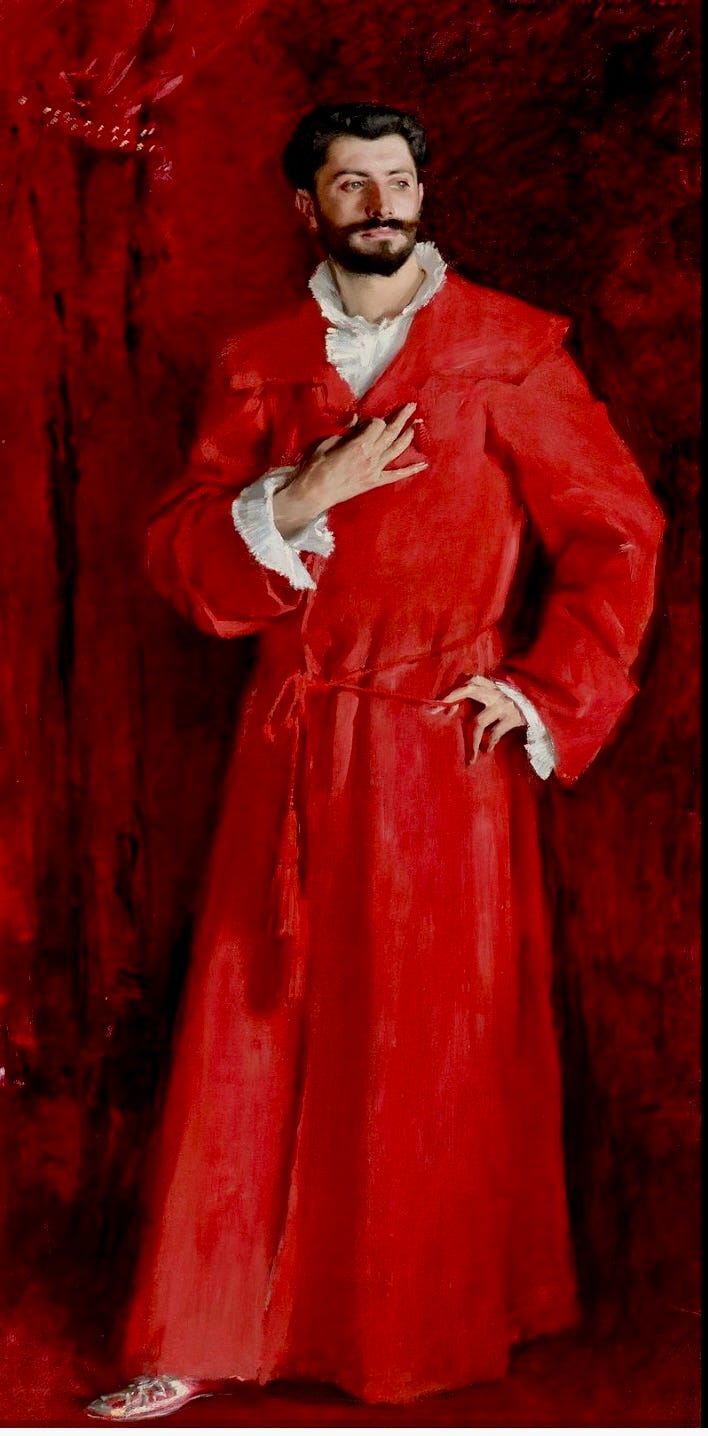
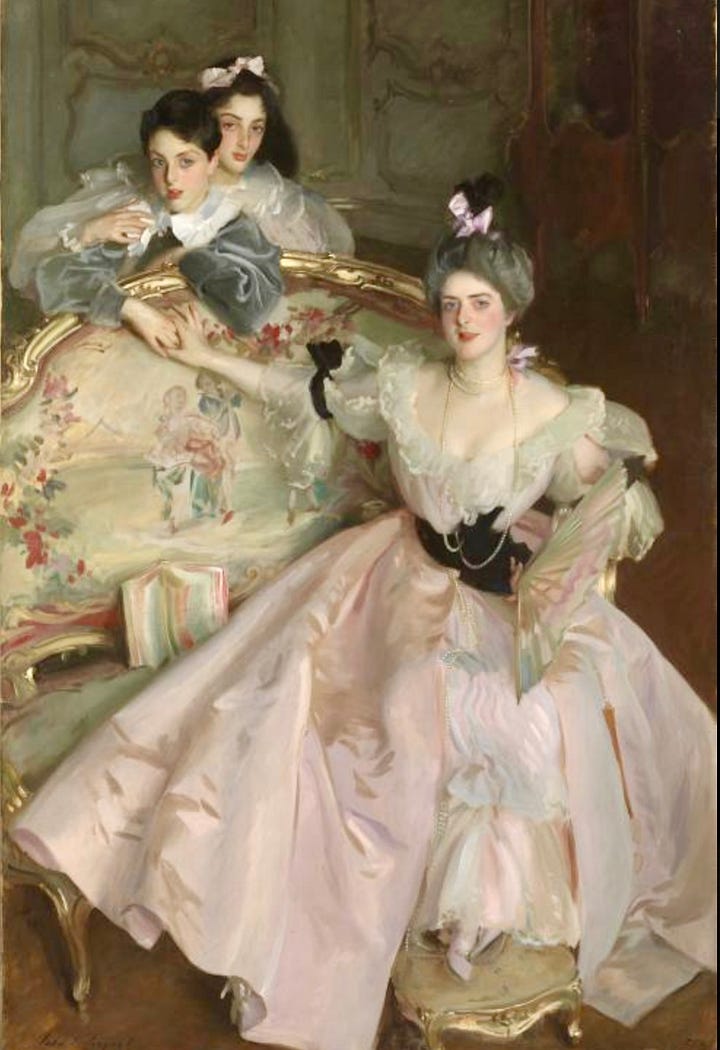
So back to the MFA-Boston exhibit. As my daughters and I looked at the portraits, I talked (actually, lectured) about John and Emily, and John’s portraits, stopping to tell them what what John or Emily said about a particular portrait or the sitter. About the loose brushwork he used to indicate light, shine, transparent lace. About John’s love for Velazquez, Hals, and the novels of Balzac, and John’s and Emily’s musicality, their talent at the piano. About how John essentially created British demand for his old friend Claude Monet. How Emily shied away from exhibiting her own work because of her famous last name. About the kinds of pictures John and Emily both liked to make later in life, watercolor sketches that were almost abstract. And how quickly John’s work fell out of fashion after his death in 1925, not to be revived until the mid-1980s, when curators and critics started looking at his work again.
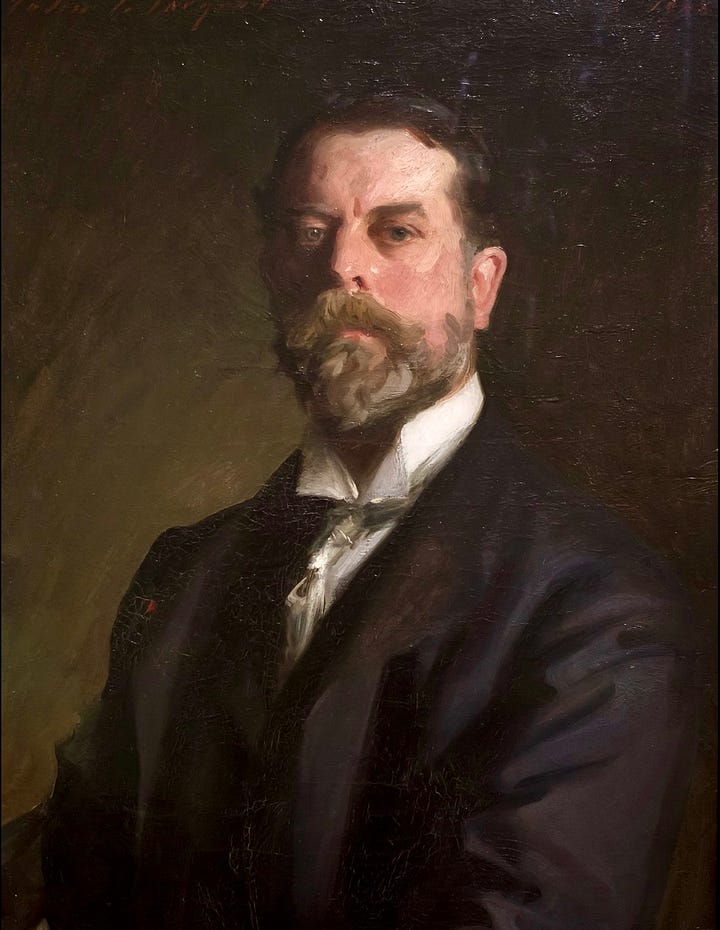
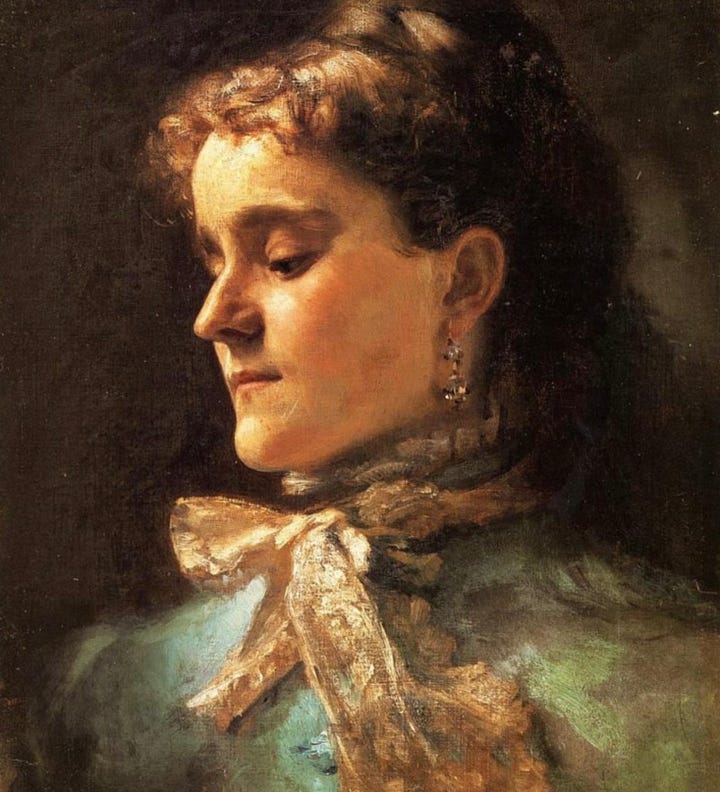
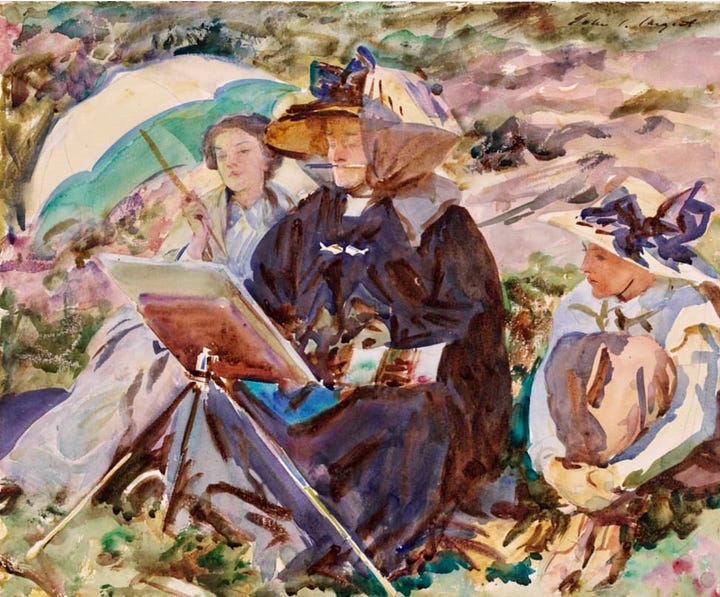

Lately I’ve been thinking about how John and Emily kept making things, making pictures, for the rest of their lives, often while traveling—sketches of their friends, those abstracted watercolor landscapes. My novel about them will probably never see the light of day, but I learned a lot from Emily and John, about how to live a meaningful creative life, whether shadowed by a famous-artist brother, as Emily was, or bound and restricted by artistic fame, as John was. And not least, as I wrote about Emily and John, I also learned how to write a novel. ✍️
In the vein of Emily Sargent, here are three novels about sisters in the shadow of a famous artist/writer/scientist:
The Stargazer’s Sister, Carrie Brown. Lyrical novel about Caroline Herschel, sister of the 18th-C. astronomer and composer William Herschel.
Lydia Cassatt Reading the Morning Paper, Harriet Scott Chessman. Beautiful short novel from the perspective of Mary Cassatt’s sister Lydia, who’s dying of kidney disease. Episodic, letters, journals. (2001, sadly out of print.)
The Other Alcott, Elise Hooper. The story of May Alcott, Louisa May Alcott’s youngest sister and the model for Amy March in Little Women, and her years in Paris when she studied painting, and married an Englishman. (This one leans more commercial.)
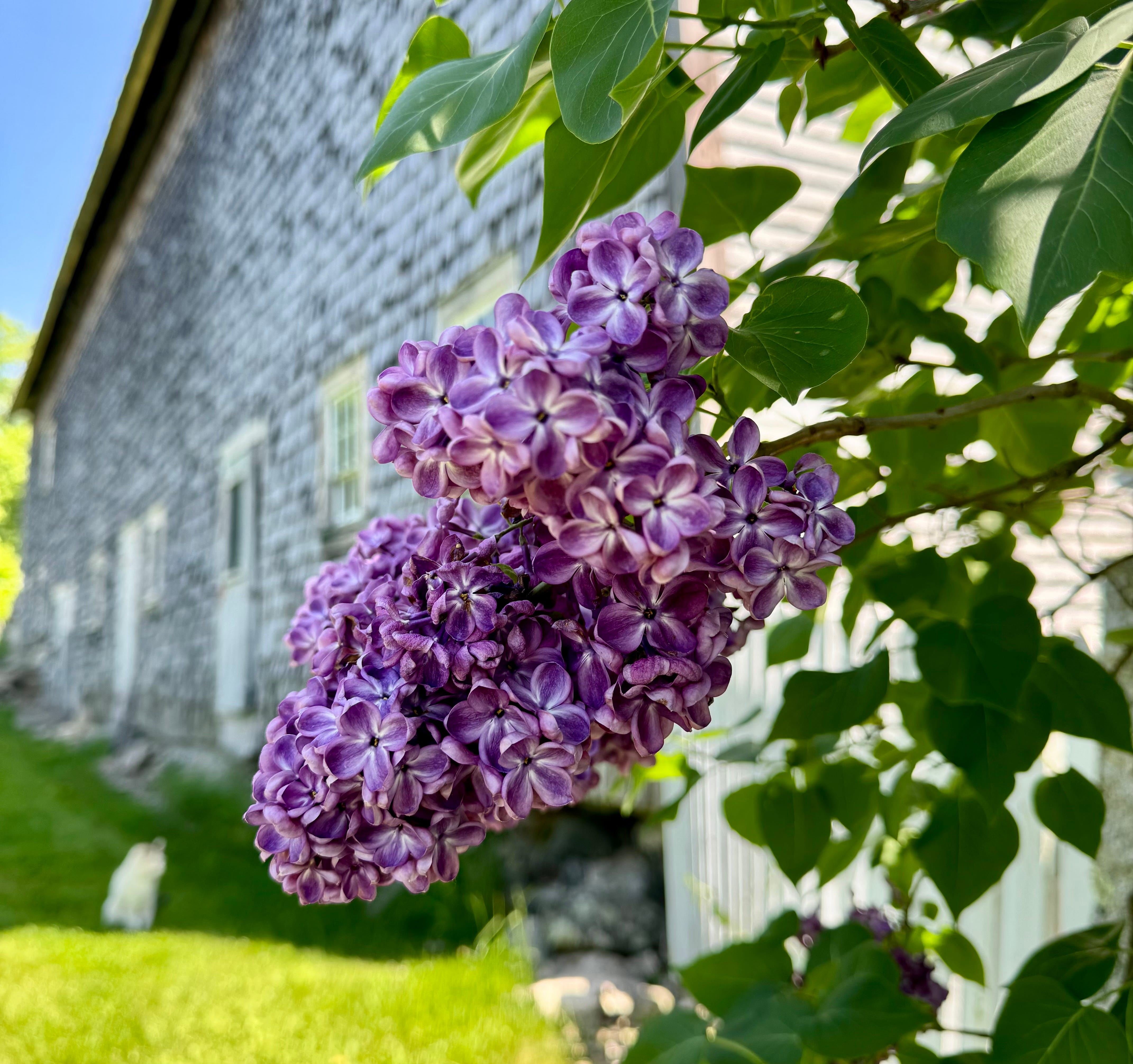
Until next time! Below, one of our old lilacs by the barn, blooming for Mother’s Day.
Comments
Nothing yet. Say the first thing.
Sign in to join the conversation.