
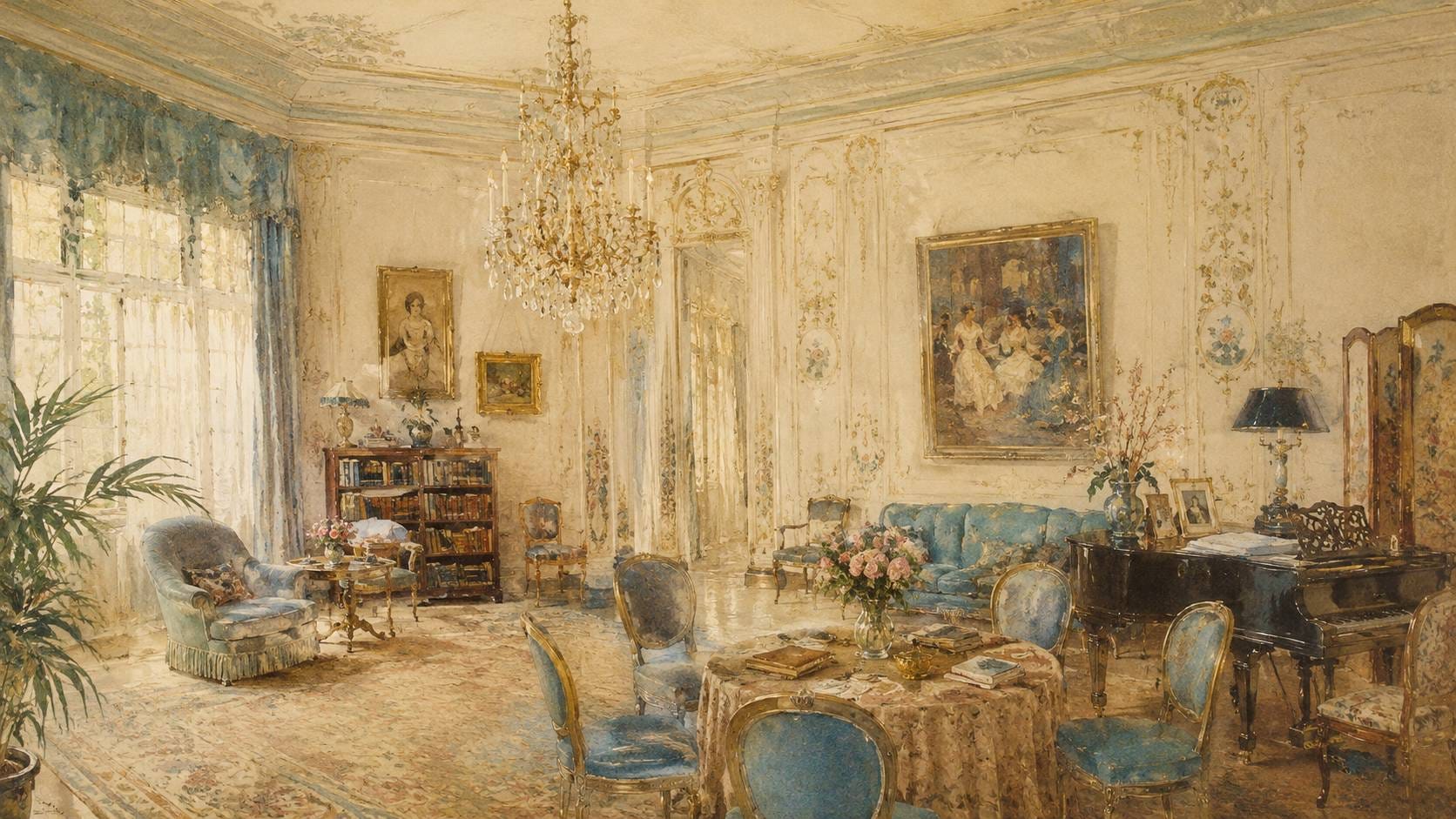
There are cities that reveal themselves quickly.
Vienna is not one of them.
It can be admired at a glance, of course. The façades, the palaces, the gardens, the cafés, the music, the gold, the stone, the imperial silhouettes.
But the deeper city asks for more time.
It asks you to notice the threshold, not only the room. The service door, not only the grand entrance. The garden path, not only the palace. The worn step, the old sign, the seasonal ritual, the fragment that seems small until it begins to speak.
That is where Understanding Vienna begins.
And this is The Viennese Salon.
The Viennese Salon is for culturally curious travellers and residents who want more than facts, recommendations or beautiful places to photograph.
Perhaps you already love history, art, architecture, music, gardens, travel or the atmosphere of an old city. Perhaps you have visited remarkable places and still felt that you never quite entered them. You saw the rooms, learned the dates, took the photographs and moved on, yet something remained outside your grasp.
The problem is not always that we need more information.
Sometimes we need a different way of looking.
Understanding Vienna helps you move from passing through places to entering into a relationship with them. Through Vienna, we learn to notice more, understand more of what we notice and receive our experiences more fully.
The purpose is not simply to know Vienna better. It is to become more attentive wherever we are, to recognise the histories gathered around us and to discover how art, place, memory and ordinary experience can contribute to a richer life.
The Salon is the room where those questions gather.
It is not a travel checklist, and it is not a generic newsletter. It is a continuing exploration of how places become meaningful, how the past remains present and how learning to see more deeply can change the way we live now.
Attention is the practice of becoming available to what is actually present.
It means resisting the urge to move too quickly towards the famous object, the expected view, the photograph or the next item on the itinerary. It means allowing a place, an object or an experience enough time to reveal what we might otherwise pass without noticing.
In Vienna, that may mean looking at the service door as well as the grand entrance, the worn step beneath the restored façade, the arrangement of a garden path, the ordinary object left behind by someone whose life has become part of history, or the way light changes a familiar street.
Attention also shapes the way we respond when an experience does not unfold as planned.
A restaurant may be closed. The weather may change. An intended route may become impossible. The day may lead somewhere we had not expected to go.
Attention does not guarantee that every disruption will produce something better. It helps us remain present and flexible enough to recognise what is still possible.
A changed plan does not have to become a spoiled day.
We can remain in conversation with the experience as it develops, rather than measuring every moment against the version we had imagined.
Inherited seeing adds another layer.
None of us arrives at a place with completely untouched eyes. We have inherited stories, images, values, habits and assumptions that shape what we notice, admire, preserve or overlook.
Earlier generations can help us see more deeply. Their paintings, buildings, letters, rituals, craftsmanship and memories reveal meanings we might otherwise miss.
But inheritance must also be examined.
We may have been taught to look towards the palace and away from the service rooms, towards the celebrated historical figure and away from the people whose labour made that life possible, towards the finished masterpiece and away from the conditions in which it was created.
Inherited seeing is not nostalgia, and it does not mean accepting every historical interpretation we have received.
It means entering into a conversation with what has been passed down.
What did earlier generations notice, make, remember and preserve? What did they overlook or choose not to record? Which parts of that inheritance help us see more clearly, and which parts ask to be questioned?
Attention helps us notice what is here.
Inherited seeing helps us understand what has gathered around it.
Together, they allow history, art and place to become part of a lived experience rather than remaining information at a distance.
Each month, The Viennese Salon gathers around one larger theme.
We approach it through four substantial weekly publications. Together, they create a movement from question to experience, from experience to creation, and from creation to reflection.
The month begins with one substantial essay built around a central question.
It brings history, art, place and lived experience together, then asks what the subject might offer us now. It does not simply recount what happened in the past. It looks for the human question beneath the history and offers practical ways for the reader to explore that question personally.
The subject may begin in Vienna, but the invitation extends beyond it.
The Field Diary takes the month’s question into the world.
You come with me to the places where the work begins. I share where we went, what we intended to do, what actually happened, what changed and what we noticed along the way.
These are not polished itineraries in which everything proceeds according to plan. Doors are closed. Weather intervenes. A conversation changes the direction of the day. An unexpected tasting, object, view or detour becomes more important than what we originally set out to find.
The Field Diary shows attention in motion. It asks how curiosity, flexibility and close observation can help us receive an experience more fully, including the parts we could not have planned.
Building Understanding Vienna opens the doors to the larger project.
Here, I explore what Understanding Vienna is becoming, what is influencing the work, which questions are changing its direction and how its different publications, practices, stories and resources are gradually being brought together.
This is not simply a report on what happens behind a desk. It is an account of how a cultural project is built through repeated observation, research, returning, questioning and revision.
It allows you to follow the creation while it is still alive and changing, rather than encountering it only after every uncertainty has been removed.
The Cabinet of Fragments begins with something small that opens onto something much larger.
It may be an object, a room, a photograph, an architectural detail, a surviving trace, a quotation or an unexpected discovery. Something interrupts the present and refuses to let us pass without looking more closely.
A fragment is incomplete, but it can carry extraordinary emotional and historical weight. A room containing the remnants of a life may affect us more immediately than a complete account of that life. An ordinary object may suddenly collapse the distance between history and human experience.
The Cabinet does not rush to turn every fragment into a finished lesson. It pauses before the disturbance, association or question the fragment creates and allows it to continue working on the imagination.
As a free subscriber, you will receive one substantial Salon publication each week, four each month.
Each month will follow the same underlying rhythm:
The larger question. The lived experience. The continuing creation. The surviving trace.
Between these weekly publications, I also share regular Notes containing shorter observations, questions, discoveries, glimpses of work in progress and fragments that do not need to become full essays.
The Notes allow the conversation to remain open between the larger pieces. They are also where readers can respond, contribute their own experiences and help shape the questions we continue exploring together.
Vienna is the place through which we practise, but it is not the limit of the practice.
Its streets, buildings, gardens, rituals and objects make it possible to see how different periods continue to inhabit the present. The visible city offers palaces, music, cafés, parks and imperial grandeur. The lived city contains reserve, humour, melancholy, contradiction, social codes and memories that cannot be understood from the façade alone.
Understanding Vienna means learning to look beneath the surface, not only of a building, but of a culture.
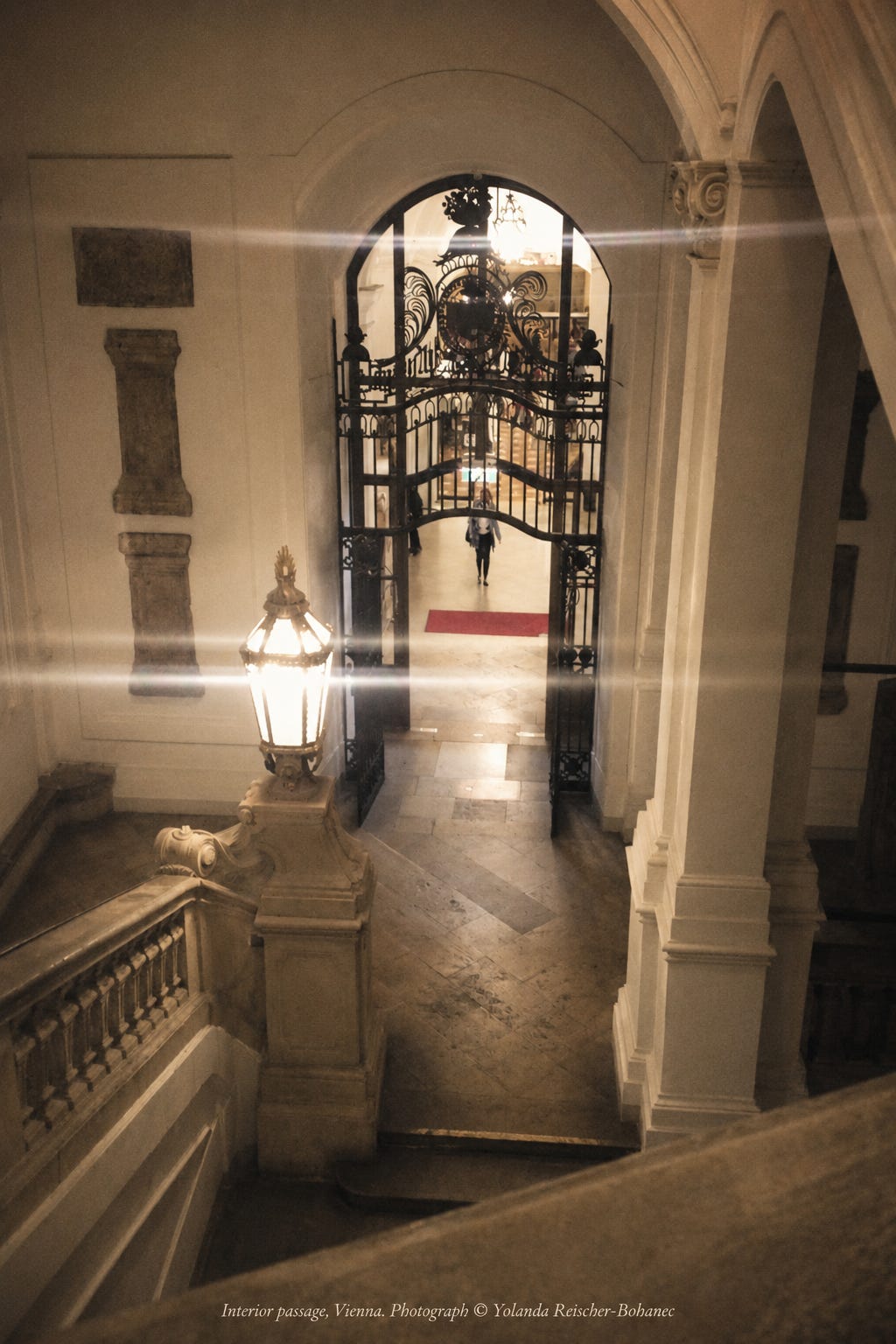
I have often spoken with internationally based friends who admired Austria while feeling disconnected from Austrians themselves. They could see the beauty, yet the behaviour, humour and cultural habits beneath it remained difficult to read.
That distance interested me because I had spent much of my own life moving between cultures.
I first came to Austria when I was seventeen. i spent 1 year in Salzburg. Much later, I followed my heart and came back. I have now lived in Vienna for more than thirty years. I grew up between countries, languages and cultural expectations. For a long time, I did not think of my way of looking as unusual. Only gradually did I understand that living between cultures had taught me to stand both inside and outside a place at the same time.
What seems natural in one culture may seem strange in another. What appears cold may be reserve. What appears old-fashioned may carry a history we have not yet understood. What looks like a decorative custom may hold memory, belonging or loss.
As a writer, artist and photographer, I return repeatedly to the relationship between what is visible and what remains beneath it.
The Viennese Salon grew from the desire to share that way of seeing.
It is not only about explaining Vienna to outsiders. It is about learning how to enter any culture more attentively, how to understand what lies beneath the visible surface and how to form a deeper relationship with the places and lives around us.
You do not need to understand every part of Understanding Vienna at once.
Begin with the question that draws you most strongly.
This is the story of the attention from which Understanding Vienna grew, including how a life between cultures shaped the way I observe, connect and interpret.
This essay explores how to move beyond the first impression, notice the structures and stories beneath beauty, and begin reading a city through its surfaces, thresholds, atmosphere and traces.
The Summer You Are Still Waiting For
·
Aug 7
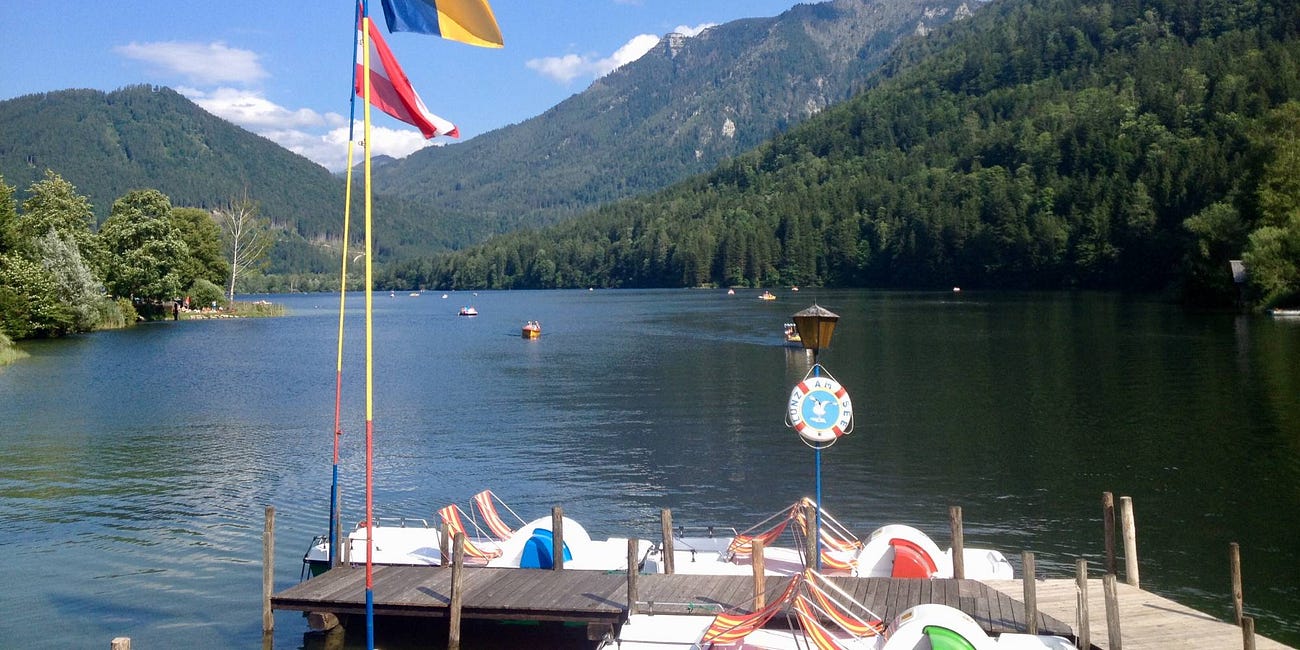
A summer occasion begins before we enter it. Lunz am See offers water, mountain landscape, and the possibility of allowing the lake to become the day.
This essay uses the Viennese tradition of Sommerfrische to explore why a season can pass without ever feeling fully lived, and how anticipation, attention and intentional occasions can help us receive our time more consciously.
These three pieces form the first path through The Salon: the central idea, the practice and its application to an ordinary human longing.
The Viennese Salon is currently entirely free.
There is no paid subscription tier at present, and free subscribers receive the complete four-part monthly journey.
I am also developing a more sustained body of guided practices, seasonal work and deeper ways of working with attention, place and inherited seeing.
I do not want to present those practices as a finished method before I have lived through them myself.
They are being developed and tested within Understanding Vienna first. The essays, Field Diaries and seasonal experiments are part of that process. They allow the method to grow through use rather than being invented as a product and applied afterwards.
When the work is ready, I will invite a small group of readers to practise with me and help test and refine it. What we learn together will help determine how a future paid part of The Salon should take shape.
For now, you are invited to follow the work as it develops and to use whatever helps you see, experience and live more richly.
Subscribe free to receive one substantial publication each week, regular Notes between the essays and the complete monthly journey through history, art, place and attention.
You do not need to be a historian, an art expert or a Vienna specialist.
You only need to be curious about what becomes visible when we stop passing so quickly.
The deeper city begins when attention slows down.
I am glad you are here.
For readers who would like Vienna to arrive beyond the screen, Post from Hidden Vienna is a separate physical literary letter project.
These letters are being created to be opened slowly, read away from the screen and kept as objects in their own right. They will carry stories, voices and overlooked corners of Vienna through the post, allowing the world of Understanding Vienna to continue in a more tangible form.
You can join the waiting list below to hear when the first letters are ready to travel.
Explore Understanding Vienna
If The Salon reminds you of someone who loves Vienna, hidden places, letters, history, or slow cultural travel, you are warmly invited to share it.
Comments
Nothing yet. Say the first thing.
Sign in to join the conversation.