
Rather than dwelling too much on the state of production during this uncomfortable introduction to the age of AI, I would like to return to the What Came Before premise that I initially planned for, but refer to specific electronic music nuances or formulas that many constantly try to reproduce, now even easier with AI tools.
A prime example and something I have wanted to dig into is the vastly popular vocal stutter effect used predominantly in EDM music, but goes back to the early 1980s days of Freestyle, a missing component in the history of Hip-Hop, that came about within Latino, Black, and Italian studio musicians in NYC after the tail end of Disco. This specific effect has pioneers worth mentioning, not only for their use of this effect but also for their important contributions to sound system dance music culture on the East coast: The Latin Rascals.
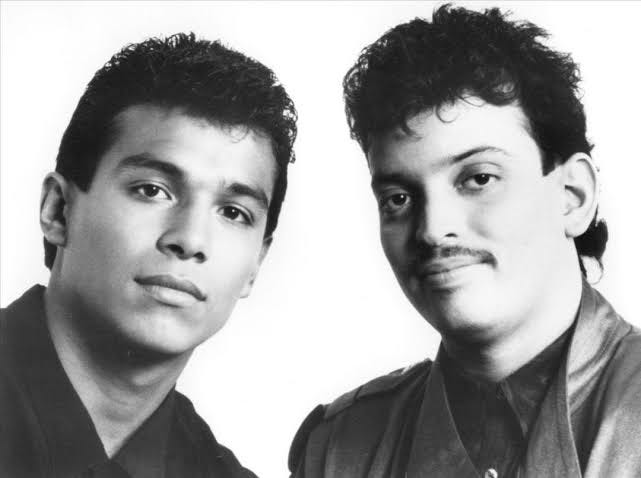
Drawing from Jamaican Dub heavily, The Latin Rascals (Albert Cabrera and DJ Tony Moran) redefined remixing itself, and their groundbreaking live DJ sets known as Mastermixes were a combination of infectious grooves with tape-slicing methods that I was personally influenced by. This was still during the analog days of tape machines.
No samplers were used then; instead, tape decks were utilized to re-record splices of repeated sections, over and over, passing between multiple decks, essentially doing the same as extending a beat you can now do by default in most Digital Audio Workstations. This is not the same as holding down a pad on an MPC with it stuttering at 16th notes, but it would seem to be so to the layman. Their primary tools were a razor blade, a grease pencil, a splicing block, and magnetic tape.
To repeat a sound in a perfect tempo, you had to calculate the tape length. If the tape machine was running at 15 inches per second (ips), a 16th note at a specific BPM might equal exactly 1.5 inches of tape. Using a ruler, they would measure that exact distance, place the tape in a metal splicing block, and slice it at a precise 45-degree angle with a razor blade.
You couldn’t easily “copy” an analog signal without losing quality, so editors would often buy multiple copies of the same vinyl record or make multiple tape copies of the same vocal stem. They would cut the same syllable out of several different pieces of tape, ending up with multiple tiny, identical slivers of tape.
Using blue or white editing tape, they would stick these tiny, inch-long slivers back-to-back in the splicing block. They had to line up the microscopic magnetic tracks perfectly. If they wanted a 4-step stutter, they spliced four of these identical segments in a row, followed immediately by the rest of the original vocal track.
When you hear a human being’s voice (as well as a string instrument) repeated artificially, you can tell that it is a repeated recording, and not an actual human doing that live, but this was not a flaw, their use of changing volume to tape for each splice helped pave the way for a lot of applications I hear today, to make a loop seem not so much a loop, evaluating sound around them and innovating to come closer to the desired effect on sound systems, moving bodies and culture.
The Latin Rascals mastered this stuttering technique, their epimone, over hundreds of shows on the best underground and dance Radio stations of the time, and their influence on the future of dance music remains to this day. But why? It is a form of premeditated archaeological fingerprinting, meant to be found, discovered, or rediscovered through a new reality, and one day will be the proof of humans’ hand in the making of a form of music, electronic/computer music/ becoming an artifact to be found in the future. In fact, it could be forensic evidence of mechanical and human interaction, embedded with stamps from wiring and the voice itself.
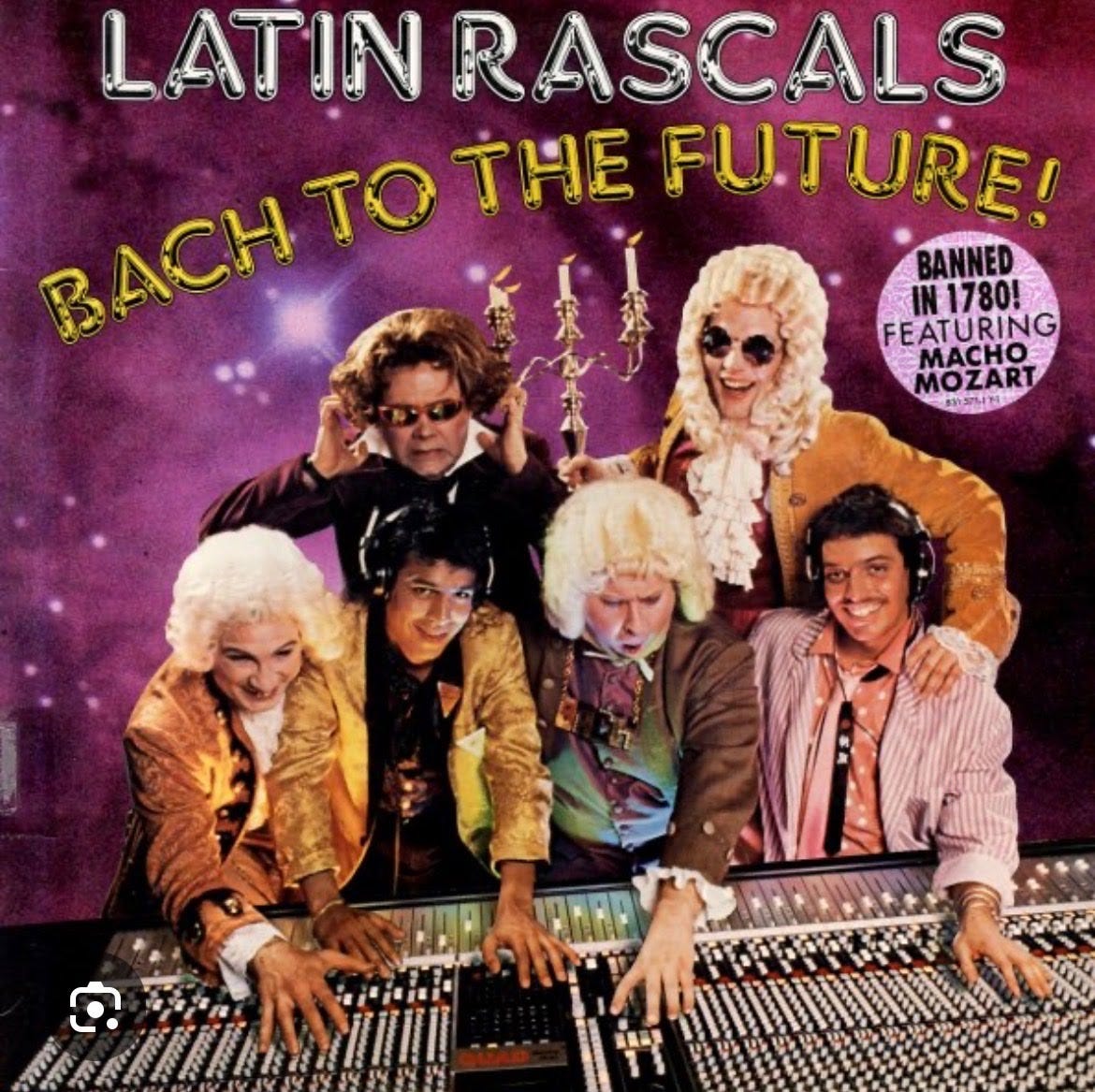
Before the Latin Rascals, this effect was still around, but done with computer voices, and can also be heard as a human extended technique in recordings by avant-garde singers and composers, as well as by The Last Poets, also credited as pioneering Hip-Hop by their innovative vocal techniques beyond just words.
The robotic effect was, in fact, the purpose of the effect, as it hinted at the future that we are in now, and also left a trace of the human influence from the get-go of the idea.
This sort of effect is a prime example of an earworm, or an effect that others tend to want to repeat over and over, without the need to feel that they are doing something like copying an idea, but are rather doing what is expected within the genre they are in.
These are the main aspects of music that decades later influence the core functions of Ableton Live and AI music platforms like Suno. The question is, why is this effect so appealing and alluring to electronic musicians? It could very simply be due to an effect that alerts the nervous system, or dopamine-related.
Regardless, the vocal stutter effect is one of many utilized for psychological effects, whether it becomes manipulative later is the n-n-n-n-n-n-num/numb/number one q-q-q-q-question.

Comments
Nothing yet. Say the first thing.
Sign in to join the conversation.