
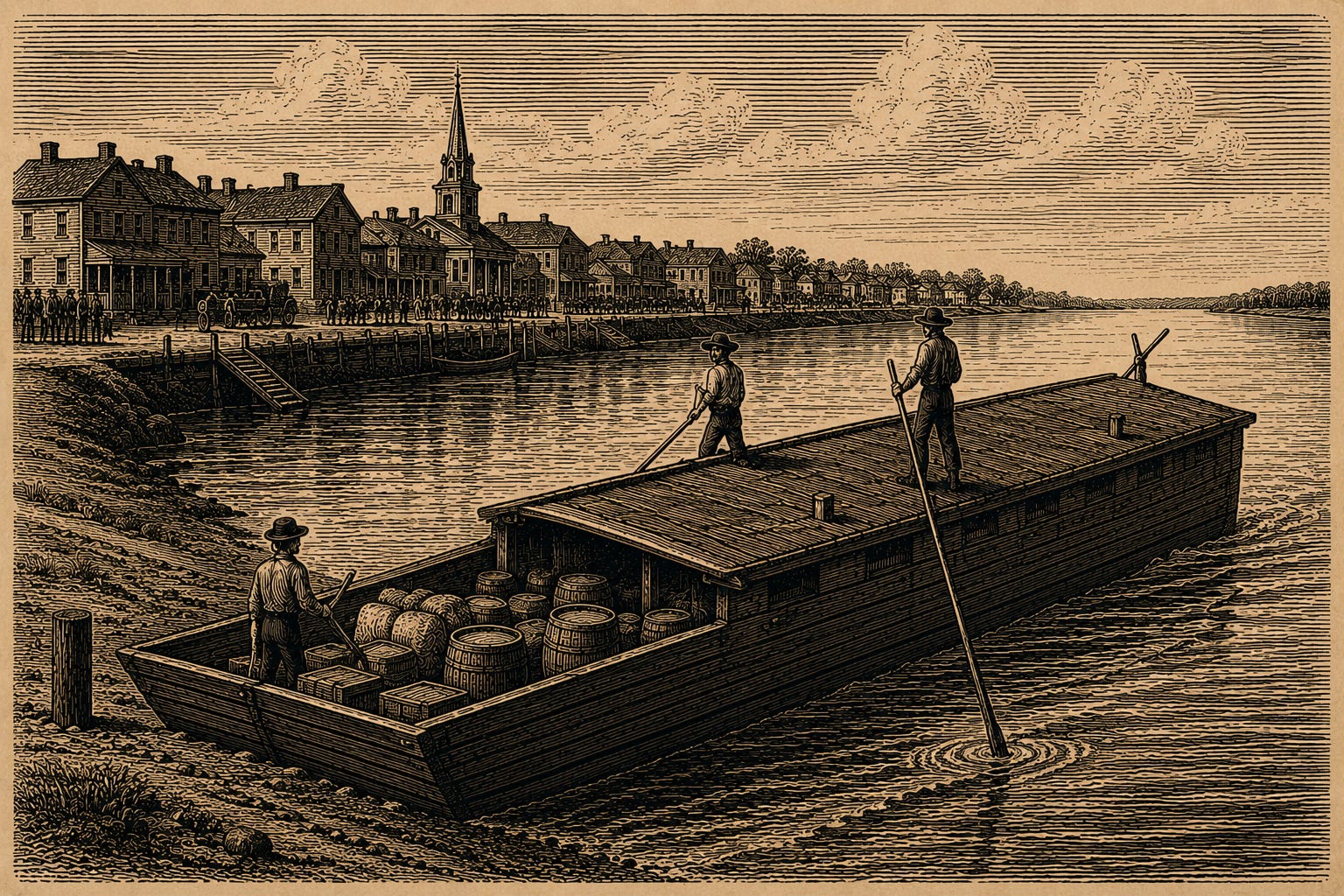
On the morning of September 4, 1809, Meriwether Lewis stepped aboard a small boat at the St. Louis waterfront and began a journey to the nation’s capital. It would become the final chapter in one of the most extraordinary lives in American history.
His destination was Washington, D.C., more than 2,000 miles away. Among his baggage were official government papers, financial records, maps, and perhaps the most valuable cargo of all—the original journals of the Corps of Discovery. Those handwritten volumes preserved the first comprehensive scientific and geographic record of the American West, and Lewis intended to oversee their long-delayed publication.
The itinerary was straightforward. He would travel down the Mississippi River to New Orleans, sail around Florida to the East Coast, present his accounts to the federal government, visit President Thomas Jefferson at Monticello, spend time with his family in Virginia, and return with his reputation restored and the expedition journals finally on their way to publication.
He never reached Washington.
More than two centuries later, travelers can still follow much of Lewis’s final route—from the Gateway to the West down the Mississippi River, across the homeland of the Chickasaw Nation, and onto the Natchez Trace, where the life of America’s greatest explorer came to its tragic end.
The Hero Returns
Only three years earlier, on September 23, 1806, Lewis and William Clark had returned to St. Louis after nearly two and a half years exploring the Louisiana Purchase and the Pacific Northwest.
The city erupted in celebration. Church bells rang, cannons fired, and crowds gathered along the waterfront to welcome the Corps of Discovery home. Newspapers across the young republic hailed the expedition as a national triumph, while President Thomas Jefferson praised it as one of the greatest achievements of his administration.
Lewis emerged as one of the most admired men in America. The expedition maps would guide generations of explorers, traders, soldiers, and emigrants westward. His journals documented hundreds of previously unknown plants and animals, described vast landscapes few Americans had imagined, and recorded invaluable observations of the many Tribal Nations encountered along the way. The expedition had fundamentally changed how Americans understood the continent.
No one standing on the St. Louis levee in 1806 could have imagined that within three years Lewis would quietly depart from the same waterfront under dramatically different circumstances.
From Explorer to Governor
In 1807, Jefferson appointed Lewis Governor of the Louisiana Territory. The appointment seemed a natural choice. No American possessed a deeper understanding of the vast new territory than the man who had crossed it from the Mississippi River to the Pacific Ocean.
Yet exploration and government required very different talents.
As governor, Lewis was responsible for administering an immense territory stretching across much of North America. His duties included overseeing military affairs, managing relations with Tribal Nations, resolving competing land claims, regulating trade, supervising public expenditures, and administering a developing territorial government. At the same time, Jefferson expected him to prepare the official publication of the Corps of Discovery journals—a project that demanded months of careful editing, scientific review, and cartographic work.
The demands proved overwhelming.
Federal auditors questioned territorial expenditures. Political disputes complicated his administration. Creditors pursued repayment of personal debts incurred during years of public service. The new Madison administration appeared less supportive than Jefferson had been, leaving Lewis increasingly isolated.
His physical health also deteriorated. Most historians believe Lewis suffered recurring bouts of malaria contracted during earlier service in the lower Mississippi Valley. Periodic fevers, exhaustion, and prolonged episodes of melancholy became increasingly common, making the burdens of office even more difficult to bear.
By the summer of 1809, Lewis concluded that only a personal appearance in Washington could resolve the growing controversies surrounding his administration. He gathered every receipt, voucher, ledger, and official record he could carry, determined to defend both his reputation and the finances of the Louisiana Territory before federal officials.
Afterward, he planned to visit Jefferson, spend time with his mother in Virginia, and finally see the publication of the journals that would forever preserve the accomplishments of the Corps of Discovery.
Down the Mississippi
Travel on the Mississippi River in 1809 bore little resemblance to the river we know today. There were no levees, locks, navigation lights, or engineered channels. Sandbars shifted constantly. Fallen timber and submerged snags threatened every boat. Dense forests lined the banks, and experienced rivermen depended more on instinct and local knowledge than on maps to navigate a river that seemed to reinvent itself after every flood.
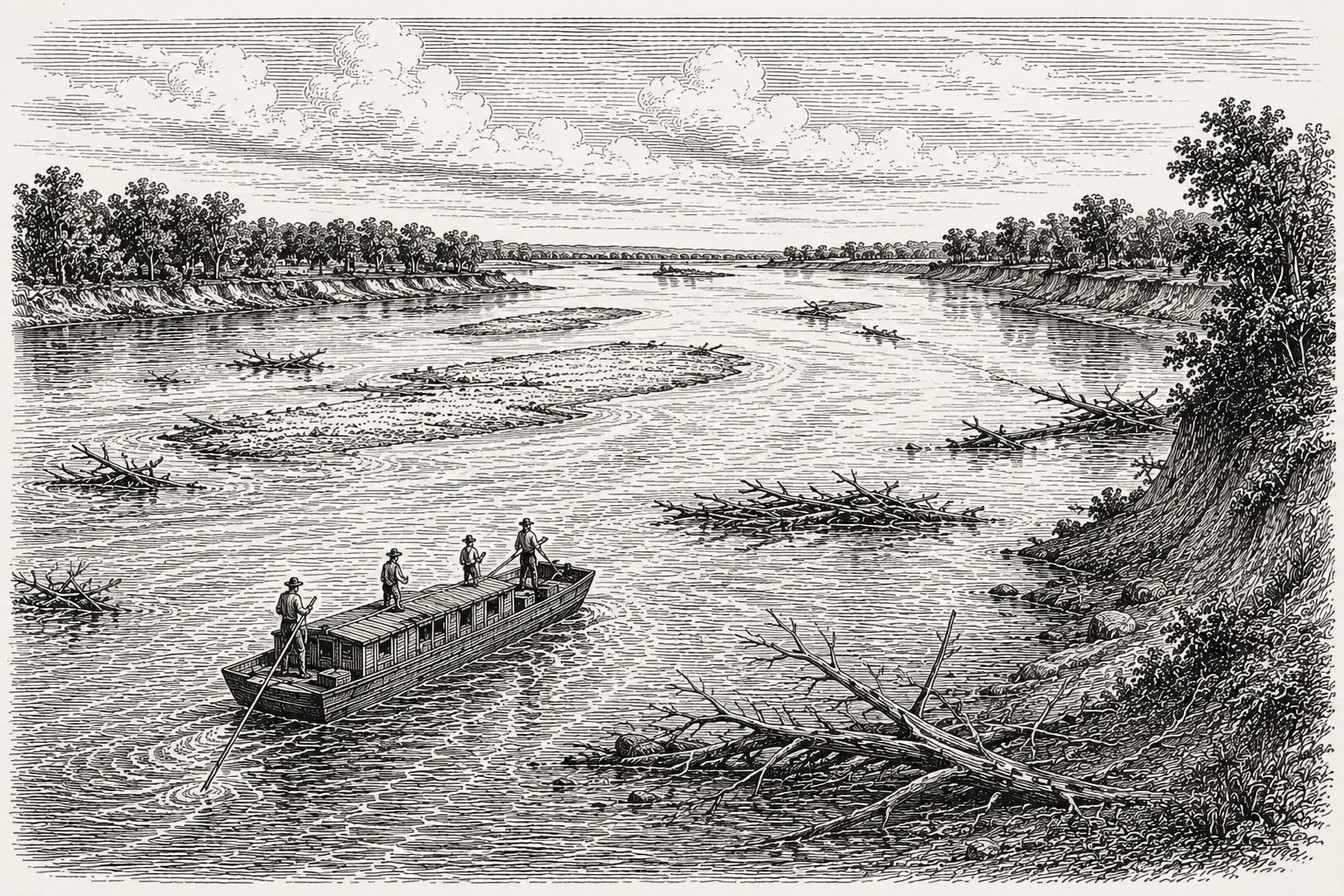
About a week after leaving St. Louis, Lewis stopped at New Madrid, then one of the most important settlements on the lower Mississippi.
There, he drafted his last will and testament.
Writing a will before embarking on a hazardous journey was common practice on the American frontier, but Lewis’s decision has long invited reflection. Whether prompted by recurring illness, the uncertainty of travel, or simple prudence, the document reminds us that he fully understood the risks of the journey before him.
By mid-September, Lewis arrived at what would become Fort Pickering on the Chickasaw Bluffs near present-day Memphis. Captain Gilbert Russell quickly recognized that the governor was seriously ill. Lewis was suffering from fever, profound exhaustion, and physical weakness severe enough that he remained at the post while Army physicians treated him.
After nearly two weeks of rest, Russell believed Lewis had recovered sufficiently to continue, though he remained uneasy about his condition.
It was at Fort Pickering that Lewis made the decision that altered the course of his final journey.
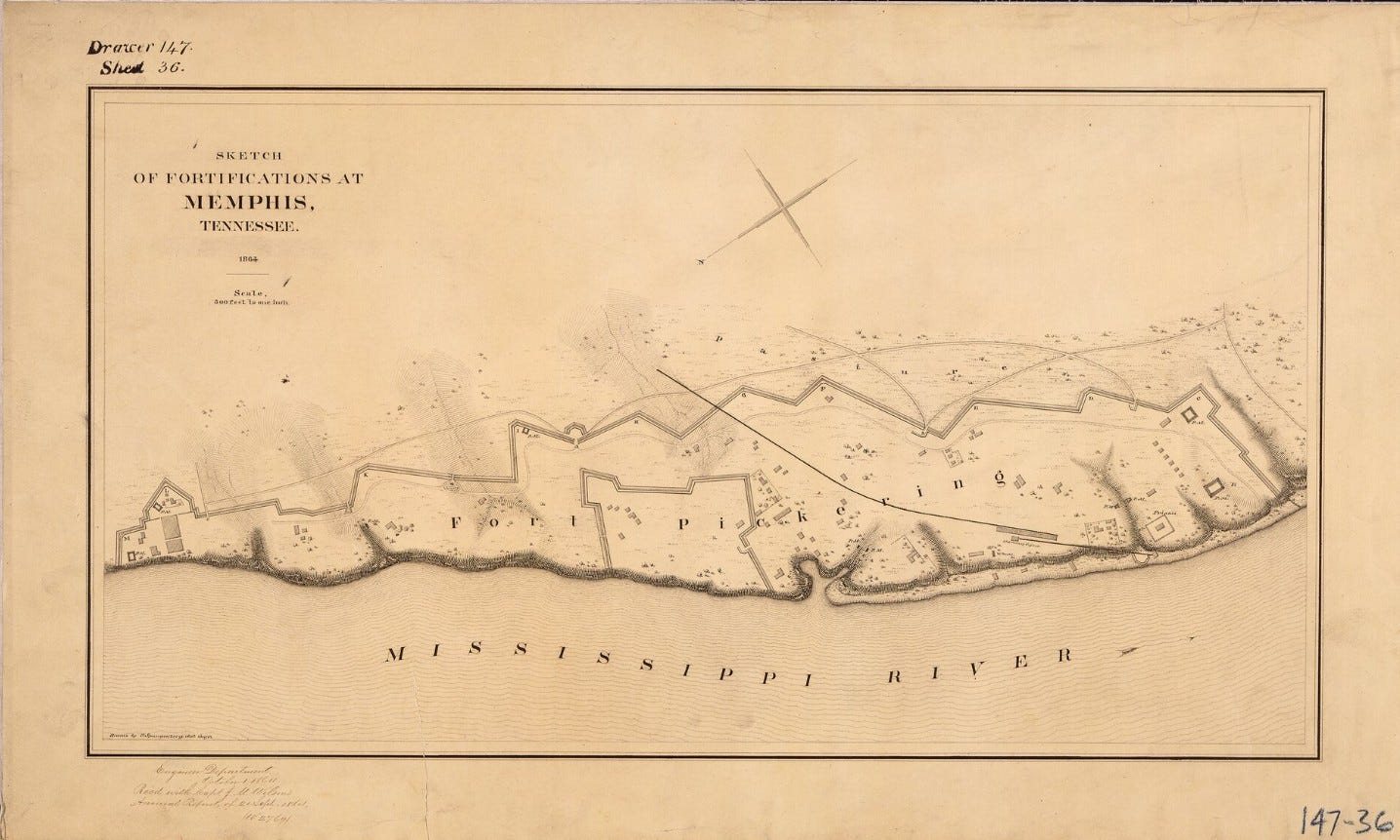
Rather than continuing downriver to New Orleans, he turned east into the homeland of the Chickasaw Nation, choosing to follow an ancient network of Indigenous trails that connected villages, hunting grounds, and trading centers across the Southeast. Europeans would call this route the Natchez Trace.
The choice shortened his trip to Washington by several weeks.
It also led him toward one of the most enduring mysteries in American history.
Along the Way
Today, travelers can follow much of his route along the Great River Road, one of America’s great scenic byways. Between St. Louis and Memphis, modern highways parallel the Mississippi through river communities whose histories were shaped by the same currents that carried Lewis southward in the autumn of 1809.
Retracing Meriwether Lewis’s final journey is more than a road trip—it is an opportunity to follow one of the most consequential figures in American history through the landscapes that shaped the closing chapter of his remarkable life. From the Mississippi River to the Natchez Trace, the route combines world-class historic sites, scenic drives, and quiet places that invite reflection.
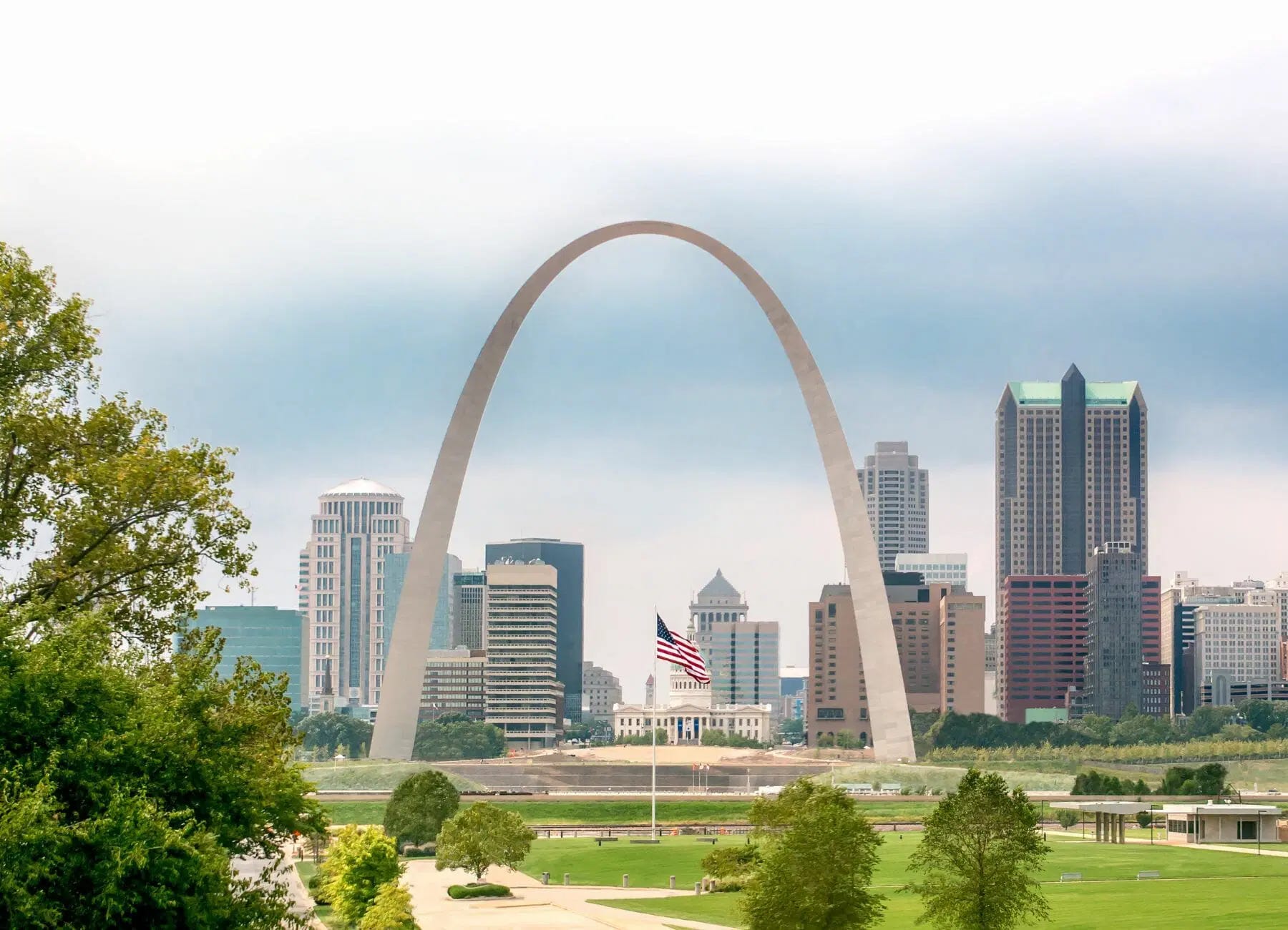
Begin at Gateway Arch National Park in St. Louis, where Lewis departed on September 4, 1809. Ride to the top of the Arch for panoramic views of the Mississippi River before exploring the museum chronicling America’s westward expansion. If time allows, visit the Missouri History Museum and pay your respects at the grave of William Clark in nearby Bellefontaine Cemetery. Together, these sites provide an ideal introduction to the story that unfolds along the river.
Just northeast of St. Louis, Camp River Dubois marks the place where Lewis, Clark, and the Corps of Discovery spent the winter of 1803–1804 preparing for the expedition that would carry them to the Pacific Ocean. A reconstructed fort and interpretive exhibits bring those final months of preparation vividly to life.
Continue south along Illinois Route 3 to Fort Kaskaskia, where the frontier outpost recalls the military presence that secured the young nation’s western frontier. Lewis passed through this region in 1803 while William Clark navigated the barge northbound on the Mississippi. Nearby, the restored Pierre Menard Home preserves one of the finest examples of French colonial architecture in the Mississippi Valley.
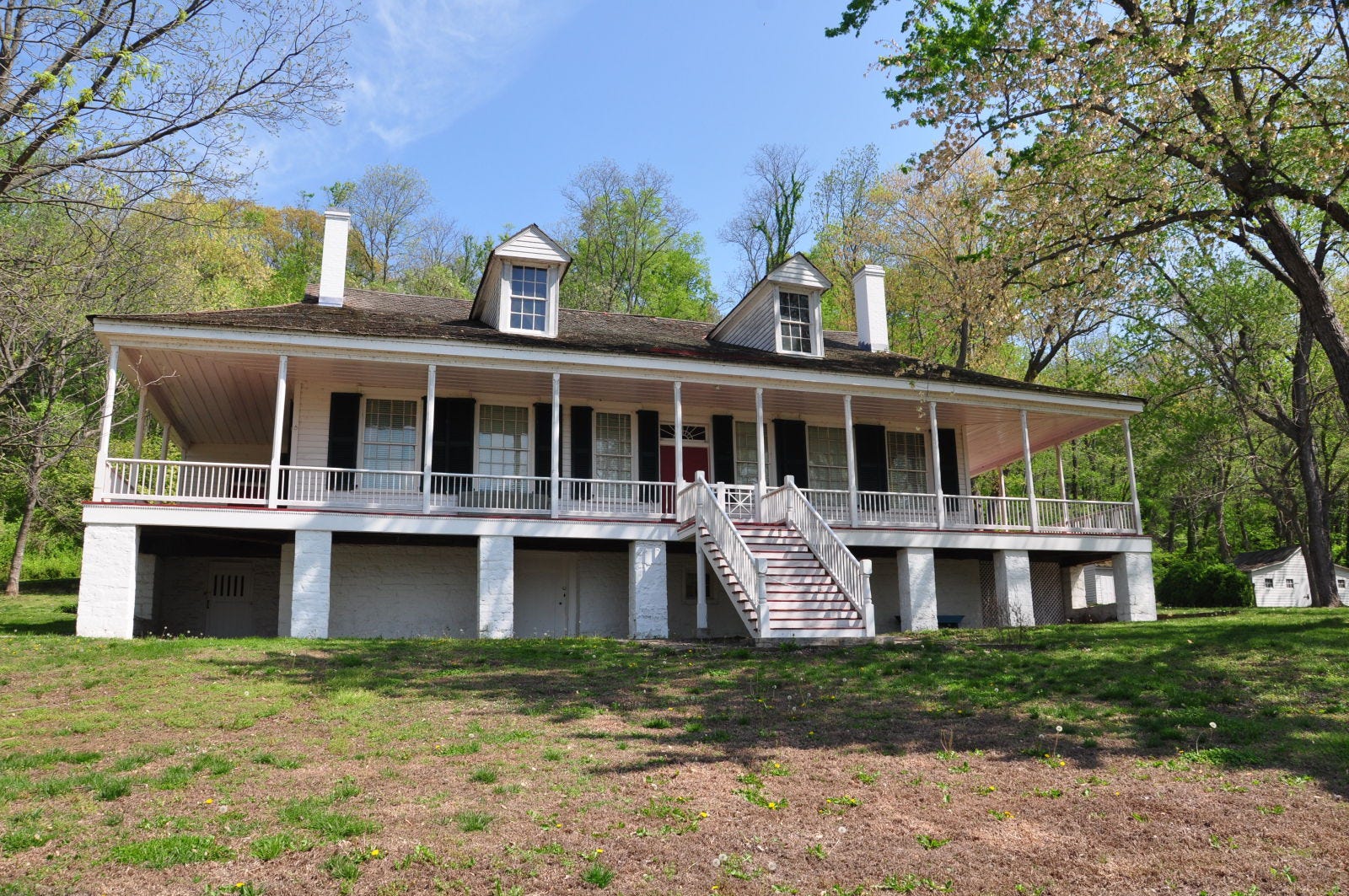
Farther south, Ste. Genevieve offers one of the nation’s best-preserved French colonial communities. Missouri’s oldest permanent European settlement remains remarkably intact, with narrow streets and distinctive vertical-log homes that evoke the frontier village Lewis would have recognized more than two centuries ago.
Continuing downstream, Cape Girardeau illustrates the Mississippi River’s importance as America’s first great transportation corridor. Riverfront murals tell the story of the region’s development, while the Red House Interpretive Center provides another excellent example of French colonial construction and early frontier life.
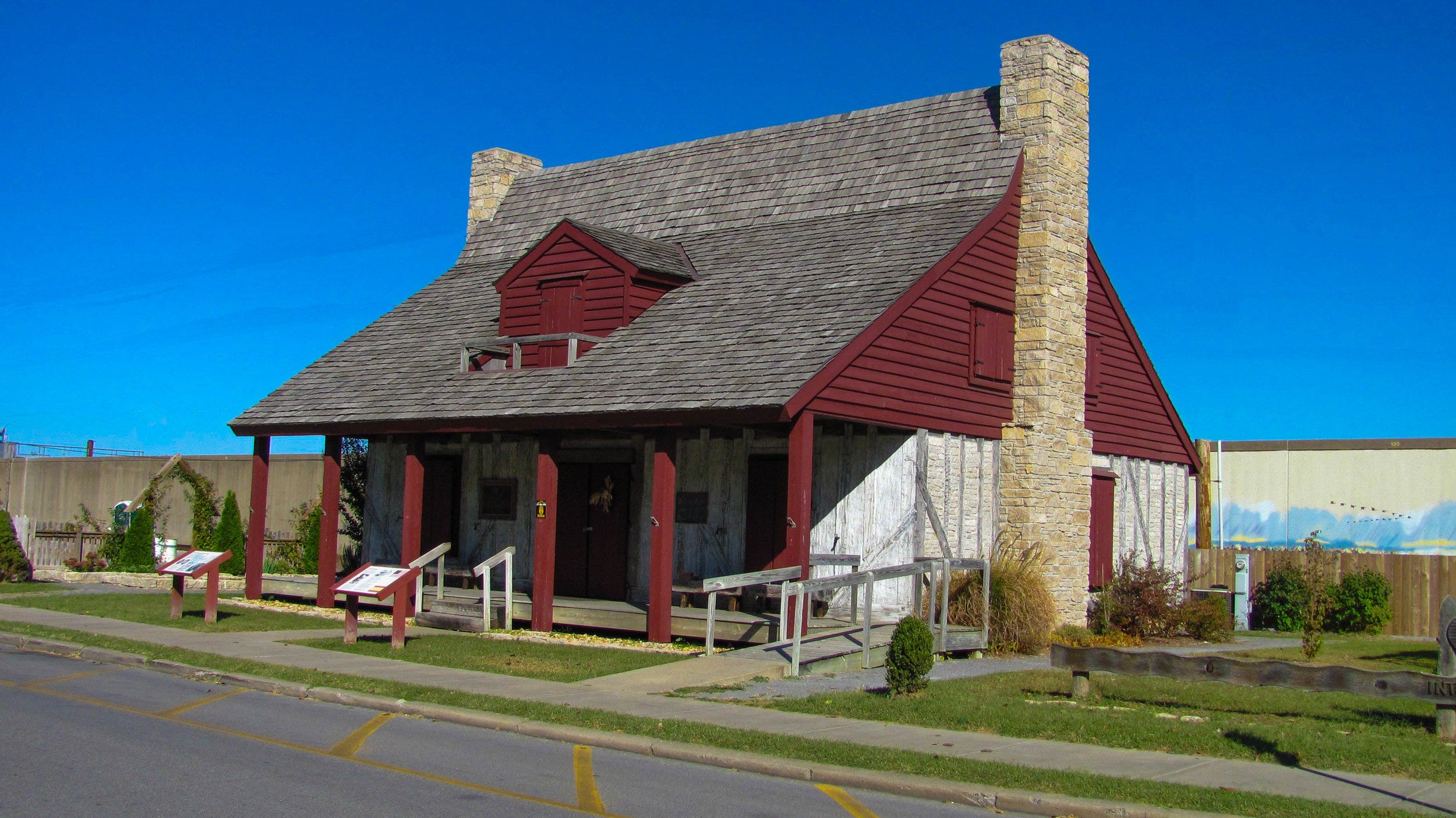
The journey next reaches New Madrid, where history took an unexpected turn. Today, the New Madrid Historical Museum interprets both the thriving river town Lewis visited and the catastrophic earthquakes of 1811–1812 that permanently altered the Mississippi Valley. Standing beside the broad river, visitors can easily imagine Lewis watching the powerful current carry him south while contemplating the difficult political challenges awaiting him in Washington.
Across the Chickasaw Homeland
Towering above the Mississippi River, the Chickasaw Bluffs have commanded this landscape for centuries. Long before the United States established Fort Pickering, the Chickasaw Nation recognized the strategic importance of these high ground overlooking the river. Their homeland controlled one of the Mississippi Valley’s most important transportation corridors and remained a center of Native power well into the nineteenth century.
Although little survives of the original fort, Memphis offers numerous opportunities to experience this historic landscape through its riverfront parks, scenic overlooks, and museums. The Metal Museum, perched high atop the bluff, combines remarkable exhibits with spectacular views across the Mississippi, allowing visitors to appreciate why generations of travelers recognized the strategic importance of this location.
Stop in Pontotoc, Mississipi and vist the Town Square Post Officce. The museum features a large collection of historical exhibits, documents, books and memorabilia. It also houses showcased displays of antique items and artifacts depicting the lifestyles, traditions, and artistry of families and businesses in the community, dating back to it’s founding days.
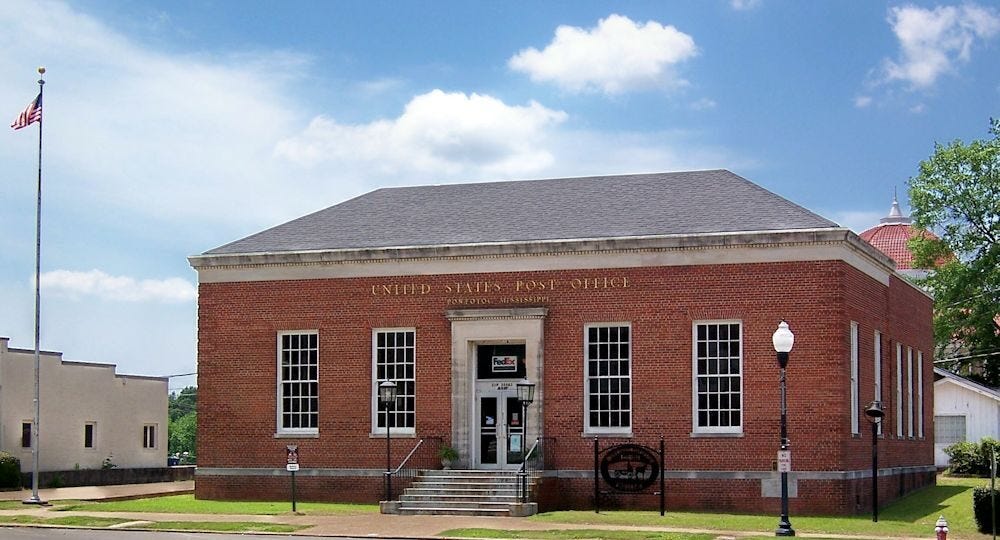
It is the only working historical post office in the nation. You can retrace the steps of the Chickasaws or learn of the hardships of the pioneers or remember the days of listening for the sound of a train whistle as the ribbons of steel brought distant travelers to this county.
On the Natchez Trace stood an Indian village, Pontatock, with its council house, which in the 1820s became the capitol of the Chickasaw Nation. The chiefs and the head men met there to sign treaties or to establish tribal laws and policies. Each summer 2,000 or 3,000 Indians camped nearby to receive an annual payment for lands they had sold to our Federal government. After the treaty of 1832, the last land was surrendered. The council house disappeared but its memory remains here in the names of a Mississippi county and town that went west with the Chickasaw as a county and village in Oklahoma.
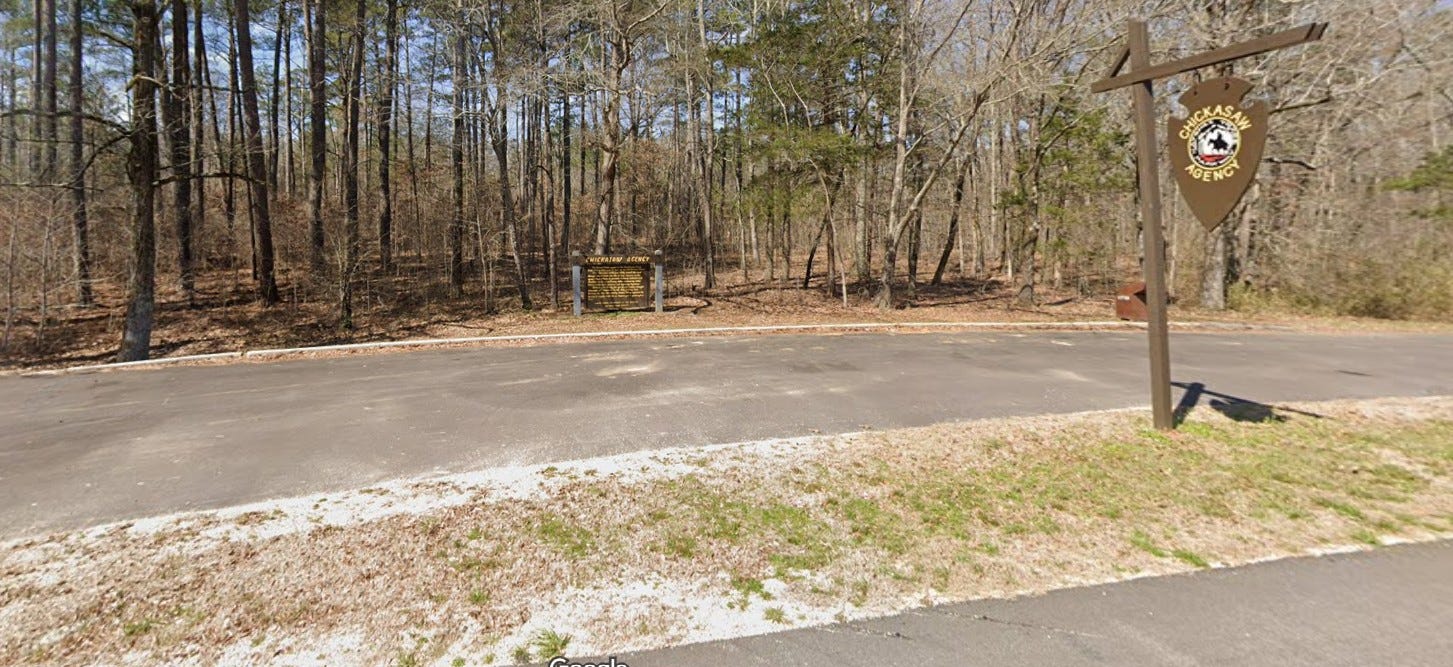
While truly not known, it is likely Lewis stayed at McIntoshville rather than the Chickasaw Agency, a few miles south of Pontotoc, MS, and several miles east of Tupelo. Highway 15 that runs south of Pontotoc is the old Trace. That area was the center of the Chickasaw Nation. That is where the Council House was located.
Buzzard Roost Spring on the Natchez Trace Parkway is the site of a stand (aka inn) run by Chickasaw Chief Levi Colbert, and later his son, in the early 1800s. His brother George operated another stand and a ferry farther up the Trace. In contrast to some Indian nations that allowed foreigners to operate businesses on their land, all businesses within the Chickasaw nation were either run by the Chickasaw or by foreigners with Chickasaw partners.
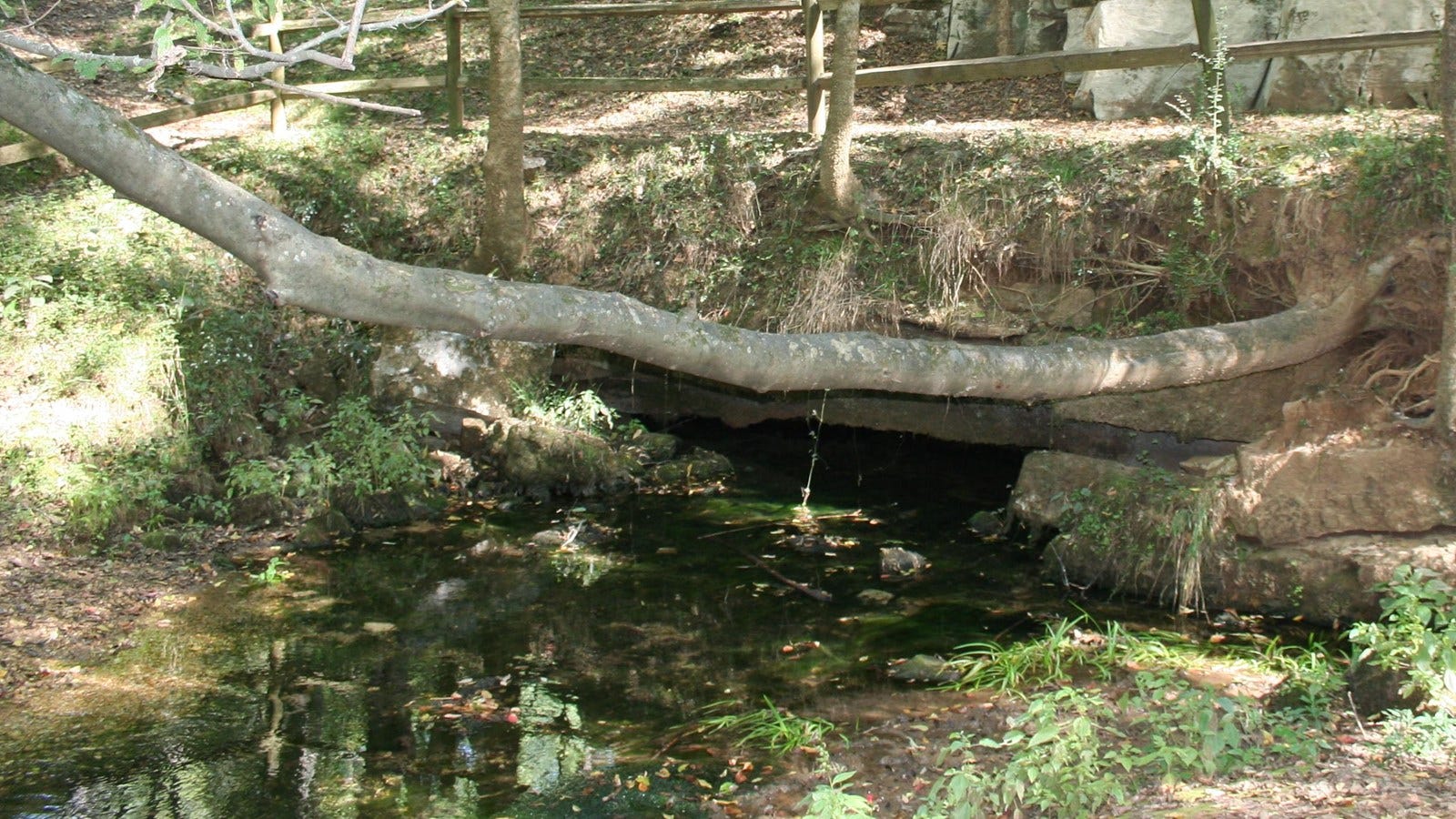
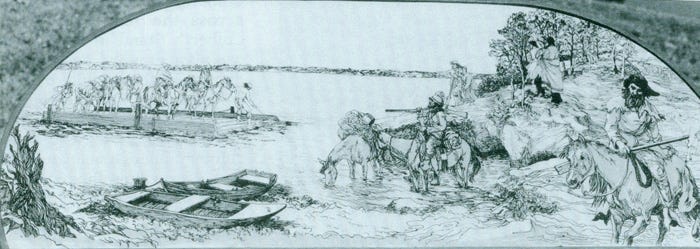
Colbert’s Ferry was a vital river crossing on the Tennessee River along the Natchez Trace, operated by George Colbert, a Chickasaw leader of Scottish and Native descent. The ferry served as a key transportation link for travelers, traders, and government officials moving between Nashville and Natchez in the early 1800s. Colbert reportedly once charged Andrew Jackson exorbitantly to cross, showcasing his savvy leadership. The site is historically significant for its connection to the Chickasaw Nation and its role in early American expansion. Meriwether Lewis likely crossed here during his final journey in 1809 before his death along the Trace.
At Metal Ford, milepost 382.8, travelers on the old Natchez Trace crossed the Buffalo River which was fordable except after heavy rains. The ford takes its name from its stone bottom, which reminded these earlier travelers of stone surfaced or “metaled” roads back home.
Also at this location is a short trail, 5 to 10 minute walk, which will take you to an old millrace, a river channel whose current fed Steele’s Iron Works to produce primitive pig iron in the 1820s.
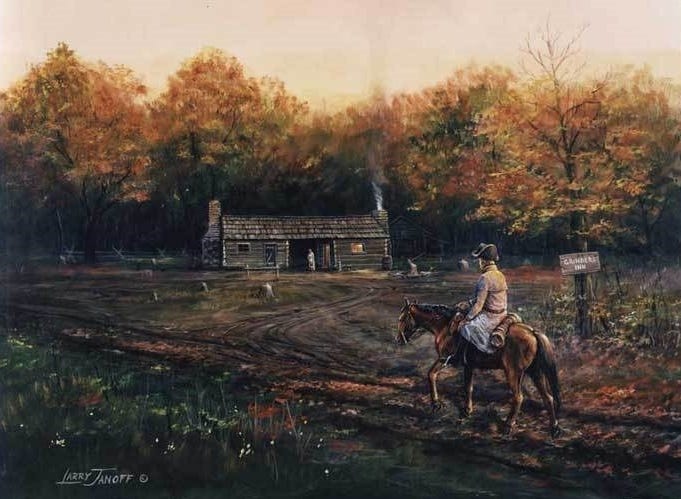
On October 11, at Grinder’s Stand (also “Inn”), 72 miles short of Nashville, most historians believe that Lewis, suffering from depression and anxiety, shot himself in the head and died the following morning. Thomas Jefferson had much earlier noted Lewis’s depressions, when he served as the President’s secretary, and believed that they ran in the Lewis family.
The Meriwether Lewis Monument and grave in Lewis County, Tennessee, are located about 100 yards from the site of Grinder’s Stand. The Inn was located on the Old Trace, near the crossing of Little Swan Creek, and was said to border American Indian territory.
A Five-Day Itinerary
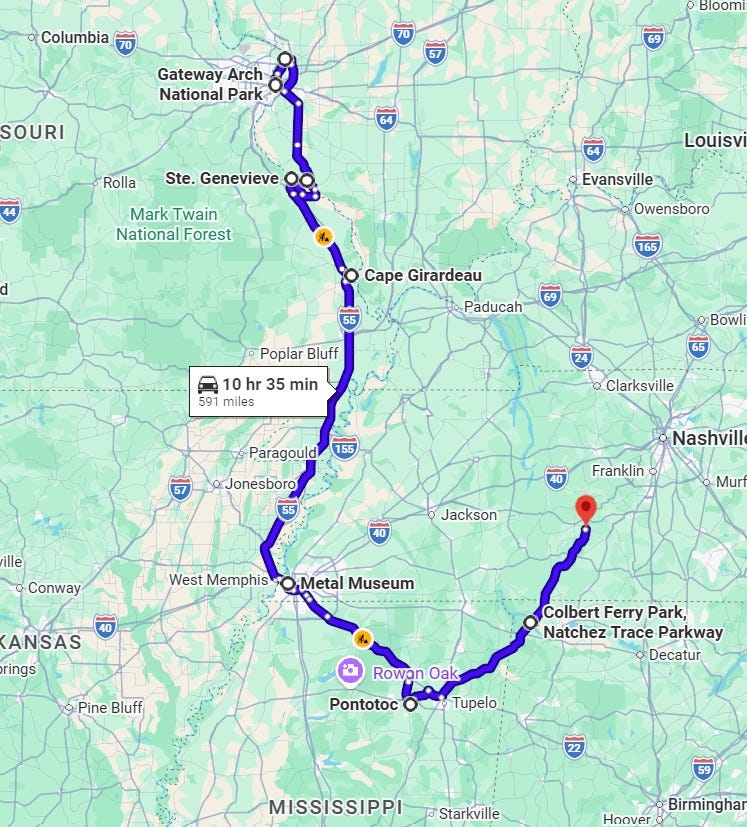
Day One: St. Louis to Cape Girardeau
Begin at Gateway Arch National Park before traveling to Camp River Dubois, where the Corps of Discovery completed its final preparations during the winter of 1803–1804. Continue south along the Great River Road to Fort Kaskaskia and the Pierre Menard Home before exploring the beautifully preserved streets of Ste. Genevieve. End the day in Cape Girardeau, where an evening stroll along the Mississippi River provides an ideal conclusion to your first day on Lewis’s route.
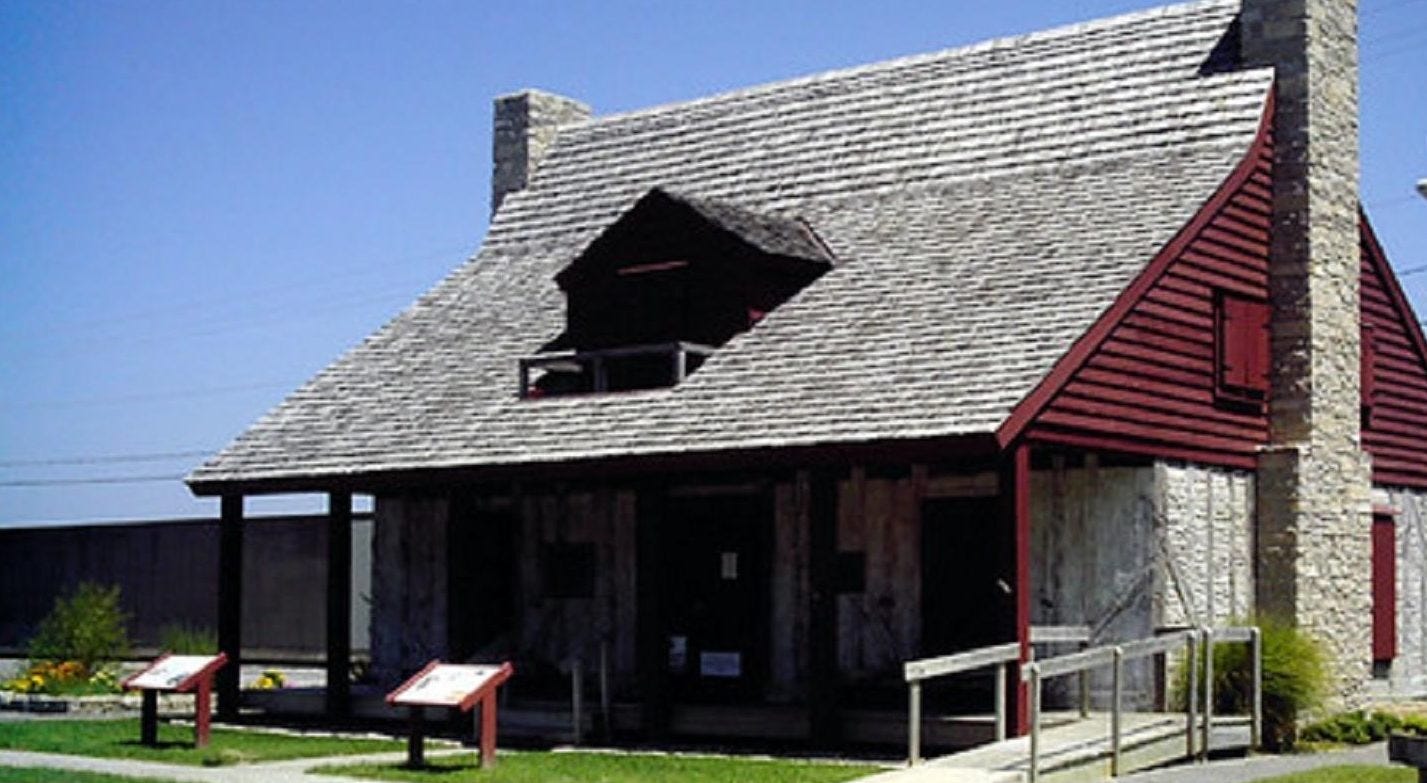
Day Two: Cape Girardeau to Memphis
Travel through New Madrid, where Lewis prepared his last will and testament before continuing toward the Chickasaw Bluffs above present-day Memphis. Standing atop the bluffs offers a fitting place to reflect on the moment Lewis left the Mississippi behind and began the overland journey that would define the final weeks of his life. Before leaving Memphis, spend time at the Metal Museum for its exceptional exhibits and panoramic views of the river.
Day Three: Memphis to Tupelo
In Pontotoc, visit the Town Square Museum, operated by the Pontotoc County Historical Society. Exhibits explore Chickasaw history, pioneer settlement, the coming of the railroad, and everyday life in northeastern Mississippi. The museum also houses the nation’s only working historic post office, providing another tangible connection to the communities that grew along the old Trace.
Spend the evening in Tupelo, an excellent base for exploring the central section of the Parkway.
Day Four: The Heart of the Natchez Trace
Dedicate the day to exploring the Parkway itself. Highlights include Tockshish, once an important Chickasaw settlement and early postal station; Metal Ford, where generations of travelers crossed the Buffalo River; Gordon House, the only surviving ferry inn along the Trace; Fall Hollow, with one of Tennessee’s most picturesque waterfalls; and the Sunken Trace, where centuries of footsteps carved the ancient roadway deep into the earth.
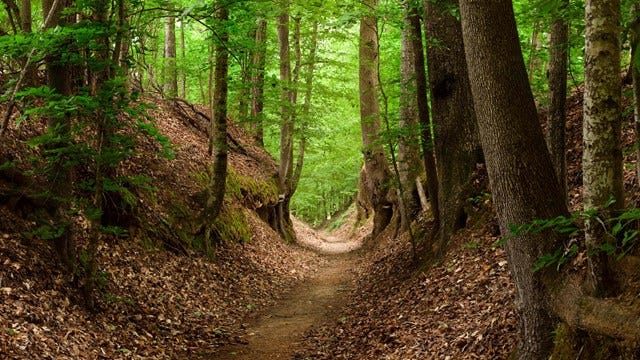
More than a scenic drive, the Natchez Trace Parkway is itself the destination. Every stop reveals another chapter in the story of Native peoples, traders, soldiers, settlers, and explorers who traveled this remarkable corridor long before modern highways crossed the South.
Day Five: Meriwether Lewis Monument to Nashville
Dedicate the morning to the Meriwether Lewis Monument and the reconstructed Grinder’s Stand. The simple monument nearby invites quiet reflection. Most visitors arrive searching for answers about Lewis’s mysterious death. They leave with a deeper appreciation for the explorer, scientist, soldier, and leader whose work forever transformed America’s understanding of the West.
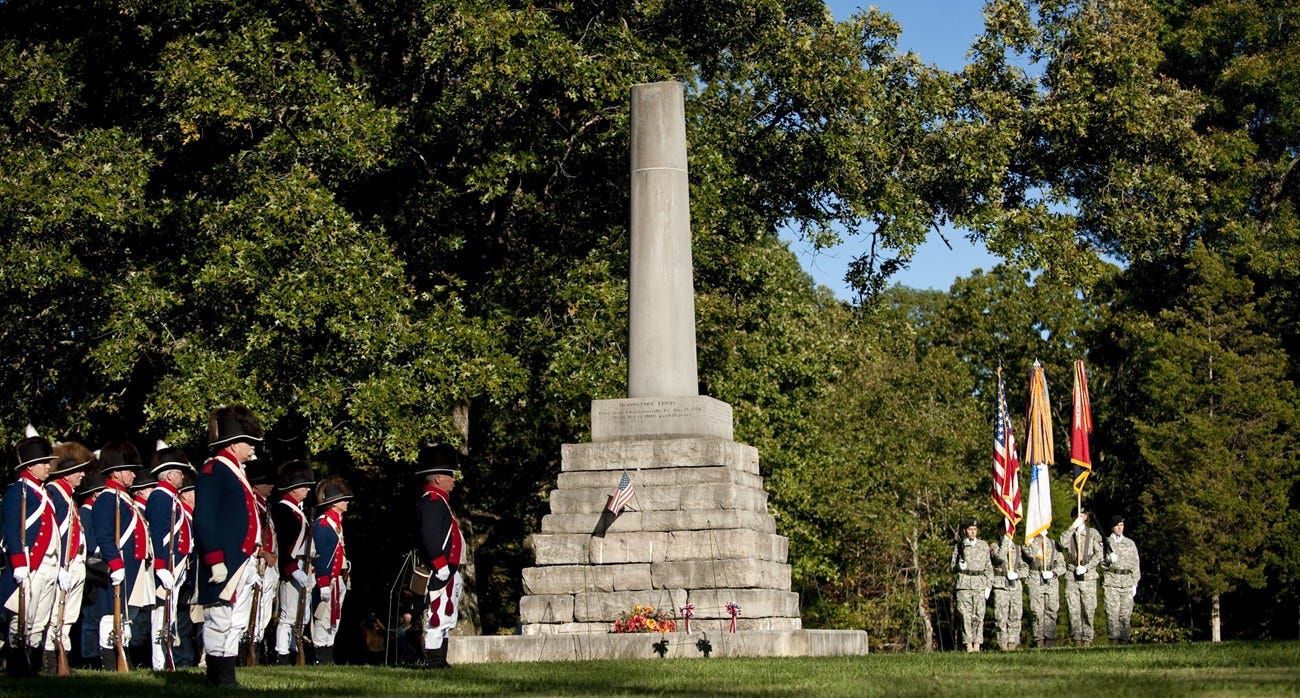
Continue north to Nashville, reflecting not on the tragedy of Lewis’s final days, but on the remarkable achievements that continue to inspire travelers more than two centuries later.
Reading Before You Go
Few travel experiences are enriched more than reading Meriwether Lewis’s own words before setting out. His journals transform rivers, forests, and prairies into living history, allowing modern travelers to experience the landscape through the eyes of one of America’s greatest explorers. Campsites become places of discovery, familiar rivers become formidable obstacles, and quiet valleys reveal stories of diplomacy, hardship, and scientific curiosity.
For readers seeking a deeper understanding of Lewis and his final journey, three books stand above the rest.
The Journals of the Lewis and Clark Expedition, edited by Gary E. Moulton, remains the definitive edition of the expedition’s original journals. Moulton’s meticulous scholarship and annotations provide unparalleled insight into both the famous expedition and Lewis’s remarkable intellect.
Stephen E. Ambrose’s Undaunted Courage introduced millions of readers to Lewis’s extraordinary life. While written for a general audience, it remains one of the finest narrative biographies of the explorer and offers valuable context for understanding the triumphs and challenges that shaped his final years.
Clay S. Jenkinson’s The Character of Meriwether Lewis takes a more thoughtful and personal approach, examining Lewis as soldier, scientist, explorer, and public servant. Rather than focusing solely on the mystery surrounding his death, Jenkinson explores the complexity of a man whose accomplishments often overshadow the burdens he carried after returning from the Pacific.
Together, these works transform a scenic road trip into a richer historical experience, allowing travelers to appreciate not only the places Lewis visited, but the extraordinary mind that recorded them for future generations.
Why This Journey Matters
Few American road trips combine history, scenery, and reflection as completely as Meriwether Lewis’s final journey.
From the busy riverfront of St. Louis to the quiet hardwood forests of the Natchez Trace, the route traces the closing chapter in the life of one of America’s greatest explorers while passing through landscapes that remain remarkably recognizable more than two centuries later. Along the way, travelers encounter French colonial villages, Native homelands, frontier forts, scenic river bluffs, and one of the nation’s most beautiful parkways. Together, they tell a story that is far richer than the mystery surrounding Lewis’s death.
The road Lewis followed in 1809 still invites travelers willing to slow down, look beyond the headlines of history, and discover the enduring legacy of a man whose greatest achievements forever changed America’s understanding of a continent.
We are grateful for the generous support of our corporate and travel partners whose sponsorship helps make this work possible. When planning your travels along the Lewis and Clark Trail, we encourage you to support the businesses and organizations that invest in preserving and sharing these stories—your patronage helps sustain both the trail and the experiences that bring its history to life.



No posts
Comments
Nothing yet. Say the first thing.
Sign in to join the conversation.