
Europe’s tech scene has been left bereft by TechCrunch’s so-called retreat from the continent. Let’s be honest, its focus was always elsewhere.
Francesco Ricciuti edited this edition of Unbeaten Path by underlining sovereignty.
Subscribing is free, so buy a sub to Sifted or sponsor a podcast/conference.
I’ll answer first: I don’t.
Judging by the grief porn littering my social media, this is clearly a controversial view but hear me out.
Eight years ago, squeezed into a Brussels phone booth, I asked Martin Peers, then working with The Information, how a scoop-hungry European tech reporter like me could ever make Europe matter to Silicon Valley.
Spoiler alert: I couldn’t. I thought the tech regulation angle would resonate but no, the Valley always assumes the EU regulates, so the detail didn’t matter.
This is exactly why The Information has succeeded. The leadership knew exactly where its strength lay: The Valley, The Valley, and… yes, still The Valley.
TechCrunch has always been predominantly a US publication. Scratch that. It’s overwhelmingly a Silicon Valley publication. Sure, Natasha, Paul, and Mike have written thousands of articles, and Romain Dillet, who helped define TechCrunch’s reputation in France, authored no fewer than 3,500 posts. But hundreds of thousands (perhaps millions) of articles have originated from a small slice of California, 5,668 miles (9,122 km) from Paris.
Underfunded Newsrooms
When I was reporting, I chased insiders because that’s where the premium in news lies. Now, as a reader, I still seek that insider’s perspective. TechCrunch’s European team did stellar work in that regard.
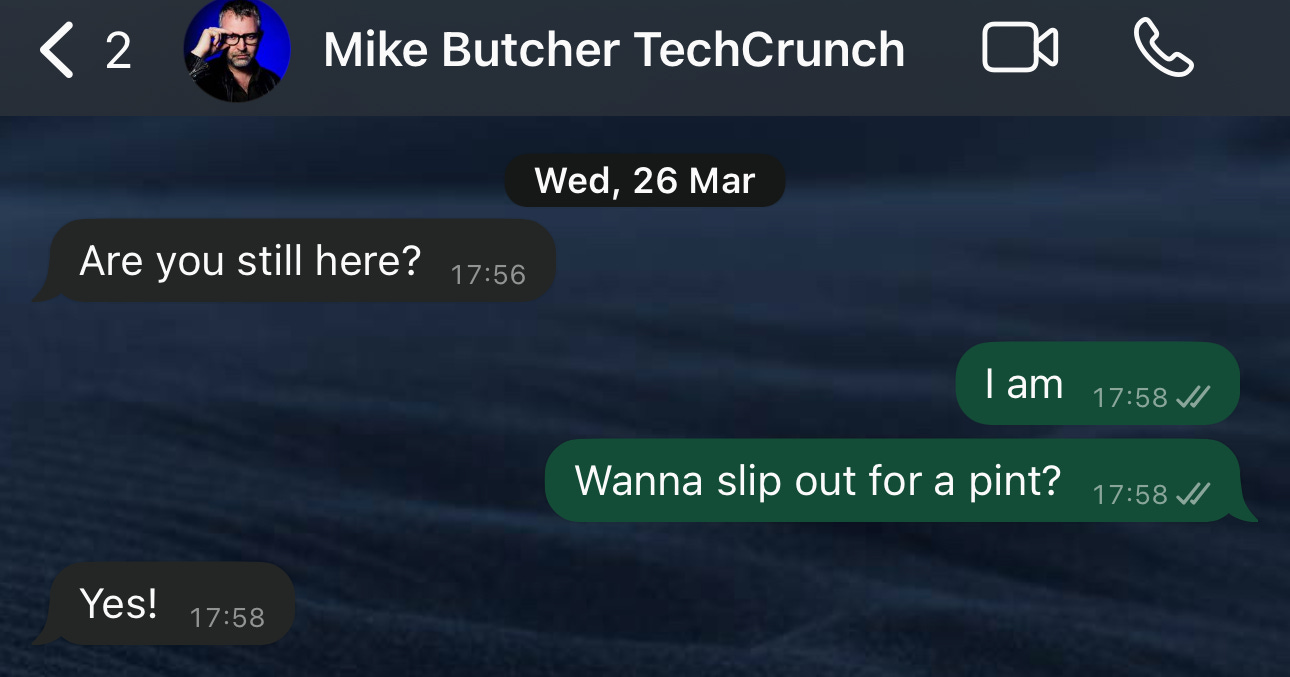
Anna Heim interrogated founder Michael Kissner to introduce Akhetonics, a small but powerful German photonics firm, to a global audience. Paul Sawers diligently covered open-source long before the AI and LLM wave swept in and elevated Konstantin Vinogradov’s little known OSS index into a scoreboard recognized worldwide. Mike and I have shared more pints than story pitches, underscoring the dying art of source building and shoe-leather reporting over regurgitating a press release.
But consider this: Akhetonics wasn’t just a chance for me to self-promote a portfolio company. It was one standout player among a sea of deeptech firms competing desperately for the attention of a few journalists. How can a handful of reporters write about an entire continent? Well, they can’t.
I spent a few years covering tech in southern Africa for Bloomberg. The Johannesburg bureau had around 20 journalists. We dipped into stories across the continent but the focus was on Africa’s most sophisticated economy and that reflected in the strength of the coverage.
There are around seven PR professionals for every reporter. I guess there are perhaps seventy for each TechCrunch journalist. This imbalance, to me, always seemed unsustainable. TechCrunch’s European reporters cared deeply about Europe; its management didn’t or couldn’t afford to.
Subscriptions Models and Media Economics
This isn’t unique. US media often covers the rest of the world as an odd peculiarity - a gentle reminder to American readers that, hey, there’s a big world out there. If you think I’m exaggerating, I’ll see your scepticism and raise you a curious New York Times piece lamenting London’s supposed abundance of “porridge and boiled mutton.” Right… me neither.
For balance, European media isn’t immune either. Sky News gleefully highlights bizarre stories. From US shoplifters wielding pythons or Sweden’s annual moose migration. I love this stuff! But if I’m American or Swedish, I’m not relying on Sky News for my local updates. Europe’s tech ecosystem deserves a similar self-reliance, especially as the region grows more strategically sovereign. Dedicated media coverage is part of that sovereignty.
Let’s be honest: TechCrunch pulling back isn’t exactly an existential blow to European startups. Investors aren’t suddenly operating blindfolded, nor will founders vanish overnight into obscurity. Instead, the real loss is symbolic. It’s a stark reminder that Europe has long been treated as a mere footnote by US-based publications.
Contrast this with The Information, thriving on its subscription model, boasting around 45,000 readers who willingly shell out at least $399 annually, plus punchy ad revenue from a newsletter reaching hundreds of thousands. Yet, I’ve never once been sent (or even seen anyone request) a paywalled article from The Information.
Sifted, however, is a different beast altogether. European VC WhatsApp groups buzz constantly with requests for screenshots of its paywalled articles (you know who you are). For context, my sub costs just thirty quid a month. Europe clearly values dedicated, insider-driven reporting—just not enough to universally pay for it, apparently.
Media Sovereignty
Europe is alight with sovereignty at the moment. Just this morning, I watched a podcast with Andreas Monk of EUVC on precisely that topic. Why limit sovereignty to matters of defense or next-gen computing?
Europe needs media champions that don’t merely glance across the Atlantic for validation.
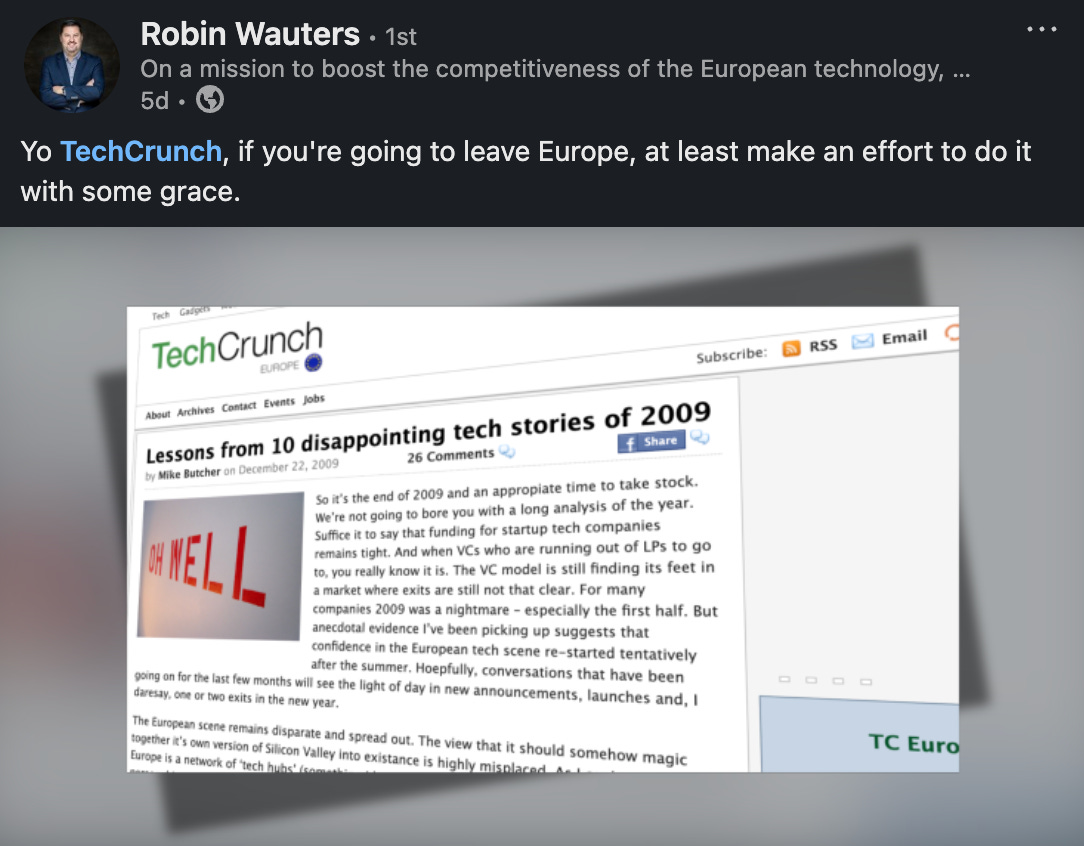
Scrappy local outlets like Tech.eu (cheers again, Robin Wauters, for letting me pilfer your data back in my reporting days), EU-Startups, Tech Funding News, The Next Web and Resilience Media are already stepping up.
Actively investing in these voices by even just reading and sharing their work is how we turn Europe’s media landscape into something robust, influential, and genuinely sovereign.
TechCrunch’s chairman insists they aren’t leaving Europe, promising great things via their acquisition of Foundry. Yet, it’s hard to see how this happens after axing decades’ worth of experienced European talent. It smells suspiciously like AI-generated filler to me but more on that in a future edition of Unbeaten Path.
That said, TechCrunch remains my go-to for US tech news, ironically enough. Despite my huge admiration for the FT (via my good friend at their San Francisco bureau), the FT isn’t my number one choice for US tech updates. Though credit where it’s due: the FT recently published a terrific Marc Benioff interview that’s worth ten minutes of anyone’s time.
TechCrunch retreating from Europe? Adios. There’s enough money (and demand) for a commercial news organization to enter the fray and make the indefatigable team at Sifted sweat. They already get heat from Riddhi Kanetkar, Cate Lawrence, Lucy Adams, Siôn Geschwindt and Sofia Chesnokova, but let’s add some more.
Europe’s tech deserves its own headlines, not hand-me-downs. Let’s start building them.
Comments
Nothing yet. Say the first thing.
Sign in to join the conversation.