
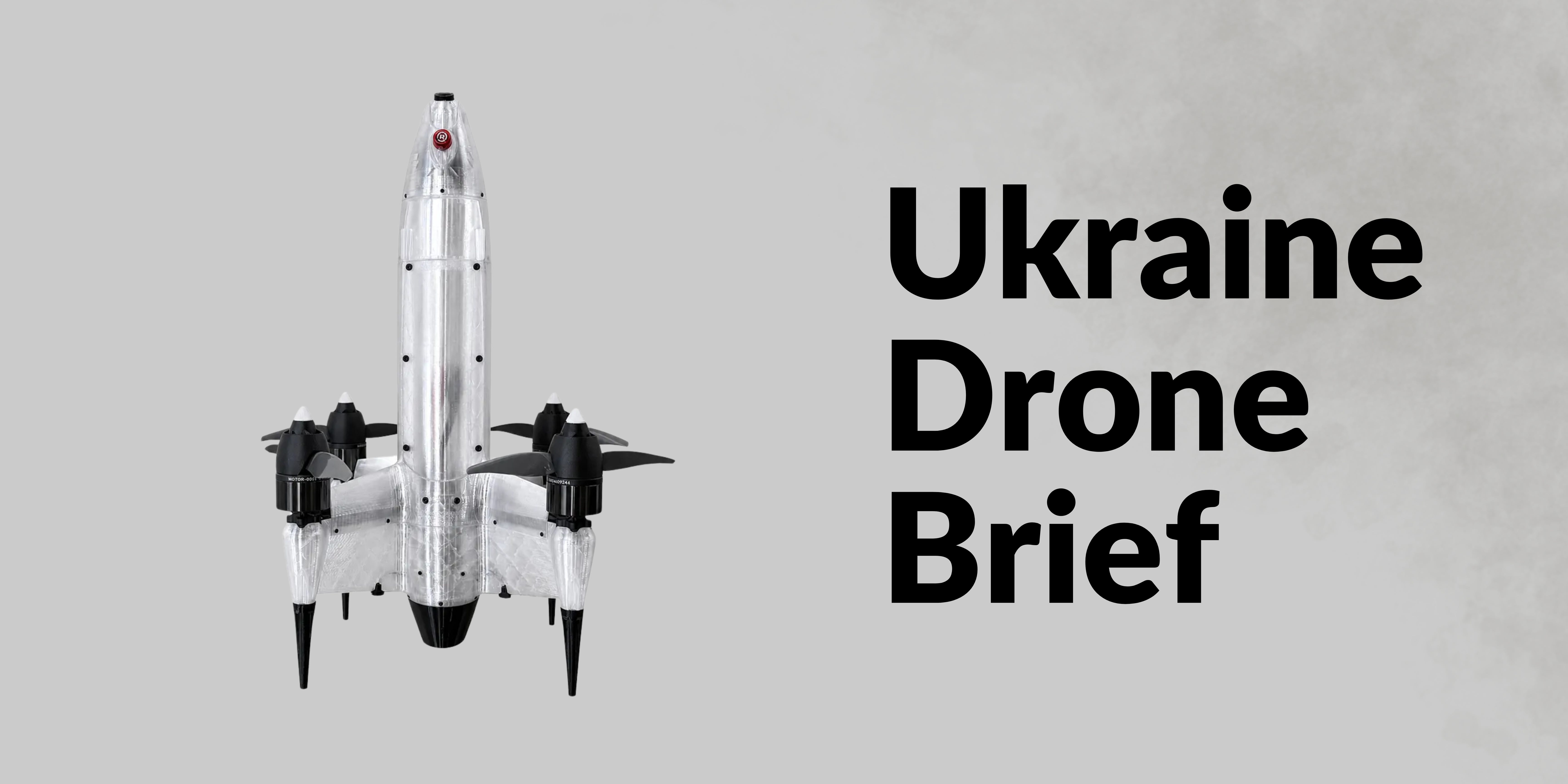
Ukraine is extending the range of its deep-strike drones, while Russia is seeking to localize motor production for FPV drones. Russia has already tried to localize fibre-optic cable production—and we all remember how that turned out.
For those who do not remember: the production site was struck by Ukrainian drones and put out of operation for at least a year.
Here is my weekly edition of Ukraine Drone Brief. Check all earlier publications here.
Aerial Drones
Ukrainian long-range drone attacks have disabled at least 30% of Russia’s actual oil-refining capacity and 45% of its nominal capacity.
Ukraine’s Fire Point modernized its long-range drones. The FP-1 can now fly up to 3,400 km while carrying a 60 kg warhead. The FP-2 has a range of up to 700 km and can carry a warhead weighing up to 200 kg.
The Kyiv production facility of US company Terminal Autonomy was destroyed in a Russian missile strike. Terminal Autonomy makes precision “deep-strike” drones with guidance systems that are resistant to Russian jamming signals.
According to Russian sources, the battery compartment is the most vulnerable part of the heavy Baba Yaga hexacopter Ukrainian drones. Russians use tracer and armor-piercing incendiary ammunition to bring down such drones.
Russia’s serially produced Boomerang FPV drones can operate on frequencies up to 7.2 GHz, beyond the coverage of most drone detectors.
Ukrainian forces observed an unusual configuration of Russia’s multipurpose Gerbera drone towing an FPV drone on a rope or cable. The purpose of the setup remains unclear.
Ground Drones (UGVs)
Since the start of 2026, UGVs in Ukraine have carried out 66,300 missions, taking on the riskiest logistics and evacuation tasks.
The Protector by Ukrainian Armor is Ukraine’s largest UGV by payload, weight, and dimensions, with a declared carrying capacity of 1,480 kg. It is also considered relatively survivable, completing around 20 missions on average. One Protector transported nearly 15 tonnes of supplies in a month. A single delivery can provide a unit with essential supplies for a week of combat operations.
Naval Drones
Russia plans to build a 500-ton unmanned vessel for anti-submarine warfare and expand unmanned-systems units across its navy. Russia’s Northern Fleet has established its first unmanned-systems regiment, comprising two battalions of unmanned surface vessels and one battalion of unmanned underwater vehicles. A second regiment is planned for the Pacific Fleet in 2027.
The Russian Navy now rarely operates in the Black Sea. Vessels launch Kalibr missiles directly from port because of the threat of Ukrainian naval drone strikes. The Ukrainian military is currently focusing primarily on vessels capable of carrying cruise missiles.
Navies are unlikely to abandon traditional large warships in the coming years. A new concept of naval warfare is emerging in which uncrewed surface vessels will become an important complement to conventional naval forces.
C-UAS
Ukraine’s Defence Forces have used STING interceptor drones to destroy more than 9,000 Russian Shahed/Geran and Gerbera drones of various modifications, including jet-powered versions.
The highest-altitude STING interception occurred at 6,858 metres, when it destroyed a Zala reconnaissance drone worth approximately $200,000.
Close to Russia’s MoD, Telegram channel Rybar published information about how Qatar is transforming its air-defence system with input from Ukraine. According to it, Qatar has acquired RADA RPS-42 radars, Merops interceptors, Zirka interceptor drones, and STING interceptors.
Within a year, Ukrainian companies are expected to provide Qatar with more than 20,000 interceptor drones, 100 USVs, 16 radars, and at least 48 trained crews. It is currently unclear how Rybar obtained this information or how credible it is.
Ukraine’s drone manufacturer General Cherry launched a service allowing businesses to protect their facilities from drone attacks. The offering includes licensed air-defence operations, trained pilots and mobile response teams, counter-drone systems, personnel training, and technical support for businesses seeking to establish their own protection capabilities.
Ukraine unveiled a new EW system called STRYI, designed to disrupt FPV drones. The manufacturer advertises operation across 300-6000 MHz and claims engagement distances of up to 50 km under favourable conditions.
Russia developed an experimental floating fire-support platform, the Plot-40, to protect naval bases and ports from naval drones. The Plot-40 is armed with a remotely operated machine-gun module.
It remains unclear whether a crew will be stationed aboard to operate the weapon or whether the platform will feature advanced AI capabilities for automatic target classification.
The Russian Navy corvette Stoikiy, which performs escort missions, has been fitted with additional 12.7 mm Kord heavy machine guns and 7.62 mm PKM machine guns to defend against Ukrainian naval drones.
Ukraine’s Kharkiv region has launched an experimental three-tier defence system against Russian fibre-optic drones. It combines an active counter-drone perimeter, anti-drone netting along major roads, and mobile fire groups with shotguns and automated weapon turrets.
Cooperation Deals
Ukraine and Latvia signed a series of memoranda to deepen cooperation on unmanned systems. The partnership aims to attract investment in UAV production, transfer Ukrainian technologies, and establish modern dual-use testing infrastructure in Latvia.
Ukraine’s EDRONE and Romania’s OVES Enterprise plan to launch drone production in Romania.
Ukrainian manufacturer F-Drones has delivered its first 2,000 F10 FPV drones to the United States.
Kyiv and London could expand their defence cooperation through the exchange of missile and drone production technologies, President Zelensky said.
Estonian-Ukrainian DoD Solution announced a strategic partnership with US-based Lantronix. The companies will work to accelerate the large-scale deployment of the AURA AI autonomy platform for unmanned systems.
Related Geopolitical Developments
Chinese leader Xi Jinping urged the military to step up the use of unmanned and AI technologies by 2027.
Britain chose proven in Ukraine Tekever AR5 surveillance drones to keep British troops safe through round-the-clock intelligence gathering. The AR5 has been selected to replace the ageing Watchkeeper drones.
American AEVEX Aerospace received an $88.1 million contract from the U.S. Army following its delivery of Phoenix Ghost family drones to Ukraine.
AI and Autonomy
Ukraine has had drones with target-guidance technology for over a year; however, these systems are still primarily purchased directly by individual military units rather than supplied centrally to the Armed Forces.
Components
The Ukrainian Oko Camera has unveiled its first purpose-built thermal imaging camera for ISR drones.
Russia is importing production lines to manufacture drone motors domestically, potentially enabling the production of millions of FPV drones. If the industry takes off, Russia’s defence sector will no longer need to import drone motors from China.
Work with Ukraine
Brave1 and NATO officially opened applications for their first joint innovation programme, UNITE – Brave NATO. The first call focuses on developing counter-drone solutions and strengthening air defence. To participate, companies from Ukraine and NATO member states must submit a joint application.
The Brave1 defense cluster postponed the third Defense Tech Valley, Ukraine’s largest international defense technology summit, after a missile strike on a testing site in the Kyiv region.
Relevant publications:
Comments
Nothing yet. Say the first thing.
Sign in to join the conversation.