
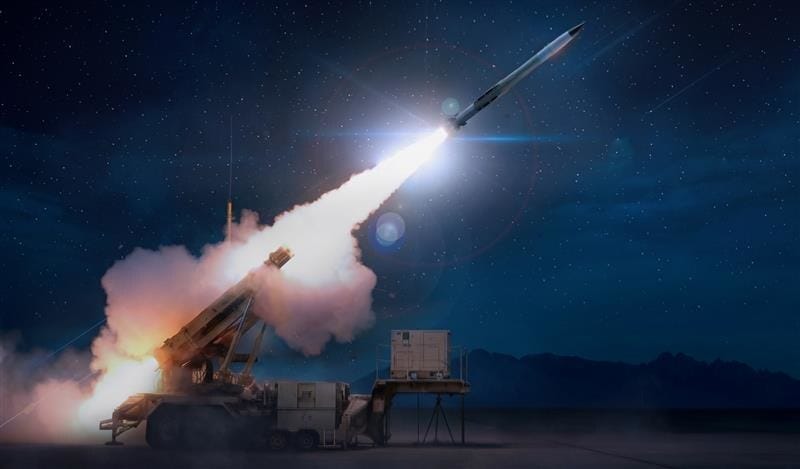
With Ukraine facing a shortage of interceptors, Russia fired a record 126 ballistic missiles in July. Moscow appears to be drawing more heavily on its reserves to exploit the current gap in Ukraine’s air defence and carry out high-impact strikes with limited opposition.
In total, Russia fired 376 missiles at Ukraine during the month—more than twice the number launched in June.
Some of these missiles are reaching Polish airspace. Poland, along with other NATO members, already needs to consider how to counter this threat and support Ukraine’s air defence capabilities.
In this edition:
Licence for Patriot Interceptor Missile Production: Trump Changes His Mind;
Ukraine’s Long-Range Strike Tactics Become More Precise;
How Russia Is Disrupting Starlink;
Ukraine’s Lessons for NATO and the German Armed Forces;
and 10+ additional developments in Ukraine and Russia.
Thank you for reading and supporting my work!
For the first time in two years, I postponed the release of my newsletter by a day.
Last week, I was in Colombia, where I delivered a presentation to the Colombian Navy on drone warfare in Ukraine. It was a major milestone in both my personal and professional life. I have been fascinated by Colombia for the past 20 years, so it was incredible to finally visit the country and contribute, in some way, to its security and defence.
I will prepare a separate publication on the opportunities for defence and security cooperation between Ukraine and Colombia. This is a highly promising area, particularly in light of the political changes in the country.
Licence for Patriot Interceptor Missile Production: Trump Changes His Mind
President Zelensky reported that on the night of 31 July-1 August, Ukraine’s Air Force managed to intercept only one out of 27 Russian ballistic missiles due to a shortage of Patriot interceptors and called on partners to provide additional air defence capabilities.
Just a couple of weeks ago, we discussed how, during the NATO Summit in Ankara, US President Donald Trump said that the United States planned to grant Ukraine a licence to produce Patriot air defence interceptors.
Last week, however, he walked back his earlier promise. According to The New York Times, when asked about the agreement, Trump said, “We have not agreed to that,” suggesting that he had changed his mind because “it is a hard thing to give away that kind of technology” and because of the risk that “the people you give the technology to could someday turn on you.”
US Ambassador to NATO Matthew Whitaker said that negotiations on the joint production of interceptors for Patriot systems with Ukraine and European partners are ongoing. However, an agreement is unlikely to be reached before this winter.
In earlier discussions, both government-affiliated officials and independent experts in Ukraine were cautiously optimistic about the US decision to grant Ukraine a licence to produce Patriot interceptors. They warned that establishing production lines in Ukraine would be a lengthy process, meaning that actual interceptor production would likely begin only in a few years.
The shift in the US president’s rhetoric has no immediate impact on Ukraine’s current air defence capabilities. Nevertheless, it contributes to a broader sense of weakened security across Europe, which would also require additional air defence capacity in the event of Russian attacks.
On July 30, a Russian missile crossed into Poland as part of Russia’s massive strike against Ukraine. Polish authorities confirmed that the object that crashed in eastern Poland was a Russian Kh-101 cruise missile carrying a significant explosive payload. A Ukrainian pilot had tracked the missile but was unable to intercept it; he turned back 20 seconds before reaching the border because he could not have flown into Polish airspace. The missile was manufactured in the second quarter of 2026 at a facility in the Moscow region.
Ukrainian analyst Serhiy Naumovych wrote that there is no reason to believe that Russia’s ballistic missile campaign will ease in the coming months. Everyone is preparing for a major war, and every country needs its own missile stockpile. Ideally, those stockpiles should be increased. Following Trump’s military operation, the United States itself reportedly has very few of these missiles left—fewer than 1,000, according to some estimates. Its stocks must be replenished ‘to protect American citizens, not Ukrainians.’
Ideally, the stockpile should be 10,000–20,000. At current production rates, manufacturing that number would take 10–20 years.
He added that the only relatively quick way to try to stop Russia’s ballistic missile campaign in the coming months is to intensify ballistic missile strikes against targets in Moscow, so that every 10–15 days the city experiences scenes similar to those in Kyiv. “Only then might Ukraine’s Defence Intelligence receive, through the communication channels used for prisoner exchanges, a request to ‘discuss a moratorium on strikes against rear areas,” Naumovych added.
Ukraine has been working on several other options for countering Russian missiles, including its own air defence system, Freija, and the LIMA electronic warfare system, which is reportedly capable of interfering even with ballistic threats.
Another option is to target Russian defence enterprises that manufacture missiles and their components—not only with drones, which carry relatively limited explosive payloads, but with missiles powerful enough to ensure that Russia cannot quickly restore the damaged production capacity.
Again, this is not a task for Ukraine alone, but for a united coalition of partners capable of supporting it. Eventually, Ukraine will not be able to intercept every Russian missile heading towards NATO territory—a development that would naturally follow previous incursions by Russian drones into Poland.
According to The Atlantic, Zelensky asked Trump to persuade Musk to allow Ukraine to use Starlink for guiding long-range drones toward ballistic missile launchers in Russia.
SpaceX currently restricts the use of Starlink on Russian territory. Zelensky reportedly wanted to discuss the issue directly with Musk during his visit to the United States, but the meeting did not take place.
Ukraine’s Long-Range Strike Tactics Become More Precise
Eighteen Russian refineries were targeted in July, including the Omsk refinery, the country’s largest and located more than 2,500 kilometers (1,550 miles) from the Ukrainian border. Bloomberg counted 30 attacks on oil infrastructure during the month, the second-highest total after 32 in May.
Of the 26 Russian refineries hit by Ukrainian drones and forced to halt production, only eight had returned to full operation as of July 27.
Comments
Nothing yet. Say the first thing.
Sign in to join the conversation.