
There’s no shortage of essays on authenticity (or lack therof) in Chinese-American foods: from clicky listicles like “11 popular American-Chinese foods that you won't actually find in China” to full documentaries like The Search for General Tso. We’ve come a long way—many people can now recognize General Tso’s chicken and chop suey as uniquely Chinese-American, but one dish still sits in a sticky spot right between the line of mainland and diaspora.
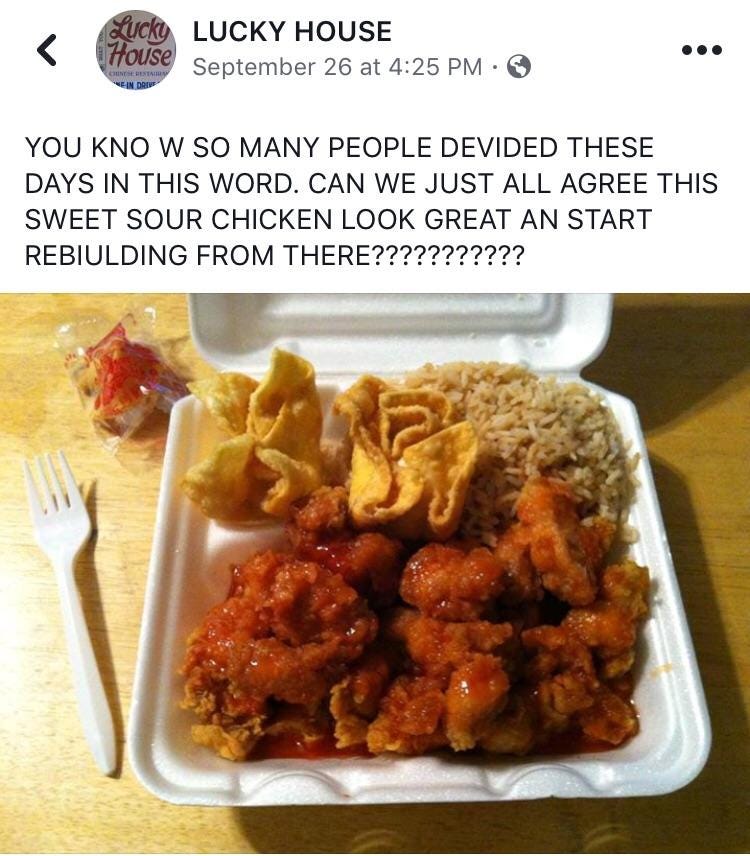
Sweet and sour, for better or worse, is everywhere—from mall food courts and takeout joints to banquet spreads. It’s possibly the most bipartisan dish out there. The version that shows up most often in the U.S. is a thick, tangy, red sauce made with ketchup, vinegar, sugar, soy sauce, and cornstarch.
Sweet and sour sauce wasn’t always the candy red ketchup-y concoction beloved across here in the States. The sauce has roots in ancient Chinese cooking, with early versions appearing in Jiangsu and Zhejiang cuisines as early as the Tang Dynasty (618 to 907 CE).

Fast forward to the 1850s: the California Gold Rush drew waves of Cantonese immigrants from southern China, who brought their culinary traditions with them. Over time, those traditions molded to American palates and pantry staples. Ketchup and pineapple juice replaced hawthorn.
Sweet and sour chicken with ketchup made its way back to China largely through globalized food culture, particularly in the reform and opening-up era starting in the late 20th century. As Chinese chefs and restaurateurs traveled abroad or returned from overseas, they brought back versions with Western ingredients, including the ketchup-based sweet and sour chicken.
Over time, regional variations emerged, especially in Cantonese cuisine, where it’s known as 咕嚕肉 (gu lou yuk). This Cantonese take usually features crispy fried meat tossed with peppers, onions, and pineapple, which all play into the dish’s namesake balance of sweet and sour.
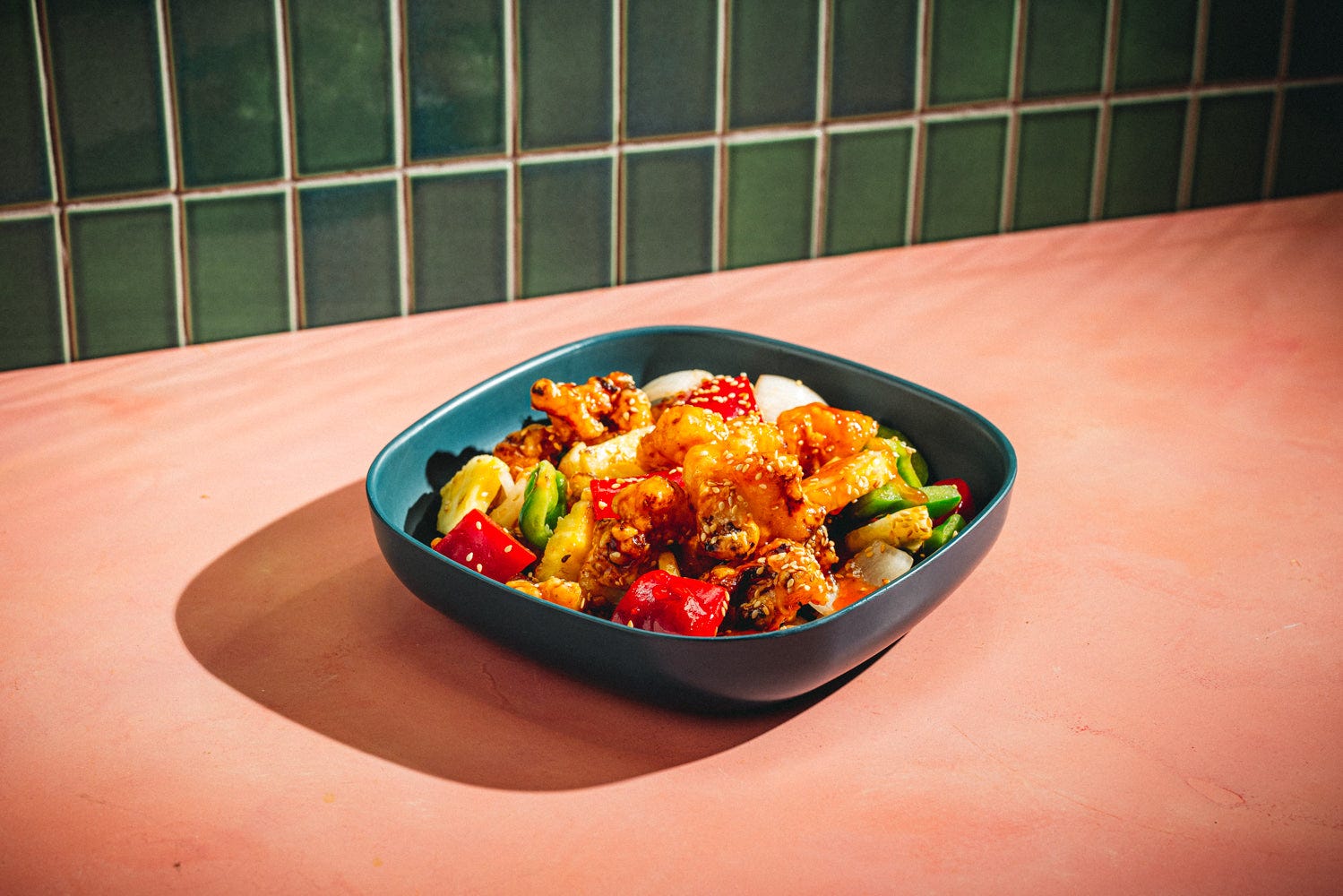
Chinese-American sweet and sour sauce feels like the opposite of food sovereignty in many ways—there’s nothing farm-to-table or recognizably indigenous to it. It’s a Chinese dish divorced from traditional Chinese ingredients, made from a mashup of American pantry ingredients yet not entirely American either.
So if a dish isn’t defined by its country of origin or by the ingredients it uses, what is it? And does it even matter?
Let’s be honest: the authenticity debate is partly a product of colonialism. It privileges purity, static borders, and a fantasy of unchanging tradition. The reality is people move and tastes change. Diasporic foods are born from this flow.
This scrutiny doesn’t just come from outsiders either. Within the Chinese diaspora, there’s a long history of gatekeeping what “counts” as real Chinese food. Recent immigrants can be quick to dismiss dishes like General Tso’s chicken or sweet and sour chicken as watered-down, too sugary, too Western.
As a first-generation Chinese-American, I’ve felt that tension firsthand. Chinese-American food wasn’t something I grew up with (re: “we have food at home”). And yet, sweet and sour managed to slip through. Maybe because it also exists in China, and that acceptance gave it a special kind of permission.
From Tang dynasty banquets to American takeout joints, sweet and sour has always reflected the circumstances that shaped it. If anything, that spirit of hustle and adaptation is the most authentic thing there is to Chinese diaspora.
Sweet and sour isn’t just a Chinese food thing—it’s an everybody thing. Nearly every food culture has its own take on this pairing. Italians have agrodolce (literally “sour-sweet”), a reduction of vinegar and sugar that dates back to ancient Roman times. In the Philippines, you’ll find dishes like escabeche, a fried fish topped with a sweet-and-tangy sauce of vinegar, sugar, garlic, and ginger. Escabeche carries a lineage of migration, passed from Persian kitchens through Spanish colonizers to Southeast Asia. Even British cuisine has sweet and sour hiding in plain sight, think Branston pickles to brown sauce, which relies on vinegar and molasses to achieve a similar sweet-savory balance.
There’s a reason the sweet and sour combination pops up all over the world. Our brains are hardwired to crave that primal hit of salt, sugar, and acid. Beyond flavor, vinegar and sugar have long been used to stretch ingredients, keep them shelf-stable, and make tough cuts of meat or day-old vegetables taste vibrant again.
I thought it would be fun to ponder, what if we flipped the narrative on sweet and sour? Instead of replacing Chinese ingredients with Western ones, what if we went the other way?
I landed on this chicken with goji agrodolce. It uses a base of honey and rice vinegar for the sweet and sour component. Add a few staples from my Sichuanese pantry like zhacai (pickled mustard stem) for savoriness, goji berries for fruity flavor, and pine nuts for richness. Chopsticks are optional here—the crispy skin is a well warranted fork and knife situation.

Comments
Nothing yet. Say the first thing.
Sign in to join the conversation.