
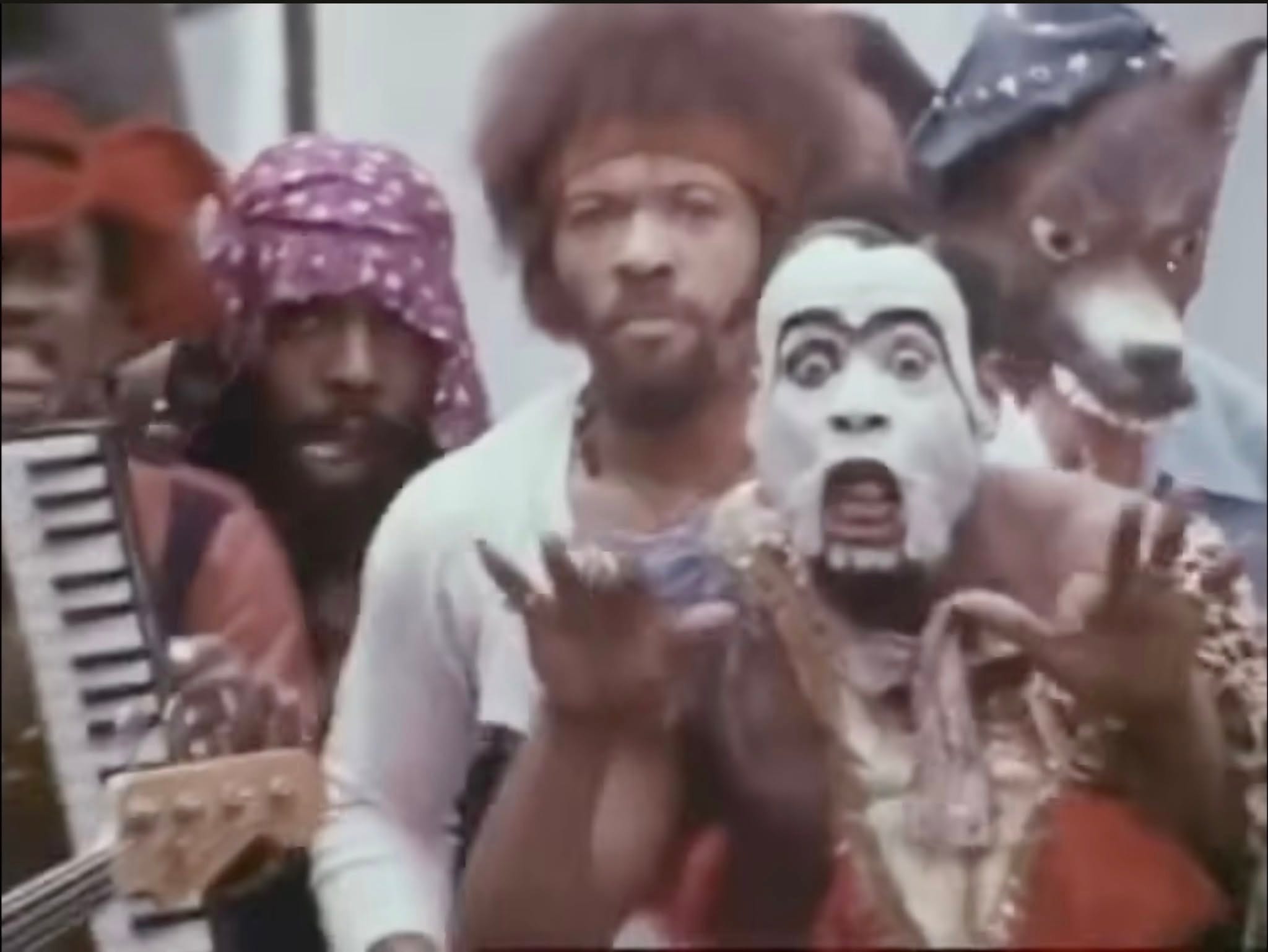
We did, turns out.
Today, Funkadelic’s third album—which turns 55 this week—is hailed as a stone(d)-cold classic, a thunderous, genre-slopping blend of gritty R&B, cauterizing psych-rock, and hard-edged funk, all awash in apocalyptic dread.
But Funkadelic didn’t just dissolve stylistic barriers; from their roots as a doo-wop corner band (as “The Parliaments”) to acid-gobbling associates of the Stooges and MC5, they challenged the notion of what “Black music” even meant. Imagine Prince, D’Angelo, Lamar Kendrick—hell, the Chili Peppers—coming up in a world without Funkadelic. It’s possible, sure, but it sounds a hell of a lot different.
George Clinton’s amorphous musical creations went by many names—Funkadelic, Parliament, Parliament-Funkadelic, P-Funk, P-Funk All-Stars. But whatever you call them, they’re as essential to America’s musical sense of itself as James Brown or Earth, Wind & Fire. This is doubly true in Washington, D.C. (aka “Chocolate City,” a term supposedly coined by local DJs and codified in Parliament’s 1975 album of the same name). They are nothing less than foundational, and on Maggot Brain, that foundation rests largely on a dazzlingly talented but troubled young man named Eddie Hazel.
That’s him playing the title track, an agonized and transcendent instrumental that seizes you by the heart even as the flames crackle from your melting face. And while I’d never advise anyone take LSD for the purpose of hearing the song as intended (and, supposedly, performed), I’d also not not advise anyone to do it, either.
The story of Maggot Brain, the album, is a saga unto itself. But today we’re going to focus on a tiny and very personal piece of its coda. It’s told by Alec Bourgeois, then a budding guitarist in the D.C. punk scene, and it focuses on the brief moment when he crossed paths with Eddie.
Let’s start with the story itself, followed by a brief Q & A with Alec. I’ll let him take the lead; it’s his tale, and I certainly couldn’t tell it better than he does….
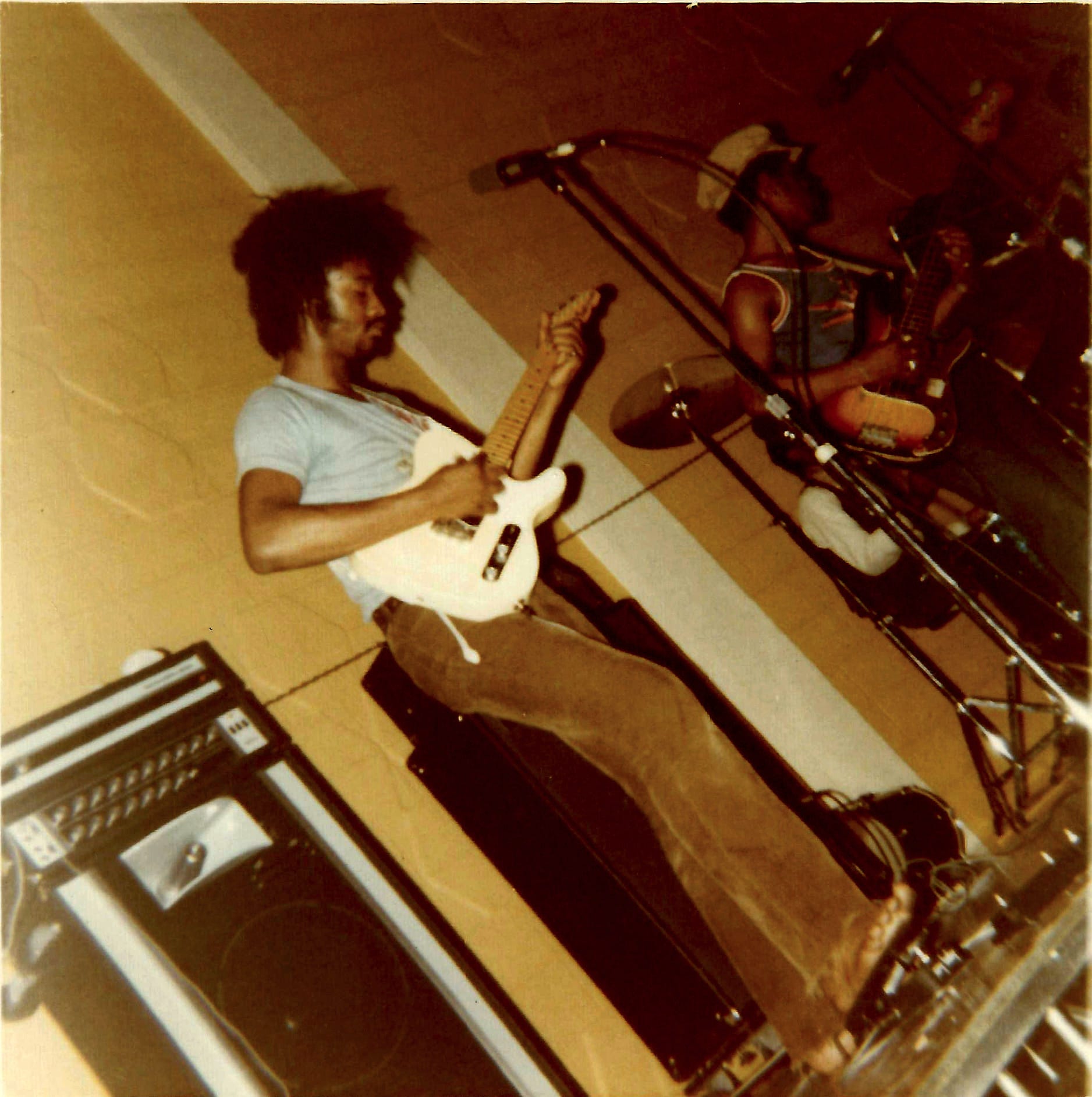
It was early summer in 1985, and I was headed from my dad’s house on Capitol Hill in Washington, DC to band practice in Bethesda, where my mother lived. [Ed: This was Alec’s band Cereal Killer, who according to Alec disbanded immediately upon hearing Rites of Spring.]
On this day, like many others, I took the Metro and a bus from one outpost to the other. Guitar in hand I wove through the familiar crew of semi-tipsy neighborhood comedians gathered outside the liquor store adjacent to Eastern Market, and the ritual hazing began.
“Yo, Slim Jim!”
“Here comes Michael Jackson!”
“Pee-Weeee Heeerman!”
As far as hazing goes it was mild and generally good-humored, and certainly less menacing than the barks of “Faggot!!” that often greeted me at the other end in Bethesda.
As a scruffy punk rock kid just a year or so out of high school, I had long accepted this ribbing as part of the deal, in both its playful and not-so-playful forms. In fact, I had gotten so good at tuning it out that I could barely distinguish the notes from the noise. But on this day, one of the jokesters walked alongside me and began peppering me with questions.
“What kind of axe you play, man? You’re punk rock? That’s wild! I love music, ALL music! I play guitar, too. You jam?”
And then he dropped the bomb.
“You’ve heard of George Clinton? P-Funk? Yeah? I play with those guys!”
I’ll be honest: There was no way this man wasn’t bullshitting me. But now he had my attention and the more we chatted, the more I began to enjoy the banter. He did seem to know something about music and after a few minutes we agreed to exchange numbers. He said he was new in town and looking to play.
“Punk rock, man, I could jam on some punk rock!”
He slipped me a piece of paper with his number: “I’m Eddie, call me up.”
When I arrived at band practice, I described my interaction. Tom, our bassist, looked at me in disbelief: “Did you just meet Eddie Hazel?!?”
“I dunno. He just said Eddie.”
After walking Tom through the details, we both agreed this was probably not that Eddie. It just didn’t make any sense. Yet I kept thinking about how he described his gear, and I began to wonder if he was a session player who had played with P-Funk somewhere along the way.
After practice, I headed to the apartment of my friends Danny and Monica. Danny worked at a record store and was a P-Funk aficionado; he owned every album, including all the rare out-of-print editions. As I recounted my story Danny whipped out Maggot Brain, flipped open the gate-fold, and pointed to the man standing in the middle of the page:
“Do you mean THIS GUY?!”
Staring back at me from the gate-fold was a younger, less war-torn (but just as stoned) version of the man I had met earlier that day.
Danny explained that for purists, Eddie Hazel was perhaps second only to Jimi Hendrix (and maybe not second), and that his signature achievement—the 10-minute solo on “Maggot Brain”—was considered by many the most tortured and expressive guitar part ever laid to wax. What I came to learn that summer was that in addition to “Maggot Brain” being Eddie’s nickname, it might also have been his autobiography.
So I called Eddie, and we hung out. It turns out he was living around the corner from me and my dad in a small, neatly appointed townhouse. He was engaged to a young woman and had moved to DC to get away from the crowd he was hanging out with in New Jersey and try to do right by his fiancée.
True to his word, Eddie loved music, all music. He was completely open to new musical experiences and expressions. Punk, jazz, rock, funk. If it had a guitar he was interested. He wanted to hear about my band and my scene, the underground DC punk scene. I played him Bad Brains and Beefeater and he was thrilled.
I brought my guitar over but I was too embarrassed to “jam.” Instead, I listened as he plugged in and played along to some basic tracks he had laid down for a Warner Brothers project that would never see the light of day. His fingers were long and thin and he worked the fretboard more like a piano than a guitar, holding down bass-like rhythm patterns while simultaneously floating solos on top.
“It’s just the blues,” he said quietly.
As the summer wore on, Eddie became more distant and lethargic, and it was clear he was descending into his routine. One night we had agreed to meet up and go to a Beefeater show, but when I arrived to pick him up he was passed out on the couch. That was the last time I saw Eddie in our neighborhood.
Several years later, George Clinton and the P-Funk Allstars booked two consecutive nights at the old 9:30 Club. I’d heard that “Maggot Brain” was featured on the set list, but also that Eddie was not a regular player on the tour.
Seeing P-Funk in the 1980s in Washington, DC was just about the most positive vibe you could experience in live music. DC concertgoers LOVED the P-Funk, and the P-Funk loved DC right back. The 9:30 Club had an official capacity of 199 but routinely packed in close to 500, as they did on this night. Every soul in the club knew every lyric better than the bandleader and showed their pride by overwhelming the PA with a massive sing-a-long from practically the first beat to the last note.
The celebration only waned during the somber “Maggot Brain.” The tune begins with a simple blues progression and (lead guitarist) Michael Hampton working up the initial guitar solo. And there, sitting against the wall at the back of the stage, with his eyes closed, was my temporary friend, Eddie.
Hampton built the solo up to the next level and then looked back to Hazel who remained motionless, eyes closed. Hampton shrugged and then stomped on the wah-wah and took the solo to its crescendo. Eddie was too stoned to play.
The next night was different. “Maggot Brain” began with its familiar progression and Hampton again took control of the solo. But this time the atmosphere felt more tense, as if he was toying with the audience. Hampton would repeatedly work up the melody only to bring it back down to the basic progression. Build and recede. Again, Eddie was seated at the back of the stage, and again Hampton turned to him to hand off the solo. This time, Hazel snapped to attention, stepped to the front of the stage, and blew the tune wide open.
His guitar scorched and wailed, sang and screamed. The audience was transfixed, and I stood in utter disbelief. Build a melody, make it sing, make it cry, and then burn it all to the ground. It was pure sonic destruction.
So many P-Funk songs are about liberation and redemption: “Free Your Mind and Your Ass Will Follow.” But it became very apparent to me at that moment that this message was much darker and far more personal. “Maggot Brain” is not a reflection on “The Struggle” but on inner struggle, on being chained to your demons. For Maggot Brain, redemption doesn’t come in this life but maybe the next.
After the song the party cranked back up, and the crew escorted Eddie from the stage and through the crowd towards the dressing room. As he came my way I reached out, grabbed his hand, and pulled him into a half-embrace. His eyes met mine, but without recognition. He smiled weakly, and was hustled off to the dressing room. Two years later he was dead at the age of 42 from liver failure. “Maggot Brain” was played at his funeral.
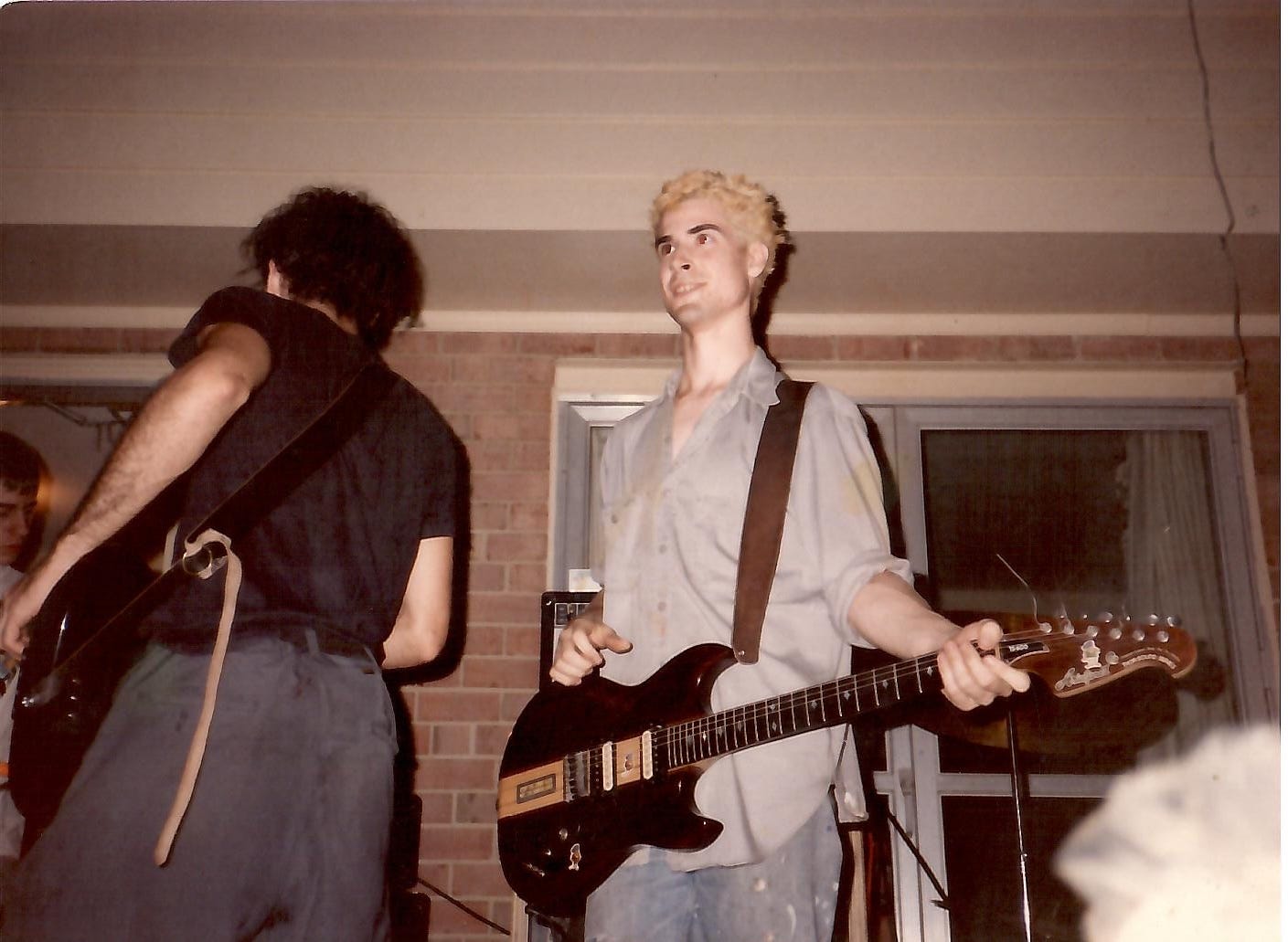
Seth: This is such a DC story! Washington is so multilayered, and I love how your one-in-a-million interaction with Eddie could only have happened here. And in his apartment: What he says to you, and the fact that he says it so quietly….
Alec: That was…yeah, that was a moment. It was crazy because he was a very quiet person and super-humble, and he wasn’t showing off. He kept wanting me to play, right? I brought my guitar over, and he’s like: “Show me, show me!” and I’m just like: No, I’m not gonna sit here and pull out my barre chords….
Just watching him play was like watching a space alien. He was so calm but he was doing these incredibly intricate…he was playing a bass line and playing a solo at the same time, and just watching his fingers, I was just like: This doesn’t make any sense to me. I was completely floored, and then he just kind of looked at me and said: It’s just the blues.
Because truth be told, I don’t like “the blues” as a musical genre. What I took from it was: I’m just playing the structures. What “the blues” mean is so indefinable and interpretive…he just took it to a place that just completely blew my fucking mind. My wife and I talk about this a lot: What does genius mean? For us, it’s when you see somebody who takes a structure anybody else can do and does something with it that’s just incomprehensible.
Seth: You talk about him being quiet, and yet the reason you met him is because he stepped out of character….
Alec: The gist I got was: As much as he was this superstar musician, his most comfortable spot was drinking with the guys on the corner or just hanging out, you know.
Seth: There’s a very deep urge in so many of us to deny our gifts, because that’s stepping into the void, right? You’re going outside the lines and you’re in the all. What you’re describing, the way he played, was that he was in the all—he’s like a space alien, he’s someplace else—and that state is very hard to maintain.
Put another way: I’ve often wondered why there’s such a link between obliterative drugs like heroin and creativity. Are you trying to extend the embrace of an audience? Or is the opposite: trying to shut off that feeling because it’s actually too much to hold? I don’t think it’s necessarily one or the other, but…I wonder if Eddie simply couldn’t square those two things: the life on the corner and the life as a truly gifted artist.
Alec: I think there’s a deep loneliness; I think people who are truly gifted are usually surrounded by people who don’t quite understand what they’re doing. It could be that when Eddie was in front of the P-Funk Army, they all got him. And as soon as he wasn’t nobody did, right? Getting high on the corner, you’re just one of the guys.
Seth: You talk about going to that show, and the poignance of seeing him in his fullness, stepping to the front of the stage and just ripping it, and then afterwards his desiccation….
Alec: It was hypnotizing. And of course, knowing what I knew about him, it was kind of devastating. That’s why some of the things I write about…I really do think the song meant something totally different to me, seeing him play it.
Seth: Most people, if they know P-Funk, think of them as this massive arena-funk band. And yet there’s this deep core of tenderness in their music….
Alec: There’s this thing the P-Funk guys talk about, which is George Clinton telling [Eddie]: “Play it like your mother just died.” That shifted something for me. This is not, you know: “Free your mind!” This is not a party anthem. This is not…it’s not any of that. It is about freedom, but the other kind. The song is called “Maggot Brain”; the song is about him.
No posts
Comments
Nothing yet. Say the first thing.
Sign in to join the conversation.