
Welcome to This Week in Social Science. What happens when we’re forced to interact with a group of people who we maybe don’t like so much? Does that experience tend to confirm our biases, or make us reconsider them?
In this edition, we look at two studies asking that question. The first examines how exposure to the “Venezuelan Exodus” affected attitudes across Latin America. The second observed how the attitudes of Israeli patients changed when they were (quasi) randomly assigned to an Arab doctor.1
4.5 million Venezuelans — almost 1/5th of the nation — fled their homes between 2013 and 2019, migrating across Latin America. As this migration unfolded, public sentiment towards migrants deteriorated across the region. But how did actual exposure to these migrants affect attitudes towards them?
A recent paper investigated that question by looking at subnational variation in migration. Is anti-migrant backlash largest in the regions that received the most migrants, or does exposure to migrants make people more sympathetic to them?
The researchers found that areas receiving more migrants were just as accepting as areas receiving fewer migrants. There was even some evidence that areas with more migrants had fewer anti-migrant tweets than other areas. And contrary to narratives suggesting that lower-income individuals respond the most negatively to migrants, exposure to migrants was associated with more positive attitudes among lower-income natives.
This research suggests that high levels of migration may cause a deterioration of attitudes towards migrants, but not because natives are seeing or interacting with more migrants. Negative attitudes towards migrants may rather be caused by abstract feelings of group threat or by misperceptions about the true impact of migration in migrant-hosting regions.2
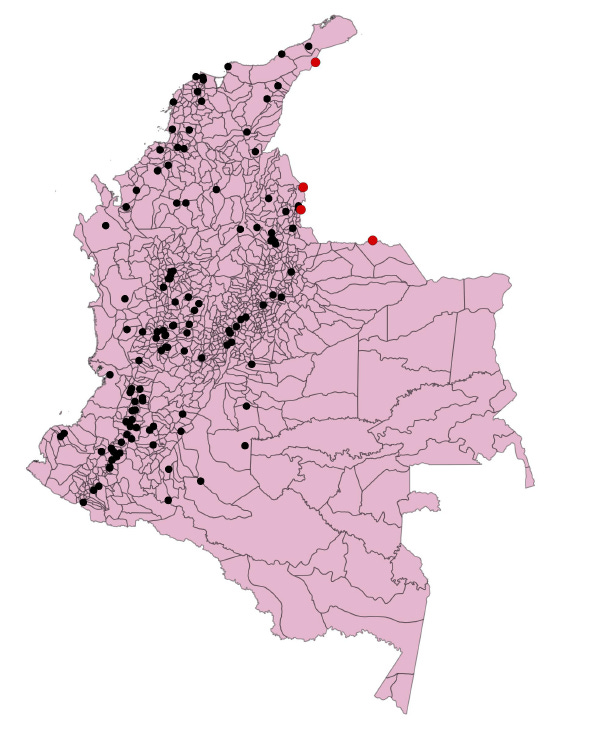
Our next study asked if brief, positive interactions between Israelis and Arabs could reduce prejudice in that longstanding conflict. The study leveraged a natural experiment to find out: patients at 21 Israeli clinics were randomly assigned to doctors, and some of those doctors were Arab.
To measure changes in prejudice, the research team embedded questions about intergroup prejudice in the clinics’ post-treatment evaluation surveys. These SMS surveys were sent to respondents either 1 day or 10 days after their appointment.
The researchers found that patients who received Arab doctors became less prejudiced, even 10 days after the experience. For example, Israelis who received Arab doctors felt more optimistic that Arabs wanted to peacefully coexist with Israelis. The effects by themselves were modest, but they suggest that many brief, routine interactions can break down barriers between groups.3
Prejudice relies on overgeneralization, seeing a group as a monolith rather than a collection of unique individuals. In at least some circumstances, interacting with people from those other groups – even ethnic, cultural, and political groups – can break that misperception.
Whether through a routine doctor’s visit or sharing a neighborhood, we might find that people who seem different from us are also different from each other. The person begins where the caricature ends.
Lebow, J., Moreno-Medina, J., Mousa, S., & Coral, H. (2024). Migrant exposure and anti-migrant sentiment: The case of the Venezuelan exodus. Journal of Public Economics, 236, 105169.
Weiss, C. M. (2021). Diversity in health care institutions reduces Israeli patients’ prejudice toward Arabs. Proceedings of the National Academy of Sciences, 118(14), e2022634118.
Comments
Nothing yet. Say the first thing.
Sign in to join the conversation.