
Happy Juneteenth, and welcome to This Week in Social Science, where we want to better understand how relationships work. When people come together, do they take a functional approach and try to promote joint stability, or are they taking a conflict approach in which they are competing forces jockeying for power and control?
When applied to relationships, and especially romantic relationships, one expression of the conflict approach is what is known as the Principle of Least Interest, where the person with the least interest in the continuation of the relationship has the most power over it. In this episode, we explore some research into the Principle of Least Interest and reflect on its broader implications for society.
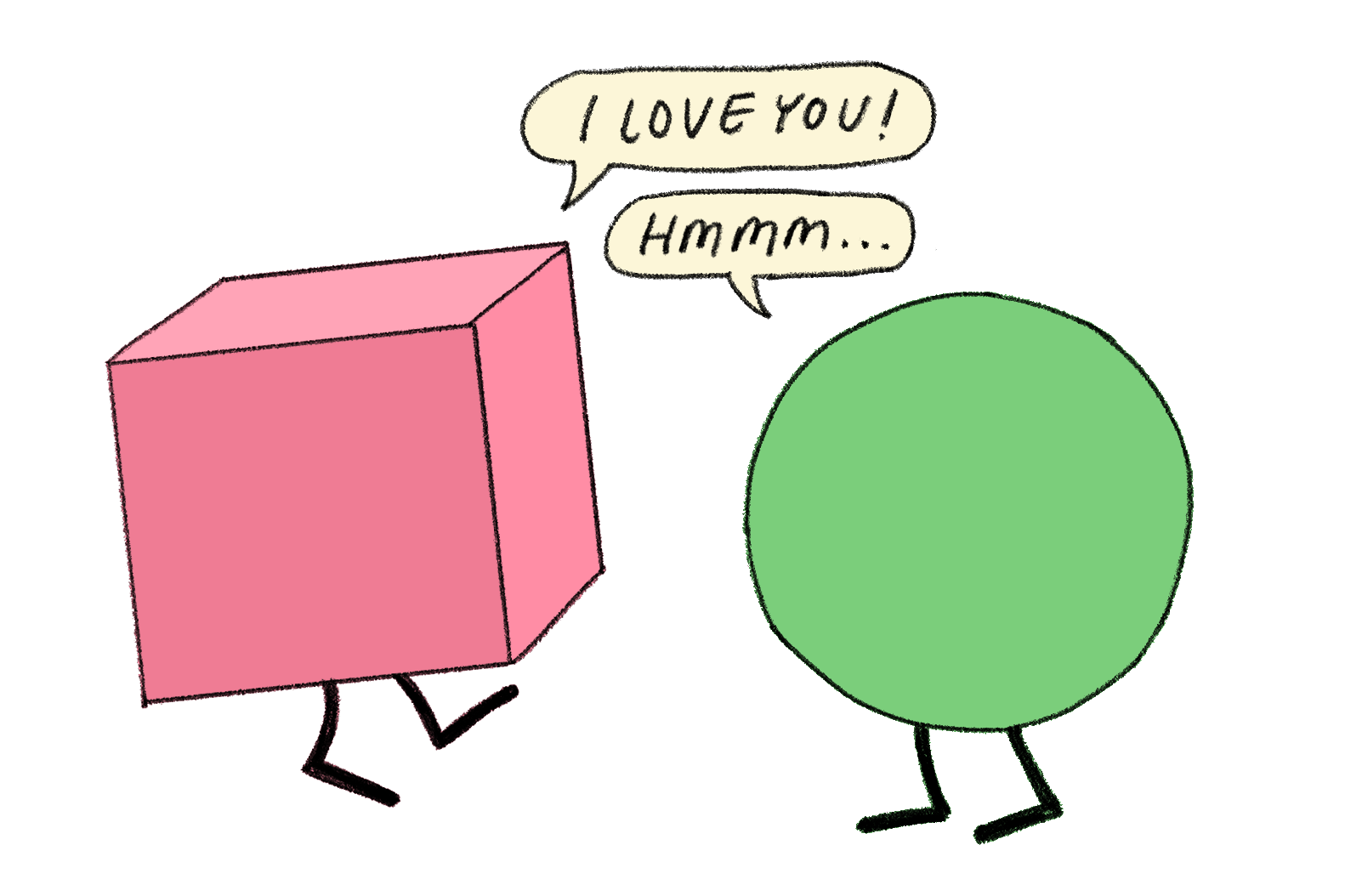
In the context of a romantic relationship, one measure of interest is the degree of emotional investment that each partner puts into the relationship. To test the Principle of Least Interest, a team of researchers tracked 101 young dating couples over nearly four years.
Over the course of the experiment, participants were asked to indicate whether they were more emotionally invested than their partner, whether both were equally invested, or whether their partner was more invested than them. They were also asked who had more control over whether or not the relationship continued.
The results indicated, firstly, that the majority of couples reported an unequal relationship, with one partner being more invested than the other, even in the relationships that lasted throughout the course of the experiment. The researchers also found support for the Principle of Least Interest: In relationships where one partner was perceived to be more invested than the other, that other partner was considered to have more control in the relationship. And this inequality made relationships less stable, with relationships that ended reporting twice as much unequal investment between the partners than those that survived.1
The Principle of Least Interest shows that the less committed partner in a relationship is considered to exert more control over whether the relationship continues. But what kinds of people tend to end up in these relationships?
To answer this question, researchers collected data from 315 opposite-sex couples, and measured their perception of alternate partners (how easily the participants believed that they could find another partner), attachment avoidance (difficulties with closeness and depending on others), and attachment anxiety (anxiety about being unloved or abandoned).
They found that the more easily that people believed they could find another partner was associated with being the less committed partner in the relationship, and the same was true the more attachment avoidant a person was. On the flip side, the more attachment anxiety a person showed, the more likely they were to be the more committed partner in their relationship.2
“That person is able to dictate the conditions of association whose interest in the continuation of the affair is least” (Waller, 1938, p. 191)
Relationships are hard, not least because it can be hard for two (or more) people to feel the same way about their relationships and to develop those feelings at the same pace. And this can be a problem, as the less interested partner is ironically the more empowered.
And the Principle of Least Interest may also apply beyond romantic relationships, and might help us think about all sorts of relationships between people, nations, alliances, and even ideologies. Because the less invested people would be less bothered by the dissolution of some shared value or union, that gives them the power to dictate terms to those more invested in keeping those connections, values, and relationships alive.
And that’s often not sustainable. So what do we do about that? What do we do when we are in a willing or unwilling partnership with someone less invested in what we have, whether a romantic relationship or even NATO, democracy, or liberalism? How can we re-empower the people who care and value the most?
If you see or read something that you’d like us to cover, email us at twiss.weekly@gmail.com!
Stanley, S. M., Rhoades, G. K., Kelmer, G., Scott, S. B., Markman, H. J., & Fincham, F. D. (2019). Unequally into “us”: Characteristics of individuals in asymmetrically committed relationships. Family Process, 58(1), 214-231.
Comments
Nothing yet. Say the first thing.
Sign in to join the conversation.