
A recent post by Christian Lindke got me thinking about something I’d never really considered before.
For decades, creators of interactive fiction have been trying to answer the same question:
Can a gamebook teach you something without feeling like homework?
Most people think of interactive adventures as pure entertainment. Haunted houses. Space travel. Treasure hunts. Escaping from monsters. Saving the world.
But scattered throughout the history of gamebooks are dozens of experiments that attempted something more ambitious. They wanted readers to learn history, math, computer programming, and problem-solving skills while still enjoying the adventure.
As a collector of vintage gamebooks, I’ve stumbled across quite a few of these educational experiments over the years. Some are surprisingly clever. Some are wonderfully strange. And a few feel decades ahead of their time.
What fascinates me most is that the best of them aren’t really educational books at all. They’re adventure books first. The learning just happens to come along for the ride.
One of my favorite examples is Micro Adventure: Doom Stalker.
This book came out during the home computer boom of the 1980s, when kids were learning to code by typing programs from magazines into Commodore 64s, Apple IIs, and TRS-80s.
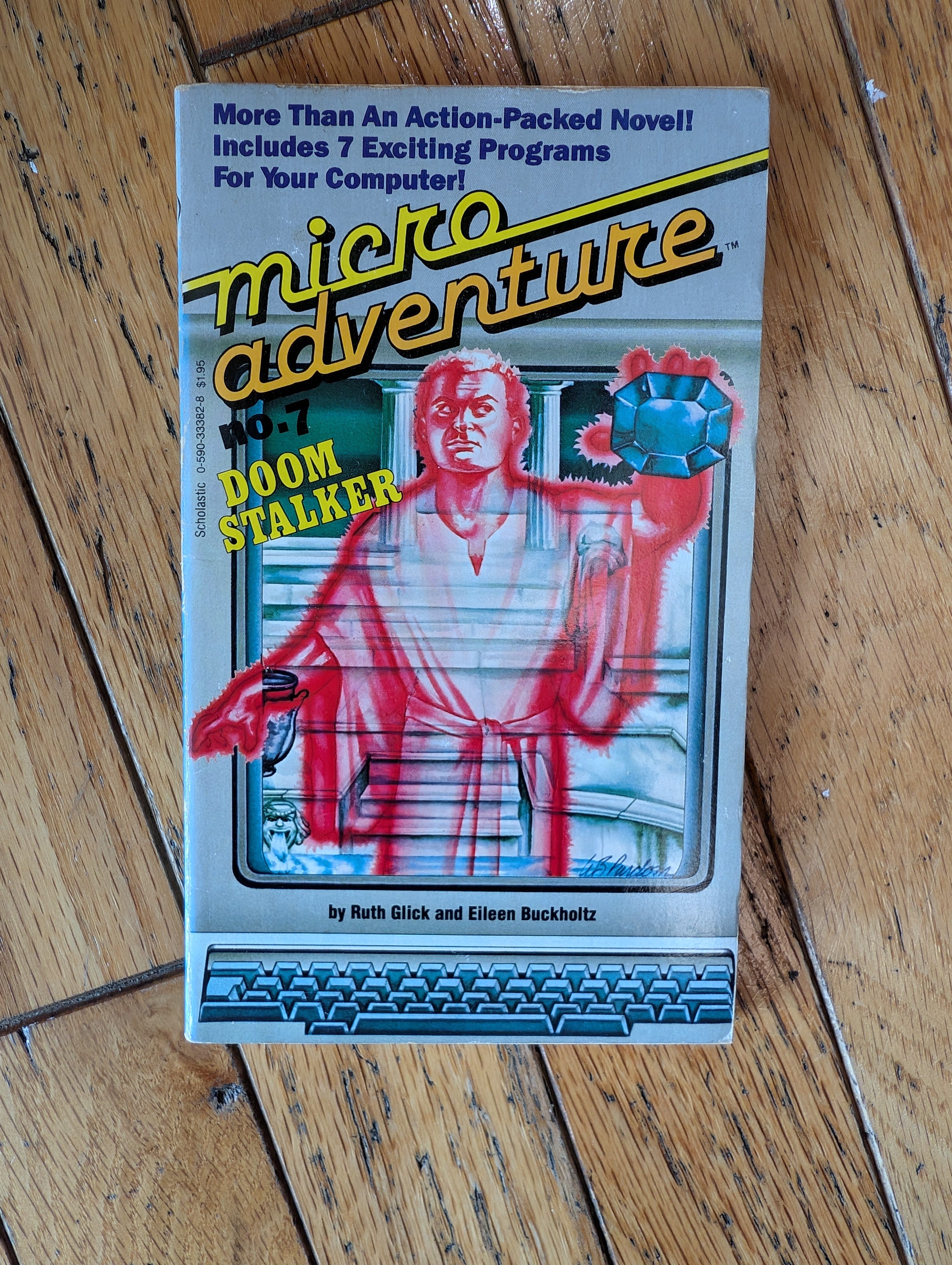
The premise sounds like a typical adventure story. You’re trying to save the world from disaster. The twist? The book includes actual computer programs. Readers could type code into their home computers and use the results to help solve challenges within the story.
The back cover proudly lists the systems it supports: IBM PCs, Apple computers, Commodores, Ataris, and even Radio Shack’s TRS-80. My very first computer was a Commodore 64, so this book feels especially nostalgic.
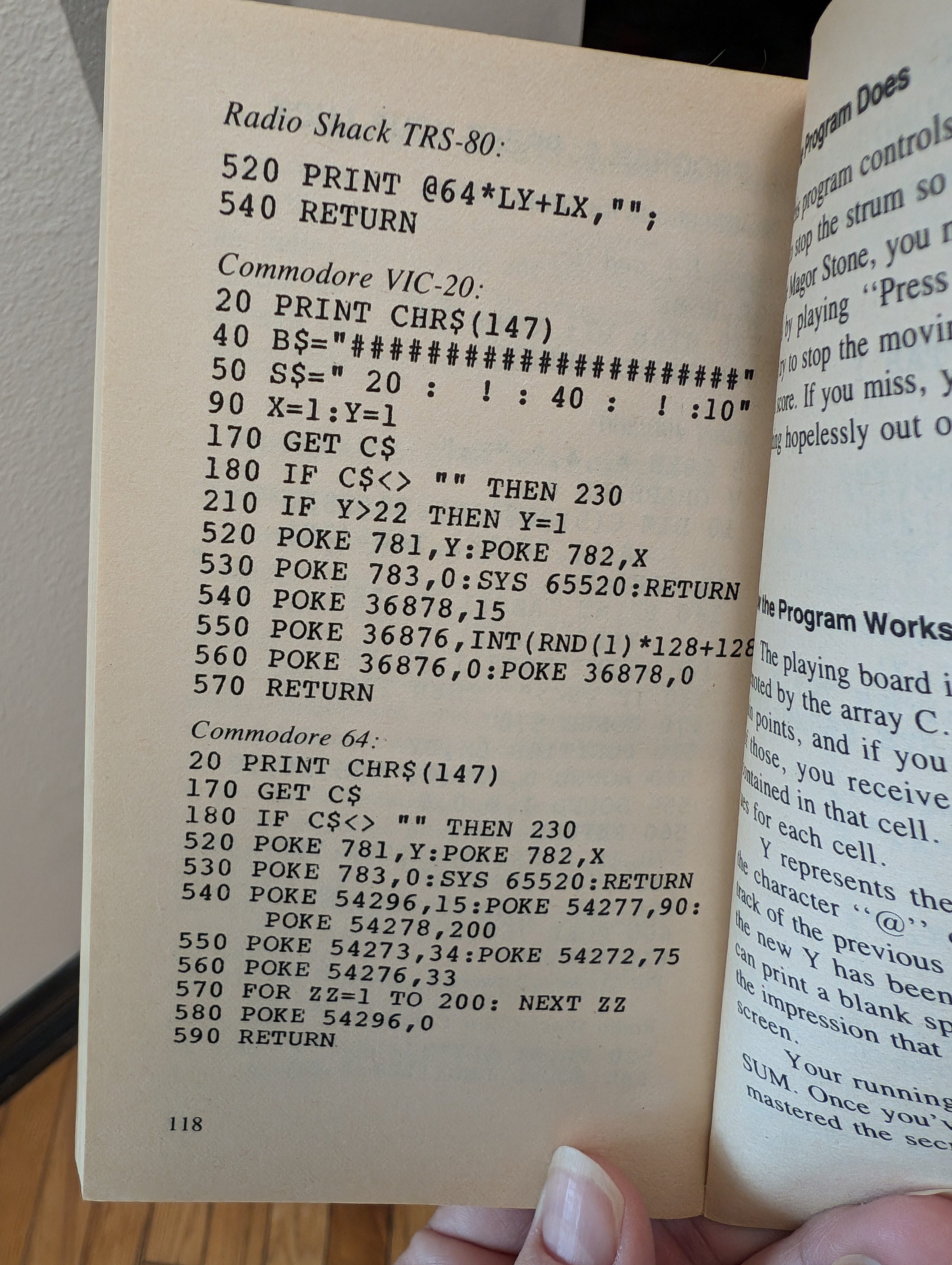
Looking through the book today feels like opening a time capsule from an era when programming seemed almost magical. What’s funny is that the idea never really disappeared. Today, millions of kids learn programming through Scratch, the coding platform developed by MIT. Instead of typing BASIC commands, they drag colorful blocks around a screen.
The technology changed. The concept didn’t.
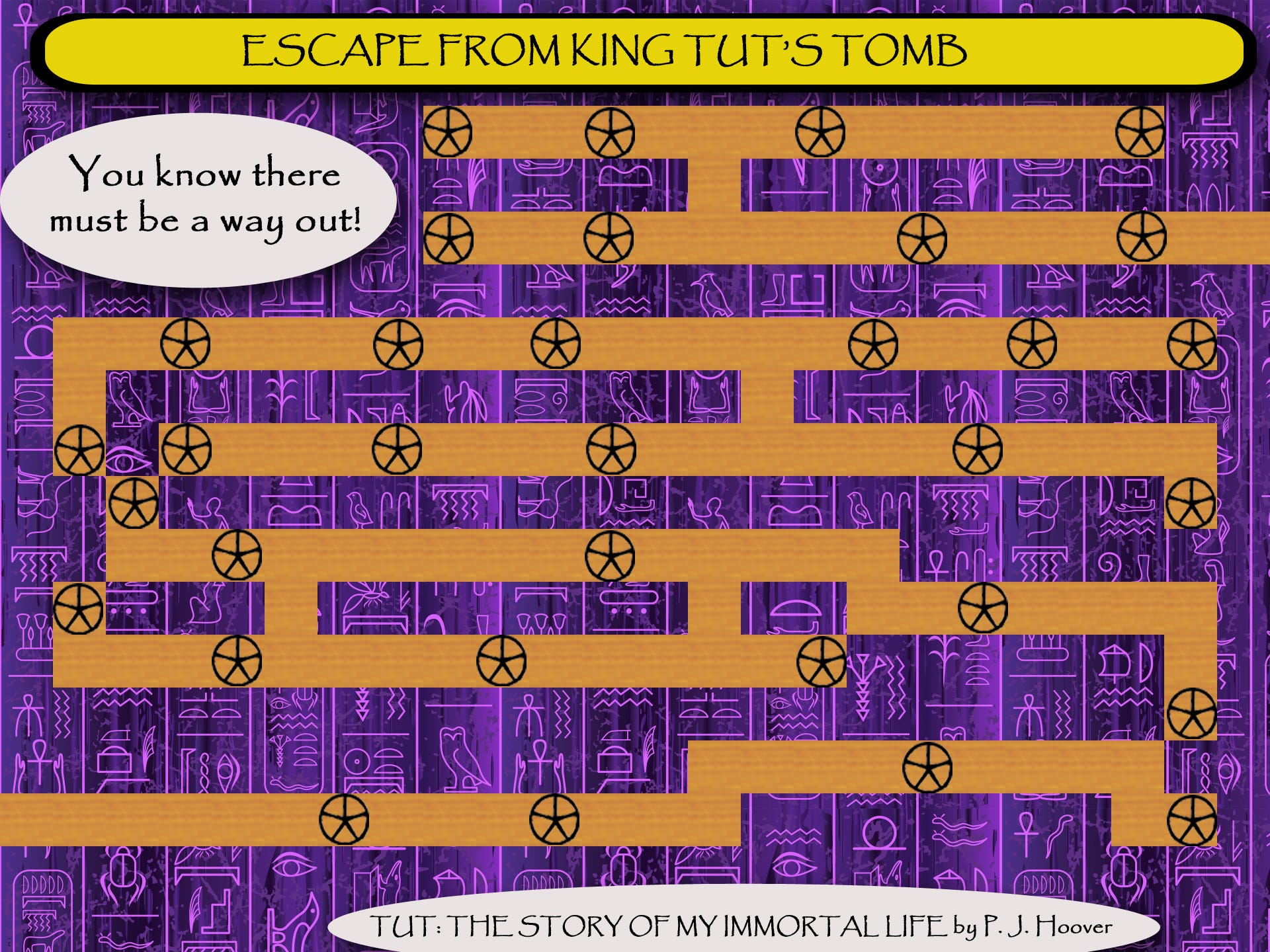
When my kids were learning Scratch years ago in elementary school, you can darn well bet I cracked my knuckles and dove right back in to the joy of programming once again. I made a 10 level Escape From King Tut’s Tomb game (filled with all sorts of puzzles), and then I recoded my 1990 Pascal video game, Castle of Doom (now a book in the Pick Your Own Quest® series). Looking back, I was participating in the same tradition these books were exploring forty years earlier.
Step aside, Magic Treehouse. Educational gamebooks have often gravitated toward history. One example from my collection is Voyage With Columbus from the Time Traveler series. The premise is simple: travel back in time and join Christopher Columbus on his voyage to the New World.
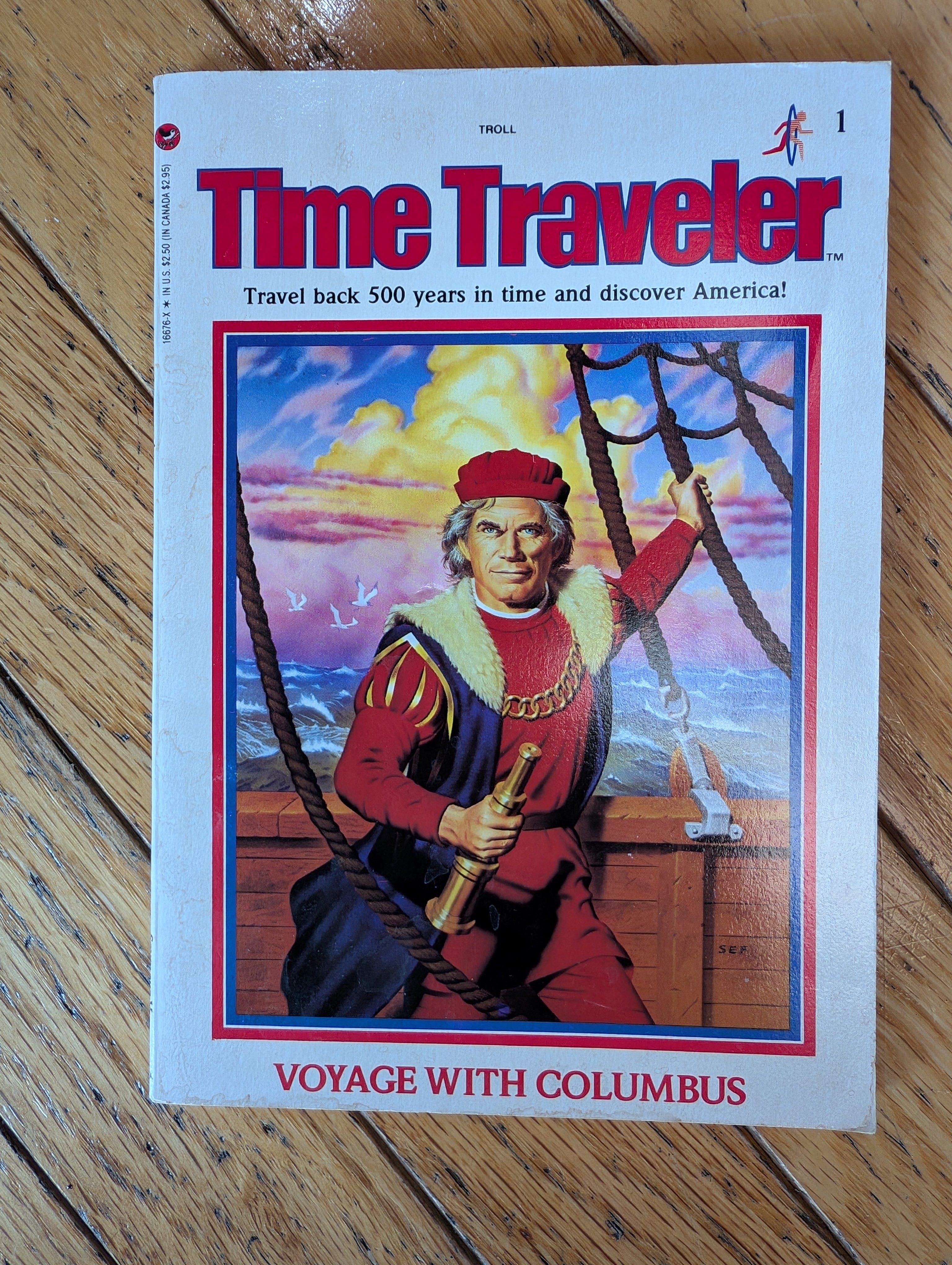
Today, Columbus is viewed much differently than when this book was published in the 1980s. Modern discussions of exploration tend to be far more nuanced, and many schools teach a broader perspective on the consequences of European expansion. Still, the idea behind the book remains fascinating. Rather than memorizing dates and names, readers learn by stepping into the story and participating in the events themselves.
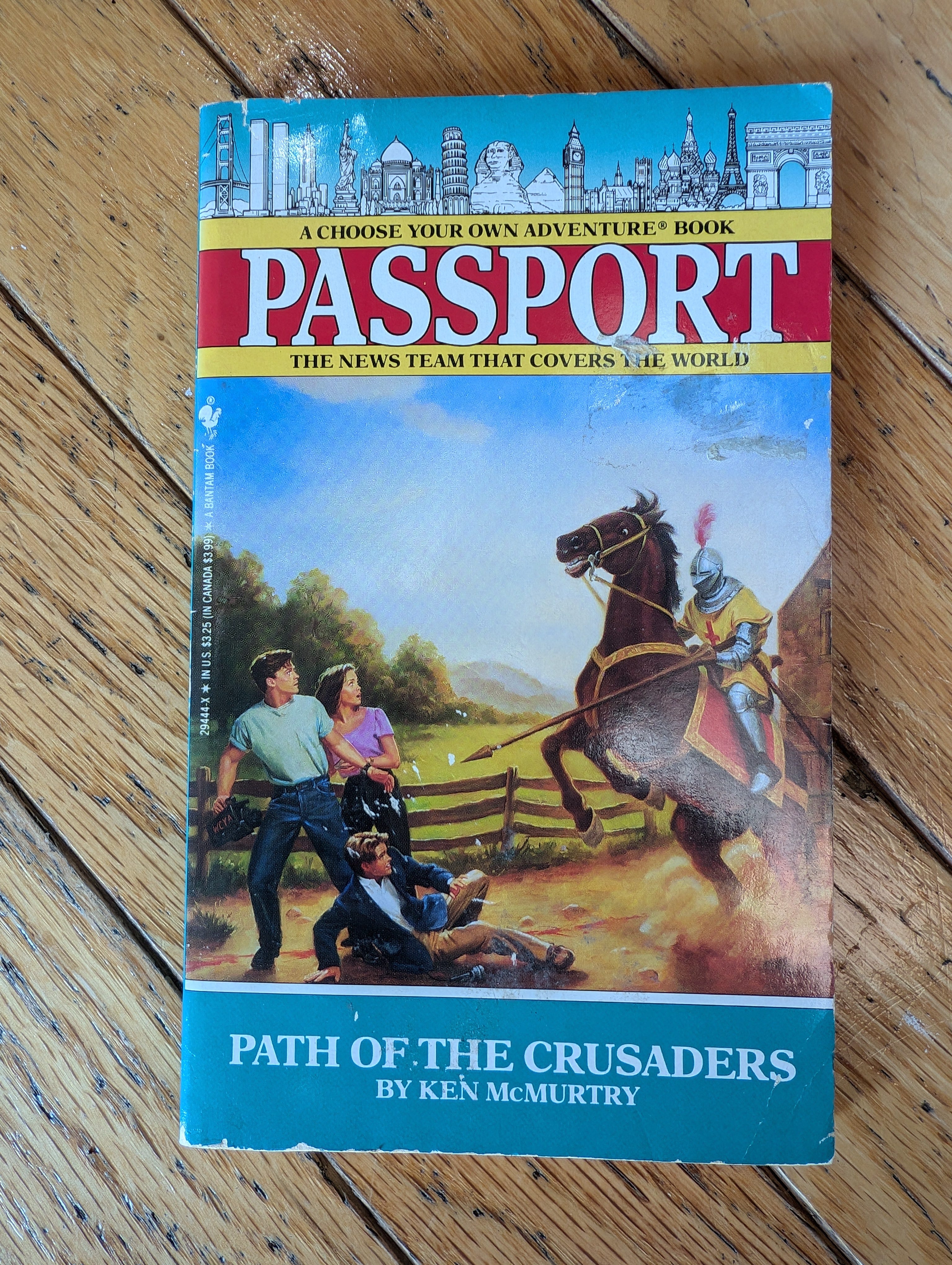
Another historical experiment is Path of the Crusaders, part of the Passport series (A Choose Your Own Adventure spinoff series). This one might have my favorite premise of all.
You’re not a knight.
You’re a member of an international news team retracing the route of the Crusaders while investigating an international conspiracy.
Only a gamebook could take medieval history, journalism, and a terrorist plot and somehow make them work together.
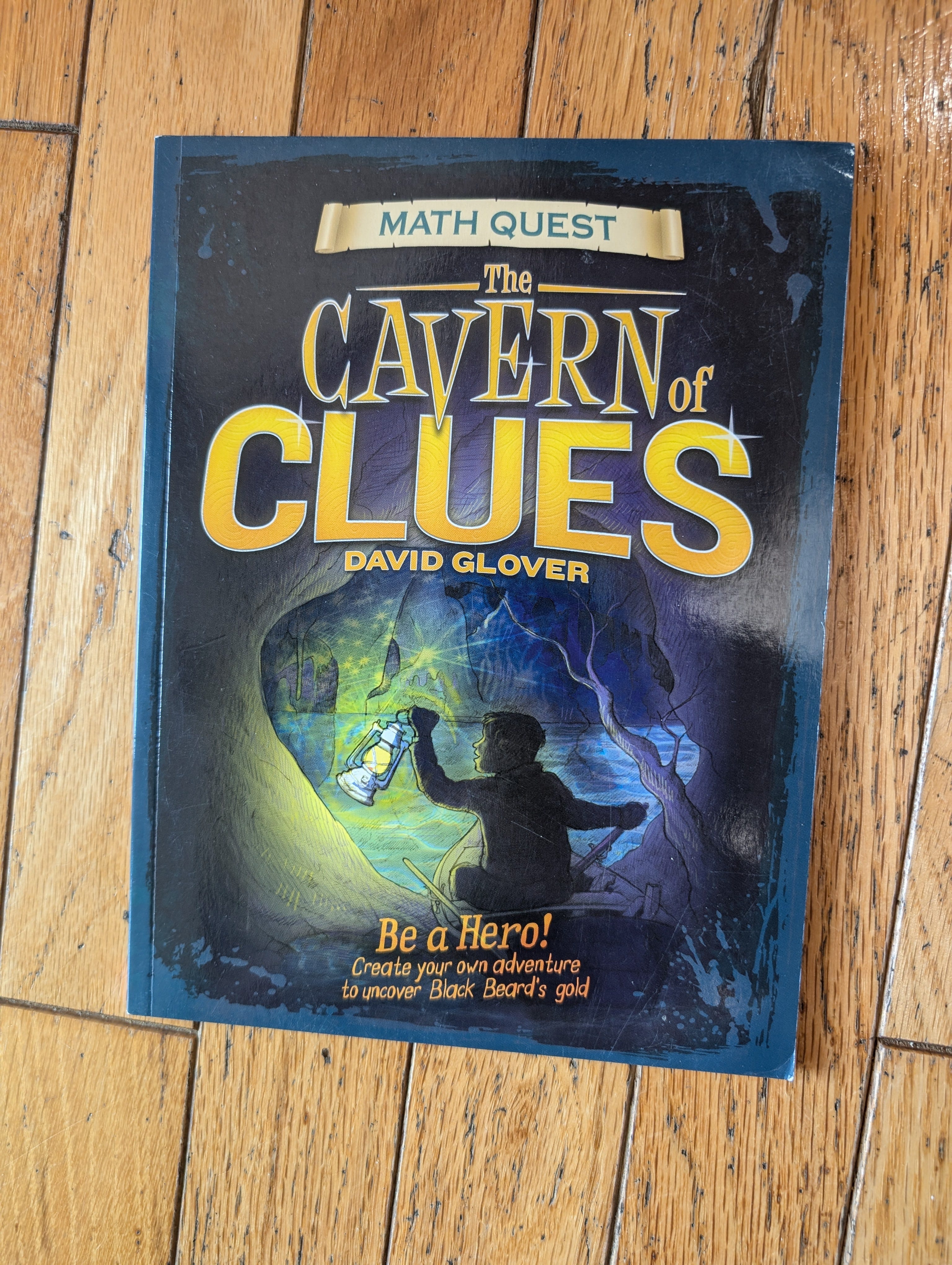
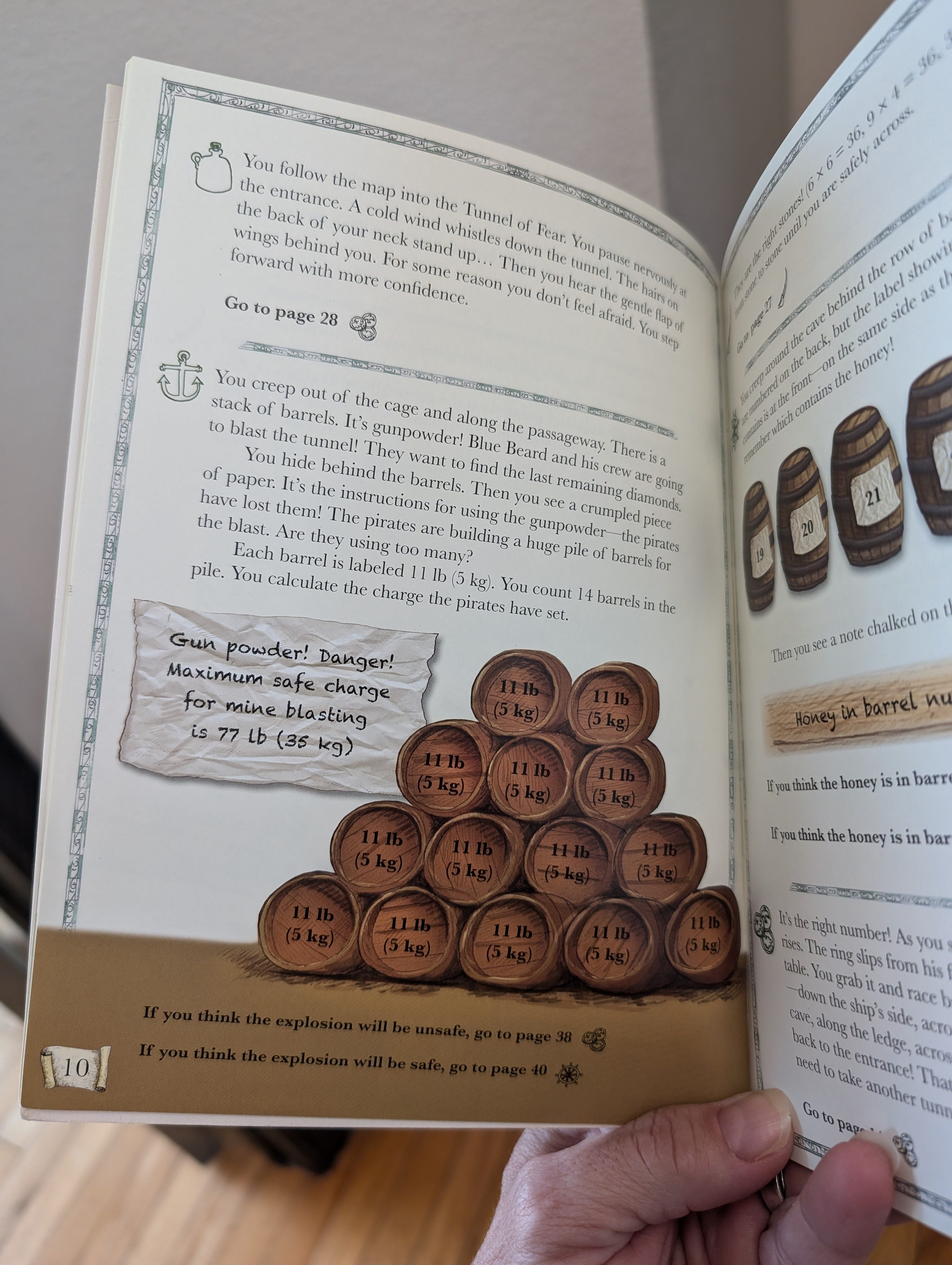
Perhaps the most elegant educational gamebook I own is The Cavern of Clues. Unlike many educational books, it doesn’t pause the story to deliver a lesson. Instead, the math is the adventure.
Need to determine whether a pile of gunpowder is safe? Do the calculation.
Need to solve a puzzle to continue your quest? Work out the answer.
Need to identify the correct barrel or choose the right path? The numbers matter.
The result is surprisingly effective because the reader isn’t solving problems for a teacher. They’re solving problems because they want to find the treasure and survive the adventure. That’s a very different kind of motivation.
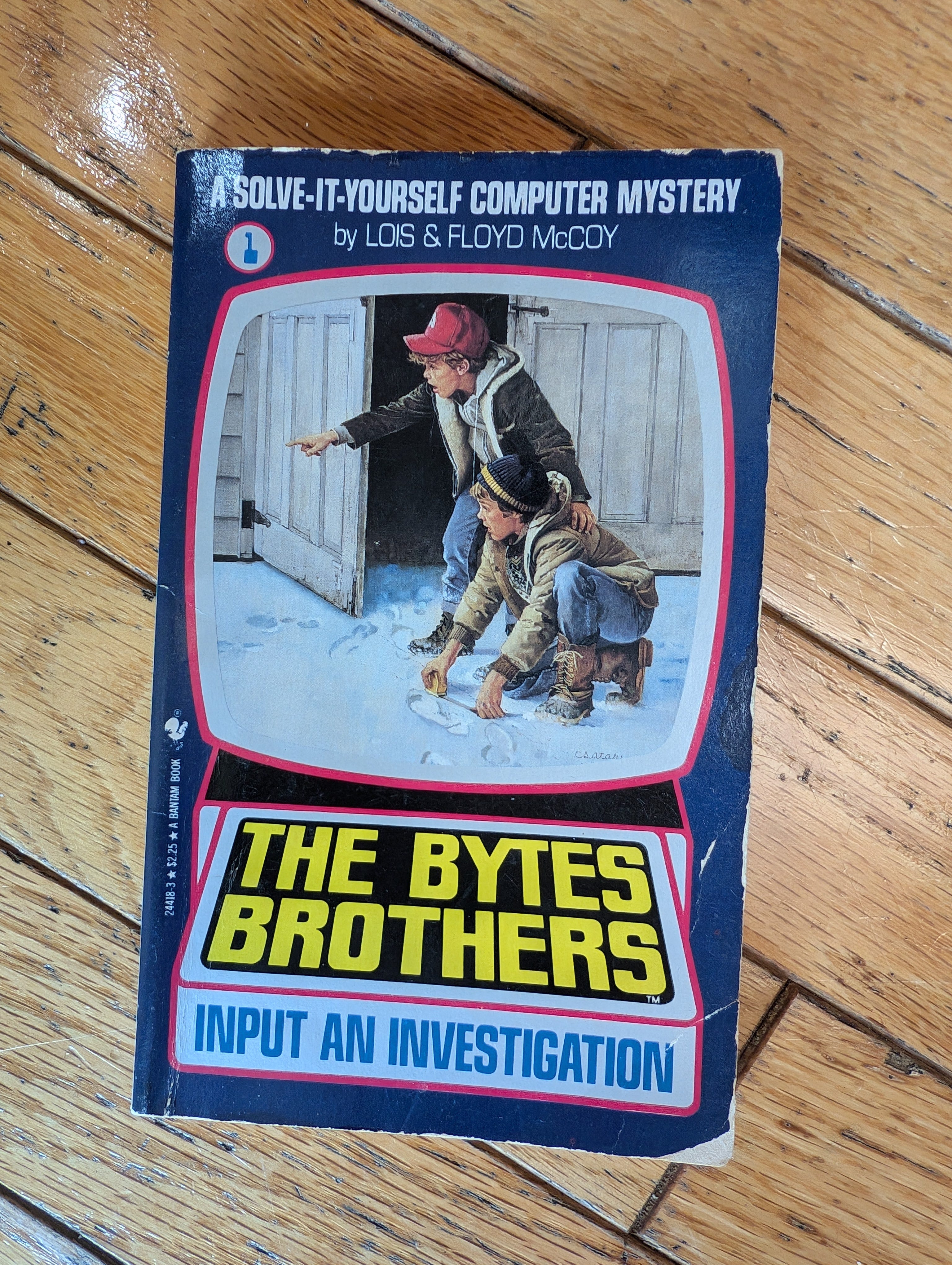
Another curious relic from the early computer age is The Bytes Brothers. The heroes are young detectives who solve mysteries with the help of a computer named Nibble.
That premise probably doesn’t sound particularly revolutionary today. In the 1980s, however, it felt futuristic.
The book encouraged readers to use their own computers to help crack cases and solve puzzles. It reflects a time when having access to a computer felt special and exciting rather than completely ordinary.
Reading it now is a reminder of how quickly technology changes. What once felt like science fiction can become everyday life within a generation.
Most of these educational gamebooks never achieved the popularity of Choose Your Own Adventure. Many were short-lived experiments. Some disappeared after only a handful of titles.
But I admire what their creators were attempting. They weren’t asking, “How do we teach kids?” They were asking, “How do we make learning feel like an adventure?”
That’s a much more interesting question.
Looking back, these books feel like early ancestors of educational apps, classroom games, coding platforms, and interactive learning software. They were trying to solve the same problem educators and game designers are still trying to solve today. The technology may have changed, but the goal remains exactly the same.
Make people curious. Give them choices. And let them discover something for themselves.
Honestly, I’d rather solve a math problem in a pirate cave than fill out a worksheet. Wouldn’t you?
Comments
Nothing yet. Say the first thing.
Sign in to join the conversation.