
Something slightly different today in that it’s not Tudor! I often revert to watching true crime when I’m struggling with something, which may be a little weird! This is a documentary that I have seen a number of times because it is quite definitive on the facts of the case. The mystery of who Jack the Ripper was, and what the police were doing at the time grips me. That it is unsolved seems to draw people in, and once you’re drawn in, you’re off down rabbit holes! You don’t have to be interested in the murders themselves, but it could be the psychology of what was done, the lives of the victims, the actions of the police, or the witness reports, as well as, of course, who the killer could have been!
First Broadcast: 2011
Number of Episodes: 1
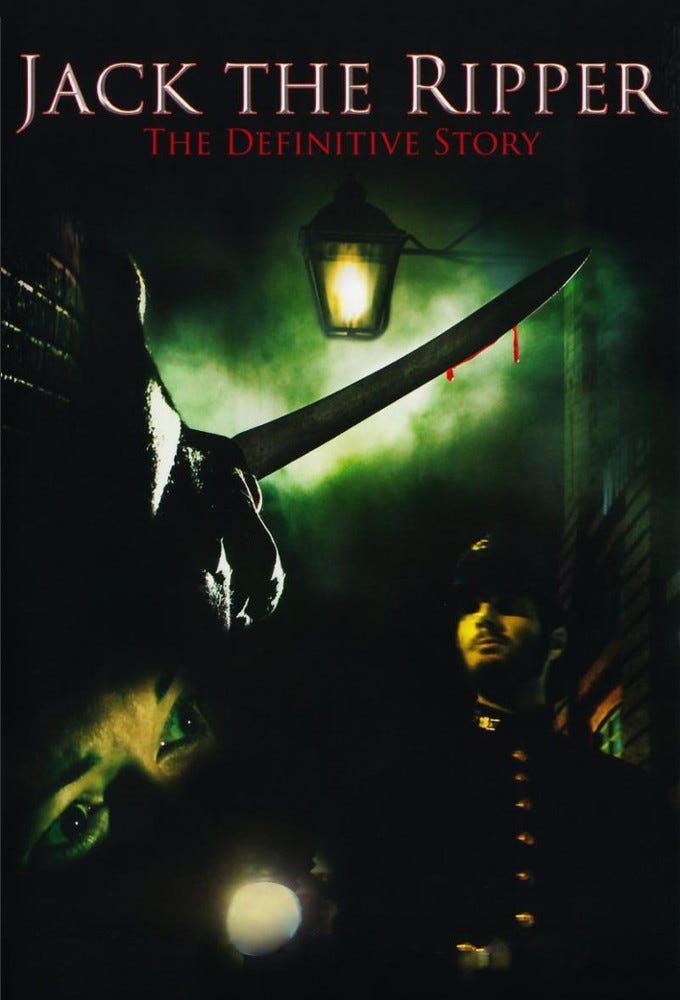
This documentary is a great one to watch, particularly if you have an interest in the Jack the Ripper case but maybe aren’t au fait with the details of the case. What is good is that this documentary reimagines the streets as they were at the time, from documents and plans, so that you can get a sense of what the locations looked like when the murders were committed. Many of these locations have either vanished or are completely unrecognisable in London today, so these reconstructions can be invaluable. It also covers the context of the period including the social conditions, and events like the Bloody Sunday Riots.
I like that this documentary starts with Martha Tabram, as I do wonder whether she was in fact Jack the Ripper’s first victim – the viciousness of the attack certainly aligns with his later attacks, though the Modus Operandi (MO) is a little different. It then goes through the canonical five victims – Polly Nichols, Annie Chapman, Elizabeth Stryde, Catherine Eddowes, and Mary Jane Kelly – and looks at their murders, the coroner reports, and witness statements.
There are lots of experts involved in the documentary, talking about the witnesses, theories, and source material. It is a mix of expert testimony, dramatic reconstructions of events, and reconstructing the streets of Whitechapel, which works well together. The dramatic reconstructions are all taken from primary sources, no fiction or embellishment at all, which means you know that you’re getting the facts as they were known at the time.
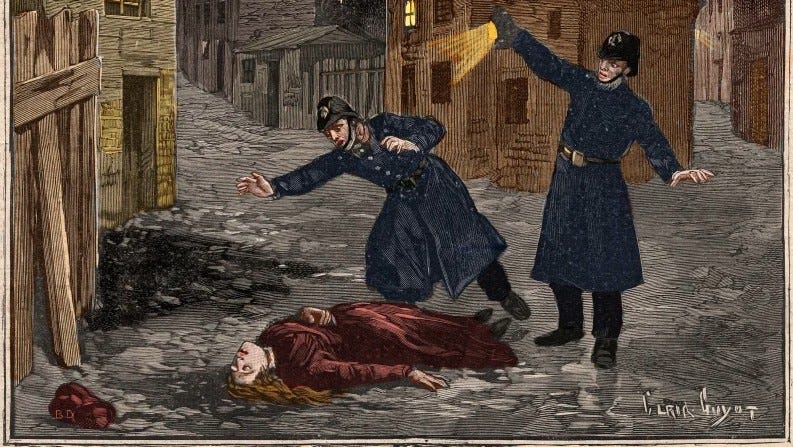
The documentary also briefly discusses the letter which first gave the Jack the Ripper name to the killer, and theories over who wrote it and why. The letter and kidney delivery to George Lusk are also explored, along with the link to the Eddowes killing. The events of the night of the Double Event are reconstructed comprehensively to track the killer and asks whether both Stryde and Eddowes were in fact killed by the same man. It’s an interesting question, since Stryde only had her throat cut and her body wasn’t mutilated, but perhaps the Ripper was interrupted and didn’t have time to do what he wanted to.
There is also exploration of some of the suspects in the case throughout – including George Chapman aka Seweryn Kłosowski, Montague John Druitt, Aaron Kosminski, and Francis Tumblety. No suspect seems to be entirely in the frame; there are things which don’t quite match up with all of them. Of course, it’s entirely possible that none of the suspects in the frame were guilty – it might have been someone else altogether! But they discuss the suspects from the contemporary point of view and who the police at the time suspected, and what happened to them.
I think that this documentary does very well is to present the evidence, using contemporary evidence primarily, to say what we do know, what was thought at the time, and who some of the suspects are, outlining the arguments for their inclusion as well as against. It’s balanced and thoughtful with no agenda for or against a particular suspect. It’s clear and concise, considering the evidence and leaving it to the viewer to explore more and think about the case themselves.
Comments
Nothing yet. Say the first thing.
Sign in to join the conversation.