
I’m delighted to welcome back the lovely Beverley Adams to my blog and Substack! I have previously done Q&As with Beverley around her books on Lady Jane Grey (blog only), Elizabeth of York, and the race for Elizabeth I’s throne, but this time Beverley has moved forward into the Stuart period to discuss Elizabeth Stuart, sister of Charles I, and her children, which is the subject of her new book The Winter Queen and Her Legacy: The Children of Elizabeth Stuart. I knew very little, so this has been fascinating for me!
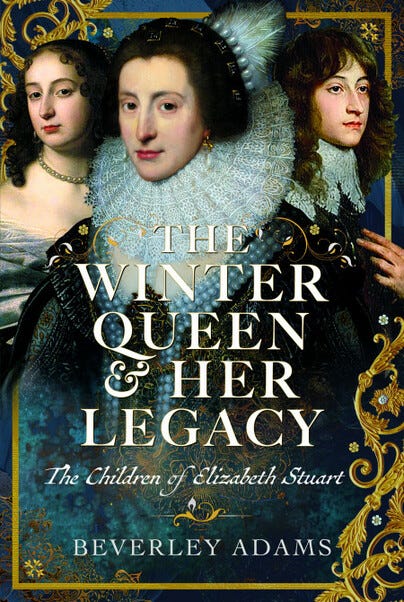
Welcome back, again, to my blog and Substack, Beverley! You’ve moved forward from the Tudors into the Stuarts for your new book, so what attracted you to Elizabeth Stuart as a subject to write about?
Thank you so much for having me back! As with most of my ideas it comes from a book I have worked on previously and so when I was researching and writing The Race for Elizabeth I’s Throne I the fact that James VI had a ready-made royal family kept coming up. I knew about Prince Henry Frederick and his younger brother Prince Charles, but I didn’t know anything about Princess Elizabeth, when I found out she was in fact the Winter Queen and the mother of Prince Rupert I knew I wanted to learn more about her. That then turns into a book proposal and before I know it a book has been written! I also felt ready to dip my toe into the history of the Stuarts to see how it felt, although I have quickly retreated to the safety of Tudor England!
What are the sources like for Elizabeth Stuart, and how difficult was it to research her life, particularly when she spent a lot of her life away from England?
There are plenty of good sources out there. She went from a Scottish princess to a Princess of England and with that came an increased interest in her life. She became much more valuable on the marriage market and therefore her life altered almost overnight. As a wife she was the Electress of the Palatinate and with that came the title of the Winter Queen, a very well written and documented period in Europe’s history as she sat at the heart of the Thirty Years’ War. Her children, Prince Rupert and Electress Sophia of Hanover both command a lot of attention themselves and so by default their mother too is well written about.
Elizabeth Stuart, at the age of 9, was a core part of the Gunpowder Plot – do we have any evidence of how much she knew, how she felt about this, and did she record anything about it later in life?
She was definitely aware of the plot, when she heard of what had happened in London and how close she became to being the puppet Catholic Queen she commented ‘What a Queen should I have been by this means? I had rather have been with my royal father in the Parliament House, than wear his crown on such a condition’ She was lucky that her guardians Lord and Lady Harington were so good at their jobs. Lord Harington had heard of a protentional plot either against James or Elizabeth herself and moved her from Coombe Abbey to the safety of Coventry so she must have had an inkling that something was happening but like others, she would not have known exactly what that plot entailed.
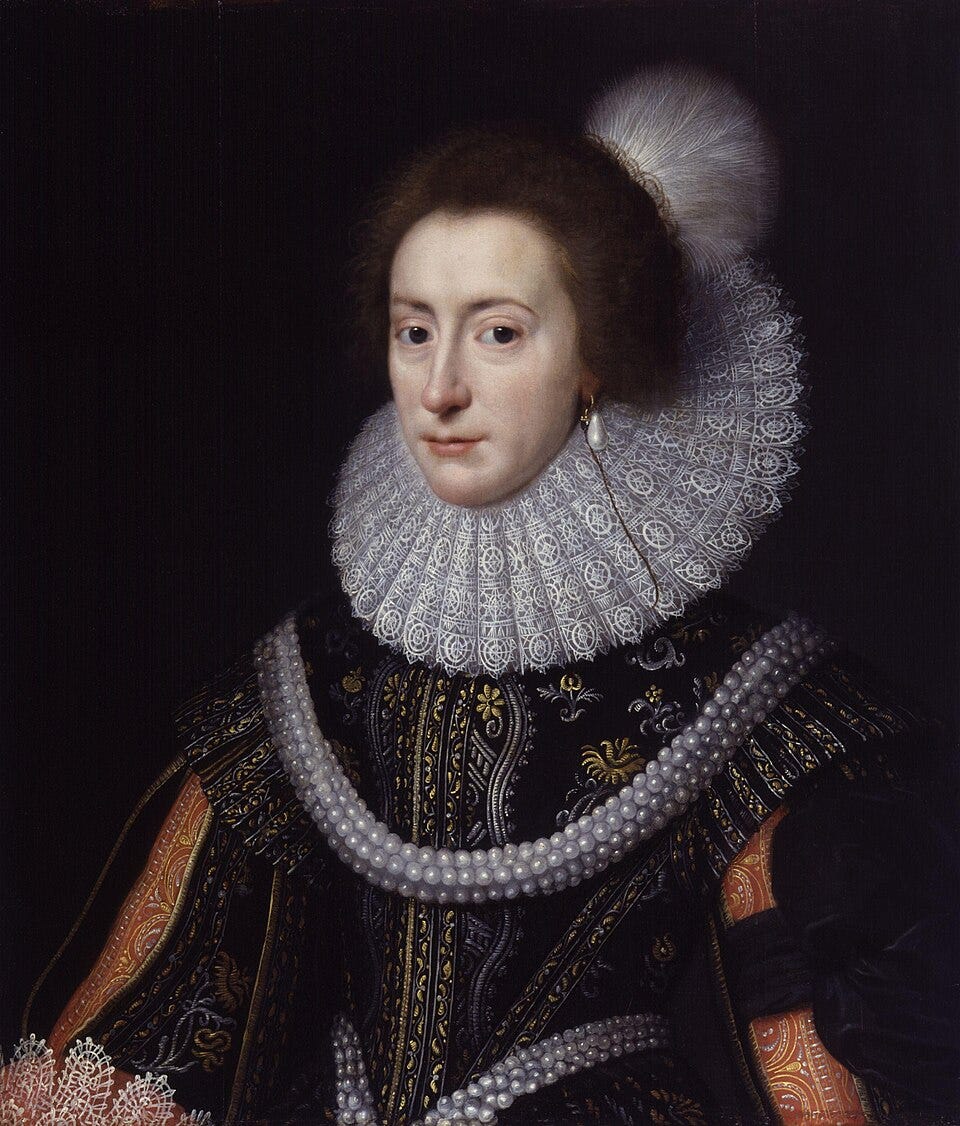
What was Elizabeth’s relationship with her husband, Frederick V, Elector Palatine, like – was it a happy marriage?
It was a very happy marriage. The couple got on well from the moment they met in London in 1612 and despite Elizabeth losing her precious elder brother Henry Frederick just weeks after his arrival, she was keen for the marriage to go ahead as planned. There were teething issues in the early days in Frederick’s hometown Heidelberg, mainly over precedence and his mother. Elizabeth felt that as a princess of royal blood she outranked everyone, however Frederick, as her husband, and as Elector Palatine ought to be seen as in charge. The issue rumbled on but ultimately it did not affect the loving nature of their marriage, and despite spending a lot of time apart they had thirteen children together.
The subtitle of your book is ‘The Children of Elizabeth Stuart’ so can you tell us a little about who her children were and why they were important on the European stage?
Oh, there is so much to say! Probably the most well-known of her children is Prince Rupert of the Rhine. He was born during her reign of Bohemia and went on to become a staunch supporter of his Uncle Charles I during the English Civil War. He became a firm fixture at the English court following the restoration of Charles II and held many posts, both military and courtly. Elizabeth and Frederick’s eldest child, Henry Frederick tragically drowned at Amsterdam when he was just 15 years old, his death devastated his parents but also mean the second son, Charles Louis became heir of the Palatine. Given the thirty Year’s War he spent much of his life trying to regain what his father had lost. Two of her daughters, Elisabeth and Louise Hollandine became Abbesses whilst her youngest surviving daughter, Sophia, married Ernst, the future Elector of Hanover, she was for a few short weeks the heir to Queen Anne, but she died just weeks before the queen meaning her son, George, took the British throne as King George I.
What were Elizabeth’s personal relationships with her children like – is there much evidence of this?
She isn’t known for being overtly maternal but everything she did was for the advancement of her children. They frustrated her, even disappointed her at times but Elizabeth knew their rights and she made sure they did too, she made sure they knew where they stood both on the continent in Europe but also at home in England. They were well aware they had royal blood and even when Frederick had seemingly lost everything and they fled into exile in the Hague she never gave up the fight to regain his lands and titles, even after his death.
Elizabeth Stuart is known as the Winter Queen because of a short-lived reign as Queen Consort of Bohemia: can you give an insight into why the reign of her husband was so short-lived?
As with so many things in Europe during the sixteenth and seventeenth centuries, religion was the main area of conflict. The Holy Roman Emperor Ferdinand II commanded huge Catholic support that Frederick could not defend himself against, he had too few many soldiers, little funding and not much united support from across Europe. James had warned him not to take the Bohemian crown and when it came down to it, the English were reluctant to back him with full military support. The decisive defeat came at the Battle of White Mountain which took place just outside Prague in November 1620. His forces were vastly outnumbered by the Habsburg backed army and Frederick lost everything just two hours later, leaving him and Elizabeth no option but to flee into exile.
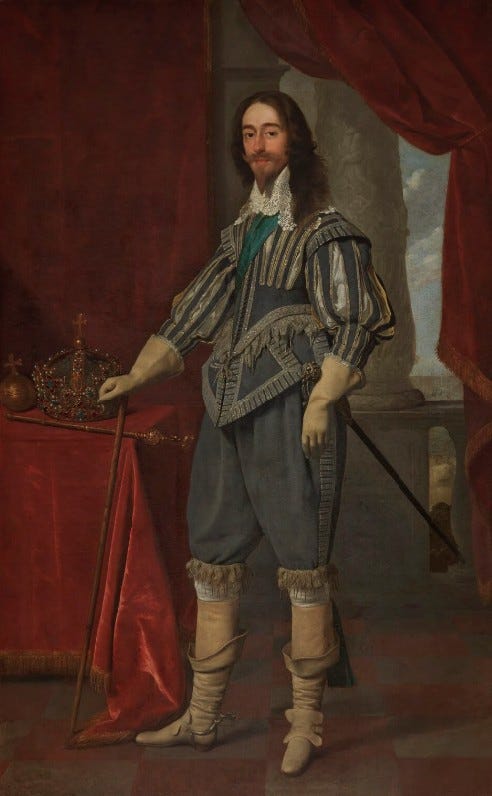
Do we know much about how Elizabeth felt during the English Civil War, and particularly with the execution of her brother, Charles I, in 1649?
Naturally she was opposed to Cromwell but when her pension payments from the English Parliament stopped coming she was quick to open negotiations with them. There was talk of her coming back to England to rule as queen in place of her brother, but these claims were never truly substantiated. It was the bravery of her sons Rupert and Maurice that were more involved in the war, fighting and even commanding troops for the Royalist Army. When news reached the Hague that Charles had been executed she was utterly devastated, she, like many, must have thought an anointed king would never be treated in such a way so to learn that her brother was dead at the hand of the executioner broke her world. She was close to her niece at the time and so she had her welfare to consider as well as her own. She formed a close bond with her two nephews Charles and James (future Charles II and James II).
If you could ask Elizabeth Stuart one question and get an honest answer, what would it be?
Oh, that is a good question!! Did you ever feel like giving up in the fight to regain the full Palatinate lands? She faced knack back after knock back and must have felt so deflated at times, especially when she learned no help was coming from her father and England. I’d like to know too how she felt about that. Did she feel let down, distraught, abandoned? (Sorry, that is two questions!)
What are you currently working on?
My next book England’s First Queen: How Bloody was Mary I is currently in editing and is due for publication next year. I have recently started research on my next book, details of which will follow soon!
Author Bio
Beverley Adams was born and raised in Preston, Lancashire. She gained her MA in English in 2018 and her first book, The Rebel Suffragette: The Life of Edith Rigby, was published in September 2021. She is passionate about bringing the lives of inspirational women back to life. Her interests include history, in particular local history, reading and travel.
Social Media:
Facebook – Beverley Adams Historian & Writer.
Instagram – @historian_writer.
Threads – @historian_writer.
Blue Sky – @writerbeverleya.bsky.social.
X/Twitter – @WriterBeverleyA.
And you can find Beverley at her website.
Beverley’s Books:
Comments
Nothing yet. Say the first thing.
Sign in to join the conversation.