
Daniel Steinberg was a renowned cardiologist and lipid researcher (Masterjohn, 2009). He is credited with convincing Merck to bring a statin drug (lovastatin) to market, despite concerns about statin toxicity.
“Merck was among the first companies to develop a statin program, but was on the verge of shutting it down based on rumors that statins caused cancer in dogs. Along with Mike Brown, Joe Goldstein, and a number of prominent clinicians, Dan convinced Merck to continue the program, leading to the introduction of the first clinical statin capable of significant reductions of cholesterol levels in humans.” (Glass, 2015)
Brown and Goldstein won the Nobel Prize for discovering the LDL receptor, which was thought to play a crucial role in cardiovascular disease (CVD), since at the time it was thought that LDL was driving CVD.
However, their attempts to figure out how were fruitless. The first step in the atherosclerosis that can lead to CVD is the creation of “foam cells”, macrophages (a type of white blood cell) that are stuffed full of LDL and the cholesterol and fats that LDL transport throughout the body. However, incubating macrophages with LDL did not result in the macrophages converting into foam cells, and the fact that humans without LDL receptors still got CVD, sometimes at very young ages, indicated that the LDL receptor was not the key player (Goldstein, 1979).
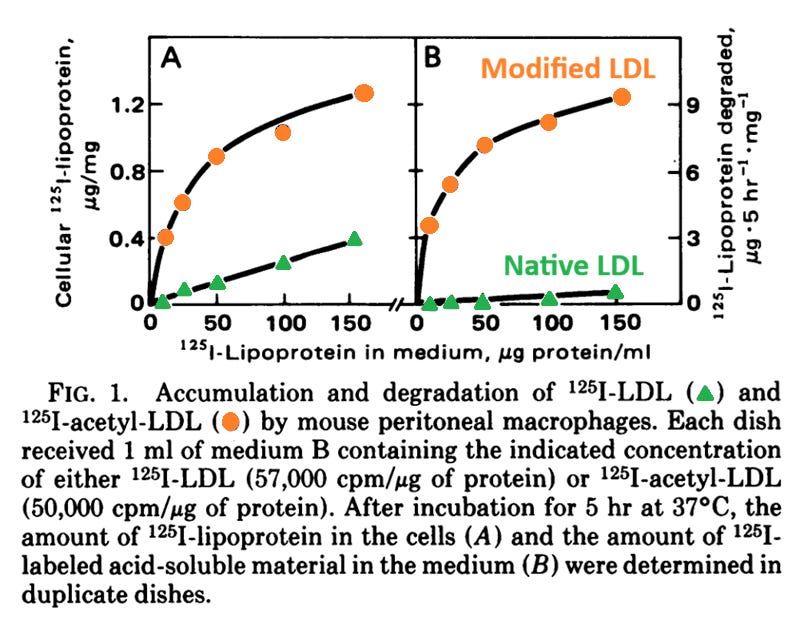
Brown and Goldstein showed that a “modification” of LDL was necessary to make macrophages start the necessary process of internalizing ‘excess’ LDL. But they couldn’t determine what the modification was in the body, just that the modification they used, which is not found in the body, worked.
In 1991 Steinberg wrote,
“It was Goldstein and Brown who first proposed that modification of LDL was a prerequisite for macrophage uptake (3).” (Witztum, 1991)
Footnote 3 was (Goldstein, 1979).
In 2007, upon publication of his magnum opus description of how statins became the preeminent treatment for CVD, Steinberg explained the genesis of the research showing the “pathogenesis” (the origin of the disease) of CVD:
“Then Hessler and collaborators in Cleveland demonstrated that the changes induced in LDL by incubation with endothelial cells were due to free radical modification (78). Steinbrecher et al. in La Jolla independently came to the same conclusion with regard to the mechanism by which endothelial cells converted LDL into a ligand for macrophage receptors (79).” (Steinberg, 2007)
Steinberg, as senior author of the 1984 Steinbrecher paper, had published “Modification of Low Density Lipoprotein by Endothelial Cells Involves Lipid Peroxidation and Degradation of Low Density Lipoprotein Phospholipids” (Steinbrecher, 1984).
The “lipid” being “peroxidized” was linoleic acid, the chief polyunsaturated fat in seed oils. In addition to the fact that the only lipid they used in this experiment was linoleic acid, the TBARS test that they used strongly reacts to peroxidized linoleic acid (Ohkawa, 1978).
“The extent of lipid peroxidation was directly assessed using the thiobarbituric acid assay and, as shown in Figs. 1 and 2, the generation of thiobarbituric acid-reactive material paralleled the macrophage uptake of LDL. (Steinbrecher, 1984)
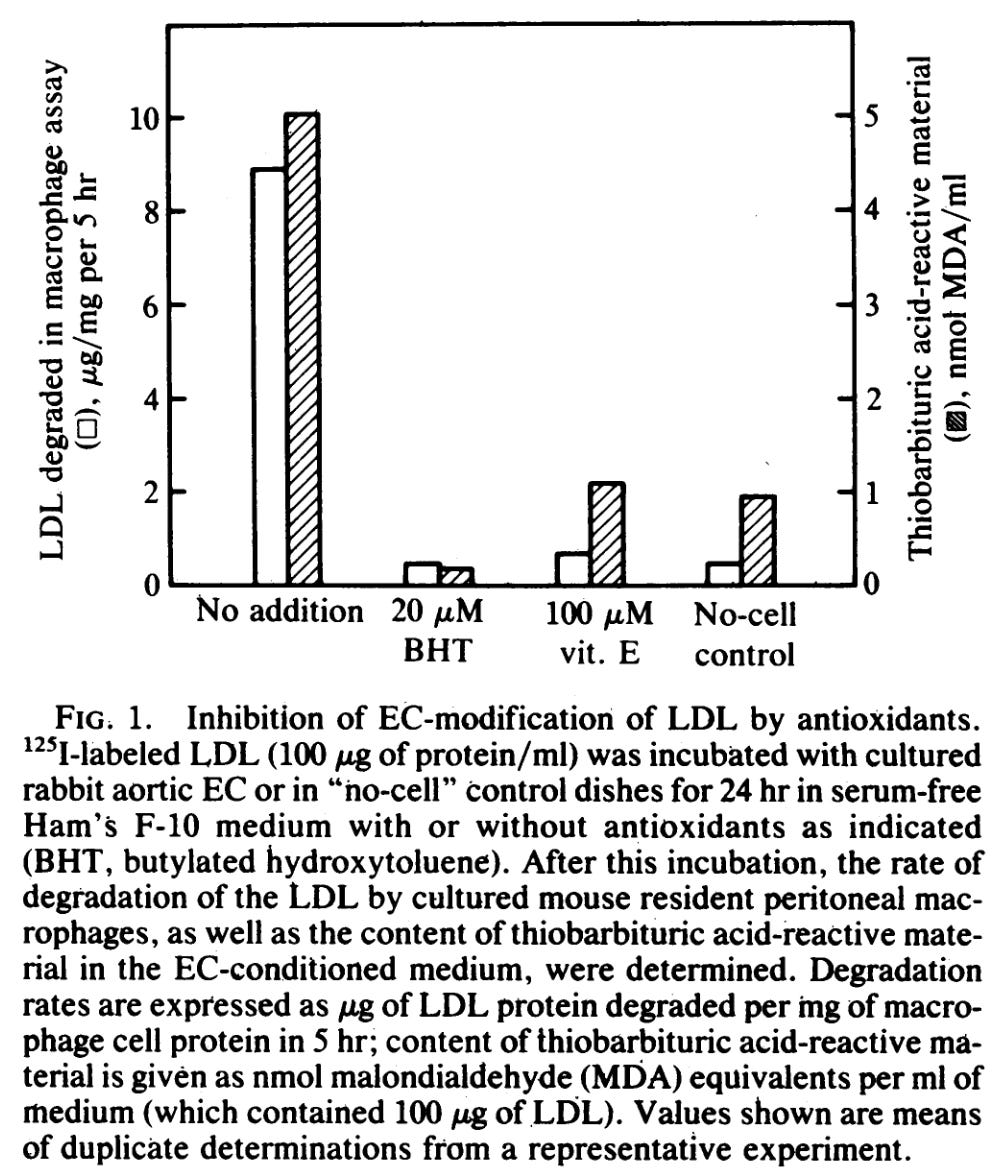
Moreover, the antioxidants they used, especially vit. E, are well known to protect linoleic acid against peroxidation. The “modified” LDL became known as “oxidized” LDL (oxLDL), as it was clear to all that this was the mechanism by which LDL went from a non-atherogenic, “native” state, to the atherogenic, pathological state. In discussing a follow-up paper of Steinberg’s (Brown and Goldstein wrote:
“The search for a physiological ligand for the scavenger receptor bore fruit when Steinberg and co-workers discovered that oxidized LDL competes for the binding of acetyl-LDL and delivers sufficient cholesterol to produce a foam cell (reviewed in ref. 5).” (Brown, 1990)
Ref. 5 is “Beyond Cholesterol. Modifications of Low-Density Lipoprotein That Increase Its Atherogenicity”, (Steinberg, 1991), a review of his team’s work up until that point, published in the New England Journal of Medicine, a premier medical journal.
“All these changes, however, depend on a common initiating step—the peroxidation of polyunsaturated fatty acids in the LDL lipids.” (Steinberg, 1989)
The predominant polyunsaturated fatty acid (PUFA) in LDL is linoleic acid, from seed oils. (Spiteller, 1998)
Steinberg and the researchers he worked with, especially Joseph Witztum, went on to do a number of other experiments looking at the peroxidation of linoleic acid and the effect of that peroxidation on LDL and its role in atherosclerosis. They showed that replacing linoleic acid with oleic acid, which is not susceptible to peroxidation, prevented the oxidation of LDL. In a latter review paper (Witztum, 1991), they describe these experiments.
“The importance of the fatty acid composition was impressively demonstrated by our recent studies of rabbits fed a diet high in linoleic acid (18:2) or in oleic acid (18:1) for a period of 10 wk. LDL isolated from the animals on oleic acid-rich diet were greatly enriched in oleate and low in linoleate. This LDL was remarkably resistant to oxidative modification, measured either by direct parameters of lipid peroxidation (i.e., TBARS and conjugated dienes) or by the indirect criterion of uptake by macrophages (53)….
“In a recent study, human volunteers were fed a similar oleic acid-rich diet. When their LDL was tested for susceptibility to oxidative modification, it was reduced albeit to a lesser degree than that noted in the rabbit studies (54). These studies demonstrate the feasibility of dietary modification of LDL fatty acid content in order to reduce its susceptibility to modification.” (Witztum, 1991)
Concluding that the root cause is that, “there is a vast excess of polyunsaturated fatty acids in LDL, in relationship to the content of natural, endogenous antioxidants.” (Witztum, 1991)
Ref. 53 above is, “Low Density Lipoprotein Rich in Oleic Acid Is Protected Against Oxidative Modification: Implications for Dietary Prevention of Atherosclerosis.” (Parthasarathy, 1990), another paper in which Steinberg is senior author.
In this paper, they fed rabbits, a long-standing model of atherosclerosis, either a high-linoleic or high-oleic sunflower oil (Trisun 80, non-GMO). Steinberg observed, “Yet diets in which polyunsaturated fatty acids are substituted for saturated fatty acids are considered to be beneficial in that they lower plasma cholesterol levels (14).” Ref. 14 is referring to the National Diet-Heart Study (NDHS).
“It was a truly heroic undertaking in which food manufacturers provided specially processed foods in which the saturated fat content was manipulated. Participants ordered their fat-containing foods from a central depot and were given dietary instructions.” Steinberg, 2007)
Saturated fat was replaced with polyunsaturated fat. It was the birth of ultra-processed foods, and the stealth replacement of fats provided a model the government pursued for decades across the entire food industry (Rowe, 2011).
But this is the key sentence from (Parthasarathy, 1990):
“In fact, dietary intervention studies have shown that such diets appear to reduce the risk of clinical coronary heart disease (15), presumably by decreasing plasma LDL levels. However, it is quite possible that the LDL in such patients is more readily oxidized and is therefore more atherogenic but that the decrease in LDL concentration more than compensates for any such increased susceptibility of LDL to oxidative modification. In other words, a polyunsaturated fatty acid-rich diet may have two opposing effects but with an overall balance that is favorable-i.e., antiatherogenic.” (Parthasarathy, 1990)
Ref. 15 is to (Dayton, 1969), aka The LA Veterans Study. Here’s how those authors describe their own study:
“…we consider our own trial, with or without the support of other published data, to have fallen short of providing a definitive and final answer concerning dietary prevention of heart disease.” (Dayton, 1969)
So citing this study as compelling only works if the only criteria you use is lowering cholesterol and heart disease outcomes, but not total mortality. That’s a bad idea.
(Interestingly, the problem in (Dayton, 1969) was increased cancer mortality in humans on the high seed oil diet. Steinberg convinced Merck to ignore the concern of cancer in dogs to bring lovastatin to market. I think it’s a bad idea for cardiologists to focus only on cardiovascular disease and ignore the rest of the body.)
That aside, the idea that lower LDL cholesterol might be beneficial even in the face of a higher Ω-6 PUFA intake isn’t of itself a crazy idea. I’ve often said that if you won’t fix your diet by removing seed oils, a statin is probably not a bad idea. There is evidence that statins do reduce CVD in a high-Ω-6 diet—see every single statin trial done—even if it’s probably by a lot less than the ~20% the industry-sponsored trials showed. Statins do have pleiotropic effects (effects other than the intended one, in this case the lowering of cholesterol production) specifically they seem to be antioxidants (Zhang, 2024), which directly effects the actual pathway of CVD disease initiation and progression, as Steinberg showed.
So I think it’s fair to say that Steinberg & Co. demonstrated the actual mechanism of CVD initiation and progression. It’s the peroxidation (rancidity) of Ω-6 fats in the body. This is such a core notion of modern cardiology that current reviews of pathogenesis like (Borén, 2020) cite (Steinberg, 1989), and place the oxidation of LDL at the start of the atherosclerotic alteration of LDL.
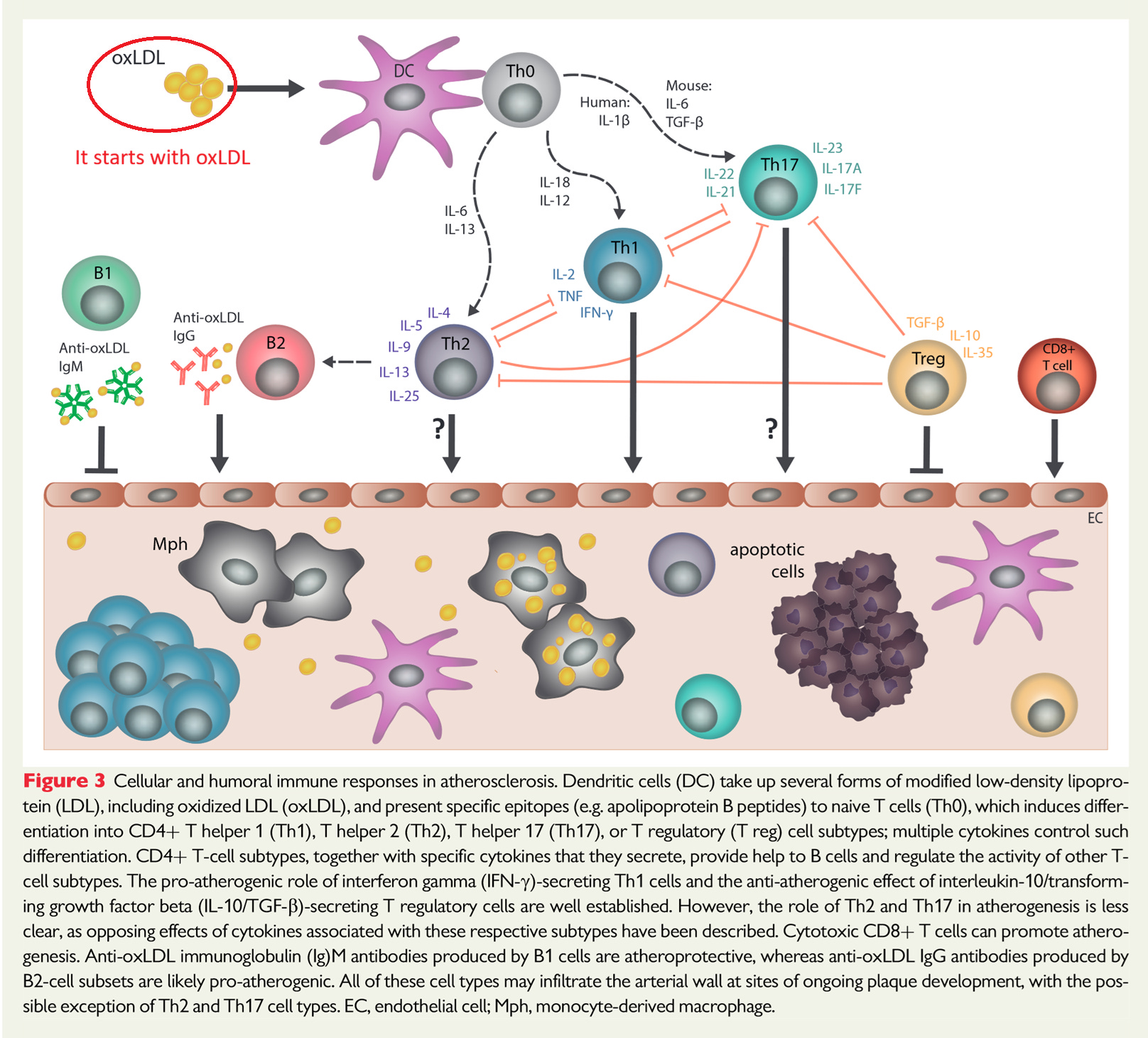
At this point I should mention the most successful diet-heart trial of all time. In 1994, in the midst of Steinberg & Co.’s research into seed oils and CVD a French cardiologist, Michel de Lorgeril, published “Mediterranean Alpha-Linolenic Acid-Rich Diet in Secondary Prevention of Coronary Heart Disease.”
This study was designed to mimic a Cretan diet, in light of Steinberg’s research (Reaven, 1993) on the role of linoleic acid in CVD, to produce a better outcome than a study like the NDHS and its successor. It succeeded.
This study attacked CVD in secondary prevention (people who have already had a heart attack, the most high-risk cases) with a two-pronged approach against Ω-6 fats in heart disease. It was a multi-intervention approach, like many other studies, but in my opinion, and based on Steinberg’s research, the two significant prongs are the decrease in linoleic acid, and the increase in alpha-linolenic acid.
“The experimental group consumed significantly less lipids, saturated fat, cholesterol, and linoleic acid but more oleic and alpha-linolenic acids confirmed by measurements in plasma.” (de Lorgeril, 1994)
(I discussed why reducing fats is not meaningful in this post, if you are interested.)
For the benefit of Ω-6 linoleic acid reduction, see Steinberg’s research, and others to be discussed below. Alpha-linolenic acid is a plant-based, 18-carbon Ω-3 fat that converts into EPA (eicosapentaenoic acid, an animal-based long-chain Ω-3 fat). EPA is currently marketed by cardiologists as Vascepa, a synthetic—and thus more profitable—version of EPA for CVD risk reduction (Chance, 2019).
(EPA replaces the long-chain Ω-6 fat arachidonic acid (AA) in cell and LDL membranes, and this is thought to be why it offers benefits in CVD. There’s less AA than linoleic acid, but it can be a problem (Spiteller, 1998))
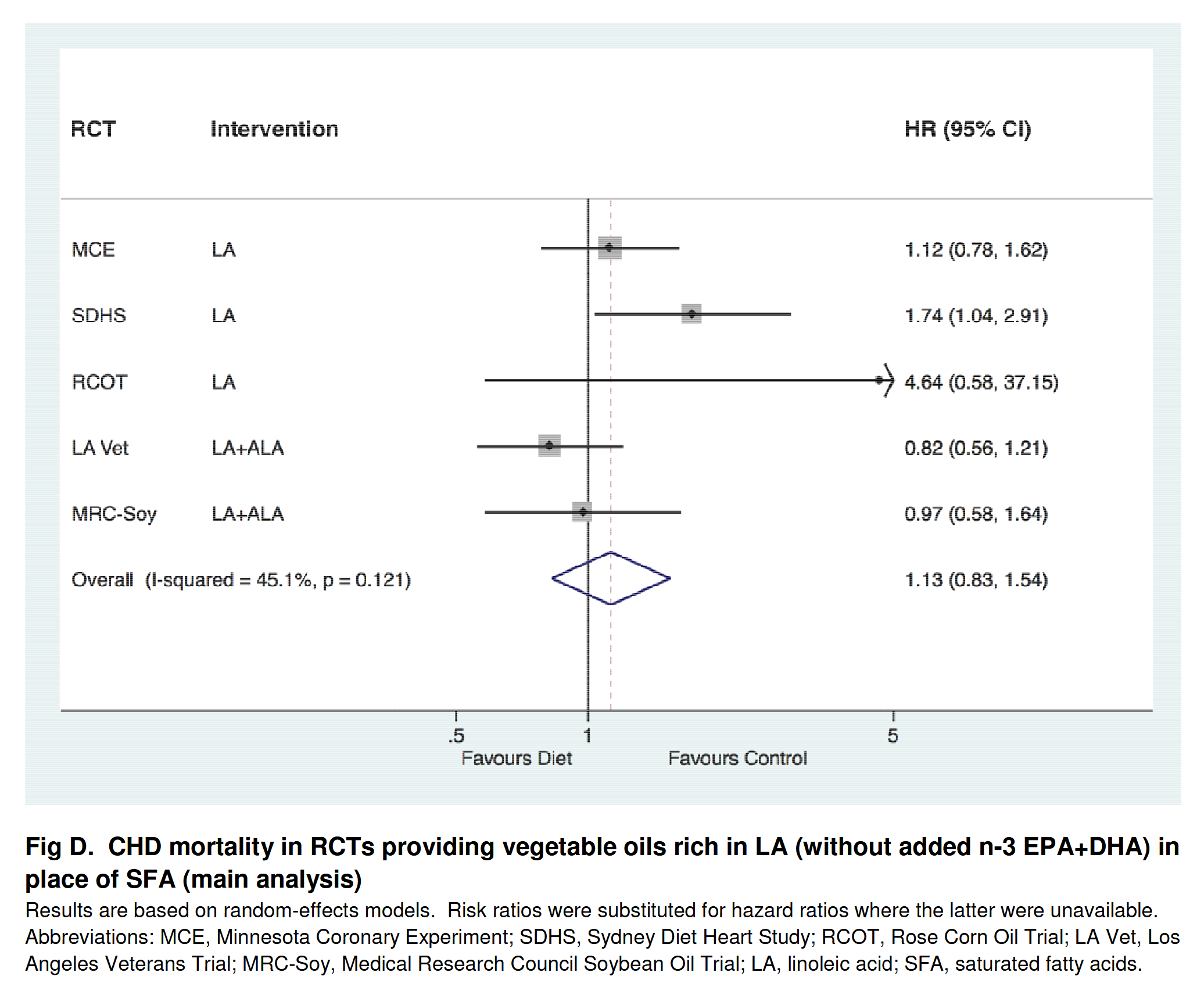
Compared to the trials which increased Ω-6 fats, but didn’t include Ω-3 fats, and saw an increase in CVD, de Lorgeril’s study saw a 70% decrease in mortality.
(It was excluded from (Ramdsen, 2016a) because it, “Did not substitute LA-rich oil in place of SFA”.)
This was also better than the trials that increased both Ω-3 and Ω-6 fats, like the LA Veterans Trial (Ramsden, 2016a, Appendix A, CHD=CVD).
The American Heart Association saw fit to revise their recommendations after (de Lorgeril, 1994) was published, and recommended a ‘Mediterranean’ diet with alpha-linolenic acid. They failed to emphasize the reduction in linoleic acid.
“AHA Science Advisory: Lyon Diet Heart Study. Benefits of a Mediterranean-style, National Cholesterol Education Program/American Heart Association Step I Dietary Pattern on Cardiovascular Disease.” (Kris-Etherton, 2001)
I hope she got a nice bonus for squaring that circle.
This is a problematic recommendation because we know that high linoleic acid impairs the conversion of alpha-linolenic acid to EPA.
“We showed that reducing [linoleic acid]-rich oils and incorporating [alpha-linolenic acid]-rich plant sources (flaxseed oil and walnuts) in recipes achieved an n-6/n-3 ratio potentially conducive to improved health outcomes and is sufficient to meet the EPA needs of individuals adhering to a vegetarian or meatless diet.” (Wein, 2010)
He discusses a number of the diet-heart trials, calling the NDHS “heroic”, as above, but trashes the Minnesota Coronary Survey (MCS, also referred to as the Minnesota Coronary Experiment—MCE).
“Clearly, the Minnesota Coronary Survey cannot be regarded as a meaningful test of the lipid hypothesis. Yet it is often included in meta-analyses and often appears on lists of studies allegedly disproving the lipid hypothesis.” (Steinberg, 2007)
This is doubly-odd, as the MCS was a follow-on from the NDHS.
“In addition, a study of a group of hospitalized patients is being conducted by Dr. I. D. Frantz, Jr., of the University of Minnesota.” (Page, 1964)
As Frantz explained, describing the MCS:
“Two diets were served. The control diet involved little departure from the institutional diet served before the trial. The treatment diet represented a compromise between the B and C diets of the National Diet-Heart Study, with target values of 45% of calories from fat, a polyunsaturated/ saturated fat (P/S) ratio of 2.5, and less than 150 mg of cholesterol daily.” (Frantz, 1989)
Of course one can conduct a higher-quality study in a hospital, where more variables can be controlled, than in people living at home, as in the rest of the NDHS.
(Page, 1964) was written by Irvine Page, who initiated and designed the NDHS and thus the MCS.
“Page and the members of his committee were pioneers, sufficiently persuaded by the evidence available to invest a significant piece of their time and energy in a quest for the definitive clinical trial. They were by no means evangelical. In his Editorial [(Page, 1964)], Page put it this way, “No one knows whether a free-living, healthy population will continue with the changes in eating habits we suggest. Nor do we know whether, if their blood cholesterol levels are moderately reduced, heart attacks will decrease. At least we will try to find out.” (Steinberg, 2007)
Moreover:
“This book might never have been written if Irvine H. Page had not suggested it to me almost 20 years ago. He wrote me a note shortly before his death in 1991, saying in essence that it was my duty “to write the history – so that people will remember the uphill battle it was to gain acceptance of the lipid hypothesis.” Page was one of the first cardiologists to recognize the plausibility of the hypothesis and to champion efforts to prove it at the clinical level (11;12). (Steinberg, 2007)
Ultimately the problem is that the MCS does disprove the lipid hypothesis.
“This finding that greater lowering of serum cholesterol was associated with a higher rather than a lower risk of death in the MCE does not provide support for the traditional diet-heart hypothesis.” (Ramsden, 2016a)
Steinberg discusses the Finnish Mental Hospitals Survey (FMHS) and Oslo Diet-Heart (ODHS) approvingly, however, although he misrepresents the rigorousness of the designs. Most modern meta-analyses of this topic exclude both.
“…excluding Oslo Diet Heart 1966 as it increased both omega-3 and omega-6 fats and included a multivitamin in the intervention group (so was multifactorial), and Finnish Mental Hosp 1972 as it was a cluster-randomised trial, with only two clusters (and used a cross-over approach inappropriate for outcomes that develop over time such as CVD). Both trials we excluded reported statistically significant reductions in their primary outcomes.” (Hooper, 2018)
So there’s ‘good’ evidence for statins—I wince, see (Vancheri, 2016)—and really good evidence for seed oils. How does Steinberg proceed?
In (Steinberg, 2007), “The Cholesterol Wars: The Skeptics vs the Preponderance of Evidence” he fails to mention:
Linoleic acid
Oleic acid
Mediterranean diet
de Lorgeril
He discusses oxLDL a bit, but mentions his and Witztum’s research peripherally, never making the connection between linoleic acid and oxLDL. He discusses the utility of antioxidants, never mentioning what oxidation they are supposed to prevent, and certainly never mentioning reducing linoleic acid to reduce CVD risk.
This is odd.
Where did he write this book?
“My eternal gratitude goes to my good friend and long-time collaborator, Joseph L. Witztum, who provided me with space and support for this post-Emeritus undertaking. Some of the themes in the book may have been drawn from his songbook. We sang them together for many years.” (Steinberg, 2007)
Some of the verses have been discarded, however.
He discusses oxLDL in the context of creating a vaccination for it using an antibody— Steinberg held a patent on such an antibody.
Ultimately Steinberg does what Page and the American Heart Association have done: bury the evidence. No doubt Page suspected this history would adhere to the party line, despite Steinberg’s research findings.
Page was president of the AHA in 1956-7, when they started promoting the consumption of seed oils for heart disease (Newport, 2024).
At the very least one can say that Page and the other cardiologists and scientists involved in this project should have been clear that the project failed: they did not prove that consuming more seed oils would have any beneficial effect on heart disease rates.
The intervention in the MCS was 13% linoleic acid. The AHA now says, sotto voce”
“The AHA has been cautious about recommending marked increases in polyunsaturates; the consequences of prolonged ingestion of large quantities of these fats are not known. To be on the safe side, the AHA has not recommended very high intakes of polyunsaturated fats for the general population. While some replacement of saturated fats by polyunsaturates seems safe, it may be prudent not to exceed 10% of total calories….”
“Finally, it should be emphasized again that the AHA does not recommend high-polyunsaturated fat diets similar to those used in the above clinical trials for the general public.” (Grundy, 1982)
The Dietary Guidelines goes further:
“…High intakes of linoleic acid create a pro-oxidant state that may predispose to several chronic diseases, such as CHD [CVD] and cancer. Therefore, an AMDR [Acceptable Macronutrient Distribution Ranges] of 5 to 10 percent of energy is suggested for linoleic acid.” (Institute of Medicine, 2005)
The problem, as Ramdsen explains:
“The MCE intervention provided ≈13%E (%E) as LA. According to NHANES, more than 13 million American adults currently consume ≥13%E as LA.” (Ramsden, 2016b)
The correct quantity is likely closer to 2%E. Note the the control diet in the MCS, with a slightly lower mortality rate, was 4.7%.
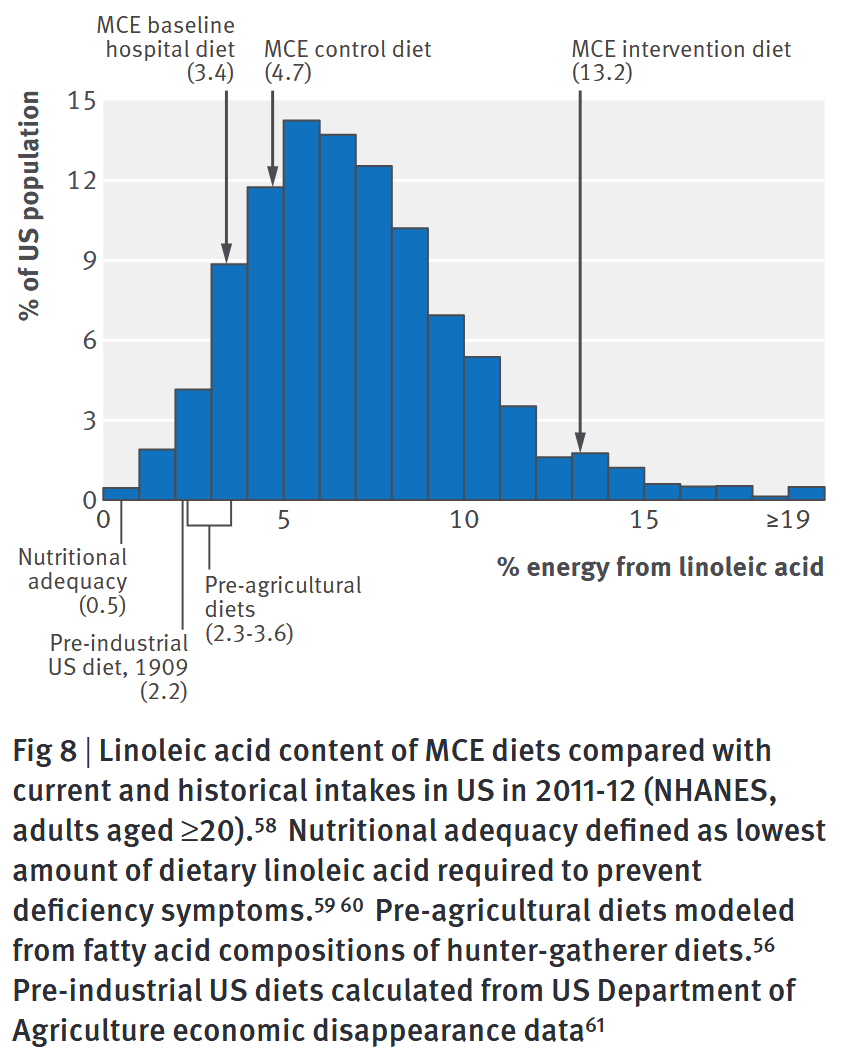
Steinberg’s research took this a step farther, however. He showed that the primary fat in seed oils drives heart disease. What’s known as the “oxidative modification hypothesis” is now the dominant paradigm in cardiology, if one is intellectually honest.
“The oxidative modification hypothesis was strongly supported by a number of lines of evidence, both in vitro and in vivo. No attempt will be made here to review this large body of evidence. The interested reader is referred to several comprehensive reviews (86-90).” (Steinberg, 2007)
Steinberg’s research makes clear that his process starts with the consumption of excess linoleic acid. He takes a victory lap for his research while hiding the core finding.
If we want to avoid the disease, and not just “treat” it, we must address the root cause.
Thanks to Chris Masterjohn, PhD for his review of Steinberg’s 2007 book, and for educating me early on on the topic of oxidized LDL and CVD.
“…One would get the idea from reading The Cholesterol Wars that there is actually good science showing that we should reduce our intake of butter and use vegetable oil instead! And nothing could be further from the truth.” (Masterjohn, 2009)
Borén, Jan, M. John Chapman, Ronald M. Krauss, et al. 2020. “Low-Density Lipoproteins Cause Atherosclerotic Cardiovascular Disease: Pathophysiological, Genetic, and Therapeutic Insights: A Consensus Statement from the European Atherosclerosis Society Consensus Panel.” European Heart Journal 41 (24): 2313–30. https://doi.org/10.1093/eurheartj/ehz962.
Brown, Michael S., and Joseph L. Goldstein. 1990. “Scavenging for Receptors.” Nature 343 (6258): 508–9. https://doi.org/10.1038/343508a0.
Chance, Blair. 2019. “FDA Approves Omega-3 Fish-Oil Medication Vascepa to Reduce Risk of Death in People with High Cholesterol.” News. ABC News, December 16. https://abcnews.go.com/Health/fda-approves-omega-fish-oil-medication-vascepa-reduce/story?id=67748996.
Dayton, Seymour, Morton Lee Pearce, Sam Hashimoto, Wilfrid J. Dixon, and Uwamie Tomiyasu. 1969. “A Controlled Clinical Trial of a Diet High in Unsaturated Fat in Preventing Complications of Atherosclerosis.” Circulation 40 (1s2): II–1. https://doi.org/10.1161/01.CIR.40.1S2.II-1.
Glass, Christopher K., and Joseph L. Witztum. 2015. “Daniel Steinberg, 1922–2015.” Proceedings of the National Academy of Sciences of the United States of America 112 (32): 9791. https://doi.org/10.1073/pnas.1512413112.
Goldstein, Joseph L., Y. K. Ho, Sandip K. Basu, and Michael S. Brown. 1979. “Binding Site on Macrophages That Mediates Uptake and Degradation of Acetylated Low Density Lipoprotein, Producing Massive Cholesterol Deposition.” Proceedings of the National Academy of Sciences of the United States of America 76 (1): 333–37. https://doi.org/10.1073/pnas.76.1.3.
Grundy, Scott M., David Bilheimer, Henry Blackburn, et al. 1982. “Rationale of the Diet-Heart Statement of the American Heart Association. Report of the AHA Nutrition Committee.” Arteriosclerosis: An Official Journal of the American Heart Association, Inc. 2 (2): 177–91.
Hooper, Lee, Lena Al‐Khudairy, Asmaa S. Abdelhamid, et al. 2018. “Omega‐6 Fats for the Primary and Secondary Prevention of Cardiovascular Disease.” Cochrane Database of Systematic Reviews, no. 7. https://doi.org/10.1002/14651858.CD011094.pub3.
Institute of Medicine. 2005. Dietary Reference Intakes for Energy, Carbohydrate, Fiber, Fat, Fatty Acids, Cholesterol, Protein, and Amino Acids. National Academy of Sciences. https://doi.org/10.17226/10490.
Kris-Etherton, Penny M., Robert H. Eckel, Barbara V. Howard, Steve C. St Jeor, and Terry L. Bazzarre. 2001. “AHA Science Advisory: Lyon Diet Heart Study. Benefits of a Mediterranean-Style, National Cholesterol Education Program/American Heart Association Step I Dietary Pattern on Cardiovascular Disease.” Circulation 103 (13): 1823–25. https://doi.org/10.1161/01.CIR.103.13.1823.
Masterjohn, Christopher. 2009. “Cholesterol Wars by Daniel Steinberg.” Blog. The Weston A. Price Foundation, March 27. https://www.westonaprice.org/book-reviews/the-cholesterol-wars-by-daniel-steinberg/.
Newport, Mary T., and Fabian M. Dayrit. 2024. “The Lipid–Heart Hypothesis and the Keys Equation Defined the Dietary Guidelines but Ignored the Impact of Trans-Fat and High Linoleic Acid Consumption.” Nutrients 16 (10): 10. https://doi.org/10.3390/nu16101447.
Ohkawa, H., N. Ohishi, and K. Yagi. 1978. “Reaction of Linoleic Acid Hydroperoxide with Thiobarbituric Acid.” Journal of Lipid Research 19 (8): 1053–57. https://doi.org/10.1016/S0022-2275(20)40690-X.
Page, Irvine H. 1964. “Editorial: The National Diet-Heart Study.” Circulation 29 (1): 4–5. https://doi.org/10.1161/01.CIR.29.1.4.
Parthasarathy, S., J. C. Khoo, E. Miller, J. Barnett, J. L. Witztum, and D. Steinberg. 1990. “Low Density Lipoprotein Rich in Oleic Acid Is Protected Against Oxidative Modification: Implications for Dietary Prevention of Atherosclerosis.” Proceedings of the National Academy of Sciences 87 (10): 3894–98. https://doi.org/10.1073/pnas.87.10.3894.
Ramsden, Christopher E., Daisy Zamora, Sharon Majchrzak-Hong, et al. 2016a. “Re-Evaluation of the Traditional Diet-Heart Hypothesis: Analysis of Recovered Data from Minnesota Coronary Experiment (1968-73).” Research. BMJ 353 (April). https://doi.org/10.1136/bmj.i1246.
Ramsden, Christopher E., Daisy Zamora, Sharon F. Majchrzak-Hong, et al. 2016b. “Re: Re-Evaluation of the Traditional Diet-Heart Hypothesis: Analysis of Recovered Data from Minnesota Coronary Experiment (1968-73).” BMJ 2016 (353): i1246. https://doi.org/10.1136/bmj.i1246.
Reaven, P., S. Parthasarathy, B. J. Grasse, E. Miller, D. Steinberg, and J. L. Witztum. 1993. “Effects of Oleate-Rich and Linoleate-Rich Diets on the Susceptibility of Low Density Lipoprotein to Oxidative Modification in Mildly Hypercholesterolemic Subjects.” Journal of Clinical Investigation 91 (2): 668–76.
Rowe, Sylvia, Nick Alexander, Nelson Almeida, et al. 2011. “Food Science Challenge: Translating the Dietary Guidelines for Americans to Bring About Real Behavior Change.” Journal of Food Science 76 (1): R29–37. https://doi.org/10.1111/j.1750-3841.2010.01973.x.
Spiteller, Gerhard. 1998. “Linoleic Acid Peroxidation—the Dominant Lipid Peroxidation Process in Low Density Lipoprotein—and Its Relationship to Chronic Diseases.” Chemistry and Physics of Lipids 95 (2): 105–62. https://doi.org/10.1016/S0009-3084(98)00091-7.
Steinberg, D., S. Parthasarathy, T. E. Carew, J. C. Khoo, and J. L. Witztum. 1989. “Beyond Cholesterol. Modifications of Low-Density Lipoprotein That Increase Its Atherogenicity.” The New England Journal of Medicine 320 (14): 915–24. https://doi.org/10.1056/NEJM198904063201407.
Steinberg, Daniel. 2007. The Cholesterol Wars: The Skeptics vs the Preponderance of Evidence. Academic Press. https://amzn.to/3OX6YZn.
Steinbrecher, U. P., S. Parthasarathy, D. S. Leake, J. L. Witztum, and D. Steinberg. 1984. “Modification of Low Density Lipoprotein by Endothelial Cells Involves Lipid Peroxidation and Degradation of Low Density Lipoprotein Phospholipids.” Proceedings of the National Academy of Sciences of the United States of America 81 (12): 3883–87. https://doi.org/10.1073/pnas.81.12.3883.
Vancheri, Federico, Lars Backlund, Lars-Erik Strender, Brian Godman, and Björn Wettermark. 2016. “Time Trends in Statin Utilisation and Coronary Mortality in Western European Countries.” Cardiovascular Medicine. BMJ Open 6 (3): e010500. https://doi.org/10.1136/bmjopen-2015-010500.
Wien, Michelle, Sujatha Rajaram, Keiji Oda, and Joan Sabaté. 2010. “Decreasing the Linoleic Acid to α-Linolenic Acid Diet Ratio Increases Eicosapentaenoic Acid in Erythrocytes in Adults.” Lipids 45 (8): 683–92. https://doi.org/10.1007/s11745-010-3430-3.
Witztum, J. L., and D. Steinberg. 1991. “Role of Oxidized Low Density Lipoprotein in Atherogenesis.” Journal of Clinical Investigation 88 (6): 1785–92. https://doi.org/10.1172/JCI115499.
Zhang, Yaoxia, Yuanyuan Qu, Ruiping Cai, et al. 2024. “Atorvastatin Ameliorates Diabetic Nephropathy Through Inhibiting Oxidative Stress and Ferroptosis Signaling.” European Journal of Pharmacology 976 (August): 176699. https://doi.org/10.1016/j.ejphar.2024.176699.
No posts
Comments
Nothing yet. Say the first thing.
Sign in to join the conversation.