
Jordan Lasker is an academic who has appeared over the last couple of years on X, where he has written about a number of topics, including politics and health. He’s become a major supporter of seed oils, and published a Substack post:
“Is Seed Oil Intake Correlated With Bad Health?” (Lasker, 2025)
(A note about Lasker and his nom de plume Crémieux: I respect that some folks have a need for anonymity on the ‘net. Lasker has already been outed by, among others, The Guardian, in an article so idiotic and typical it should be read to be believed, but probably isn’t worth the time (Wilson, 2025).)
Words he’s going to live by:
Remember: I am the one who cites all the RCTs, genetic evidence, *and* the epidemiological evidence. I look over *all* of the evidence… (Lasker, 2026)
The Gish Gallop is a fundamentally dishonest rhetorical technique:
The Gish gallop is a rhetorical technique in which a person in a debate attempts to overwhelm an opponent by presenting an excessive number of arguments, without regard for their accuracy or strength, with a rapidity that makes it impossible for the opponent to address them in the time available.
It’s dishonest because you can’t have an honest debate over the details, and in an article, it attempts to overwhelm the reader by pummeling them with unverifiable information.
It’s telling that Lasker’s first sentence is a Gish Gallop:
Genetic evidence and trials suggest seed oils are not harmful: they don’t make people fat, they don’t cause inflammation, they don’t cause cardiovascular disease, and so on. (Lasker, 2025
I’ve included the various studies linked below. I’m not going to go through them all, but will address them by type or specifically as is relevant.
Epidemiology is the lowest form of evidence, although it is invaluable. Many relationships between environmental variables (like, for instance, vitamin consumption) and diseases (like, heart disease) have been identified by epidemiology, and then tested and found not to be true when doing an experiment (like a randomly-controlled trial (RCT)).
One of the more famous examples was the attempt to treat oxidative damage from consuming seed oils on heart disease by taking vitamin E. Vitamin E impedes the oxidation of the Ω-6 fats in seed oils and was thus thought could prevent heart disease.
Unfortunately, when this was actually tested in an experiment, this was found not to work.
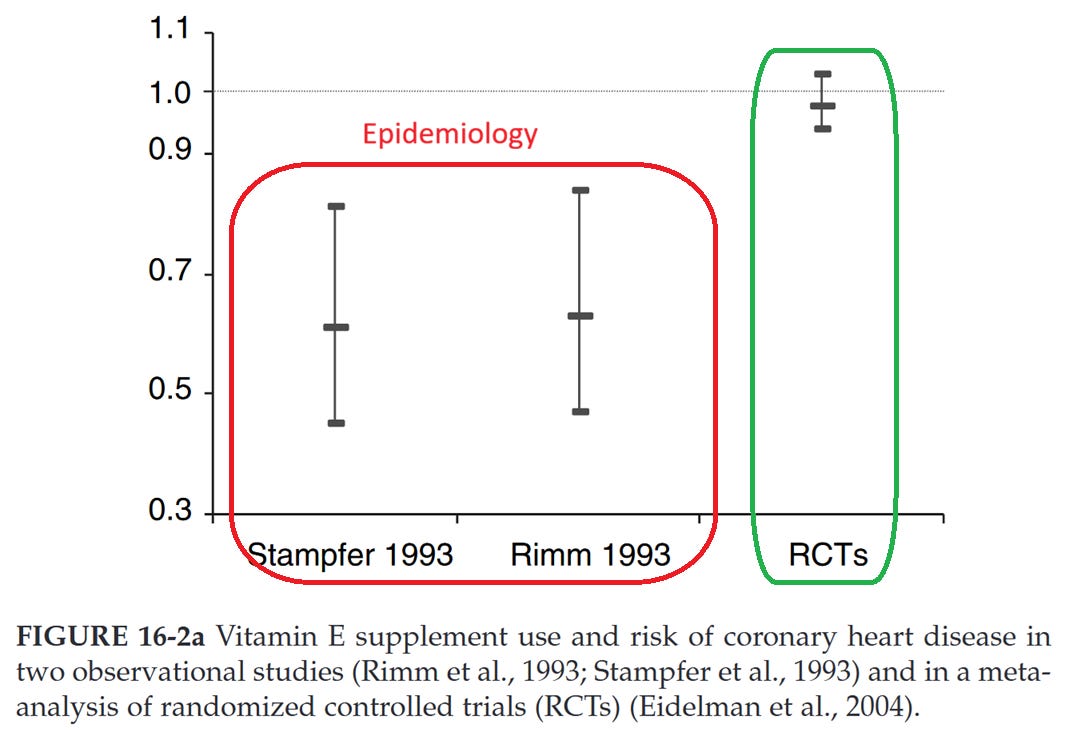
Lasker includes seven Mendelian Randomization (MR) studies. MR is an effort to “strengthen” epidemiology (Davey Smith, 2024). It has several issues, however, not least of which is that:
“A second explosion has been in complex mendelian randomisation methods that are difficult for most readers and co-authors to scrutinise.” (Davey Smith, 2024)
And thus:
“Considerable circumspection should be applied to interpretation of all published non-linear mendelian randomisation papers, and further stress-testing of the new non-linear mendelian randomisation method is required before its findings are accepted.” (Davey Smith, 2024)
MR should thus “…should always be situated within a triangulation of evidence framework.” (Davey Smith, 2024)
So these studies don’t really add anything. The relevant variable, linoleic acid, is solely provided through the diet, and all the genetic studies can only show is what happens after it is consumed. There’s certainly variability there, as we discussed in this podcast:
There’s a more fundamental problem with epidemiology such as this, however: ubiquity.
“…When a risk factor is ubiquitous in a population, it may strongly influence the population incidence of a disease, but may not identify high-risk individuals within a population. This is technically correct, e.g. in a society where everyone smokes, smoking will not identify high-risk individuals for lung cancer.”
“So can the role of near-ubiquitous risk factors be studied and their importance for disease causation quantified? Yes they can, but it’s not easy, and they cannot always be studied with our ‘standard’ methods such as randomized controlled trials, cohort studies or case–control studies….
First, it may be possible to identify important risk factors by comparisons between populations or comparisons over time.” (Pearce, 2011)
Virtually all epidemiological studies are conducted in industrialized countries with capable research universities. All such countries (except Japan) have been consuming seed oils with linoleic acid for decades before nutritional epidemiology became widespread. So the question is: where do you find the subjects without exposure?
So looking at seed oils, the populations that do not consume them do not suffer from cardiovascular disease, and this is true both for current, primitive populations, and across time in countries like the United States (Levenstein, 1975; Balsbag, 2011).
So ‘simple’ comparison like those used in MR, where all the population has long been exposed, will not necessarily be enlightening.
“However, the problem is that too often the major population risk factors will not be hypothesized (and therefore will not be studied) when they are ubiquitous.” (Pearce, 2011)
This is illustrated by the lack of MR papers (I can find none) looking at the ALDH2*2 mutation, linoleic acid, and heart disease, despite many papers finding clear links epidemiologically or experimentally.
“In particular, a number of studies have reported an association between the ALDH2 polymorphism and increased risk of coronary artery disease (CAD) risk (Xu et al., 2018; You, Li, Zhao, Wang, & Cui, 2018). In 2012, a GWAS study in the Japanese population corroborated these findings by identifying increased susceptibility to CAD in individuals who carry the ALDH2 mutant allele (Takeuchi et al., 2012). In further support of these findings, a meta-analysis of 5644 Chinese subjects from nine individual studies revealed a significant association between the ALDH2 rs671 polymorphism and CAD however, the authors acknowledged their meta-analysis included only a limited number of large-scale or prospective studies (Li et al., 2018). Furthermore, serum ALDH2 levels could be influenced not only by the ALDH2 polymorphism, but also by environmental factors and metabolic diseases such as obesity, diabetes mellitus, hyperlipidemia and hypertension. Researchers have also evaluated whether the ALDH2 polymorphism is an independent risk factor for worse outcome following AMI. Overall, numerous experimental and clinical studies support this notion…” (Lamb, 2024)
Lasker doesn’t discuss this at all.
There are a number of studies that looked at how seed oils might be protective against cardiovascular disease (CVD). Virtually all failed, showing instead that seed oils increase CVD risk.
Lasker includes a number of meta-analyses (studies of studies) looking at this phenomenon, but only one RCT, the Oslo Diet-Heart Study (ODHS) (Leren, 1970).
Lasker does not include the most rigorous meta-analysis, done by the NIH (Ramdsen, 2016).
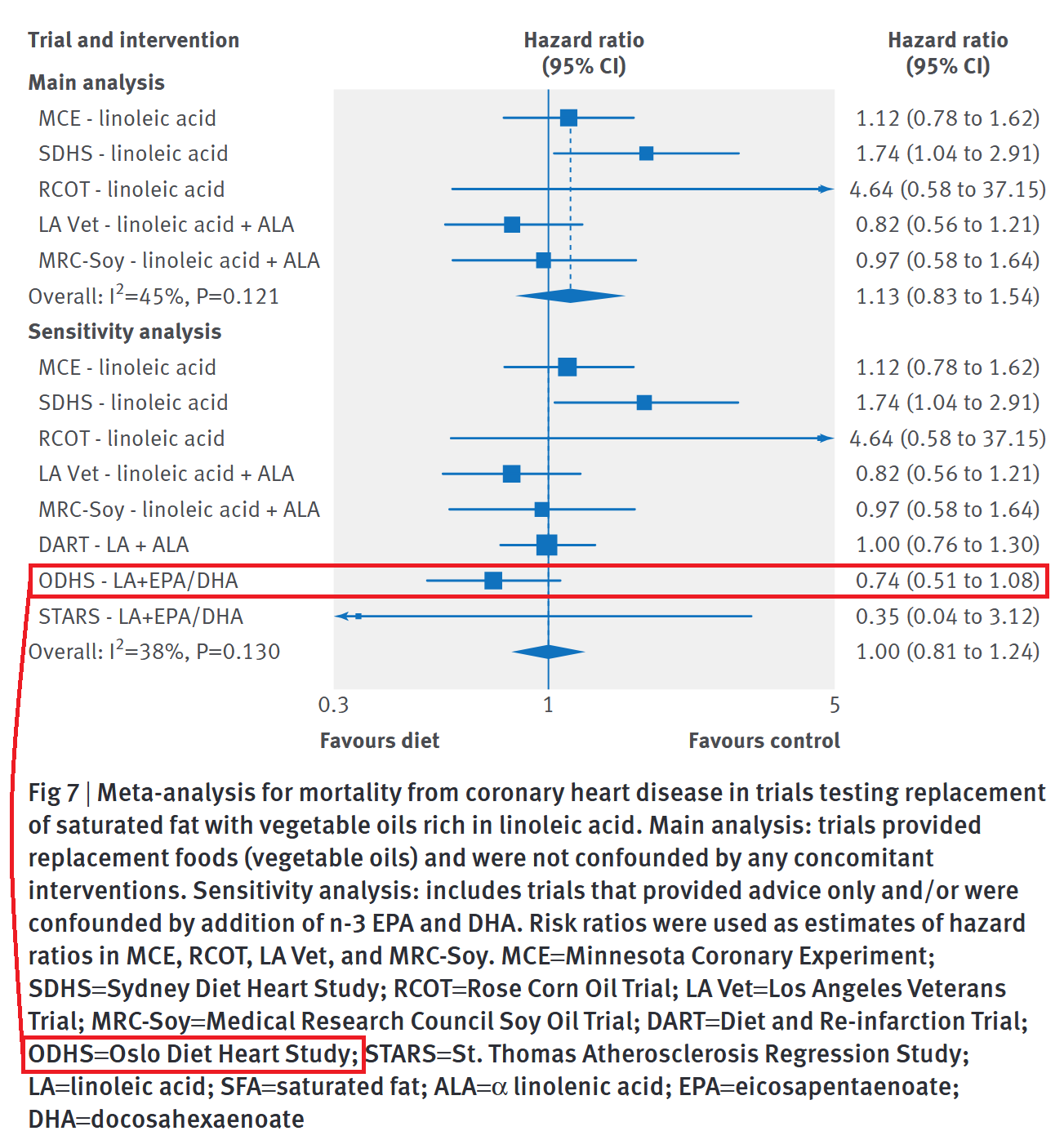
Ramsden excluded ODHS from their main analysis, because, importantly, ODHS is not a trial solely of seed oils.
The ODHS has often been represented as a test of the replacement of SFA with an LA-rich vegetable oil (soybean oil). However, in addition to soybean oil, the intervention group received a very large dose (≈5 grams per day) of n-3 EPA+DHA from provision of sardines canned in cod liver oil, and was advised to restrict sugar intake and to replace refined carbohydrates with less processed selections. Since EPA+DHA (and sugar) are reported to influence CHD risk by mechanisms independent of serum cholesterol lowering, it is not possible to determine which intervention components were responsible for study results. (Ramsden, 2016)
Thus it cannot answer the question here. Why not include some of the other trials?
Oslo is included in (Mozaffarian, 2010), a meta-analysis that Lasker does include. However, two other meta-analyses that Lasker also includes, (Hamley, 2017) and (Hooper, 2018) also both note that Oslo is not a trial of seed oils.
“Multifactorial dietary interventions: ODHS and STARS both used a multifactorial dietary intervention, in which the dietary advice given to the experimental group included much more than just replacing SFA with mostly n-6 PUFA. Other dietary differences besides TFA intake included: 1) a higher intake of long chain n-3 PUFA (2.0% vs. usual intake (ODHS) and 0.21 vs. 0.10% (STARS); 2) advice to consume more whole plant foods (ODHS and STARS); 3) advice to moderate sugar consumption and to increase fish and shellfish (ODHS); 4) sardines canned in cod liver oil that were supplied to the experimental group (ODHS); 5)...
Hooper et al. judged ODHS and STARS as having a ‘high risk’ of bias related to being ‘free of dietary differences other than fat’, but included ODHS as a fat modification trial and STARS as a reduced and modified fat trial.” (Hamley, 2017)
Hooper in their 2018 paper states they excluded “Oslo Diet Heart 1966 as it increased both omega-3 and omega-6 fats and included a multivitamin in the intervention group (so was multifactorial).”
So Lasker is sloppy, doesn’t understand the study, or is being disingenuous in included only this one trial, which, one can see from the Ramsden analysis above, is an outlier.
Lasker, while excluding the most definitive meta-analysis, as mentioned above, does include a number of others. (Mozaffarian, 2010) has come in for a number of criticisms. Hooper, 2018) is another meta-analysis he includes, here’s what Hooper had to say about Mozaffarian in 2010:
“So might relevant studies have been missed? Yes, several studies, such as a trial by Houtsmuller et al (which randomised newly diagnosed diabetics to a usual diet or a fat-modified diet, reporting myocardial infarctions over 6 years), and similar, more recent studies are missing from this analysis. An ‘excluded study’ randomised people who had recently had a myocardial infarction to remain on their usual diet or to follow a low-fat diet with added corn or olive oil. Corn oil versus control diet would seem an appropriate comparison for the systematic review, but the results do not appear. This lack of inclusion of all relevant studies may cause the suggested bias in the funnel plot. With only eight data sets used in the analysis, the ability of the subgrouping and meta-regression to identify relevant relationships is limited.” (Hooper, 2010)
Hooper also notes that they “…do not explain how much of the PUFA consist of ω-3 fats in each trial.” (Hooper, 2010) This conflation of beneficial Ω-3 fats with apparently harmful (Ramsden, 2016) Ω-6 fats is a typical tactic of those seemingly trying to obfuscate the relative effects of the two series.
My own notes on (Mozaffarian 2010) include the following:
Rose 1965—Rose Corn Oil: “Multiple interventions”. Intervention was reduction of SFA and increase polyunsaturated fat (n-6 via corn oil) or olive oil in two separate wings.
Excluded: Negative result.
vs. Burr 1989—DART: 3 separate wings, one was reduction of saturated fat an increase of unspecified polyunsaturated fat. Same intervention as Rose.
Included: Positive result.Woodhill 1978—Sydney Diet Heart: “No CHD endpoint” is reason given for exclusion. Title of study is “Low fat, low cholesterol diet in secondary prevention of coronary heart disease.” CHD was the primary endpoint.
Excluded: Negative result.De Lorgeril 1994—Lyon Diet Heart: “Multiple interventions”. This did have multiple interventions, one of which was a REDUCTION in n-6 PUFA, along with other fats; increase in n-3 PUFA (large decline in CVD with REDUCTION in PUFA).
Excluded: Negative result.
vs. Watts 1992—STARS included: “Multiple interventions” included reduction in total fat and SFA, increase in n-6 and n-3 PUFA, increase in fiber. n-6 and n-3 not measured or defined.
Included: Positive result.
Hamley 2017 sums up the problem with this meta-analysis thus:
“Mozaffarian et al. [19] was the only meta-analysis to find a significant reduction in risk for CHD mortality, which is mostly due to their inclusion of FMHS and their exclusion of SDHS.”
I’ve discussed my problem with Mozaffarian and his research methods and bias in the following:
Just for starters. Search for more.
Lasker links to “Perspective on the Health Effects of Unsaturated Fatty Acids and Commonly Consumed Plant Oils High in Unsaturated Fat” (Petersen, 2024). I’ll confess I hadn’t seen this previously, although the list of authors has a lot of overlap with those discussed in this post:
It’s basically an update of that previous paper. Significantly, the abstract notes the following:
“Epidemiological evidence indicates that higher PUFA intake is associated with lower risk of incident CVD and type 2 diabetes mellitus (T2DM). Additionally, replacement of SFA with PUFA is associated with reduced risk of CVD and T2DM. Clinical trials show higher intake of UFA from plant sources improves major CVD risk factors, including reducing levels of atherogenic lipids and lipoproteins. Importantly, clinical trials show that increased n-6 PUFA (linoleic acid) intake does not increase markers of inflammation or oxidative stress.” (Petersen, 2024)
Oddly, they fail to note the strongest evidence: the multiple human trails that show seed oils increase the rate of CVD evidence. I discussed this in the post above.
I’d like to note the funding sources:
This work was supported by the Soy Nutrition Institute Global, United Soybean Board, Corn Refiners of America, National Corn Growers Association, Canola Council of Canada and USA Canola Association. These funders had no role in the design, analysis or writing of this article. K. S. P., K. C. M., P. C. C., M. A. B., M. M., C. F. K. and W. S. H. conducted literature searches and wrote sections of the manuscript, K. S. P. & M. M. drafted the manuscript, all authors critically reviewed the manuscript. Financial support for K. S. P., K. C. M., M. A. B., C. F. K., and W. S. H. was provided by the Soy Nutrition Institute Global, United Soybean Board, Corn Refiners of America, National Corn Growers Association, Canola Council of Canada and USA Canola Association…. Over the last 3 years, K. C. M. has received research funding and/or consulting fees from… Cargill… P. C. C. acts as an consultant/advisor to… Bunge, Cargill… M. A. B. serves on the American Society for Nutrition board of directors and has received research funding from the United Soybean Board. M. M. is employed by Soy Nutrition Institute Global, which is funded by the United Soybean Board and membership dues from organisations involved in the manufacture and/or sale of soy foods or soy ingredients. C. F. K. is an employee of Midwest Biomedical Research and has no additional conflicts of interest to report beyond those disclosed for K. C. M., except that she serves on the National Lipid Association Board of Directors. W. S. H. holds stock in OmegaQuant Analytics, LLC, a laboratory that offers fatty acid testing. (Petersen, 2024).
The bolded organizations have a direct financial interest in seed oil production, with the exception of the National Lipid Association (NLA). Cargill and Bunge are the two largest producers of seed oils on Earth. The most recent annual report of the NLA is 2020, as listed on their foundation’s website. Their funding is predominantly from the pharmaceutical industry:
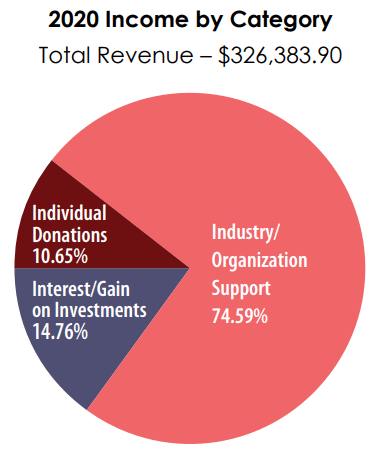
Specifically from Amgen, Esperion, and Novartis.
I can’t tell you how odd it is that nothing more recent is listed. Why wouldn’t they want you to know their financial state and funding sources?
Petersen (the first author) includes the following on her bio:
“Petersen is currently a member of the American Heart Association’s Nutrition Committee and a liaison to the Council on Lifestyle and Cardiometabolic Health. She has been a member of several AHA scientific statement/advisory writing groups including a scientific statement describing how popular diets align with AHA Dietary Guidance. Petersen was also a member of the writing group for the 2023 National Lipid Association Nutrition Interventions for Adults with Dyslipidemia Clinical Perspective.”
The AHA of course has been perpetrating the fraud that seed oils prevent heart disease since 1956, despite their own research showing this isn’t true.
Harris (the last author) doesn’t mention he’s part of the FORCE consortium, which is funded by Unilever, in part, to fund research into “THE OMEGA-6 FATTY ACIDS PROJECTS”. Unilever produces highly-processed foods which include seed oils, has a long history of funding and writing pro-seed oil research, and was one of the largest producers of seed oils until they sold that business to Bunge (see above).
“In conclusion, authoritative health and scientific organisations recommend intake of n-6 PUFA-containing vegetable oils, including seed oils, as part of healthful dietary patterns. Specifically, vegetable oils rich in UFA should be consumed instead of rich sources of SFA, such as butter, tallow, lard, palm and coconut oils, duck fat and ghee.” (Petersen, 2024)
You can see where they’re coming from. The idea that seed oils provide a benefit in cardiovascular disease over natural fats consumed when heart attacks were unknown was thoroughly debunked in the 1960s and 70s.
Lasker doesn’t like it that I call him a shill for promoting seed oils.

Given that he’s uncritically promoting research from the industry, I think it’s a fair description. He’s clearly promoting this research, and not providing any context that would allow one to judge it.
Lasker goes on to cite some epidemiological evidence to support his title. The problem is that epidemiological evidence is useless to establish causation, especially when there are well-designed and executed human randomized controlled trials looking at the question, and contradicting the epidemiology.
To quote famed epidemiologist George Davey Smith again, commenting on a study titled “Butter and Plant-Based Oils Intake and Mortality” (Zhang, 2025)
“It is now more than 30 years since these authors published two high profile papers back to back in the New England Journal of Medicine claiming that vitamin E supplement use would reduce heart disease risk by 40%. The claims were incorrect, but many people believed them – the story was the headline news in the New York Times – and started taking vitamin E.”
As in the conclusion of my blog on the same authors’ “dark chocolate” paper, the interesting question this paper raises is “why do supposedly legitimate journals keep publishing papers like this?”.” (Davey Smith, 2025)
Ironically, vitamin E was promoted as a cure to the well-established role of seed oils in promoting cardiovascular disease.
During its incubation with cells, the LDL particle undergoes a large number of structural changes that alter its metabolism in important ways. All these changes, however, depend on a common initiating step — the peroxidation of polyunsaturated fatty acids in the LDL lipids. As shown independently by Steinbrecher et al. and by Morel et al., the modification of LDL by cells is totally inhibited by antioxidants, such as butylated hydroxytoluene or vitamin E. (Steinberg, 1989)
Unfortunately, it turns out that vit. E acts as a pro-oxidant for seed oils in circulation (Santanam, 1995), and the human RCTs that followed those epidemiological studies demonstrated vit. E supplementation increased heart disease.
On the basis of all the available data, we believe that vitamin E supplements cannot be recommended for patients with coronary heart disease. (Ness, 1999)
Vit. E is thus no longer promoted for that purpose, yet seed oils, which have similar effects in human RCTs, still are.
Lasker’s claim that he cites “all” the evidence is just pretty conclusively false. As I’ve demonstrated here, he cites the evidence that other pro-seed oil parties, including the industry, cites, and nothing that might cast another light on the matter.
Don’t listen to the shills.
Note the studies are not in the same order as they were referenced in Lasker’s sentence, as he did not group them as they are grouped here. Those I discuss are in bold, those I specifically discuss include the reference code.
“Genetic evidence”:
“Mendelian Randomization of Circulating Polyunsaturated Fatty Acids and Colorectal Cancer Risk”
doi:10.1158/1055-9965.EPI-19-0891“Mendelian Randomization Analysis of n-6 Polyunsaturated Fatty Acid Levels and Pancreatic Cancer Risk”
doi:10.1158/1055-9965.EPI-20-0651“Polyunsaturated fatty acids and prostate cancer risk: a Mendelian randomisation analysis from the PRACTICAL consortium”
doi:10.1038/bjc.2016.228“Phenome-wide Mendelian randomisation analysis of 378,142 cases reveals risk factors for eight common cancers”
doi:10.1038/s41467-024-46927-z
“Effect of linoleic acid on ischemic heart disease and its risk factors: a Mendelian randomization study”
doi:10.1186/s12916-019-1293-x“Pro-inflammatory fatty acid profile and colorectal cancer risk: A Mendelian randomisation analysis”
doi:10.1016/j.ejca.2017.07.034
“Polyunsaturated Fatty Acid Levels and the Risk of Keratinocyte Cancer: A Mendelian Randomization Analysis”
doi:10.1158/1055-9965.EPI-20-1765
“they”: “Comparison of dietary conjugated linoleic acid with safflower oil on body composition in obese postmenopausal women with type 2 diabetes mellitus”
doi:10.3945/ajcn.2008.27371
“don’t”: “Overfeeding Polyunsaturated and Saturated Fat Causes Distinct Effects on Liver and Visceral Fat Accumulation in Humans”
doi:10.2337/db13-1622“make”: “Overfeeding polyunsaturated fat compared with saturated fat does not differentially influence lean tissue accumulation in individuals with overweight: a randomized controlled trial”
doi:10.1016/j.ajcnut.2024.04.010“people”: “Overeating Saturated Fat Promotes Fatty Liver and Ceramides Compared With Polyunsaturated Fat: A Randomized Trial”
doi:10.1210/jc.2019-00160“fat”: “Overfeeding polyunsaturated fat compared with saturated fat does not differentially influence lean tissue accumulation in individuals with overweight: a randomized controlled trial”
doi:10.1016/j.ajcnut.2024.04.010
“don’t”: (Leren, 1970) “The Oslo Diet-Heart Study : Eleven-Year Report”
doi:10.1161/01.CIR.42.5.935
“they”: (Mozaffarian, 2010) “Effects on Coronary Heart Disease of Increasing Polyunsaturated Fat in Place of Saturated Fat: A Systematic Review and Meta-Analysis of Randomized Controlled Trials”
doi:10.1371/journal.pmed.1000252“cause”: “Effect of Interventions Aimed at Reducing or Modifying Saturated Fat Intake on Cholesterol, Mortality, and Major Cardiovascular Events: A Risk Stratified Systematic Review of Randomized Trials”
doi:10.7326/ANNALS-25-02229“cardiovascular”: (Hamley, 2017) “The Effect of Replacing Saturated Fat with Mostly N-6 Polyunsaturated Fat on Coronary Heart Disease: A Meta-Analysis of Randomised Controlled Trials”
doi:10.1186/s12937-017-0254-5“disease”: (Hooper, 2018) “Omega‐6 fats for the primary and secondary prevention of cardiovascular disease”
doi:10.1002/14651858.CD011094.pub3“and”: “Reduction in Saturated Fat Intake for Cardiovascular Disease”
doi:10.1002/14651858.CD011737.pub2“on”: “Health Effects of Various Edible Vegetable Oils: An Umbrella Review”
doi:10.1016/j.advnut.2024.100276
“so”: (Petersen, 2024) “Perspective on the health effects of unsaturated fatty acids and commonly consumed plant oils high in unsaturated fat”
doi:10.1017/S0007114524002459
Blasbalg, Tanya L., Joseph R. Hibbeln, Christopher E. Ramsden, Sharon F. Majchrzak, and Robert R. Rawlings. 2011. “Changes in Consumption of Omega-3 and Omega-6 Fatty Acids in the United States During the 20th Century.” The American Journal of Clinical Nutrition 93 (5): 950–62. https://doi.org/10.3945/ajcn.110.006643.
Davey Smith, George, and Shah Ebrahim. 2008. “Biosocial Surveys, Ch.16: Mendelian Randomization: Genetic Variants as Instruments for Strengthening Causal Inference in Observational Studies.” In Biosocial Surveys, edited by Maxine Weinstein, James W. Vaupel, and Kenneth W. Wachter. National Research Council., edited by Committee on Advances in Collecting and Utilizing Biological Indicators and Genetic Information in Social Science Surveys. National Academies Press (US). https://www.ncbi.nlm.nih.gov/books/NBK62433/.
Davey Smith, George, and Shah Ebrahim. 2024. “Mendelian Randomisation at 20 Years: How Can It Avoid Hubris, While Achieving More?” The Lancet. Diabetes & Endocrinology 12 (1): 14–17. https://doi.org/10.1016/S2213-8587(23)00348-0.
Davey Smith, George. 2025. “Expert Reaction to Study Looking at Butter or Vegetable Oils and Mortality.” Blog. Science Media Centre, March 6. https://www.sciencemediacentre.org/expert-reaction-to-study-looking-at-butter-or-vegetable-oils-and-mortality/.
Hamley, Steven. 2017. “The Effect of Replacing Saturated Fat with Mostly N-6 Polyunsaturated Fat on Coronary Heart Disease: A Meta-Analysis of Randomised Controlled Trials.” Nutrition Journal 16 (1): 30. https://doi.org/10.1186/s12937-017-0254-5.
Hooper, Lee. 2010. “Meta-Analysis of RCTs Finds That Increasing Consumption of Polyunsaturated Fat as a Replacement for Saturated Fat Reduces the Risk of Coronary Heart Disease.” Therapeutics. BMJ Evidence-Based Medicine 15 (4): 108–9. https://doi.org/10.1136/ebm1093.
Hooper, Lee, Lena Al‐Khudairy, Asmaa S. Abdelhamid, et al. 2018. “Omega‐6 Fats for the Primary and Secondary Prevention of Cardiovascular Disease.” Cochrane Database of Systematic Reviews, no. 7. https://doi.org/10.1002/14651858.CD011094.pub3.
Kaplan, Hillard, Randall C. Thompson, Benjamin C. Trumble, et al. 2017. “Coronary Atherosclerosis in Indigenous South American Tsimane: A Cross-Sectional Cohort Study.” The Lancet 389 (10080): 1730–39. https://doi.org/10.1016/S0140-6736(17)30752-3.
Lamb, Reece J., Kayleigh Griffiths, Gregory Y. H. Lip, et al. 2024. “ALDH2 Polymorphism and Myocardial Infarction: From Alcohol Metabolism to Redox Regulation.” Pharmacology & Therapeutics 259 (July): 108666. https://doi.org/10.1016/j.pharmthera.2024.108666.
Lasker (ndp Cremieux), Jordan. 2026. “That’s pretty funny Remember….” Post. X, April 5. https://x.com/cremieuxrecueil/status/2040938613114814924.
Lasker (ndp Cremieux), Jordan. 2025. Is Seed Oil Intake Correlated With Bad Health? Blog. March 12.
Leren, Paul. 1970. “The Oslo Diet-Heart Study: Eleven Year Report.” Circulation 42 (5): 935–42. https://doi.org/10.1161/01.CIR.42.5.935.
Levenstein, J. H. 1975. “Historical Perspective of Myocardial Infarction.” South African Medical Journal = Suid-Afrikaanse Tydskrif Vir Geneeskunde 49 (39): 1585–90. https://doi.org/10520/AJA20785135_24168.
Mozaffarian, D., R. Micha, and S. Wallace. 2010. “Effects on Coronary Heart Disease of Increasing Polyunsaturated Fat in Place of Saturated Fat: A Systematic Review and Meta-Analysis of Randomized Controlled Trials.” PLoS Medicine 7 (3): e1000252. https://doi.org/10.1371/journal.pmed.1000252.
Ness, Andy, and George Davey Smith. 1999. “Mortality in the CHAOS Trial.” The Lancet 353 (9157): 1017–18. https://doi.org/10.1016/S0140-6736(05)70733-9.
Pearce, Neil. 2011. “Epidemiology in a Changing World: Variation, Causation and Ubiquitous Risk Factors.” International Journal of Epidemiology 40 (2): 503–12. https://doi.org/10.1093/ije/dyq257.
Petersen, Kristina S., Kevin C. Maki, Philip C. Calder, et al. 2024. “Perspective on the Health Effects of Unsaturated Fatty Acids and Commonly Consumed Plant Oils High in Unsaturated Fat.” British Journal of Nutrition 132 (8): 1039–50. https://doi.org/10.1017/S0007114524002459.
Ramsden, Christopher E., Daisy Zamora, Sharon Majchrzak-Hong, et al. 2016. “Re-Evaluation of the Traditional Diet-Heart Hypothesis: Analysis of Recovered Data from Minnesota Coronary Experiment (1968-73).” Research. BMJ 353 (April). https://doi.org/10.1136/bmj.i1246.
Santanam, N., and S. Parthasarathy. 1995. “Paradoxical Actions of Antioxidants in the Oxidation of Low Density Lipoprotein by Peroxidases.” The Journal of Clinical Investigation 95 (6): 2594–600. https://doi.org/10.1172/JCI117961.
Steinberg, D., S. Parthasarathy, T. E. Carew, J. C. Khoo, and J. L. Witztum. 1989. “Beyond Cholesterol. Modifications of Low-Density Lipoprotein That Increase Its Atherogenicity.” The New England Journal of Medicine 320 (14): 915–24. https://doi.org/10.1056/NEJM198904063201407.
Wilson, Jason. 2025. “US Natalist Conference to Host Race-Science Promoters and Eugenicists.” US News. The Guardian, March 3. https://www.theguardian.com/us-news/2025/mar/03/natal-conference-austin-texas-eugenics.
Zhang, Yu, Katia S. Chadaideh, Yanping Li, et al. 2025. “Butter and Plant-Based Oils Intake and Mortality.” JAMA Internal Medicine, ahead of print, March 6. https://doi.org/10.1001/jamainternmed.2025.0205.
No posts
Comments
Nothing yet. Say the first thing.
Sign in to join the conversation.