
LIVED EXPERIENCE
Our TSEE guest writer Julia Wallis is a wife, mum of 3, grandparent, and an accredited electrologist based in the UK with over 35 years of experience in the beauty industry. She is the founder of Julia Wallis Natural Skincare, and she specializes in electrolysis, advanced cosmetic electrolysis, and holistic skincare.
Combining clinical expertise with a holistic approach to wellbeing, Julia developed her own natural, cruelty-free skincare range to support clients before, during, and after electrolysis treatments. She is passionate about sharing a multi-faceted approach to health and wellbeing, integrating effective, circadian-aligned, and nature-inspired solutions that support both skin health and overall wellness.
In this article, she shares insights from her observations of hair pigmentation changes with electrolysis and how these observations relate to what we know about energy, biological repair, and healing.
What if the smallest observations we make in clinical practice are quietly pointing us towards biology that we don’t yet fully understand?
For more than thirty years I have looked through magnification at thousands of hairs. Over time, patterns begin to emerge—patterns that are rarely discussed in textbooks. One observation has stayed with me.
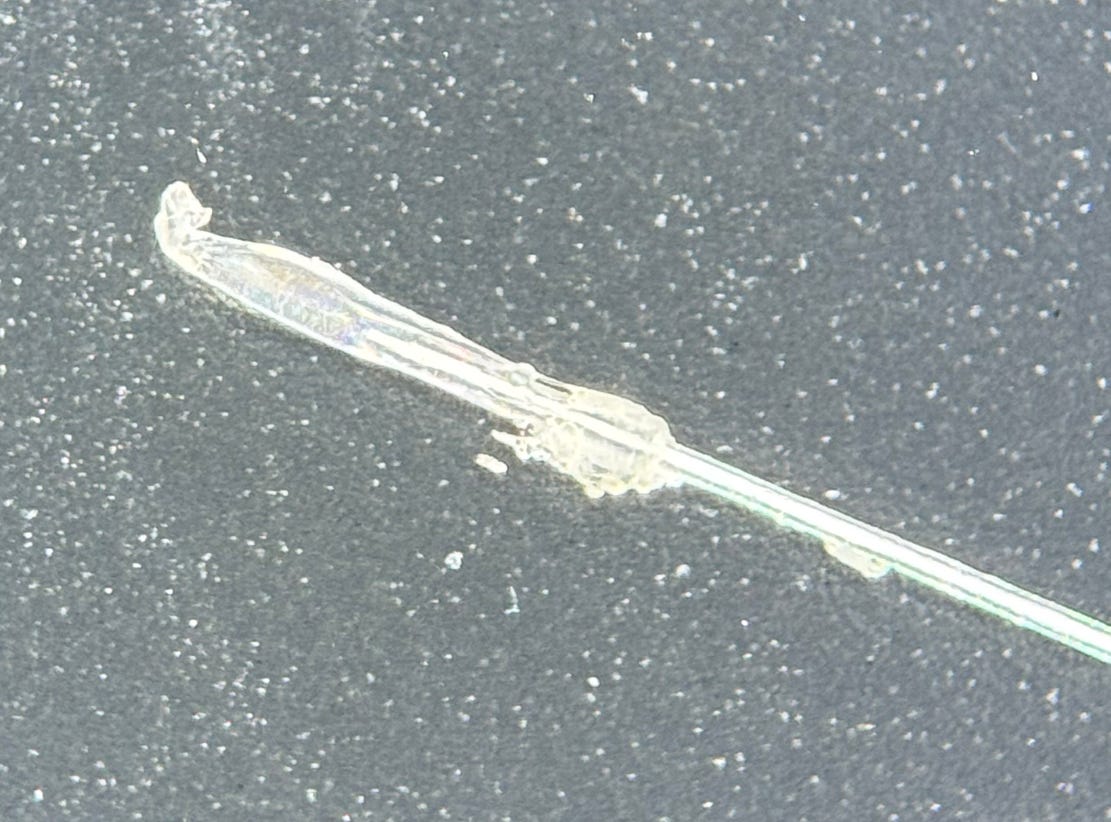
After treating white hairs with electrolysis, I repeatedly saw neighbouring hairs emerge with colour again. During their next growth cycle some hairs appeared with the top half white and the bottom half to the root pigmented again.
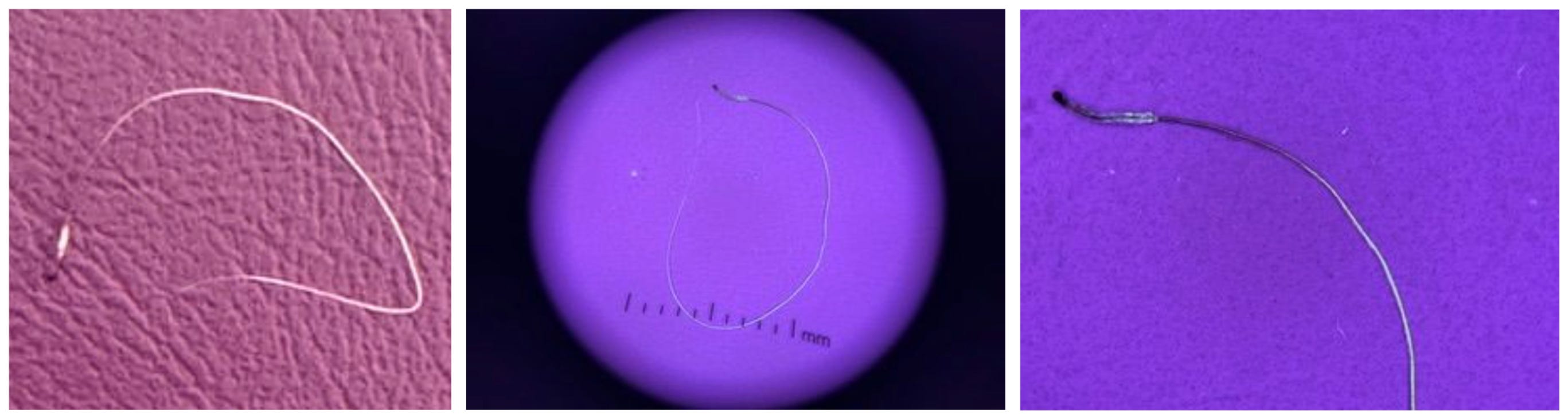
I wasn’t expecting to see this, and at first, I assumed it was a coincidence.
But the pattern continued with a variety of clients.
By nature, I have an enquiring mind. My role as an electrologist is not simply to remove unwanted hair, but to observe carefully, ask questions, and better understand the biology unfolding beneath the skin. Every new observation becomes an opportunity to learn—not only to improve outcomes for my clients, but also to contribute to a wider understanding within the electrolysis profession.
The observations I share here do not prove a new biological mechanism. Instead, they raise a question that I believe is worth exploring.
Could the local healing response initiated by electrolysis temporarily create an environment that supports renewed pigment production in neighboring follicles?
Recent discoveries in melanocyte stem cell biology, wound healing, and mitochondrial science suggest this may be an important question to ask.
Hair follicles are often thought of simply as structures that produce hair. They are among the body’s most biologically active mini-organs.
Each follicle contains stem cells, melanocytes (cells that make and contain the pigment melanin), immune cells, blood vessels, nerves, and sebaceous glands (structures that secrete an oily substance called sebum).
Throughout life, hair follicles repeatedly cycle through four stages; growth (anagen), regression (catagen), rest (telogen), and shed (exogen). They are continuously regenerating themselves.
Producing a pigmented hair is an energy-intensive process. Melanocyte stem cells must mature into functioning melanocytes, synthesize melanin, and transfer that pigment into the developing hair shaft. This requires healthy cellular communication, an adequate blood supply, oxygen, nutrients, and efficient energy transformation in the mitochondria.
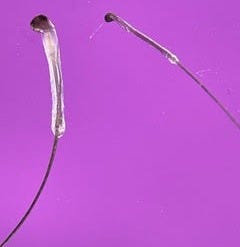
Hair pigmentation is therefore not simply about colour. It reflects the health and energetic capacity of the follicle.
From a clinical perspective, white hairs differ markedly from pigmented hairs.
The term “grey hair” describes the overall appearance created when pigmented hairs become mixed with white hairs. Hair itself is not actually grey. Rather, the combination of coloured (pigmented) hairs alongside white hairs that have lost their melanin creates the visual impression of grey.
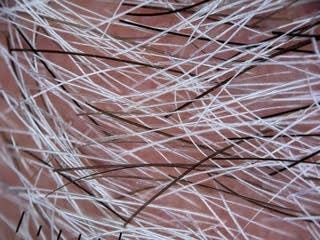
Pigmented hairs contain melanin within the thick middle layer of each strand usually possess a well-defined root sheath, and often appear dense and biologically active. White hairs lack melanin, frequently present with a thicker, more opaque root sheath, and can appear coarser in texture.
These differences are more than cosmetic. They reflect changes within the follicular environment and how the melanocytes function.
For decades, it was believed that white hair resulted from the irreversible loss of pigment-producing cells. However, recent research has challenged this view. Studies from researchers at New York University demonstrated that melanocyte stem cells may not disappear entirely. Instead, they can become immobilized or stuck within the follicle, preventing them from maturing into pigment-producing cells.
Martin Picard’s group has shown that stress-induced greying—as in my own case below—can, in some circumstances, be partially reversible. This suggests that hair pigmentation is far more dynamic than we once believed.

Rather than viewing white hair simply as an inevitable consequence of aging, we may instead consider it a reflection of changes in the follicle’s biological environment.
Electrolysis is widely recognised as the only permanent method of hair removal. Yet biologically, far more is taking place than the destruction of a single follicle.
My approach is to treat hair follicles where the hair has become genuinely problematic and unwanted, rather than treating simply for the sake of treatment. I recognize that hair and its follicles are living, biologically active structures with important roles in skin function, sensory communication, thermoregulation, and the wider skin ecosystem, including its relationship with the microbiome.
A sterile probe the diameter of the hair delivers carefully controlled electrical energy into the follicle, creating a controlled localized micro-injury. The treated follicle is permanently disabled, but the surrounding tissue immediately initiates a sophisticated wound-healing response.
Blood vessels dilate to increase circulation. Histamine and inflammatory mediators coordinate the early stages of repair. Immune cells migrate into the area, fibroblasts begin producing collagen and elastin, new capillaries form through angiogenesis, and the space surrounding the cells is remodeled as healing progresses over several months.
Every part of this process requires energy.
From a biological perspective, electrolysis does not simply remove unwanted hair—it initiates one of the body’s most sophisticated energy-dependent repair programmes. Beneath the temporary redness visible on the skin, thousands of cells are communicating, adapting, and responding to restore tissue integrity. The human body is just amazing in its ability to respond to the signals it receives.
Over many years of practice, I have consistently observed an intriguing pattern in clients with white facial hair.
Following electrolysis treatment, neighbouring follicles—not the treated follicle—often produce hairs that are no longer completely white. You can see some examples in the photos below.
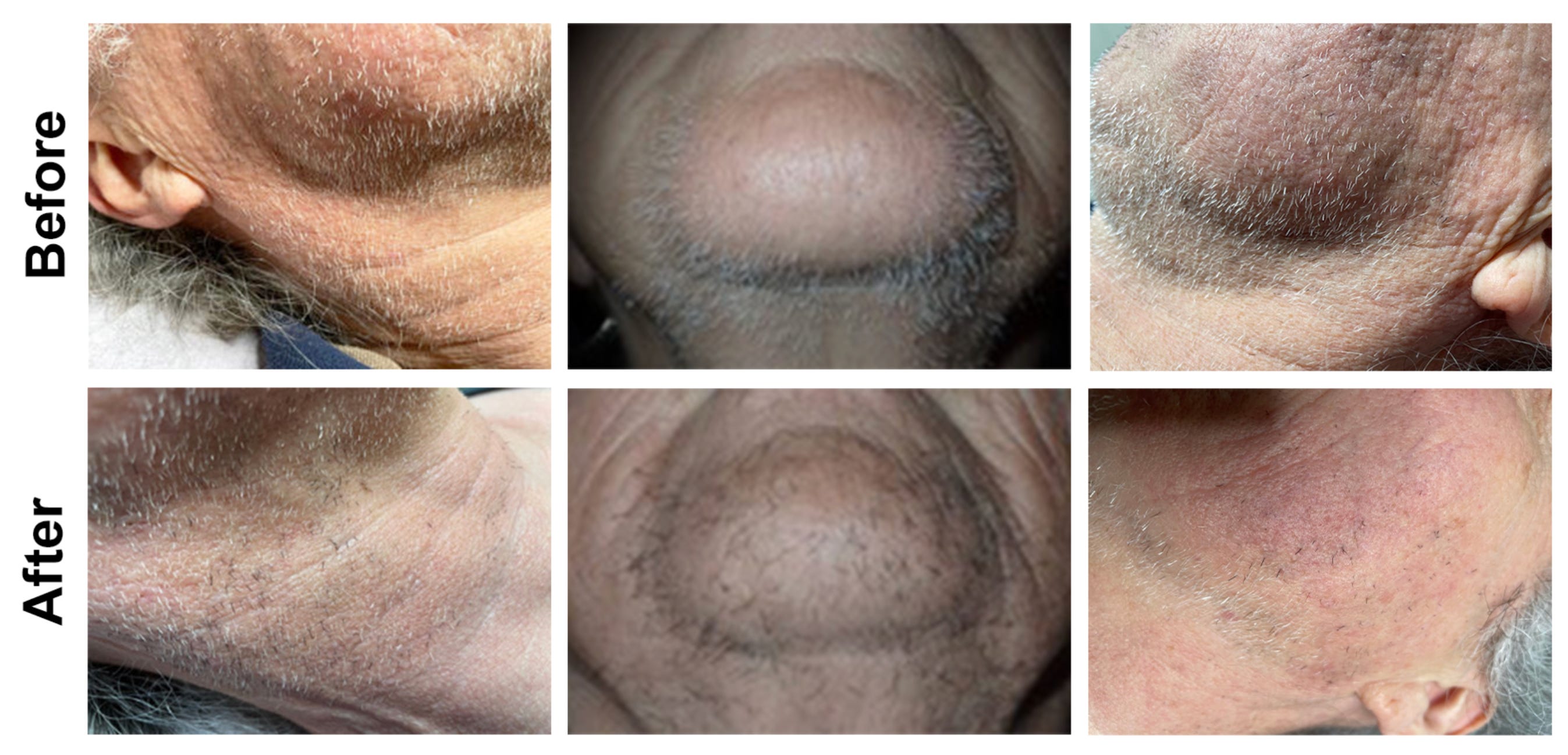
During their next anagen growth cycle some emerge as two-toned hairs. The upper portion remains white while the newly formed lower shaft contains pigment.
Importantly, these hairs arise from adjacent follicles already programmed to enter anagen. This should not be interpreted as electrolysis stimulating new hair growth. Rather, it suggests that the local follicular environment may have changed in a way that influences pigmentation.
As clinicians, we often reassure clients that new hairs appearing after treatment are part of the normal hair growth cycle. My observation concerns not the appearance of new hairs, but the unexpected return of pigment within those neighboring follicles.
Traditionally, biological energy has been described in terms of ATP (adenosine triphosphate), the cell’s energy currency. ATP is produced largely through the transformation of energy in the mitochondria. However, emerging research is revealing a much broader and more dynamic understanding of biological energy and how it influences cellular function, communication, adaptation, and repair.
Mitochondria are increasingly understood as dynamic signaling organelles that integrate metabolism, stress responses, circadian rhythms, inflammation, and cellular communication.
Biological energy is therefore not simply fuel. It is the capacity of living systems to adapt, communicate, and repair.
This perspective resonates with what I observe clinically.
Healing is an energy-dependent process. Tissue repair demands increased mitochondrial activity, enhanced blood flow, coordinated immune signaling, and communication between neighboring cells.
The question that naturally follows is whether this temporary increase in biological activity could influence neighboring follicles that are approaching their next growth cycle.
At present, there is no evidence that electrolysis directly restores hair pigmentation.
However, my observations suggest that the local wound-healing response initiated by electrolysis may temporarily influence the biological environment surrounding neighbouring follicles. I do not know how long any renewed pigmentation persists following electrolysis, as I continue to treat these surrounding follicles as new stimulated problematic hairs emerge during subsequent growth cycles.
If melanocyte stem cells remain present but functionally dormant, as recent research suggests, could the enhanced cellular signaling, vascular support, and metabolic activity during tissue repair temporarily favour renewed pigment production?
This remains a hypothesis.
Nevertheless, it is a hypothesis born from repeated clinical observation rather than one isolated anecdote.
Throughout history, careful observation has often preceded scientific understanding.
Hair follicles are among the most metabolically active structures within skin, the largest circadian organ in the body. Pigment production itself is energetically demanding and influenced by ageing, stress, circadian rhythms, nutrition, mitochondria, and the local tissue environment.
Perhaps pigmentation is not a fixed characteristic but a dynamic reflection of the follicle’s biological resilience.
Whether future research confirms or refutes this hypothesis, I believe these observations can offer reassurance to both clients and practitioners by helping them understand what they may see during the course of electrolysis treatment. They also deserve further investigation, as they raise important questions about tissue communication, wound healing, and the biological capacity of neighbouring follicles to adapt.
Every day, electrologists closely observe one of the smallest yet most biologically active organs in the human body.
My observations do not prove that electrolysis restores pigmentation, nor do they establish a new mechanism in hair biology. They do, however, invite a different way of thinking.
If biological energy is the capacity of living systems to adapt, communicate, and repair, then perhaps the healing response initiated by electrolysis offers a unique window into that process.
Science often begins in the laboratory, but sometimes it begins in the treatment room—with a practitioner who notices something unexpected and is curious enough to keep asking why.
Perhaps that is one of the greatest lessons electrolysis has taught me.
Every hair follicle tells a story—not only about hair, but about healing, adaptation, and the extraordinary intelligence of living systems.
My hope is that by sharing these observations, they may encourage further discussion, inspire future research, and deepen our understanding of the remarkable biology that unfolds beneath the skin every day.
Want to learn more about Julia and her observations about changes in hair pigmentation after electrolysis? Visit her website to read her full article published earlier this year.
No posts
Comments
Nothing yet. Say the first thing.
Sign in to join the conversation.