
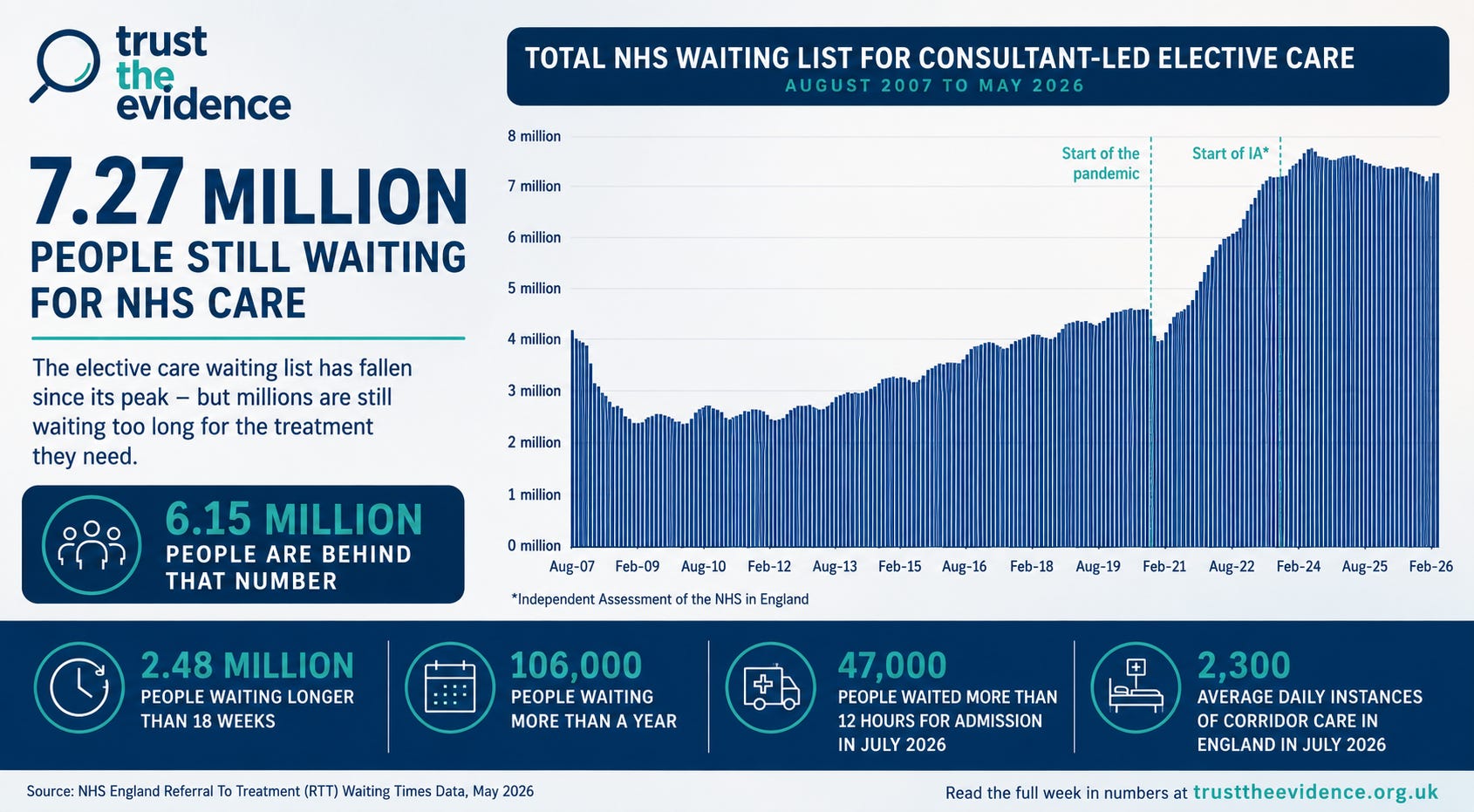
7.27 million
The number of cases currently sitting on England’s elective treatment waiting list at the end of June 2026. Behind it are around 6.15 million people waiting for care.
A number the mainstream media (MSM) ignored as it did not go up, and the government also ignored as it was only down by 6,093 compared with May, and the number of unique patients is unchanged from the previous month.
The danger now with the NHS backlog is that extraordinary numbers have started to sound ordinary.
One in four
A survey of 712 GPs found that doctors estimated 26% of hospital referrals were being rejected and returned to them as unsolicited “advice and guidance”.
More than a third — 36% — of the advice and guidance returned to GPs was estimated to involve work they considered outside their normal remit.
Most concerning are the reports of patients with red-flag symptoms where cancer is suspected.
This week, a separate patient-safety investigation added weight to those concerns, finding risks of missed or delayed diagnoses associated with how advice and guidance have been implemented.
This exposes an uncomfortable problem with the way we talk about waiting lists. You cannot reduce a waiting list simply by making it harder to get onto one.
69.9%.
The proportion of patients receiving their first cancer treatment within 62 days of an urgent referral in June. The operational standard is 85%. Something else you won’t read about in the MSM or from the government front benches.
Few areas demonstrate more clearly why waiting-time statistics matter. If we were to get serious about improving cancer outcomes, the route between primary and secondary care needs to become easier to navigate, not harder.
2.48 million
Roughly how many patients have now been waiting longer than 18 weeks for treatment.
Eighteen weeks was supposed to be the standard, not an aspiration. For millions - well, in this case, 2.5 million - it has become merely another milestone passed while waiting.
106,000
Approximately how many patients have been waiting more than a year for treatment.
And while the overall waiting list has begun to fall ever so slightly, the number waiting more than 365 days (a Christmas, a birthday or two and four seasons) has actually increased in the latest figures.
47,000
The number of patients who waited more than 12 hours for an emergency admission in July.
For once, some improvement. Although historically poor, it must not be confused with acceptable performance.
2,300
The average number of recorded instances of corridor care taking place in England’s emergency departments every day in July.
It means people receiving care in spaces never designed for it: corridors, waiting rooms and other clinically inappropriate areas. It means diminished privacy and dignity for patients and compromised working conditions for staff.
The NHS is not simply struggling to clear a backlog. It increasingly lacks the capacity to get patients into, through and out of the system. 7.27 million is an enormous number, but it does not tell us the full extent of unmet need.
The test of NHS recovery cannot be simply whether the minister can reduce the waiting list. It must be whether patients can get through the front door, receive treatment in time and move safely through the system. These numbers suggest we remain a very long way from that.
The most important thing we can do with the NHS statistics published each month is refuse to become accustomed to them. No “normalisation” please.
Two old geezers wrote this post: At our age, waiting comes with the territory, but waiting a year for NHS treatment shouldn’t.
No posts
Comments
Nothing yet. Say the first thing.
Sign in to join the conversation.