
Troy Tassier is a professor of economics at Fordham University and the author of The Rich Flee and the Poor Take the Bus: How Our Unequal Society Fails Us during Outbreaks.
In March 2023 one of my favorite books was published, Poverty, by America. In the book, Matthew Desmond describes the varied ways that US policymakers subsidize wealth and penalize poverty. For example, Section 8 housing vouchers, that allow low income individuals to rent homes, are frequently targeted for cuts and there is a culture of stigmatization that surrounds recipients. Yet, we hardly ever hear about the tax breaks that accrue to home owners when they file tax deductions for home mortgage interest and real estate taxes. And, no one feels shame or is called out as a “free loader” for filing the deduction.
Section 8 housing costs about $30-$35 billion each year. In recent years the mortgage interest deduction alone has cost between $30 and $60 billion (varying based on other tax factors that encourage or discourage filing itemized deductions). Further over 60 percent of the benefits of the mortgage interest deduction go to filers making over $200,000 per year and less than 10 percent goes to filers making less than $100,000. It is a huge subsidy for the very wealthy yet hardly anyone ever complains.
We are seeing another example play out in real time over the enhanced ACA Premium Tax Credits that just expired.
The total cost of all ACA subsidies was estimated to be about $138 billion last year. These subsidies are spread across 24 million people which yields an average of about $5,750 per person enrolled in the ACA marketplace. The cost of the enhanced subsidy at the heart of the controversy is estimated to be $60 billion for a two year extension or $350 billion if extended for a decade. In yearly terms this is about $30 to $35 billion a year or a bit under $1,500 per person enrolled in the ACA marketplace. In per capita terms it is about $100/ year per person in the US.
Of course some receive much larger subsidies and others receive none because the enhanced subsidies are income based. They cap the share of income that an ACA marketplace purchaser pays for health insurance. In the original subsidies, a family of four making over three times the federal poverty level would be capped at insurance payments of 9.96% percent of their before tax income. Families making less than this amount are capped at a smaller share of income. The enhanced subsidies work in a similar manner with lower cap percentages and they raise the maximum income to qualify.
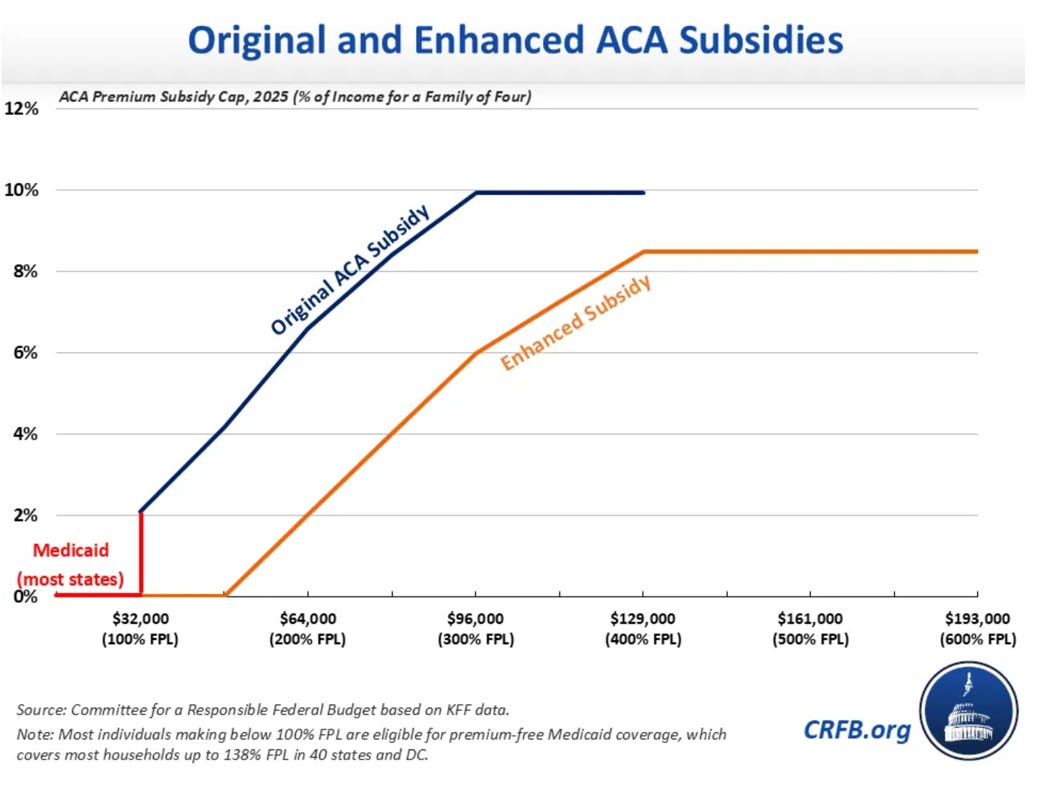
With this sliding scale, the largest share of the subsidy goes to those most in need. They go to hard-working middle-income families that fall between the cracks of the US health insurance system. They are the people that don’t work for large corporations on employer provided health insurance and they make too much money or are too young to qualify for Medicaid or Medicare. Most of them are owners of small businesses, self-employed workers, and the people who work for them. They are the folks who are most likely to support president Trump. In fact, 80 percent of the cost of ACA tax credit subsidies go to individuals in states won by President Trump.
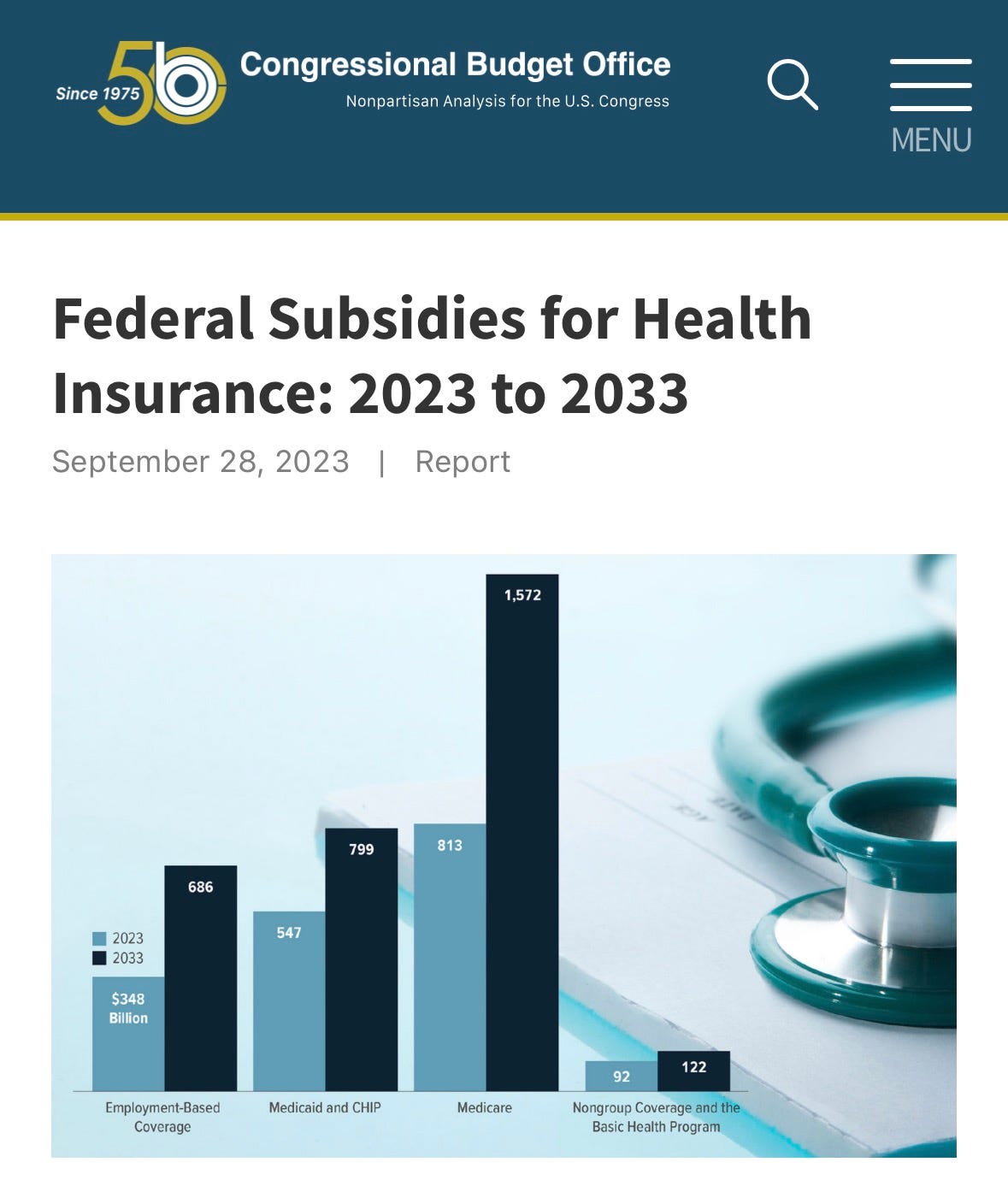
If you work at a large firm you are almost guaranteed to be offered health benefits – 97% of firms with at least 200 workers offer healthcare benefits (to at least some employees) compared to only 59% of smaller firms. In total 154 million people receive health insurance through an employer. Like housing, we often ignore the subsidy that accrues to wealthier individuals who receive their health insurance from employers. These subsidies are much more expensive in total than the ACA subsidies, but accrue to a larger number of people and firms.
The subsidies (received in the form of tax breaks) for employer-based health insurance coverage cost the federal government $348 billion in 2023. That is about $2,260 per person receiving employer based health insurance or $1,000 per person in the US. Much of this subsidy goes directly to the firms that pay the bulk of the health insurance premiums and indirectly to employees that implicitly accept lower wages in exchange for health insurance.
We rarely hear a debate about ending these employer based subsidies. Yet, over and over again, Republicans target the subsidies received by lower income Americans. They target people in the ACA marketplace and people receiving Medicare and Medicaid over and over again. At the same time, they rarely target firms or wealthy individuals who receive billions of dollars in tax breaks.
There will be another vote in the House of Representatives to extend the enhanced ACA tax credits soon. It will be another opportunity for our leaders in Congress to do the right thing and approve an extension that will make health insurance more affordable for millions of middle income Americans. However, it is almost certain to fail and millions of hard working Americans will continue to struggle to afford healthcare. It will be a heartless decision rooted in politics alone that ignores the plight of those who voted them into office.
Troy Tassier is a professor of economics at Fordham University and the author of The Rich Flee and the Poor Take the Bus: How Our Unequal Society Fails Us during Outbreaks.
No posts
Comments
Nothing yet. Say the first thing.
Sign in to join the conversation.