
It’s not about your freedom to code.
It’s not about innovation.
It’s not about protecting people.
It’s about giving trillion-dollar tech corporations legal protection to extract energy, water, land, and public infrastructure, make massive speculative bets on AI and data centers, and walk away with the profits while communities absorb the costs.
In 2025, Montana passed the nation’s first so-called Right to Compute Act, sold as a digital freedom law. In reality, it functions as a legal shield for hyperscale data centers, AI empires, cloud monopolies, and capital-heavy compute infrastructure. It elevates corporate computation above democratic control and reframes regulation as oppression.
The core of these laws is simple: they redefine “computation” as something so fundamental that government regulation must meet the highest possible legal threshold to exist at all. That sounds abstract, but the consequences are concrete. It makes it harder for states and cities to regulate data centers. It weakens the ability of communities to manage grid impacts. It limits oversight of water usage, land development, zoning, and infrastructure strain. It reframes public-interest regulation as an attack on freedom.
What this actually creates is a one-way system: corporations gain legal protections, while communities lose control.
We need to always askourself: who benefits? These are not neighborhood tech startups or local entrepreneurs. This is about hyperscale operators, cloud monopolies, AI firms, and data infrastructure giants that require enormous amounts of electricity, water, land, and public infrastructure to operate. These companies are building facilities measured in millions of square feet, drawing power loads comparable to small cities, and consuming water at industrial scales.
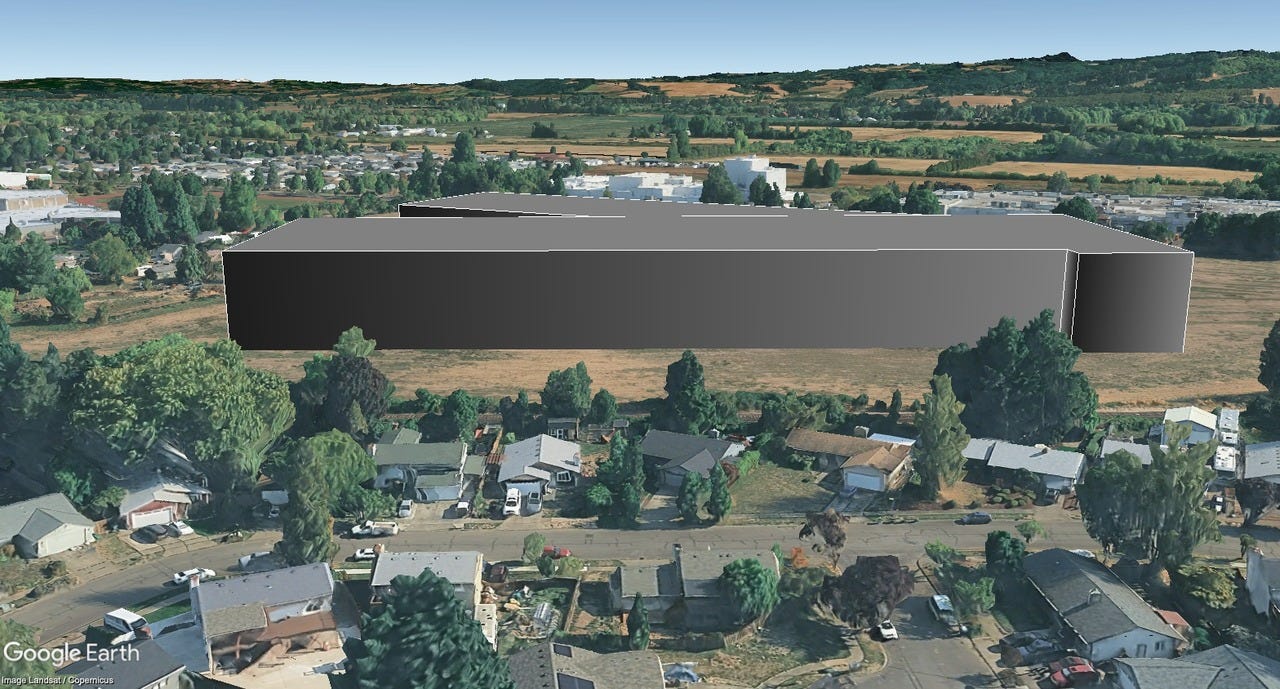
They do not care how much you pay for power, and they do not care about the long-term stability of your local water supply. They do not care if a five-million-square-foot data center sits on your property line. They do not care if your electric bills go up. They do not care if your community absorbs the infrastructure strain. Their model is straightforward: convert public systems into private profit centers. Extract energy from public grids. Extract water from our lakes and rivers. Use public infrastructure to support private capital. Externalize the costs, internalize the profits.
This is not innovation. It is extraction economics with new branding.
Supporters of these laws lean on a familiar argument: we all use data, AI is here to stay, and technological change is inevitable. That part is true.
However, inevitability is not consent, and technology is not a substitute for democracy.
The presence of AI does not mean communities lose the right to regulate. The growth of data does not mean public infrastructure becomes private property. Innovation does not mean monopoly power gets immunity. Progress does not require surrendering democratic control. We can build AI systems while maintaining public oversight. We can expand compute infrastructure while enforcing energy accountability. We can develop new technologies while protecting communities and local economies.
What we cannot accept is a model where “freedom” is defined as the freedom of monopolistic corporations to gamble with public grids, drain water systems, reshape land use, and strain local infrastructure, while the public carries the risk and the corporations capture the reward.
If this were truly about rights, the conversation would be about public digital infrastructure, community-owned compute, public-interest AI models, data transparency, energy accountability, and democratic governance of technology. Instead, we’re being sold a narrative that concentrates power, shields corporate actors from regulation, and transfers risk downward.
So let’s call it what it is. “Right to Compute” is not a civil right. It is a corporate entitlement: a legal framework that enables extraction, externalizes costs, privatizes public systems, and deregulates infrastructure in the name of innovation.
Right to Compute = Right to Profit
Comments
Nothing yet. Say the first thing.
Sign in to join the conversation.