

“Worship again and again interrupts the course of the world. Through worship the Christian community testifies that the world is not on its own.”
- Bernd Wannenwetsch, Political Worship
* A few years ago, I wrote a book (on Revelation) that was never published. I know it may seem random, but during COVID, I wanted to revisit ancient answers afresh—not weird or worrisome truths, but ones that have met people where they are for 2,000 years. While the writing is a little different, it rises out of the archives of those times.
In the final installment of the original Hunger Games trilogy, the war between The Capitol and the rebels concludes. The Capitol, the ruling party of Panem, had long oppressed through mass surveillance, an authoritarian state, and the division of the populace into isolated areas. So, after this humiliating 75-year history, Alma Coin, the leader of the rebels, proposes a symbolic Hunger Games featuring the children of those previously in power.
In the scene, the deafening irony can’t be lost. As Katniss Everdeen candidly shares, “All those people I loved, dead, and we are discussing the next Hunger Games in an attempt to avoid wasting life. Nothing has changed. Nothing will ever change now.” Panem had new leadership, but nothing had changed. What the rebels despised became the tool for the assertion of their power. They had merely undergone an imperialistic rebrand; like changing the name on a name tag while one’s personality and preferences stay the same.
Surely, a continuing cycle of violence isn’t anything new. Throughout history, one empire’s reign ends only to be picked up by another. Utopia is promised but delivered is the conquest of foreign peoples, exploitation of those at the margins, and larger walls built to keep others out. Despite names changing, colors and lines on flags altered, the essence of empire seems to endure. The oppressed become the oppressor—the conquered become the conqueror—the shedding of blood continues for the appeasement of the masses.
While this can sound a tad hopeless, this is sort of the point. If anything is clear in culture, it is that modernity has failed to quell the appetite for violence in the human psyche. The only real difference these days is the medium: as more and more vitriol finds its way through social media algorithms. Yet the core themes of seeking revenge and a bloodthirst that has difficulty being appeased continue to be the impulse from which humanity is most familiar.
And even for those who like to stay out of the crossfires of politicians, slowly and sadly, you can easily become what you despise. In this hour, it may even be true that the less spiritually inclined would agree that the voice of the oppressor has become supreme. Yet, what if there was a way to move forward—not a clear path with blinking lights or fresh pavement—but a rugged, cross-cultural way of life that unseats one from the judgment seat? What if love could drench after what’s seemed like a long drought?
“There is a pervasive form of contemporary violence to which the idealist most easily succumbs: activism and overwork. The rush and pressure of modern life are a form, perhaps the most common form, of its innate violence.”
- Thomas Merton, Conjectures of a Guilty Bystander
“…the overthrow of evil occurs within the liturgical setting…Those who worship God do by that very act enact the reign of God, thus to worship God is to experience God’s kingdom.”
- David L. Barr, Towards an Ethical Reading of The Apocalypse
To find answers, a surprising place is toured: the battle of Armageddon. On the surface, the application seems to be holy war, militant zealotry and a laissez faire complacency awaiting killer Jesus to slay all those who disagree. Though, when Armageddon is really unpacked, unexpected resolutions do arise. The battlefield is empty. Cooperation is found. Violence is undercut.
Consider how Christ comes into battle “clothed in a robe dipped in blood.” The pairing of blood and a battle scene may not sound strange; nonetheless, it is bizarre timing. The battle of Armageddon has not yet begun in the story, and there is no previously identifiable moment where Jesus became bloodied. It’s almost like a montage save-the-day moment in a superhero movie, where the heroes line up to face off against their evil adversaries, but the protagonist is bloodied before the actual battle begins.
While rather peculiar, the origins of bloody battle imagery has precedent. The prophet Isaiah foresaw the Divine Warrior with blood all over himself, as “their lifeblood spattered on my garments, and stained on my apparel.” The Divine Warrior then treads on the winepress of God’s enemies. In this account, the graphic scene is a poetic portrayal of divine justice finally coming down.
Despite the similarities in the stories, the blood on Jesus’ robe comes from a different source. Yes, Jesus is the Divine Warrior who Isaiah foresaw. But no, the blood on Jesus’ robe does not come from the blood of God’s enemies. There is no actual battle taking place at Armageddon. Jesus does not come as the slaughtered Lamb turned slaughterer. There is no violent, vindictive wrath brought upon the world. Rather, the blood on Jesus’ robe is his own: God’s final justice is brought through the scandal of the cross.
When cultural fanaticism is stripped away, this is a portrait of breathtaking beauty. On display is the full manifestation of the love of God, projected to cosmological levels. The world is bathed anew. The stain of sin is purged. The success of the sword is undercut. The Spirit’s song of love is triumphant. The new work of God is welcomed. The forgiveness sought, found.
So, in those moments when I feel depressed—doubting what the point of this all is when there’s so much pain—I remind myself of the Savior who still holds the sword. Surely, this doesn’t mitigate the necessity of a prophetic witness, or the role of a vibrant counterculture. But it does remind me that it’ll be okay. This cultural moment may run widely out of control, but in Christ I find a source of fresh hope and faith for a different world to come.
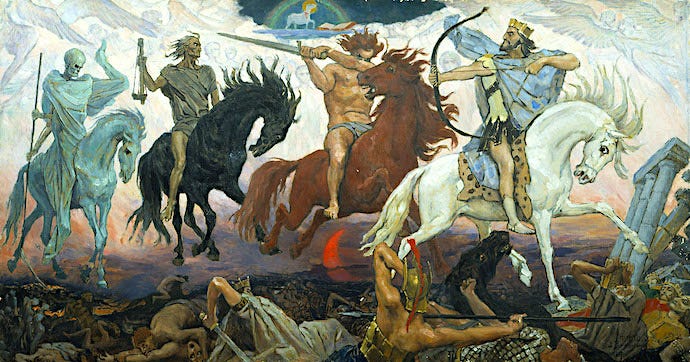
Practice - Our worship is of central importance for the sake of the world. If you go every week or it’s been a while, go to church and let your worship be an act of faith that the rider on the white horse will return to make all things new.
Prayer - This month’s prayer comes from The Book of Common Prayer: “Most merciful God, we confess that we have sinned against you in thought, word, and deed, by what we have done, and by what we have left undone. We have not loved you with our whole heart; we have not loved our neighbors as ourselves. We are truly sorry and we humbly repent. For the sake of your Son Jesus Christ, have mercy on us and forgive us; that we may delight in your will, and walk in your ways, to the glory of your Name. Amen.”
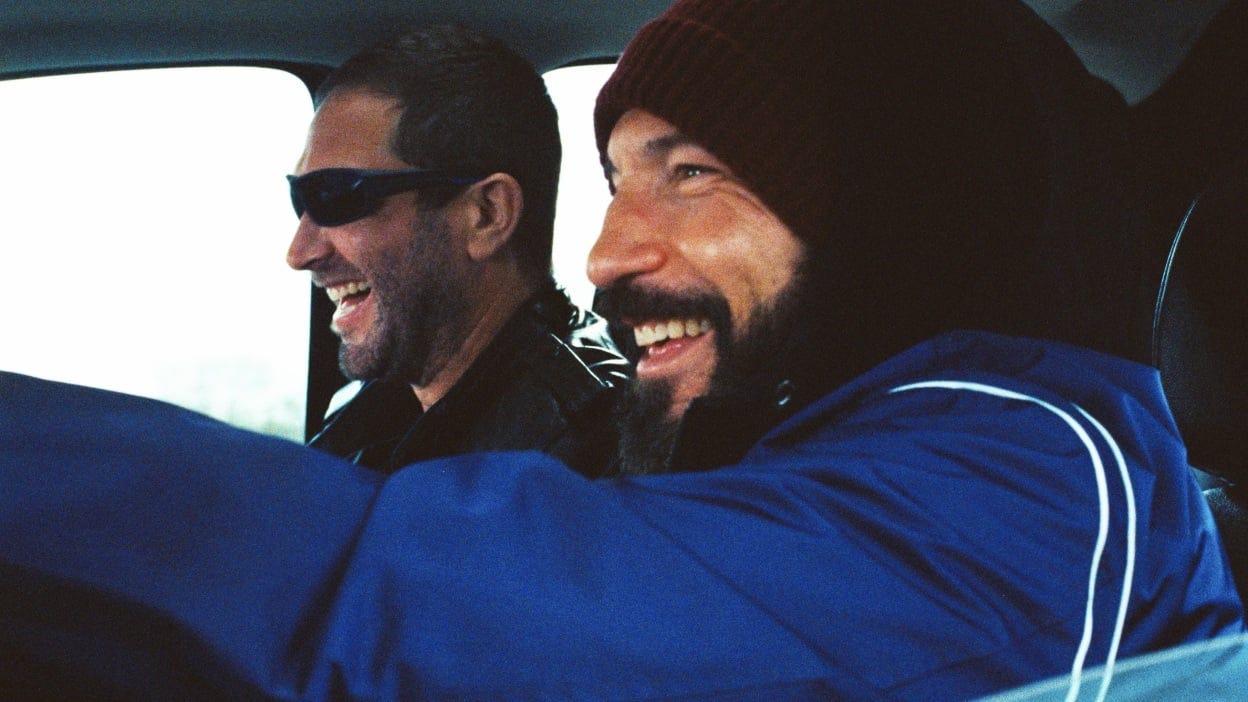
There’s some incredibly fun stuff dropping as we head into summertime. Whether it’s summer blockbusters or new streaming releases, there’s plenty to enjoy in the slower pace of summer. Here are a few recommendations:
The Bear Season 5 (Hulu/Disney+) - Well, the final ride is here. I’m not sure there’s a television show in recent history that has inspired more meaningful moments of reflection for me (and my writing) than this one. If you’ve been living under a rock, go check out the beauty and chaos of this show about the complexity of both food and family. (Also, if you missed it: they dropped a one-off episode on May 5 titled “Gary.” What a strange yet mesmerizing hour-long journey with Mikey and Richie.)
A Job to Love by The School of Life - Whether through their piercing articulations of the surprising plight of modernity or their practical, grounded career advice, I’ve long been a fan of The School of Life. They have published numerous volumes addressing the issues that plague humanity, but this one in particular feels like a gift to anyone trying to figure out what in the world they should do with their life.
Make Believe: On Telling Stories to Children by Mac Barnett - After seeing Mac Barnett perform at my local bookstore, I’ve been sold. Not because of the ridiculousness of performing The First Cat in Space live, but because of the whimsy and joy he clearly carried. This book is strange because it is his first work for adults, but it is still in service of his primary audience: kids.
Other - One of my favorite recent Pixar movies is Hoppers (now streaming on Disney+). It’s kind of like Avatar meets a clan of beavers, with a local freeway project creating a man-versus-nature conflict. It’s a smaller-scale story, but in some ways even more enjoyable. I’ve greatly enjoyed The Man in the High Castle (Netflix). It’s an older show from the 2010s that feels like a slower-paced era of TV. My modern, scattered brain struggles with the pacing at times, but that’s more on me. The alternate history—where the Nazis win WWII—is both terrifying and compelling. Lastly, I’ve been behind on superhero content, but I enjoyed how Wonder Man (Disney+) was a self-contained property focused on one hero’s journey.
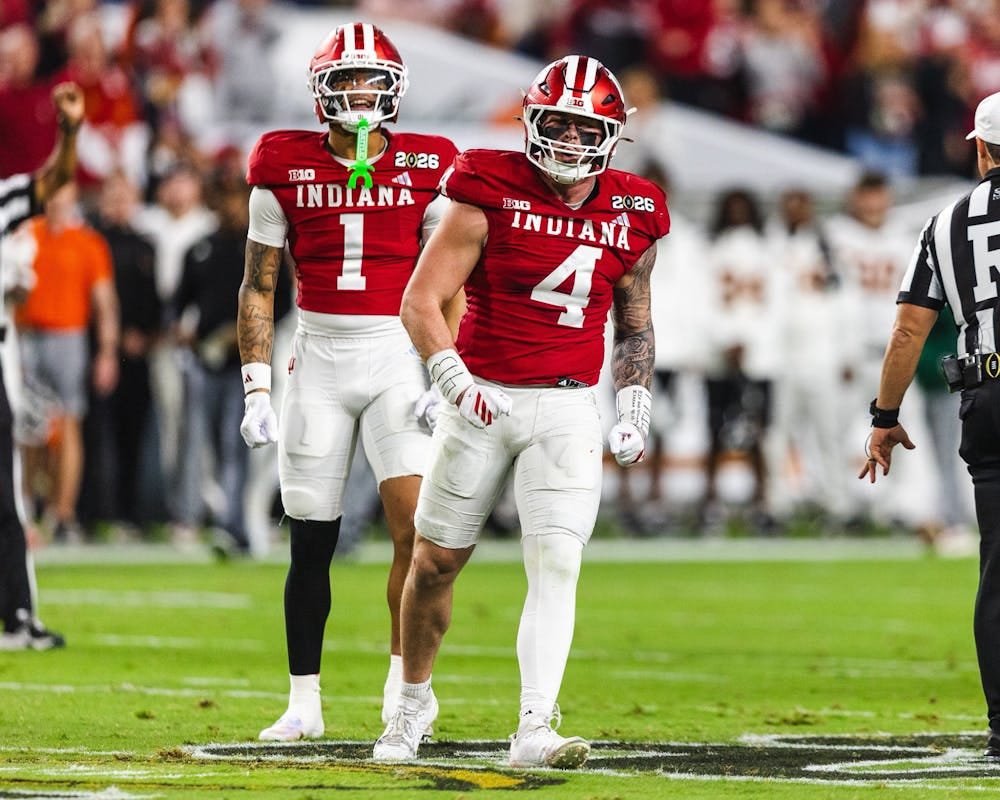
Everyone not living under a rock is aware of Indiana football’s rise from one of the worst programs in college football to national champion. And at the helm is one of the rising characters in college football: Curt Cignetti. If he’s new to you, this video includes a few sound bites to introduce you to the legend:
Outside of his unparalleled confidence, he has unique ideas that apply to the rest of us. One of my favorites was a short reel (below) on how he values independence and pushes against an often toxic coaching culture. It’s instructive for the rest of us—whether coaching or not:

“For the first time in history a purely self-sufficient humanism came to be a widely available option. I mean by this a humanism accepting no final goals beyond human flourishing, nor any allegiance to anything else beyond this flourishing. Of no previous society was this true.”
- Charles Taylor, A Secular Age
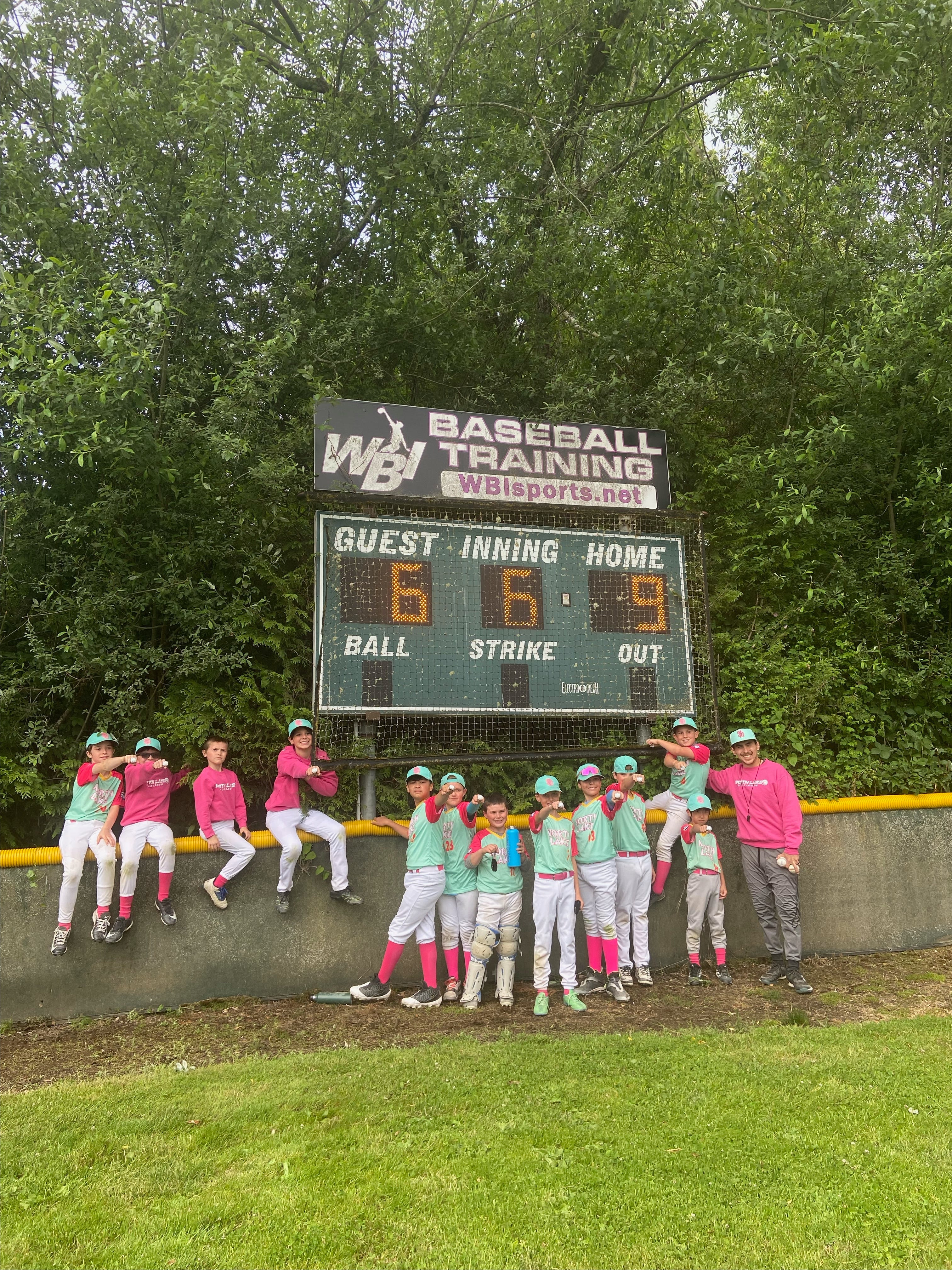
Can’t believe the marathon of baseball season is coming to an end! I’ve loved coaching these teams—maybe as much as any group I’ve had before. They’ve competed hard, grown together, and created so many great memories this spring. While the regular season is wrapping up, we’ll soon transition into summer ball and All-Star season.
Ephraim’s team lost in their local Little League championship game, but then went on to win their regional Little League bracket, which included the 2nd- and 3rd-place teams from four neighboring leagues. Abram’s team earned the #1 seed in their bracket and finishes up this weekend—we’re hoping for a strong finish. On top of that, Ephraim was selected to our Little League’s 10U All-Star team.
Spring football is also underway. The overlap with baseball has made for a busy season, but I love the process of getting to know a new group of players and discovering who we are going to be as an offensive unit.
Lastly, I’m currently applying for teaching positions for the fall. I’d appreciate your prayers as I walk through that process!
No posts
Comments
Nothing yet. Say the first thing.
Sign in to join the conversation.