
Our taxi slowly progressed through streets lined with shuttered shops, heading across the desert city of Jaipur, famous for its pink(ish) city walls. Our ultimate destination was the Amber Fort, a few miles out of town. It was pretty early in the morning, probably around 8am, and the air was fresh and the sky was bluer than previous days when it had taken on a weird orange brown tinge from all the pollution. Pollution that, according to our driver, had absolutely nothing to do with Jaipur and was absolutely either just harmless fog, or it was pollution that had blown in from Delhi.
Our driver suggested another place he knew along the way that we might like to visit first. We had never heard of it but we thought we could give it a go as he assured us that it was peaceful at this time of the day. We were mentally fatigued from all the chaos of the days leading up to this day and badly needed some respite, but we were also definitely suffering from a bad bout of ‘Ancient Monument Fatigue’. This was only our second visit to India but, in all honesty, we had already grown a little weary of the idea that viewing crumbling buildings that had any religious significance, or that perhaps had belonged to a rich long-dead conqueror, was all the local people thought that tourists wanted to do in India. We had visited a lot of forts, but the day was young so we took the plunge, again.
We noticed that the driver of our taxi was getting a little edgy. He was looking at his watch continually whilst also trying to tune his radio into a very raucous religious station and thread his way through the narrow gaps in the traffic ahead. When we asked if he was alright he said he was fine, but then went on to sheepishly ask whether it would it be an inconvenience to us if he went to the nearby mosque to pray? Right on queue, the voices of the muezzin began their slightly out of sync call to prayer from the surrounding minarets and we gladly let him fulfil his duties while we enjoyed a hot cup of chai from a street stall outside the mosque. In no time at all he was back out and we were on our way, with a much less tense taxi driver.
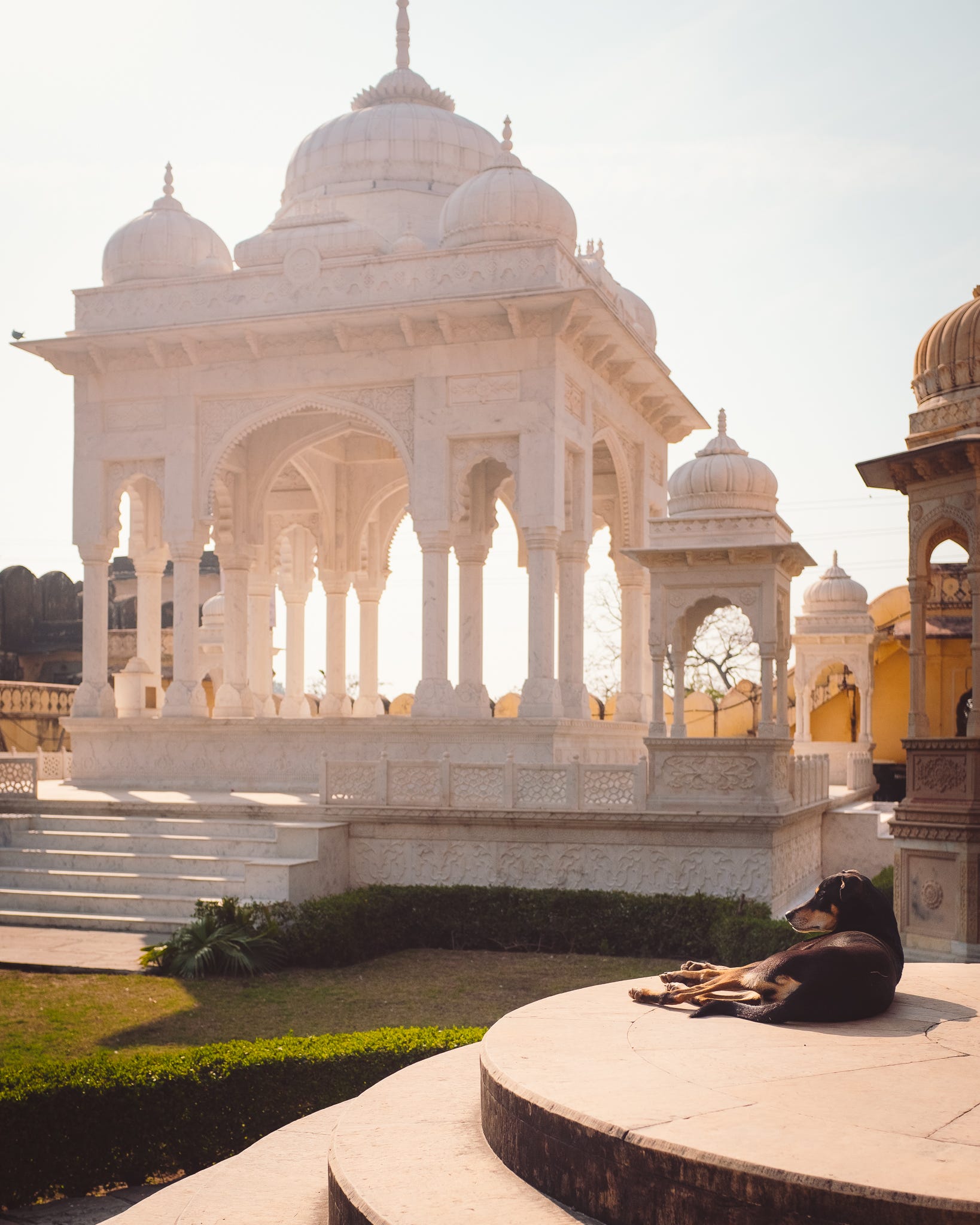
We pulled up at the shining white gateway to the Gaitore Ki Chhatriyan (the complex was named for the umbrella shaped domes known as chhatris) and immediately felt calmed. There was just a sparse scattering of taxis, no touts, no horns, no cows and no stress. It was feeling quite alien. We paid a small amount of money and entered the most beautiful complex of white marble buildings I think I had ever seen. And we were completely alone. We hadn’t long been to the Taj Mahal, perhaps the most famous monument of all of India, but the environment here was, for us at least, far more beautiful.
It was more than just the architecture. The small complex was nestled against the foot of the steep Aravalli hills which were covered in vegetation and flowering trees so there was even birdsong. Something we hadn’t heard much of on our vists to India. The Taj Mahal, conversely, is a building plonked in the centre of a sprawling wasteland on the banks of one of the most polluted rivers in the world with nothing to see in any direction other than dusty urbanisation and desolate damaged environments. The Gaitore was, in comparison, simply beautiful.
The high walls at the Gaitore kept out much of the traffic noise, although the out-of-town location also saw to much of that. It was not a place on any tourist’s radar so we literally had it all to ourselves for the first hour or so. We spent some time at first simply standing by the impossibly white marble arches and steps just feeling three weeks of stresses flowing away from us There were, of course, a few dogs lazing about in the early morning sun but even they couldn’t be bothered to unfold themselves and pester us for snacks, such was the meditative calm that this place exuded.
No posts
Comments
Nothing yet. Say the first thing.
Sign in to join the conversation.