
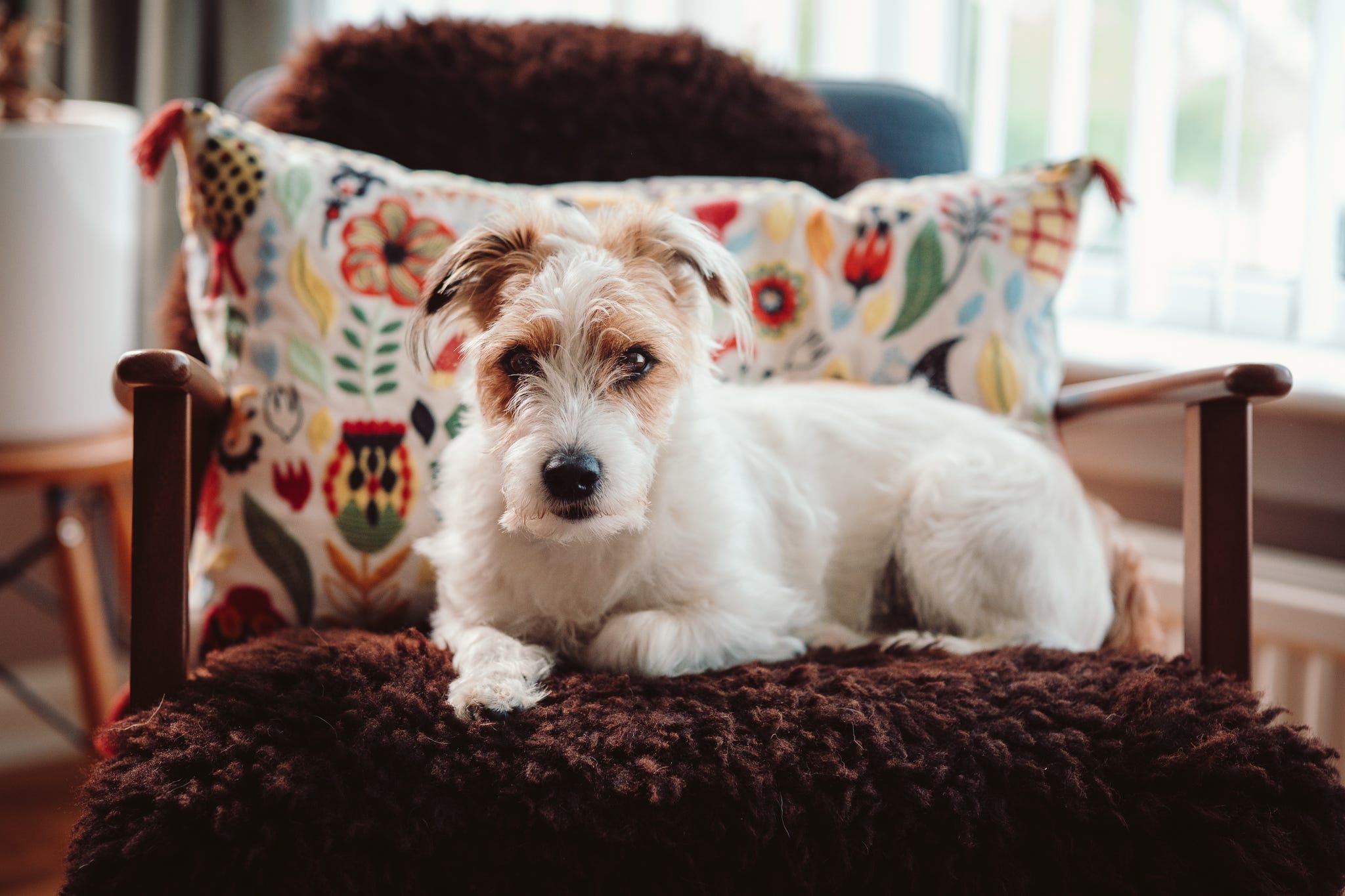
I have a dog of my own. He is a Jack Russell Terrier that we named Chip, but he has had several names, and many years ago traveled from his birthplace in Russia to live in Scotland. We didn’t bring him from Russia; I wouldn’t personally do that because to me it seems very cruel to put a dog through such a traumatic experience at a young age, but his first owners packed him up and sent him here.
He was bred specifically to be a show dog before being shipped here for a lifetime of parading around dog shows, being poked and prodded and used for breeding. Fortunately for little Chip, in the eyes of people who see dogs as things to be used to make money, he had too many flaws to meet the breed standard and was retired at a very young age. A mutual friend put us in contact with his owner at the time and we arranged to meet her in a car park at a dog show in Edinburgh. Once there we handed over an envelope of cash and, in return, received a terrified young dog.
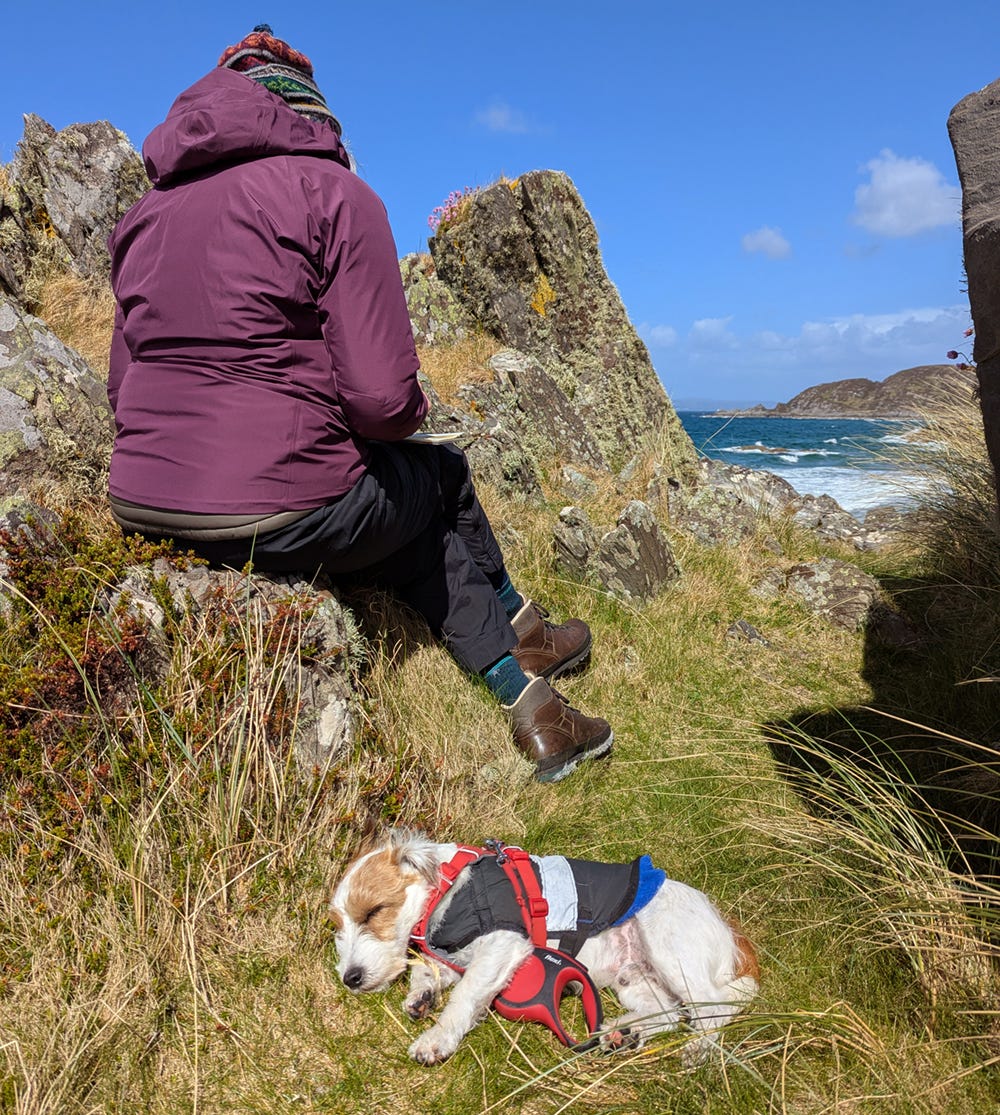
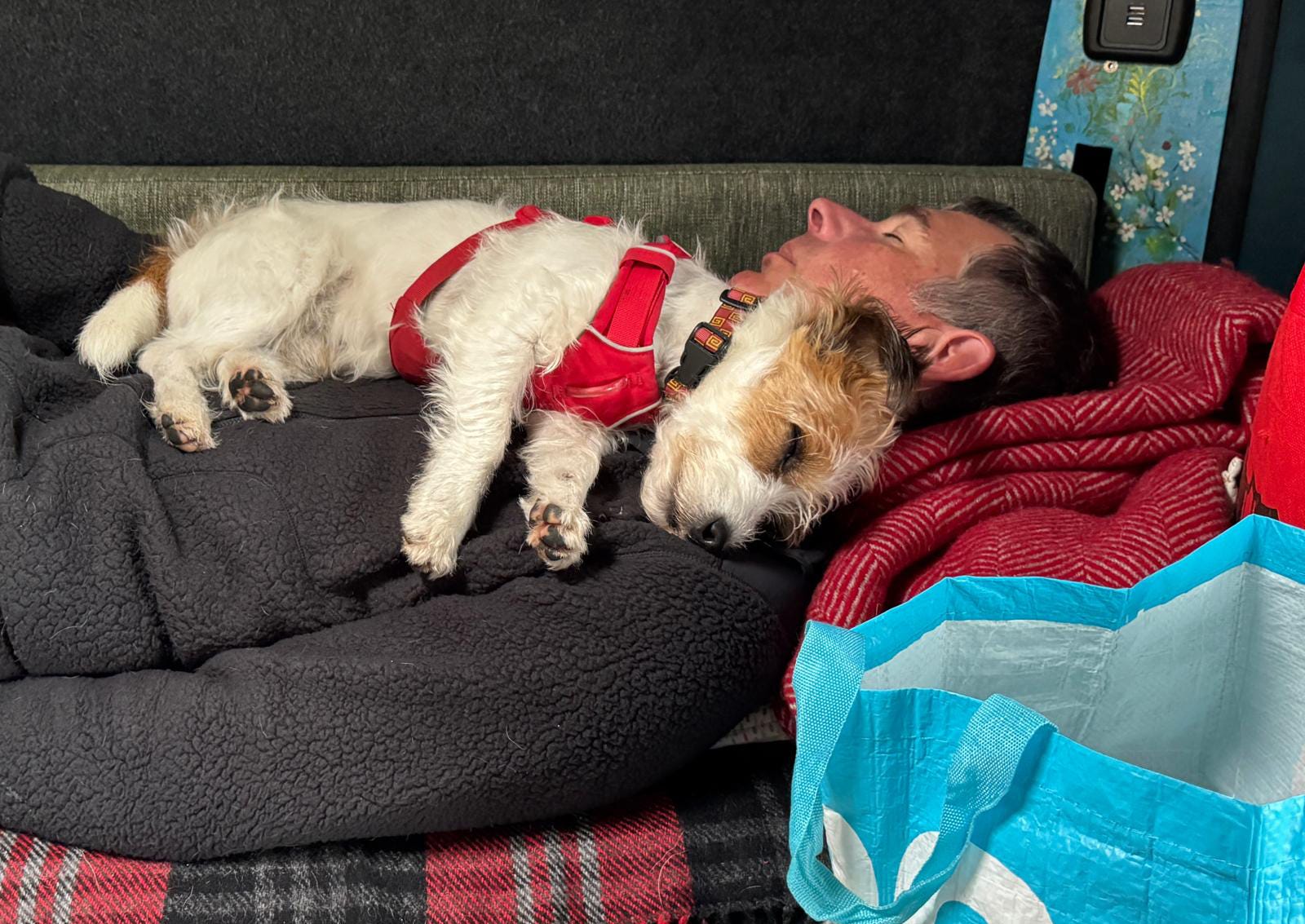
Since that day I like to think that he has had a pretty good life. We certainly work hard to try and keep him healthy and stimulated in his time with us. He almost always has us with him as part of his pack as either one or the other of us works from home. He eats well, goes for regular walks that are often in new and interesting places. He has good medical care, a healthy and varied diet, shelter and protection. He’s collected ticks with us whilst camping in 10 European countries, and has sampled cheese and sausage in every one of them.
There is one question that I think about an awful lot, and my 100 Dogs project makes me think about it even more. Is Chip truly happy? More to the point, is he actually happier than the street dogs in India, who most people look upon with great sadness?
As I have written countless times in my project, Indie dogs fascinate me. They live mostly in their own packs, as they would in the wild, but they also live closely alongside the humans who often regard them as companions. Observing the street dogs in India gives something of an insight into how I imagine it might have been when dogs and humans first discovered the mutual benefits of living together. I think the photograph I used for day 69 illustrates this perfectly — a family gather around a makeshift fire on a chilly night with at least two dogs, and two calves, joining them to keep warm. Humans provide certain comforts whilst the keener senses of the dogs offer a degree of protection to the group. The calves make a nice warm cushion.
Which of these dogs has the happier and most fulfilling life? My own dog Chip or the Indie by the fire in Varanasi? One is kept inside a house and is well fed and cared for. His life is consistent, but he must conform strictly to our life and he is not living within a pack of other dogs, only people. He will probably live a long life that is further prolonged, perhaps for too long, with modern medicine until he is put to sleep when we decide he no longer has an acceptable quality of life.
Then there are the street dogs who earned their battle scars through a tough but natural life outside. They can do as they please each day as their instincts direct them. A wound or illness will likely end their lives many, many years earlier than a well cared-for pet but, up until that point, they lived as dogs have always done with few restrictions.
We would never ordinarily choose a pedigree dog but Chip came along at a time when we were unable to adopt from one of the usual charities due to their strict rehoming policies so we invited him, and his carefully chosen genes, into our lives.
Indian street dogs reproduce and raise puppies that over time become stronger and better suited to their environment due to natural selection. A dog that cannot eat the food scraps it finds on the floor will not live long enough to mate. A dog that overheats because it has brachycephalic features, or a heavy coat, will not survive long without help. On the whole, only the dogs best suited to street life will make more Indie dogs.
We, on the other hand, breed dogs like Chip to enhance the physical and behavioural traits that suit our lives, and those traits are often no more than cosmetic adjustments that suit our whims. We don’t breed dogs with their long-term survival in mind and, as history shows, we actually make dog’s lives harder and more miserable through the aesthetic and non-functional alterations we make. We have, in fact, taken many fine breeds of dogs and changed them dramatically over the years to the detriment of their health, but the benefits of breeder’s bank accounts.
Something that became clear on my most recent trips to India, where I was photographing and studying the dogs more intentionally, was how different the more integrated dogs had become. As soon as food becomes plentiful the dog begins to overeat, especially as the food they are given is commonly composed of human biscuits, leading to many of the casually adopted dogs being overweight.
When they are given a name and a jacket, and food competition isn’t a problem any more, they seem to detach themselves from a pack and become less healthy and more prone to fighting. The natural balance has been disrupted. Have a look at enormous Idli for a great example of the side effects of over-caring. In a perfect world it would seem that you either need to take on the care of a dog completely, as in the case of Kalu or Tony Slice, or leave them be. But in our very imperfect world people with few resources still want to help these animals that live amongst them, even when they have very little food for themselves and have little understanding of the health issues they may cause by feeding the dogs incorrectly.
We are simply not better here in Britain — we just have a huge perception gap and think that our pets are ‘just a little chubby’. Every day, when walking Chip through our village, I see overweight dogs struggling to walk down the road. They got that way because their owners gave them too much food. The British Veterinary Association says that around 60% of pets in the UK are obese, and that is a major health problem. It is about time we realised that we are hurting our own dogs by feeding them poorly.
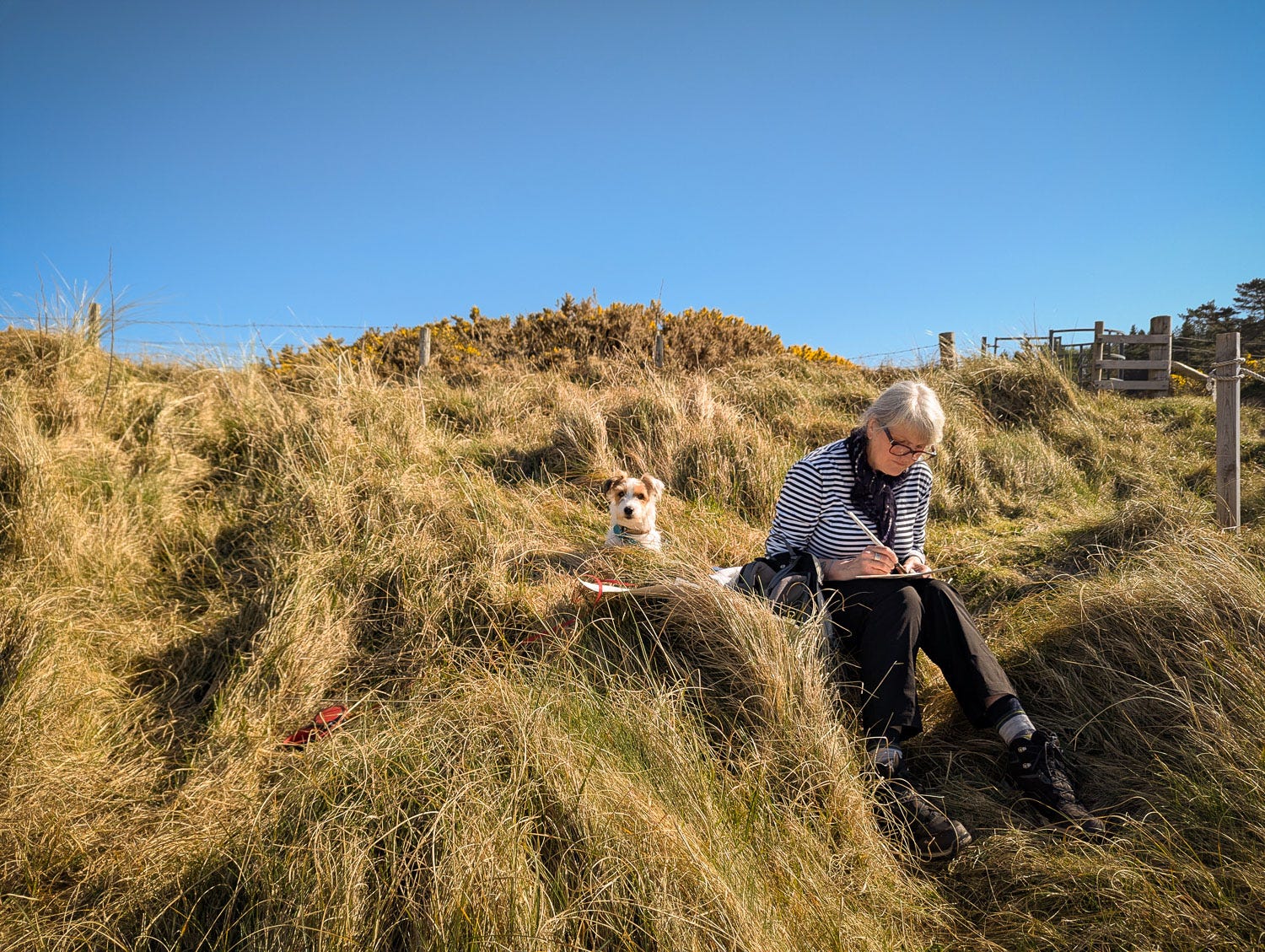
So, does Chip have a better life than an Indie dog? I guess nobody can ever know. I’ve tried talking to him about it but he just wants me to throw his ball for him. I can see from his daily antics that he still has those same deep-seated behaviours that the Indie dogs have. The big difference is that he is forbidden from allowing them to lead him through life and we have trained him to live alongside us in a more acceptable balance.
What I do know is that the problems of the dogs in India are very visible and, sometimes, they can be quite gruesome, so it might seem worse than here. But I also know that we are most definitely not as good at truly caring for our dogs as we like to think we are here in the West, and I expect that far too many of our dogs dream of a happier life.
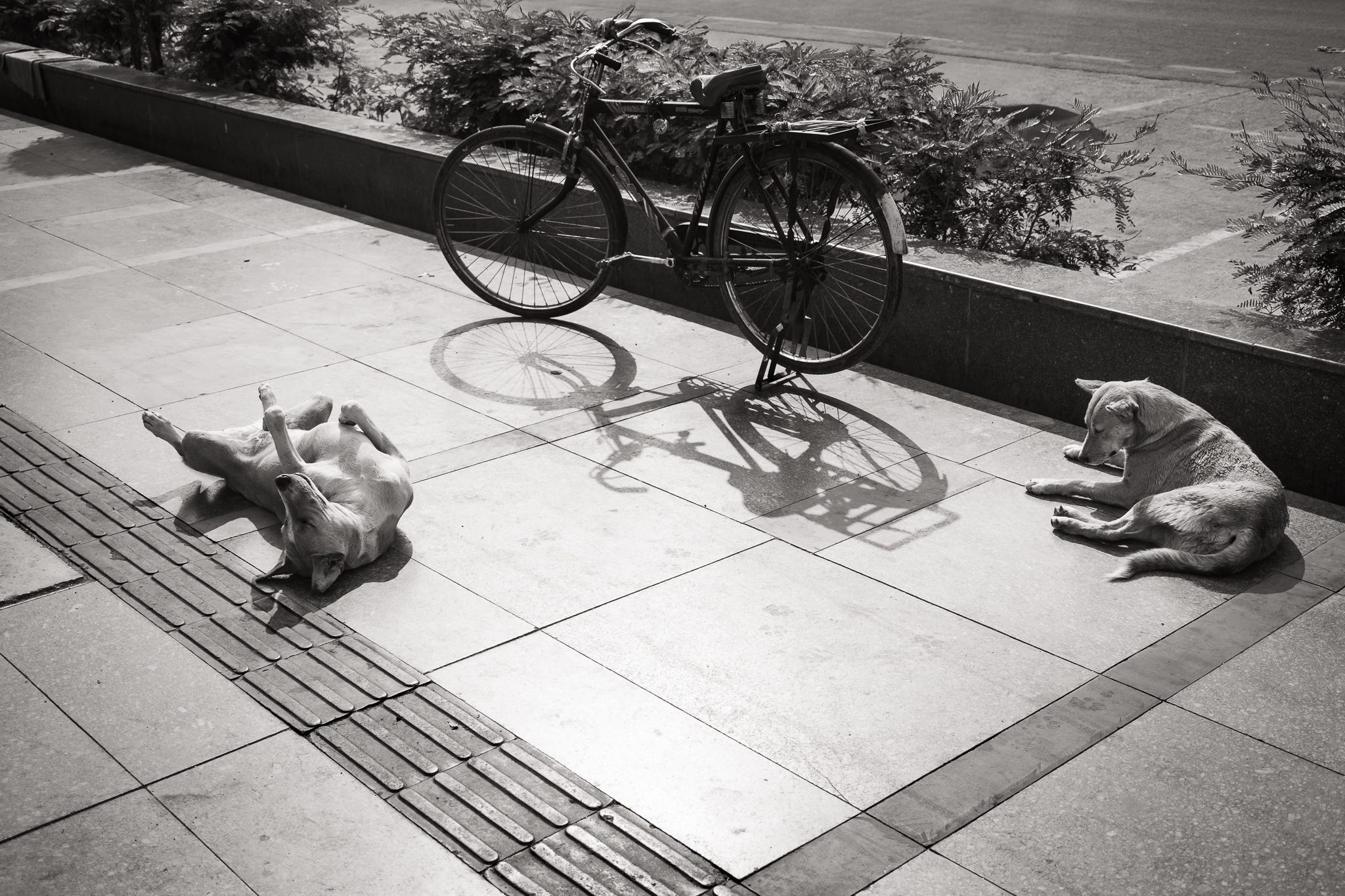
To wrap up this part of my project I have a plan that I have been thinking about for a very long time. Almost everyone I know says I should make a book of the Indian dogs, so I shall. When I make the book I want to be able to give some of the proceeds from each sale back to the very dogs that feature in it however that isn’t as simple as you might imagine. A quick search online shows there to be a great many animal welfare charities across India.
With this in mind I have a question aimed especially at all the new Indian followers and subscribers that have kindly read my stories for the past year. Do you know of a good, reliable charity that actually does good positive work for the dogs and, if so, could you please tell me? I don’t want to send money to India and find that it was used unwisely — I want it to go to help the dogs that deserve it. I too can do a simple search online, but it would be lovely to know from someone who has first-hand knowledge of a particular charity and can vouch for them.
Thank you for reading!
No posts
Comments
Nothing yet. Say the first thing.
Sign in to join the conversation.