
Several things in this edition are not what they seem. A popular housing policy with no evidence behind it. AI that creates more work the better it gets. Travelers who want personalization but won’t share their data. A caricature that may be more honest than your brand guidelines.
Special thanks to Alpic for sponsoring this edition of the newsletter:
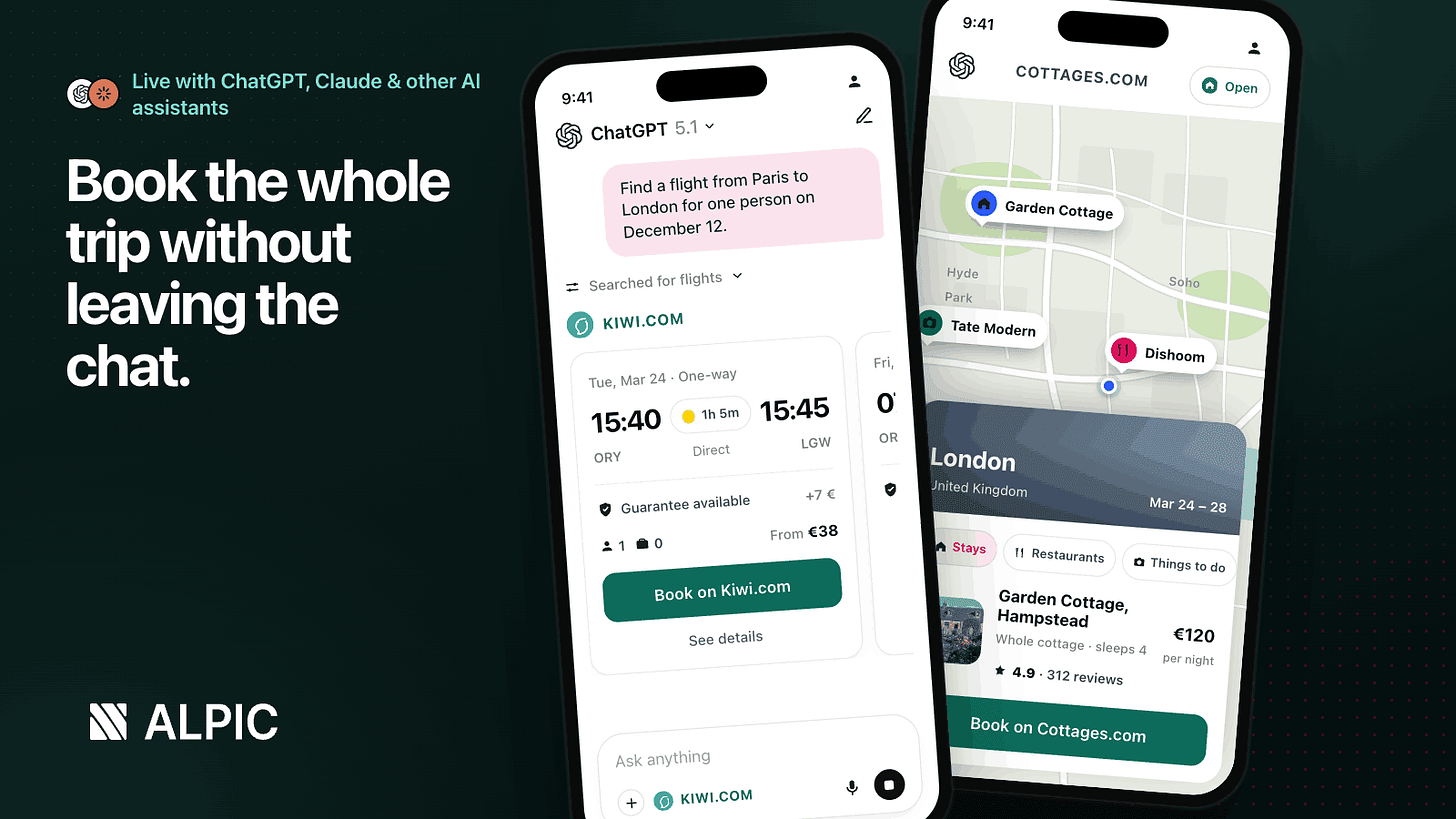
AI assistants are the new search bar for travelers. If your inventory isn't there, you're invisible. Alpic puts travel brands inside ChatGPT and Claude, with live inventory and real prices, bookable in the chat. We built it for Awaze and kiwi.com. We can build it for you. Catch us at Phocuswright Europe, Barcelona, June 16-17, or meet with our team online.
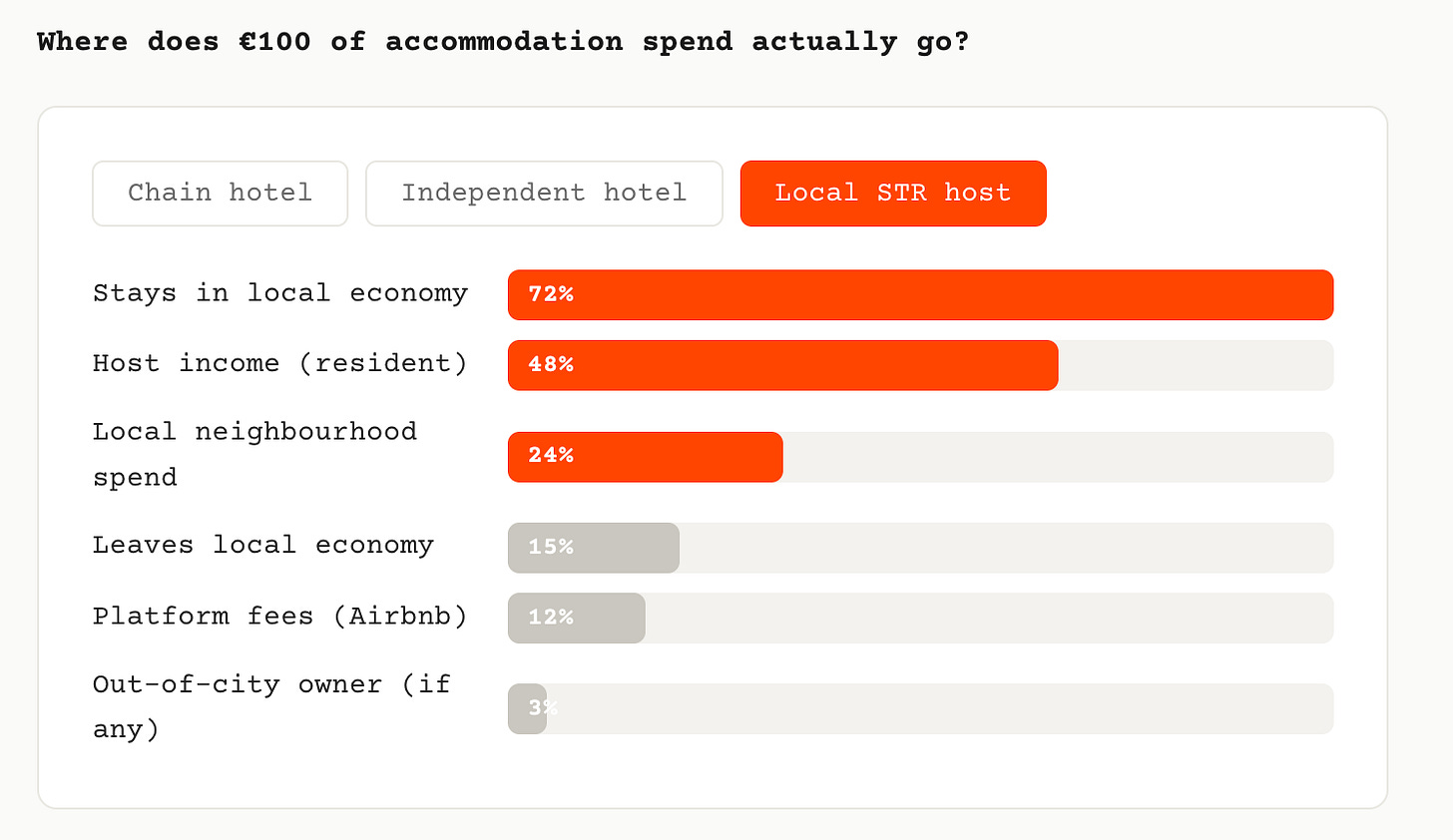
Barcelona’s intended 2028 ban on all short-term rental licenses is popular but the data is more complicated. No city that has implemented a full STR ban has demonstrated measurable housing relief. Berlin reversed its ban after two years. New York’s rents rose after Local Law 18 eliminated 90% of Airbnb listings. Hotel rates went up 12.6%. The housing crisis continued.
I built this analysis using Claude, combining research, data, charts, and design into a single published piece. It argues that Barcelona has chosen a story over a solution, and that the main beneficiaries are the hotel chains that lobbied for the ban. The process was as interesting as the output: research, writing, visual design, and publishing from a single workflow. Worth reading, and worth thinking about what that kind of AI-assisted work makes possible.
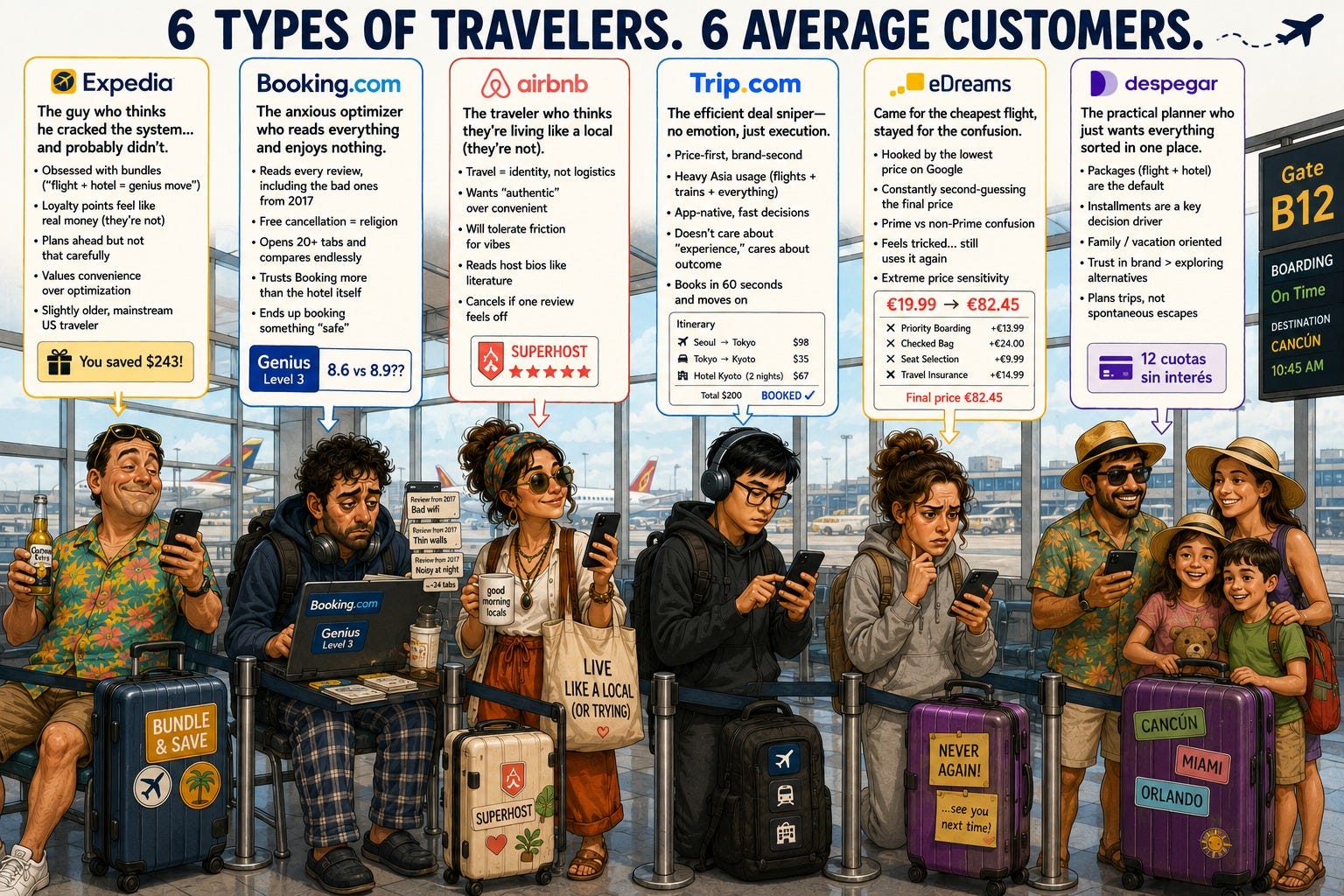
JoseLuis Vilar (cofounder of Caravelo) asked ChatGPT to draw a caricature of the average customer of Europe’s top four low-cost carriers. The result is the internet's collective memory of a brand, averaged into a single image. Reviews, Reddit threads, TikToks, news articles, all compressed into one frame.
I asked JoseLuis to run the same exercise for the major OTAs. What the internet thinks your customer looks like is your brand, whether you built it that way or not. This accidental portrait may be more honest than anything your marketing team ever produced.
Kevin Kelly has been traveling seriously for over 50 years. Take a look at his list of 50 Years of Travel Tips. Among them:
If you hire a driver, or use a taxi, offer to pay the driver to take you to visit their mother.
Your enjoyment of a trip will be inversely related to the weight of your luggage. Counterintuitively, the longer your trip, the less stuff you should haul.
Don’t avoid tourist traps. They are world-famous for a reason: they usually have something special that keeps people returning. The trick is to visit them off-season, early morning, late at night, on foot, with a local, through the backdoor, off the main street, away from the vendors.
Dan Shipper has automated everything he can at Every. And yet his team keeps growing, with more human work than before. The better the models get, the more work there is to do.
In After Automation, he explains that AI progress creates more work for humans, not less, because AI is trained on the visible output of past work. Code, prose, support tickets, product specs, etc. It packages all of it cheaply. The problem is that once everyone has access to the same cheap output, the output stops being worth much. What becomes valuable is the judgment underneath it.
He calls this the frame/framer gap. Someone still has to decide which problem matters, why now, for this customer, in this market.
For travel operators, that judgment came from years of watching things go wrong in ways no one predicted. Pricing models that broke in specific edge cases. Booking flows that worked fine until they didn’t. Customer behavior that made no sense until it did. None of that is in a training corpus. It’s too specific, too lived, and too recent. That’s exactly why it holds its value while everything else gets cheaper.
“Quitting is not the problem. Quitting too soon is.” — Nir Eyal
“Three things you need: the ability to not give up something till it works, the ability to give up something that does not work, and the trust in other people to help you distinguish between the two.” — Kevin Kelly
There is no reliable way to know in the moment. The line between foolish and genius is only visible in hindsight. What you can do is improve your odds. Talk to more customers than feels necessary. Decide in advance what signals would make you change course, and write them down. And find two or three people who know your space, have no stake in your outcome, and won’t just tell you what you want to hear.
Travelers want brands to know them, but they don’t want to be known. A CapTech survey of 447 US consumers found that people are 40% more likely to buy from brands that tailor experiences to their needs. At the same time, 52% are reluctant to share the data that enables personalization, and two in three don’t understand how their data is used by AI. The gap between wanting personalization and trusting the systems behind it is wide.
This matters more in travel. Hotels, airlines, and OTAs hold some of the most intimate consumer data that exists: where we go, who we travel with, how much we spend, how often we cancel. The potential for genuinely useful personalization is real, but so is the possibility of getting it wrong.
Brands that resolve this will make the value exchange visible by clearly telling travelers what data is being used, why, and what they get in return. But most travel brands aren’t close. Hotels, for instance, still struggle with basics like remembering a returning guest’s room preference or not asking for information they already have. The paradox is real, but for most of the industry it’s still a future problem.
Artem Simenenko, Director at Expedia Group, writes that ChatGPT is running ads in 1-2% of prompts, and most conversations that do have just one. According to data from Adthena, travel-related questions triggered ads across more advertisers than clothing or consumer electronics, with Expedia, Airbnb, Hilton, and Royal Caribbean already showing up.
Travel fits the format well. Booking a trip is a messy, multi-step decision involving destinations, dates, budgets, room types, cancellation rules, etc. A chat interface sees all of that happening in one conversation, which means an ad can appear at exactly the moment a traveler is narrowing down their options. Search can't do that. Read +
I pushed the Copilot to my entire team so they could benefit from it too. — Grégoire Pasquet, Co-founder & CEO, Worldia
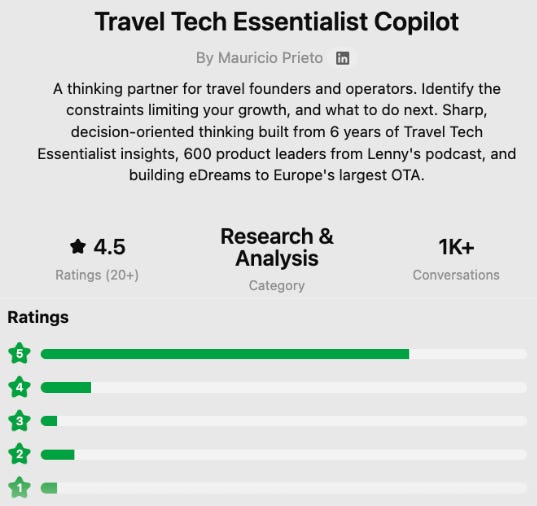
The Travel Tech Essentialist Copilot has now had over 1,000 conversations and holds a 4.5 rating. Try it and let me know what you think.
→ Explore all 1701 open roles on the Travel Tech Essentialist Job Board now.
Airbnb | Senior Staff Software Engineer, Storage | USA | $244k - $305k
Navan | Senior Product Marketing Manager | San Francisco | $130k - $288k
Navan | Senior Communications Manager | New York City | $119k - $264k
Booking.com | Integrated Content Strategist | Amsterdam
📩 For monthly updates on the latest roles, subscribe to the Travel Tech Jobs newsletter
If you are a startup looking to raise a round (from pre-seed to Series D), I can help (for free). Travel Investor Network is a private platform where I recommend innovative travel startups to investors and innovators. If you’re interested, please start by completing this form.
If you’ve found value in Travel Tech Essentialist, the best way to say so is to share it with someone who’d appreciate it:
If you’re not yet subscribed, join us here:
Thanks for trusting me with your inbox.
Mauricio Prieto
Comments
Nothing yet. Say the first thing.
Sign in to join the conversation.