
Lately I’ve been focused on writing poetry, reading and research. But I’m still doing DNA travel when I can. Over the next few days I’ll be sharing some thoughts and reflections from my ancestral trip to Arkansas last month. I’m not sure where my personal journey fits into the larger chaos and trauma of our country’s politics right now. I will say that the genealogy, historical research, and reading I’ve been doing about our country’s past is somehow helping me to cope with, and frame, the present. Take what you like, and leave the rest.
My recent ancestral trip to Arkansas felt like two twin experiences in one. One experience was visiting the silent places of the past, the places where only traces of the dead remain, where one must imagine and conjure another time, feel into the quiet with the heart instead of the mind. The other experience was of joyous connection and welcome, of new friends and new places. I communed with both the dead and the living, the two becoming intertwined, both offering their own understanding.
Hempstead County, Arkansas was the land of my biological ancestors for 100 years. My enslaved 5th great-grandmother Lizette Gamble was brought here with some of her enslaved children and grandchildren in the 1850s, and her descendants remained until they began to leave in the 1950s. Here, my family passed through emancipation, the Reconstruction era, and the rise of the Ku Klux Klan and lynch law. The oppression and dehumanization of slavery was replaced by unfair sharecropping practices, and the demoralization that came with Jim Crow laws and segregation.
My biological grandmother, Ollie Belle, chose to join the waves of the Great Migration, moving to Chicago with her husband in 1950, and then leaving her husband and following her aunts to Seattle in 1954. She wanted something better for her then five children, which included my biological father Willie Ray, and my uncle Robert, who accompanied me on this trip.
Willie Ray, Robert and my aunts Mary and Linda were the only four of Ollie Belle’s children born in Arkansas, the last generation in my immediate family to be born in Hempstead County. It meant a lot to my uncle to be able to finally go back after decades. And it meant a lot to me that he could join me. I’ve only known him for five years now, but our connection has felt deeper than that - like we’ve been old friends for a long time.
I had never been to Arkansas. Honestly, I probably would have never gone there if I hadn’t found my biological family. Up until five years ago I knew practically nothing about it. I vaguely understood that it was a southern state, but didn’t think of it as being as culturally southern as Louisiana, Mississippi or South Carolina. But it is. And it was a Confederate state during the war.
I became eager to go to Arkansas after finding out about my 5th great-grandmother whose rare name I somehow share, despite being adopted out of the family at birth. I have been obsessed with her ever since. A few years ago, my uncle and I traveled to South Carolina where she lived most of her life in slavery. Now it was time to go to where she had lived out her final years in freedom.
And so my uncle, husband and I found ourselves exploring Hempstead County for a few days last month, moving between silent and vibrant spaces, between the dead and the living.
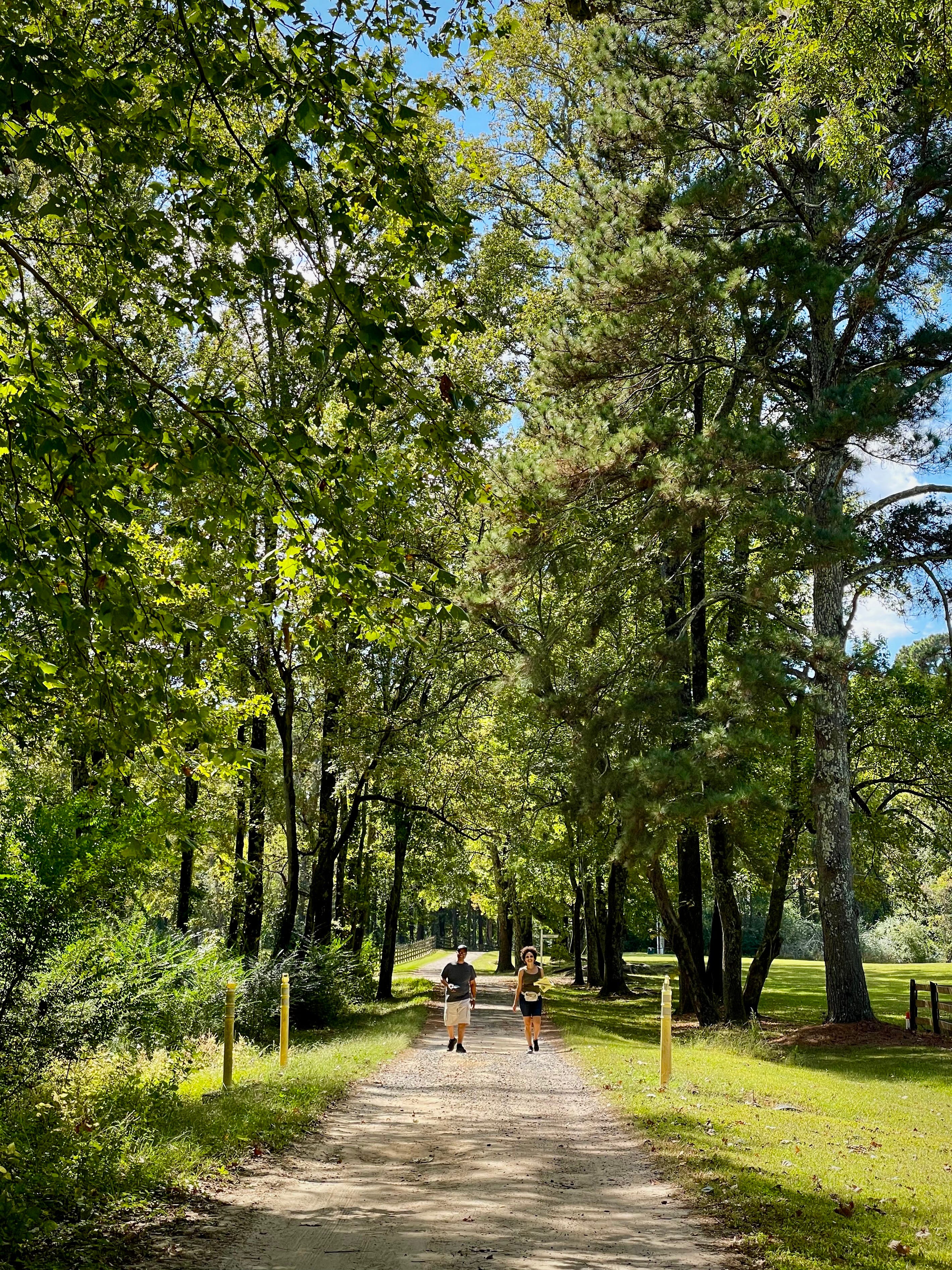
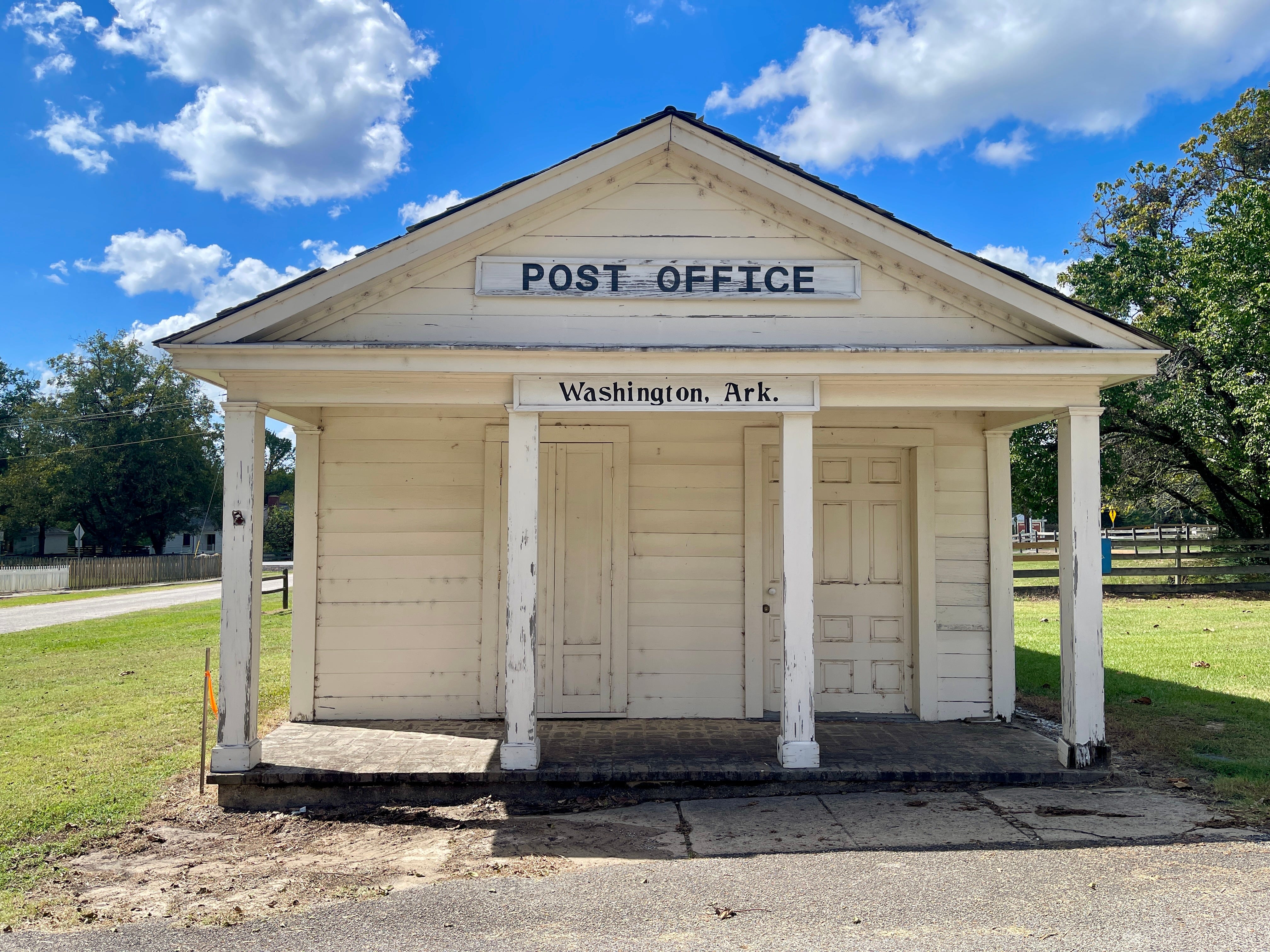
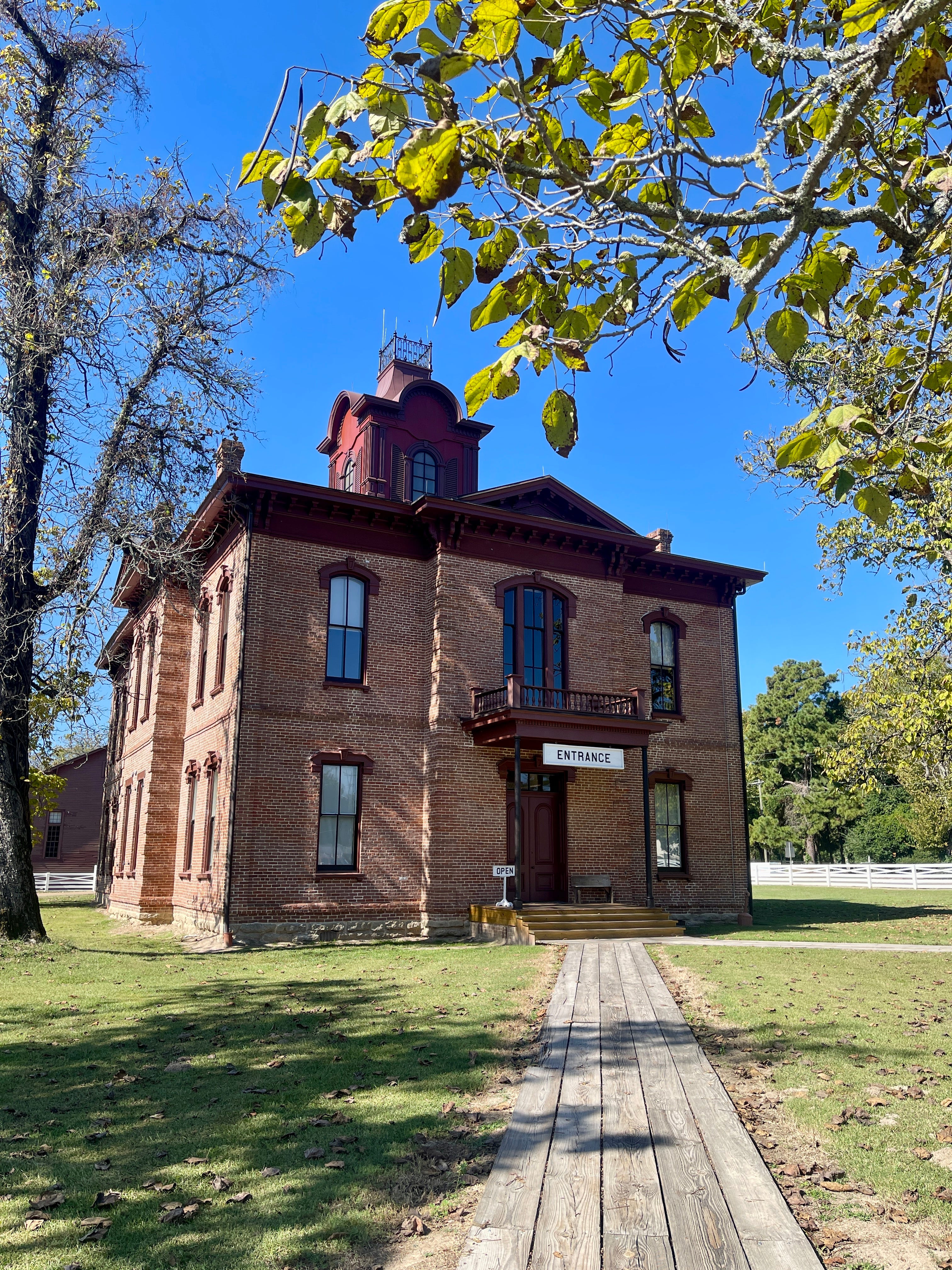
During our first full day, we explored Historic Washington State Park, which preserved the old town of Washington, Arkansas, the former county seat. The park consisted of modest and grand 19th century buildings, majestic trees, the original county courthouse which now holds a museum, a tavern that has served food since the 1700s (and still serves incredible meals), and beautiful long roads that resemble painted idyllic country scenes. I had no idea that Arkansas held so much natural beauty.
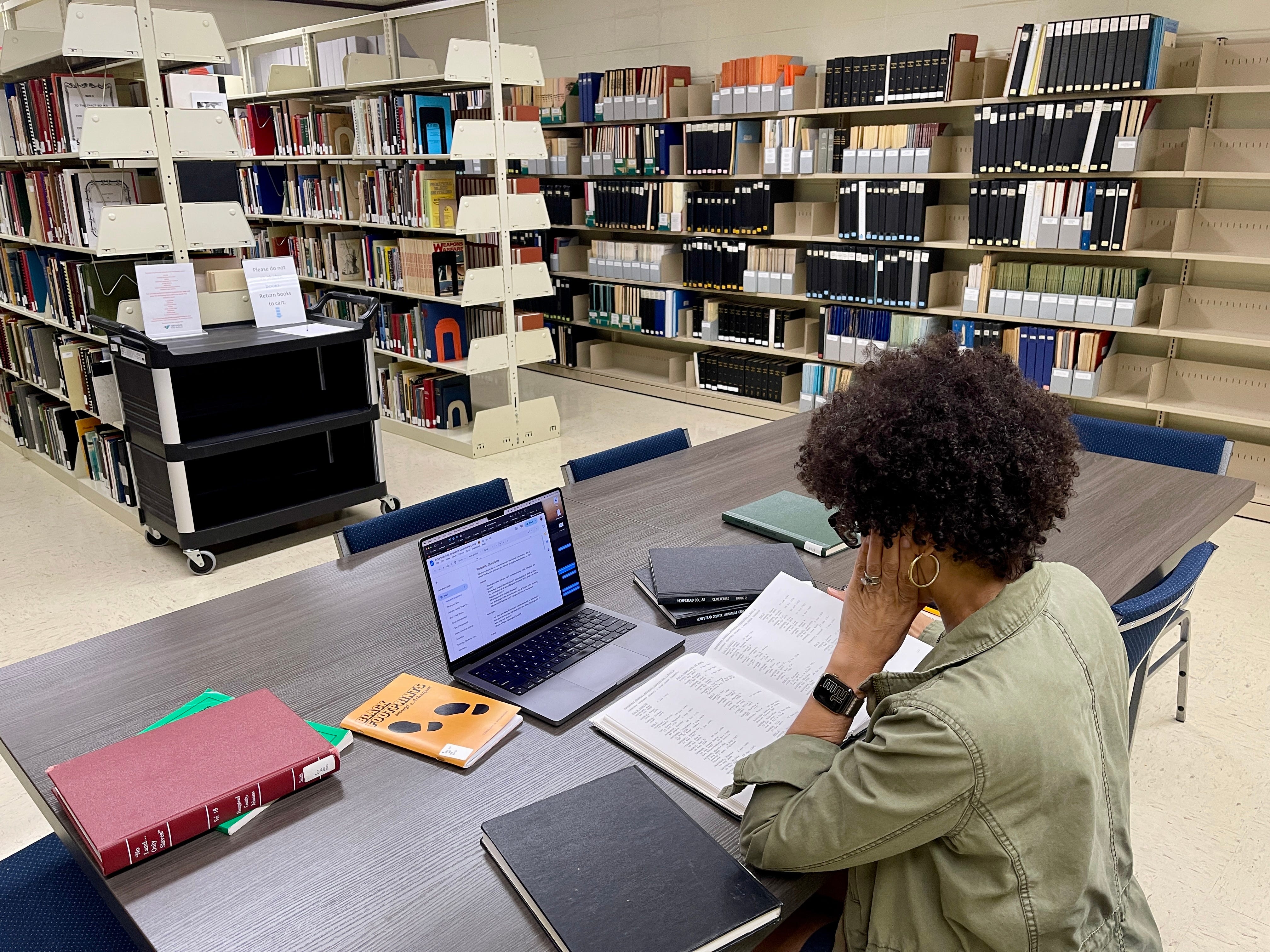
The park is also home to the Southwest Arkansas Regional Archives (SARA) where we spoke with the friendly and helpful director and her assistant, and where I pored over county cemetery indexes, looking for family names. We enjoyed our many hours at the historic park, and promised ourselves that we would return.
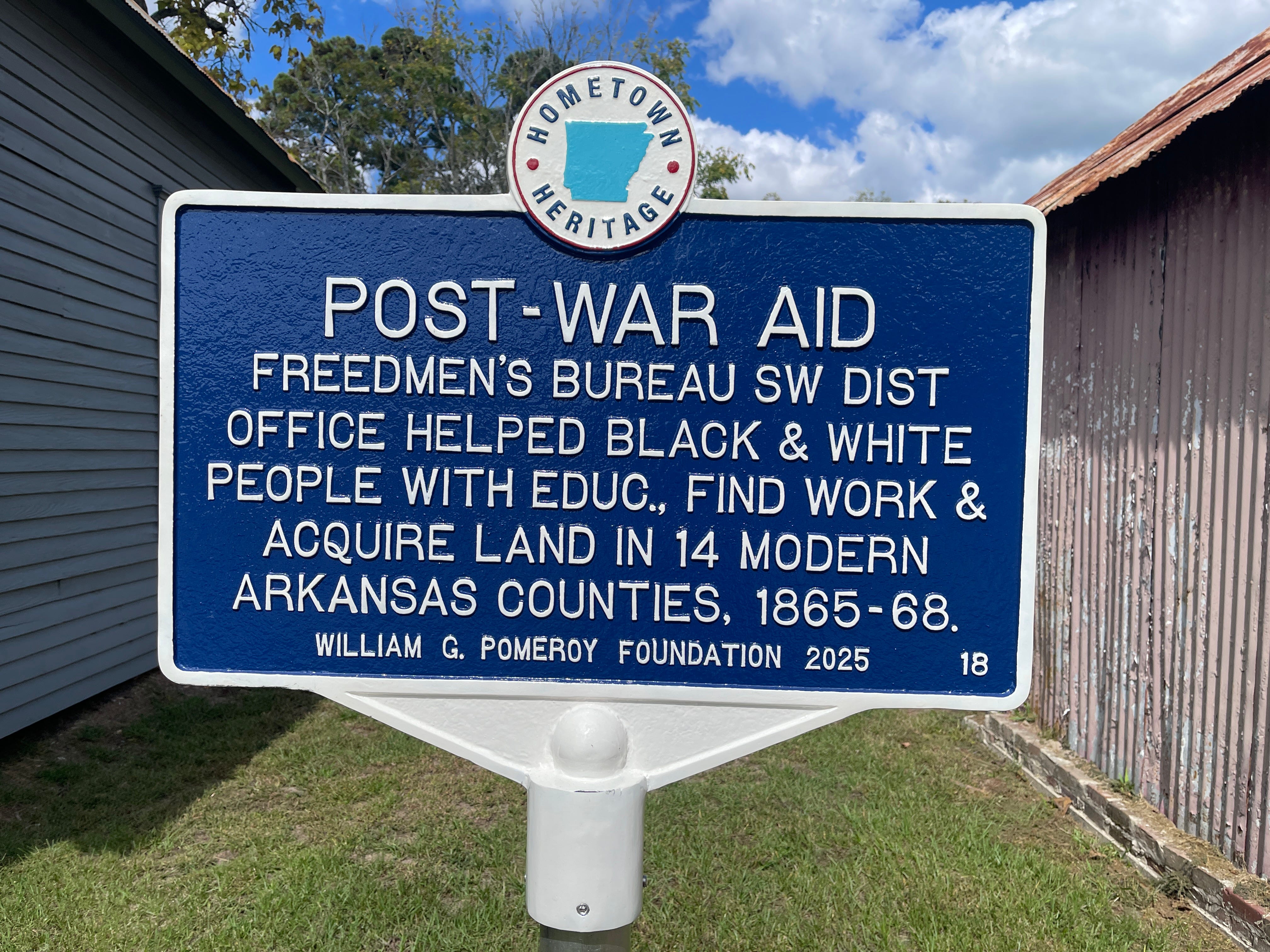
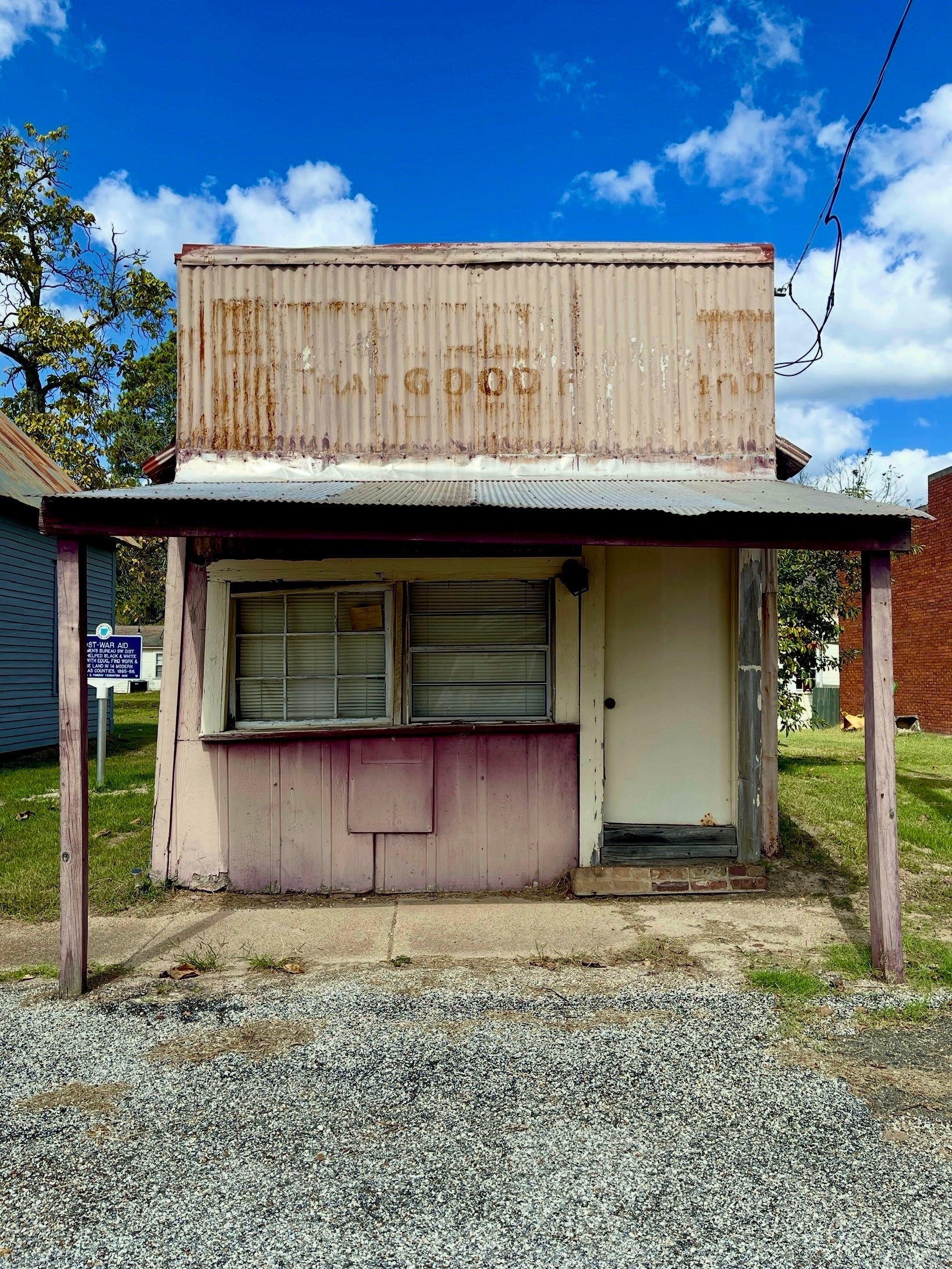
After leaving Washington, we drove north in search of what used to be two bustling historic Black towns: Ozan and Clow. There wasn’t much to see in Ozan besides a post office and some random houses, so we drove the five additional miles to Clow. Things became even more rural. As we entered the land where many of my ancestors had lived, it was hard to imagine that it once held nearly a thousand Black families building new lives after emancipation in the 1860s. There was no visible sign of a former town. Only a few homes remained, nestled in what was now thick forest.
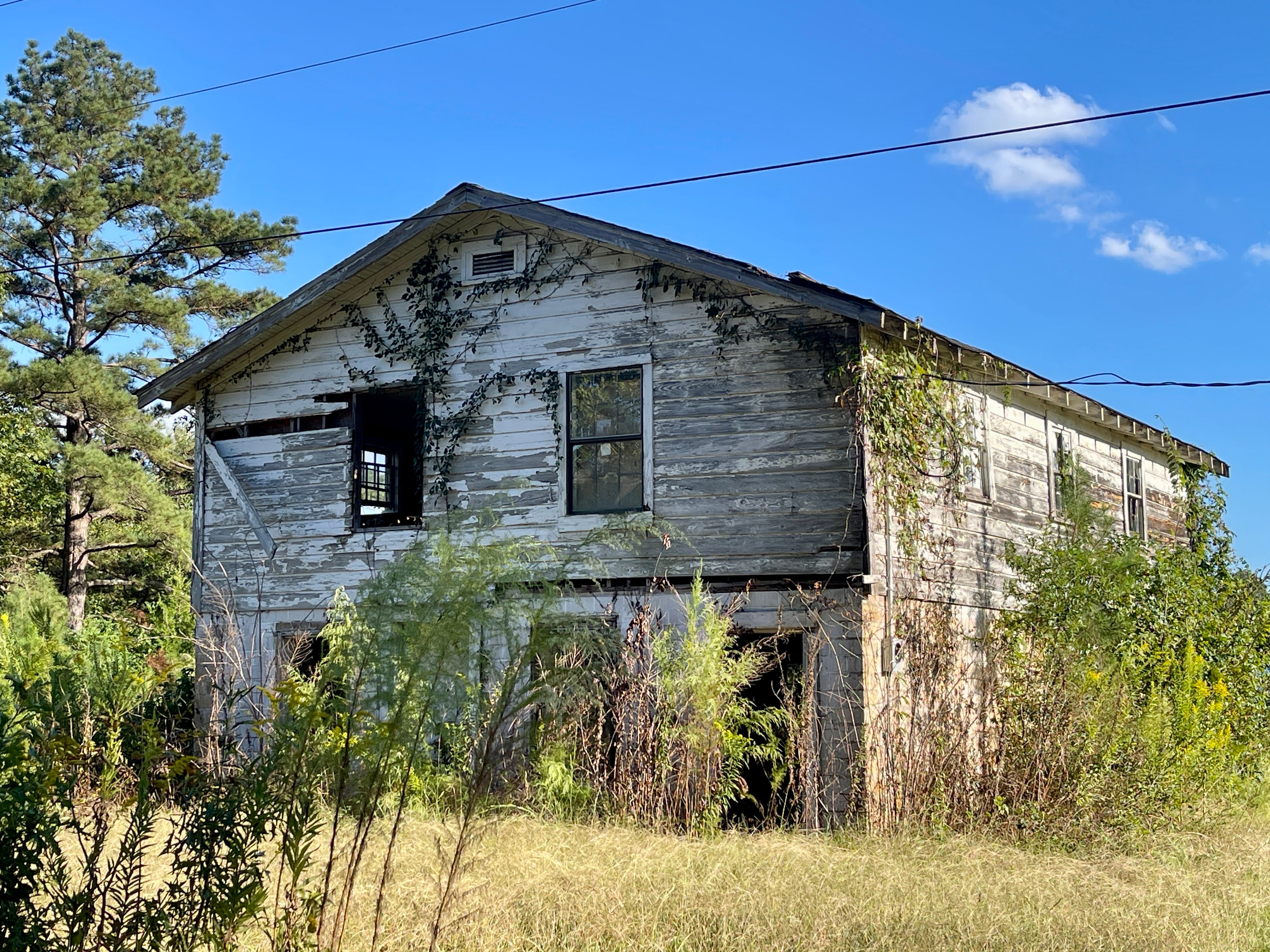
We pulled up to what the Google map pin said was Clow, in front of Wiley Baptist Church, a small and modest building. The only other non-residential structure was a dilapidated building across the street, where apparently the Black Masons (the oldest and largest predominantly African-American fraternal order in the United States) used to hold their meetings on the top floor. We walked around it, taking pictures. It was beautiful in its own tired, worn way.
I was finally standing where Lizette had lived with some of her children and many grandchildren. I had arrived. I barely knew anything about her. The only documentation of her life was in South Carolina estate papers where she was left with other property to her owner’s son, and her appearances in the 1870 and 1880 censuses living in Clow. I hungered to learn more about her. Perhaps this place could give me clues.
But of course that’s not how this works. There was no bolt of lightning or spirit visitation. There wasn’t anything to see that was directly connected to her. Instead what I noticed was the quality of the light through the trees, and the peacefulness of this seemingly forgotten place. It did feel good to imagine her living in such natural beauty—a different perspective than the brutal realities of the Civil war and the uncertainty that followed.
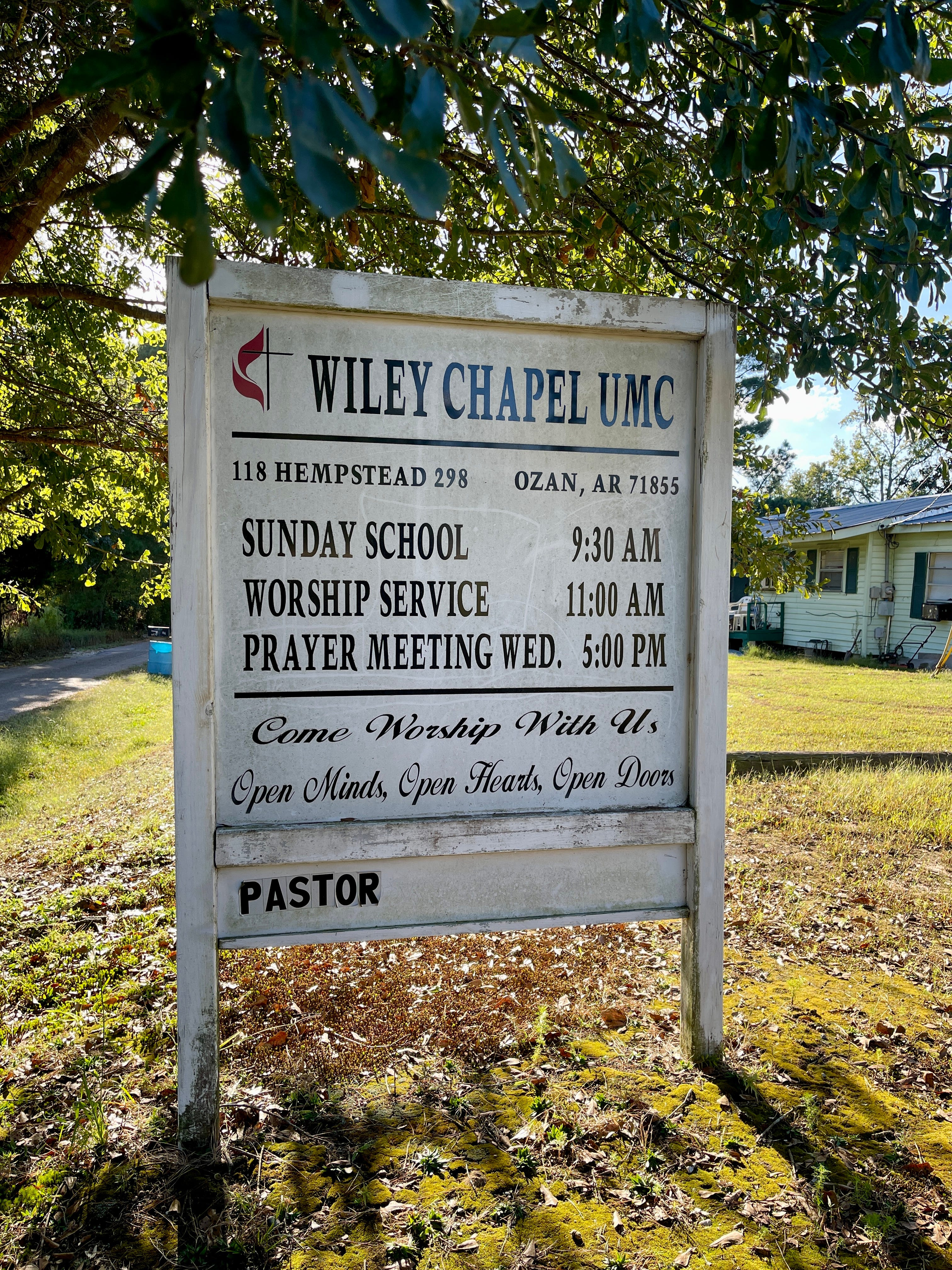
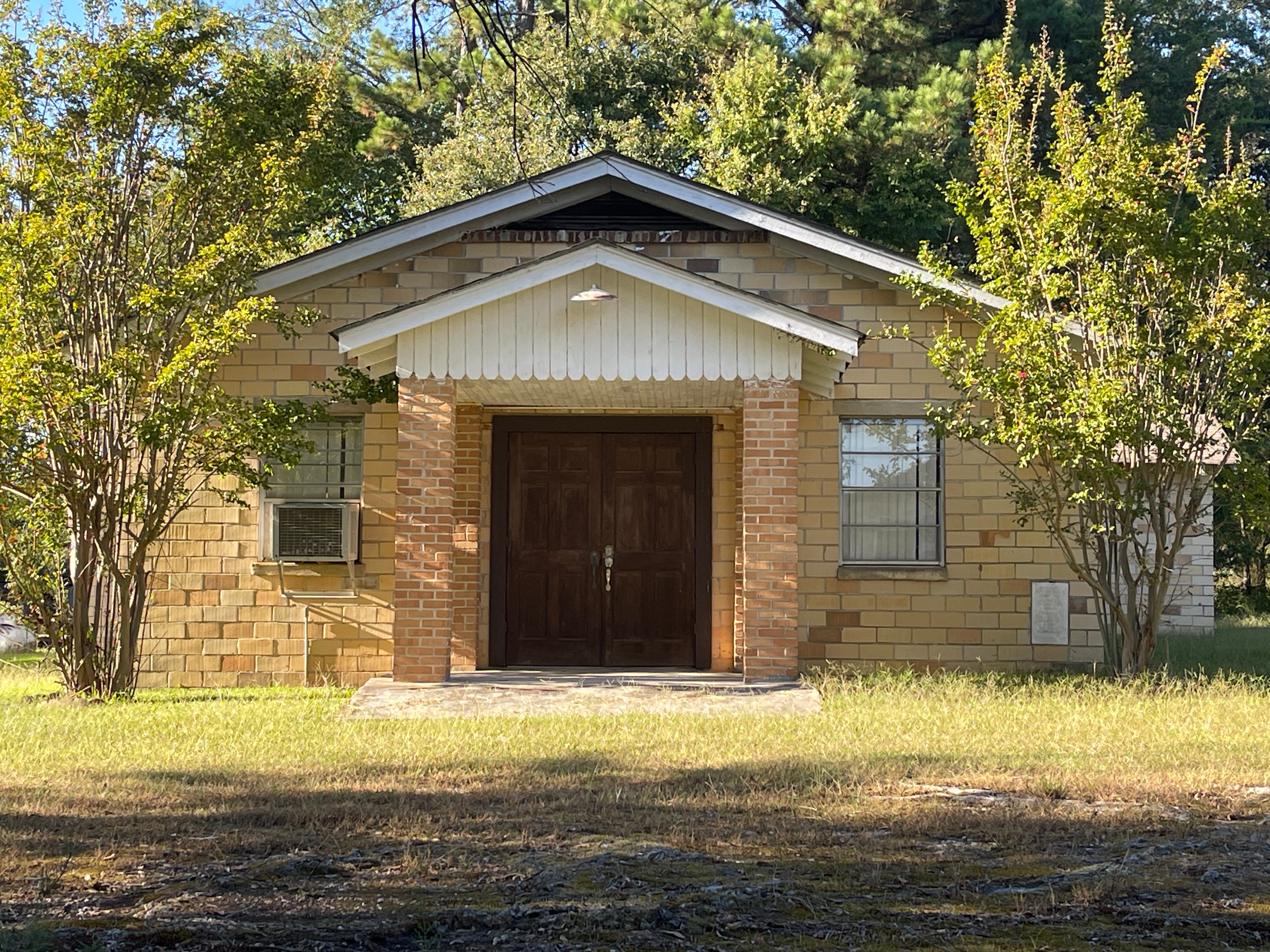
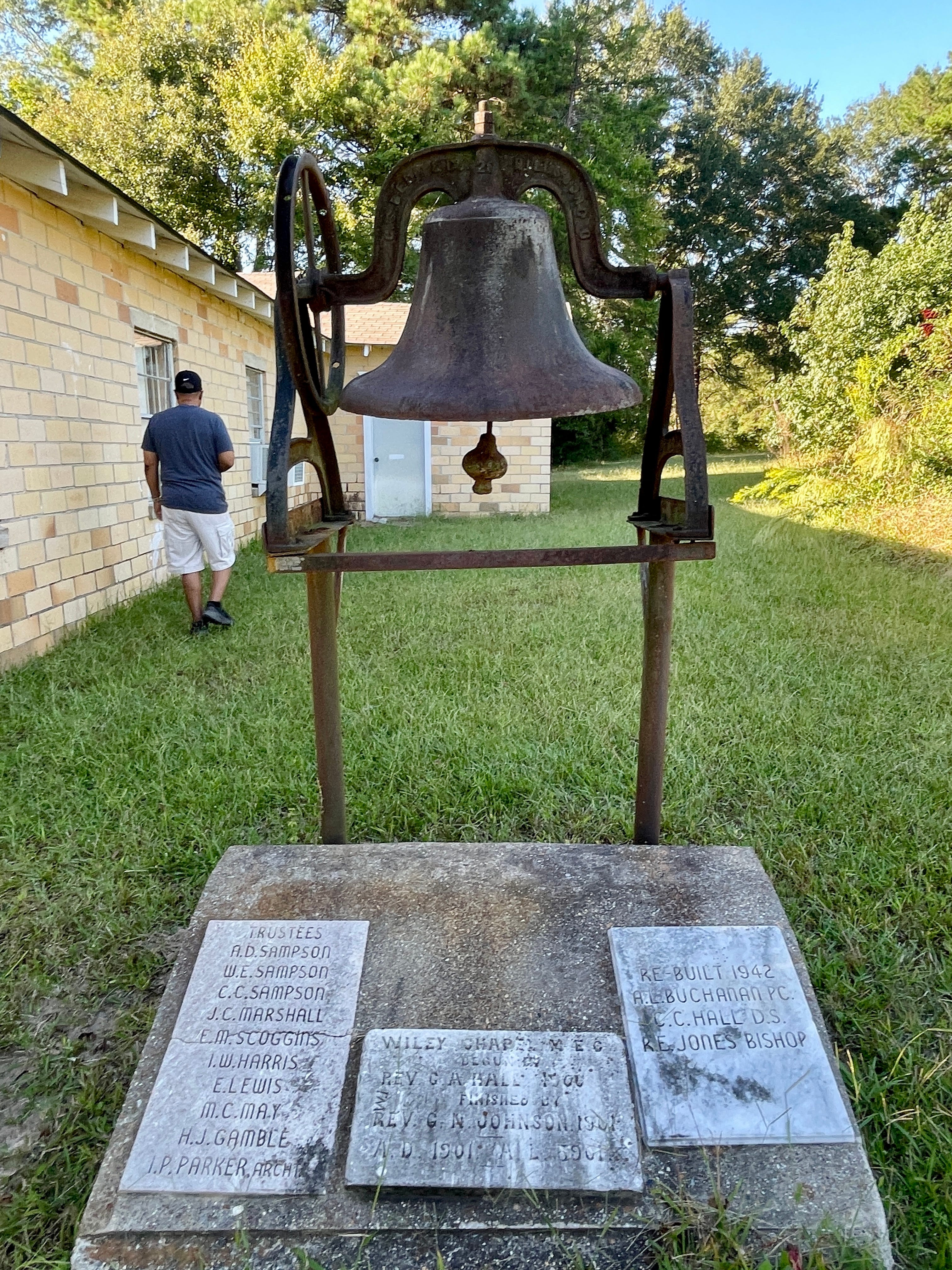
After peering into the windows of the locked church, we got back into the car and crossed the railroad tracks that once brought supplies, people and the outside world to this small town. We found the dirt road that led to our next destination, the nearby African-American cemetery. As we drove, I thought about how there was so little left of Clow, and how if I hadn’t learned about its history I would have never believed that it had been there at all. Where had it all gone? Life was so impermanent. Then it hit me that what primarily remained was that community’s descendants. We were the living remnants. The DNA in my cells connected me to that past. And that had to be enough.
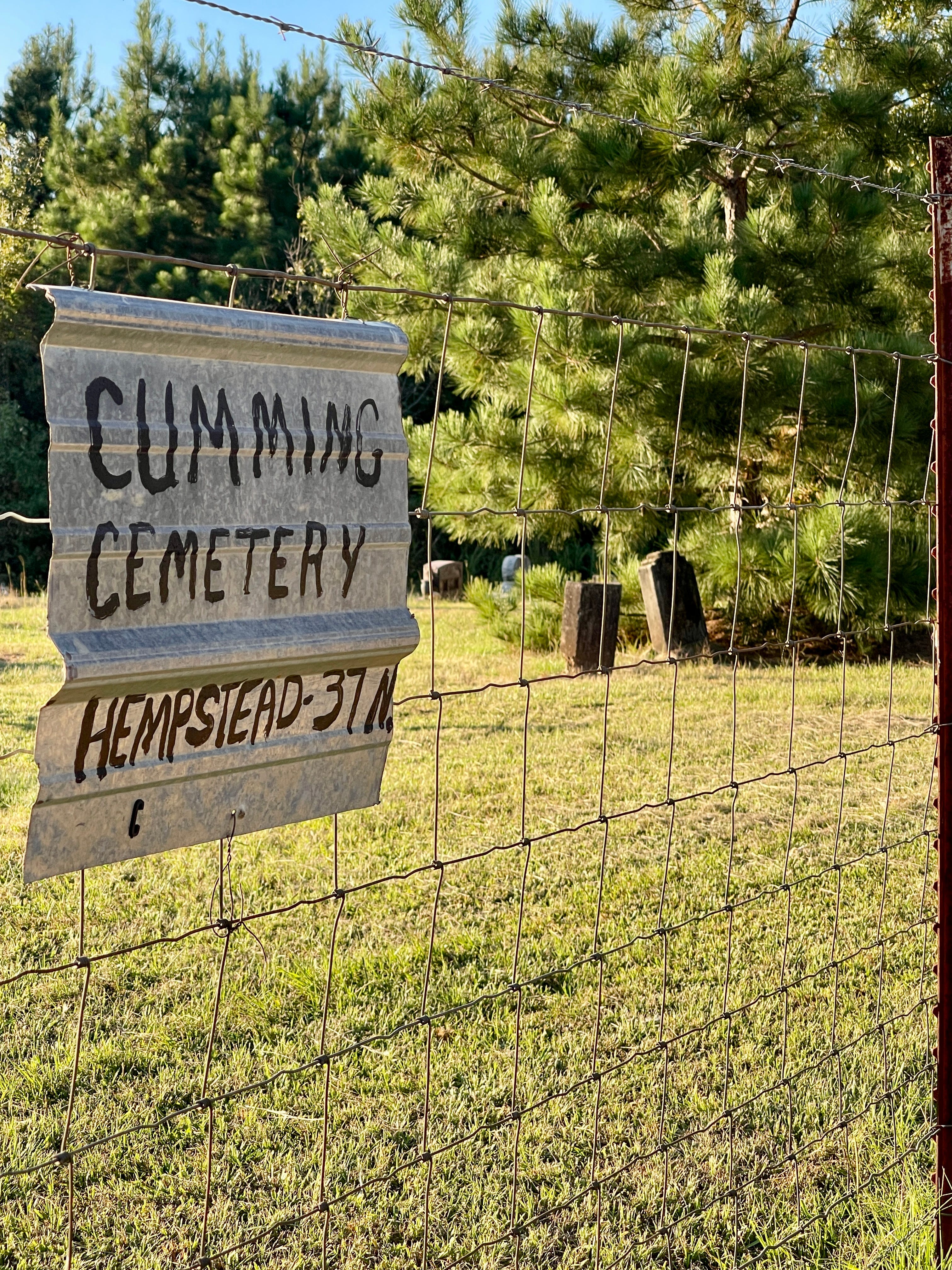
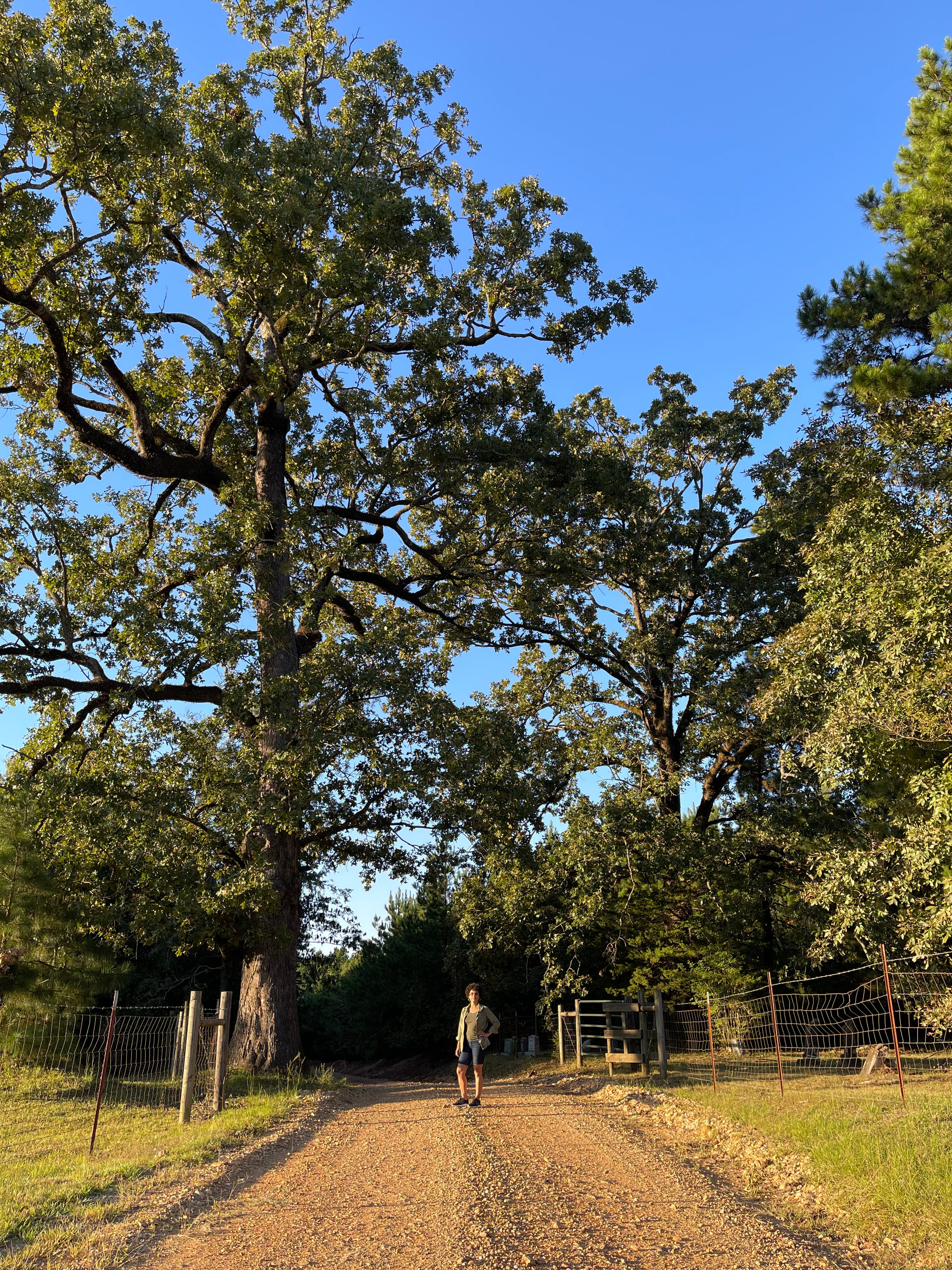
The dirt road wound its way through tall oak and pine trees. Finally, we came to a wide clearing and saw headstones and then a handmade sign that said “Cumming Cemetery”. The cemetery, in fact, was cut in half by the road. We parked and got out. We soon realized that the older headstones were on the right side of the road, so we went through the gate on that side, my husband and I splitting up.
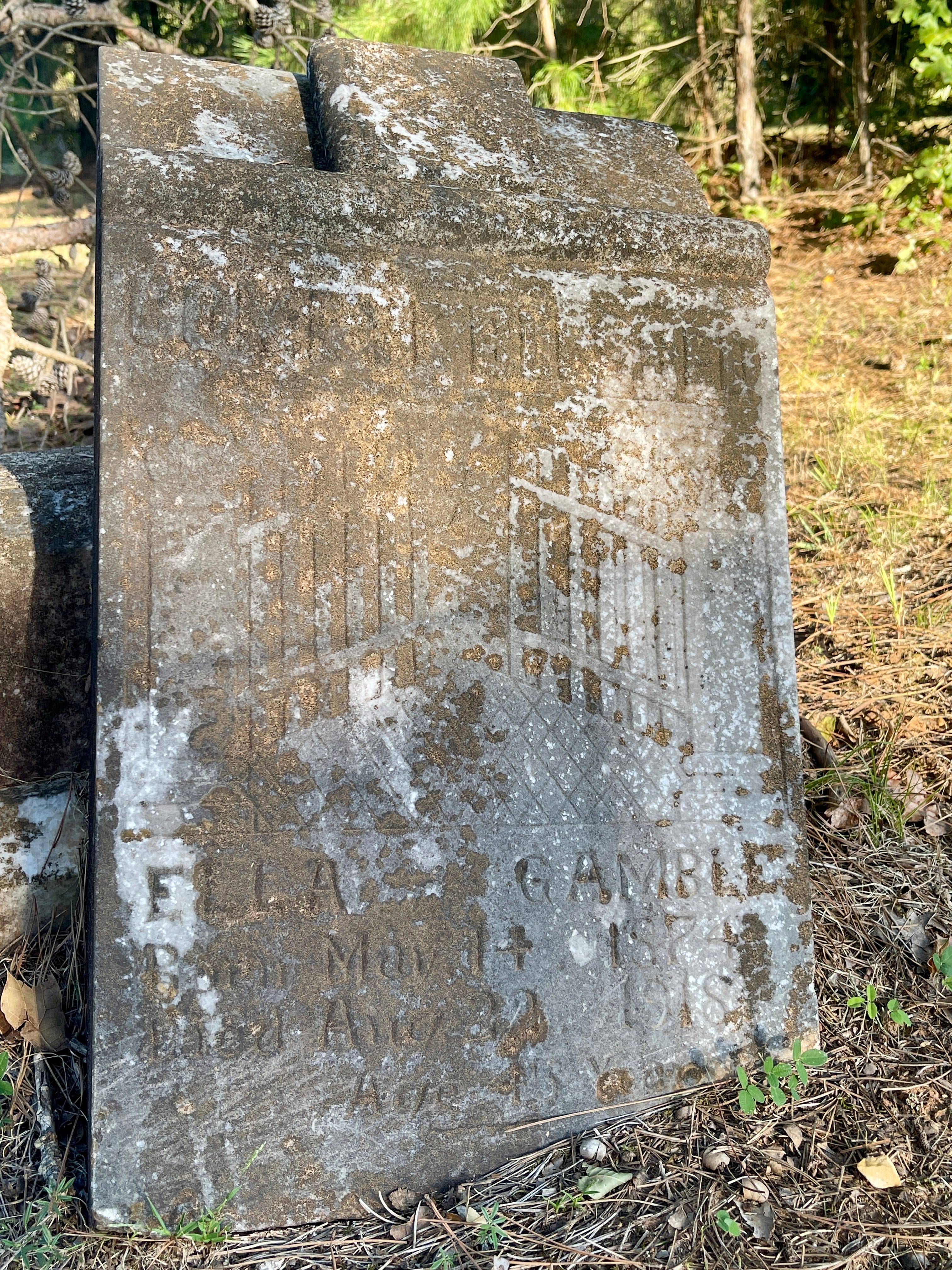
This was a place of tall grass and old cracked stone slabs with fading names carved into them, some falling over, some illegible, some too heavy to lift so we could try to read names. It was hot and humid, still in the upper 80s even though it was now October. Anthills dotted the meadow, spiders scurried, crickets made their grinding, mechanic sound.
So many Gambles were buried here. I did extra research before the trip, hoping to learn where Lizette Gamble was buried. But there was no record of her death, and she was not listed in any Hempstead county cemeteries. But I knew she had lived in Clow and this had been the Black cemetery for the area since the 1860s, so this had to be it. But I would never know exactly where her bones lay.
I wasn’t sure how I felt being here. It felt important, but also eerie to be walking without ceremony on this land that held so many ancestral bones. These headstones could not speak to me, there was no one left. Why was I here, anyway? To find proof that my people were here? I could do that online. Maybe to miraculously locate a marker that someone else had overlooked? What would I really accomplish in person?
But there was something unnameable in the silence. There was something about being here in real time. I felt reverence as I walked where my ancestors had laid their loved ones to rest. Where they had shared stories that were now unknowable, but that some of the oldest trees had heard. And not only was Lizette probably buried here, my 3rd great-grandmother Annie Hannah Gamble was definitely buried here per county records (although I never did find her grave).
After a while, I found myself alone in a copse of small trees, trying to make out the name on a headstone that was leaning over from the push and pull of the roots around it. I couldn’t make it out. I paused and closed my eyes. I thought of my grandmothers whose graves I could not find. And I realized I didn’t need to see their names to speak to them.
Grandmothers. I am here. I am here to honor you. Thank you for passing on your strength to me. Help me to reimagine your lives, to know you better somehow. Grandmothers. I am here. I remember you.
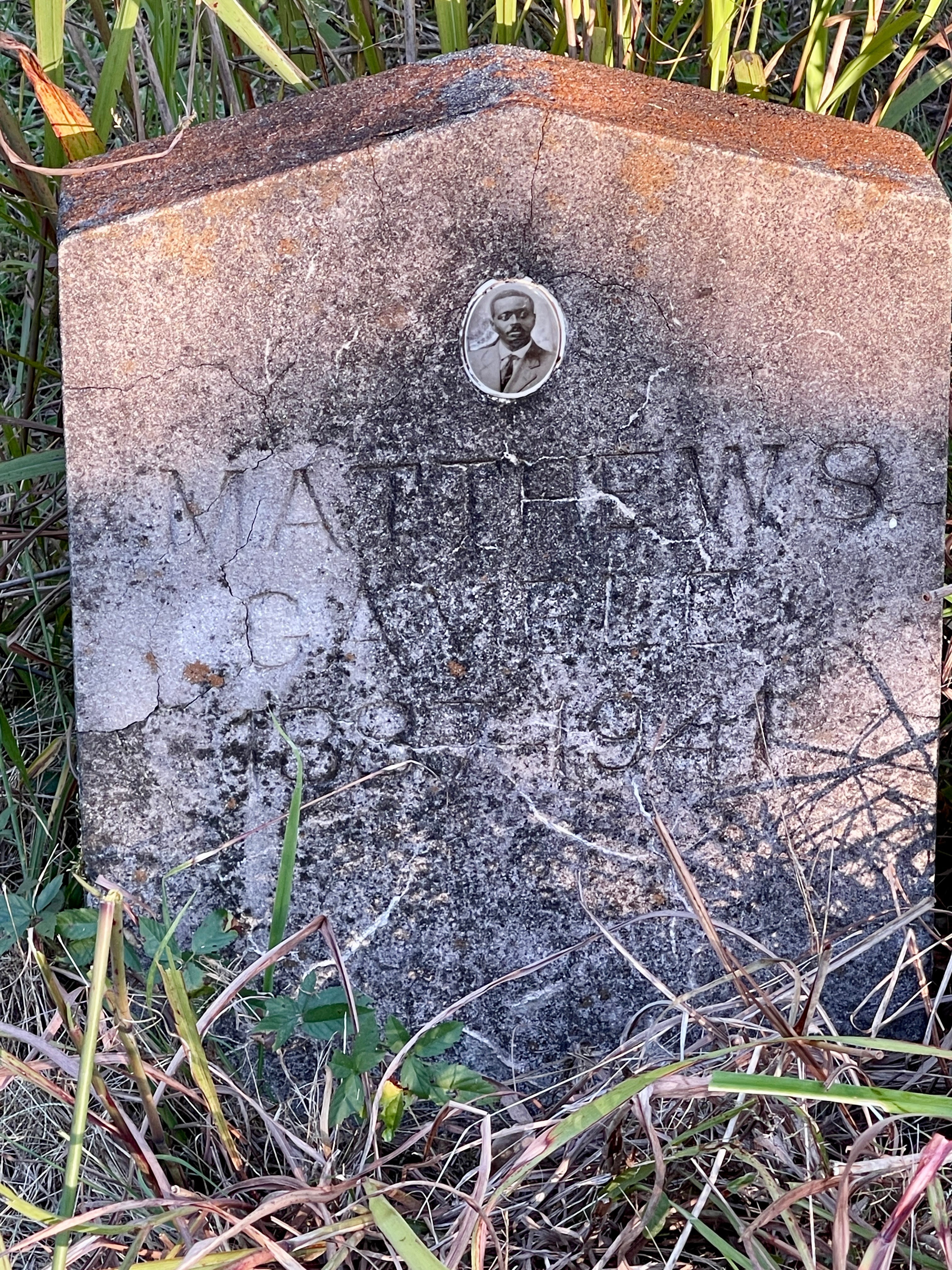
I stood still, letting my whispered words dissipate into the breeze and the unknown seep into my bones. Then I walked back out into the sun and joined my husband, taking pictures of a few graves, including one for Matthew Gamble, a distant cousin who died in 1941. It had a remarkably intact black and white photo of him above his name. I stared at his handsome face and silently paid my respects.
Before we left I stood in the road that divided the cemetery, oak trees on either side, my photographer husband capturing the moment. I felt grateful, filled up in a way that is hard to describe. I had not technically learned anything new. But I had walked the earth that held the bones of my ancestors. I had asked for guidance as I seek to write about and reimagine their lives. I was replanting myself in the soil of where they had lived and died. And in so doing, I was reclaiming the lineage that I had been severed from at birth, yet somehow had never fully lost. A lineage that had waited patiently for me for half a century. And for a moment, I felt like the land had been waiting for me, too.
Comments
Nothing yet. Say the first thing.
Sign in to join the conversation.