
If you haven’t already, I recommend reading Part 1 before continuing below. When finished with this one, be sure to also read the final post.
After a day of haunting the past, it was time to enter the present, to interact with the living. We woke up Sunday morning, had breakfast at our hotel in Hope (which was the current Hempstead County seat, famous for being the birthplace of Bill Clinton) and drove out of town to Macedonia Baptist Church.
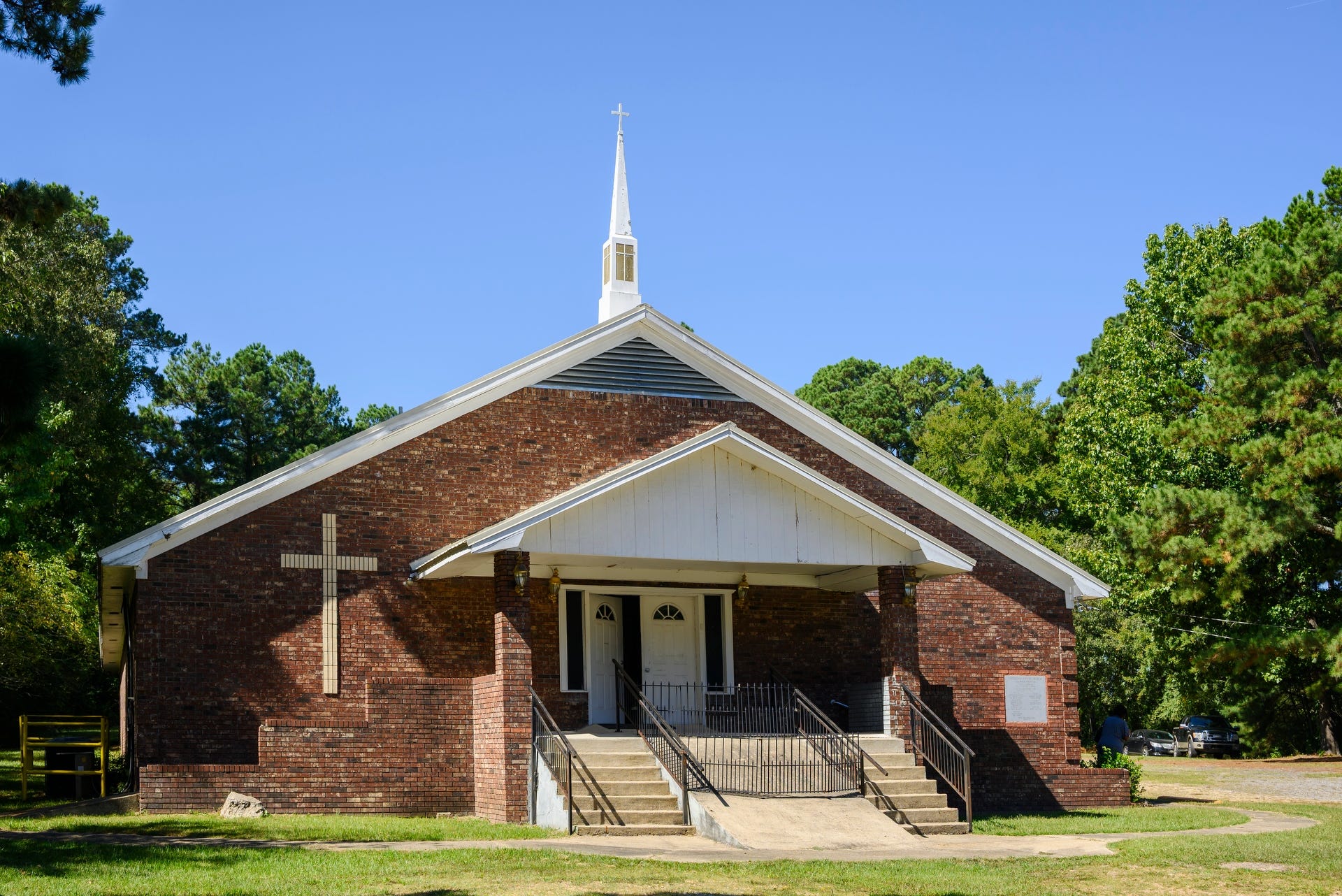
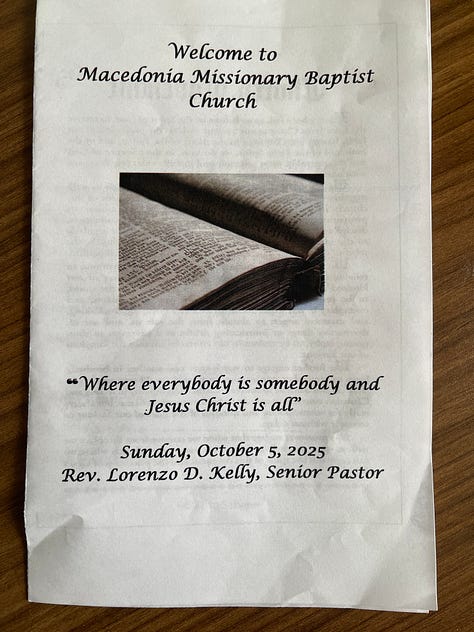
This was the church that my grandmother Ollie Belle Trotter had attended, along with her mother Lilian Johnson, and her aunts Bessie and Mary Johnson. The Johnson sisters and my grandmother all moved to Seattle in the 1950s. Their descendants make up the large family that still lives in the Seattle area.
Founded in 1869 after emancipation, Macedonia has never stopped serving the local Black community. I didn’t realize the church’s longevity until they announced it during the service. I was stunned. Family members had worshipped here for over 150 years. This was where the present and the past intermingled, the connecting thread.
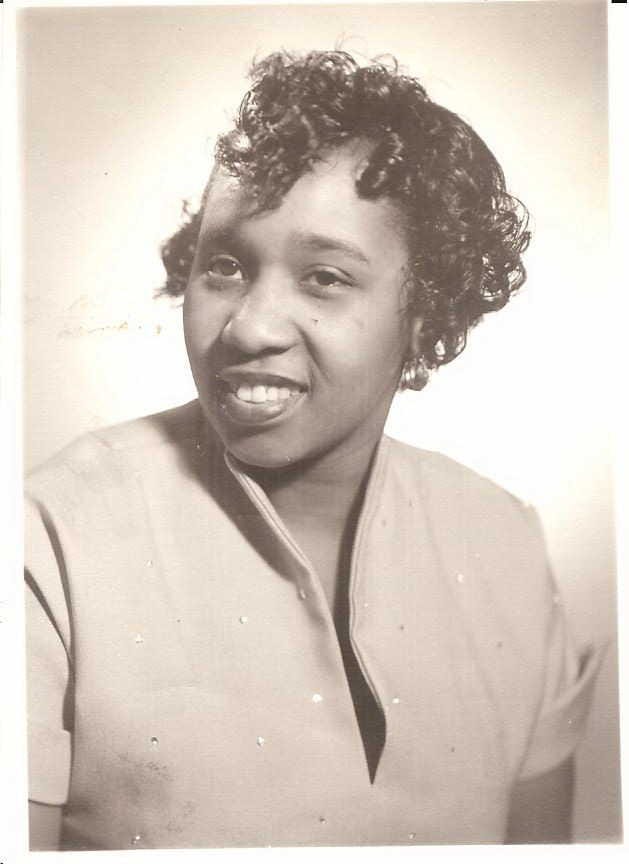
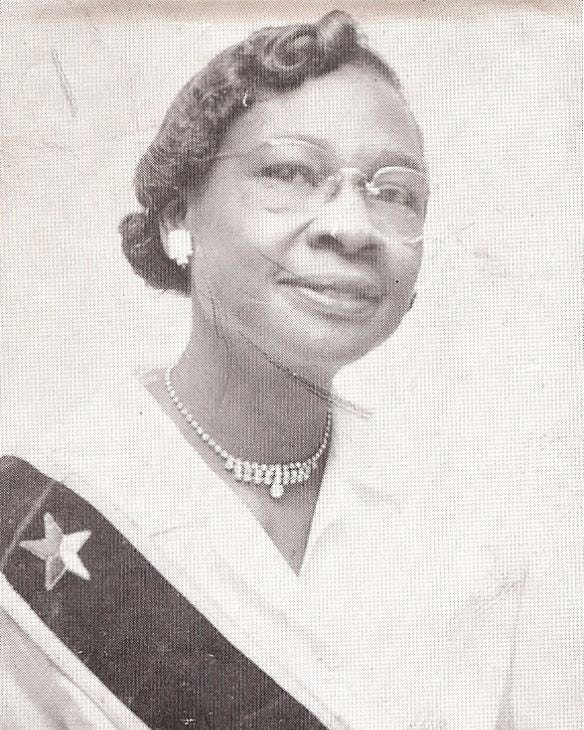
There were maybe 30 people in attendance. Everyone noticed us, we couldn’t hide the fact that we were strangers. We were welcomed and invited to sit closer to the front, so there was no way we could hide in the back. I remembered to ask for Cecil, the man that our cousin in Texas, James Davis, had called a few days ago to let him know we would be coming. Soon a tall man came out with a wide smile, and shook all of our hands as we got settled in our pew. Then a small women’s choir started singing the old, bluesy gospel song from the 1930s “Jesus is on the Mainline” and I was immediately hooked.
0:00
-1:47
It’s hard to describe what happens to me when I attend a Black Baptist church. One thing I’ll say is that I always wonder by the end of the service why I don’t attend them more often. There is an electricity that builds with the call and response, the amens, the gospel music, the rhythmic preaching, the laughter—until I am humming with gratitude and a feeling of devotion, and a sense of the divine.
I find myself praising Jesus and feeling uplifted, certain that the Spirit is hearing and answering our call—feeling like a thirst I didn’t know I had is being quenched. There is a feeling of coming home to where I should be, a place where worship includes music and song, loud expressions of joyfulness, a sense of abandon and surrender, a giving over of oneself to prayer and praise. It feels so embodied to worship in this way— not sitting in silence on my cushion, but instead swaying and singing with others, nodding and laughing, teary and hopeful.
The pastor, Lorenzo D. Kelly, invited us to stand and say where we were from early in the service. My uncle was a little flustered but took up the mantle and announced that we were from Seattle, and that we were descendants of Cheatham, Trotter and Thomas people from Hempstead County. He also mentioned that he was born just down the road in Columbus, but had left the area when he was three years old. People nodded and murmured their approval. Then the service kept unfolding, drawing us in with its music. A woman who appeared to be the music director was playing a double electric piano and belting out Motown-worthy songs while accompanied by the choir and another woman on drums. The pastor also sang on his own at one point and he had a beautiful voice. I needed more gospel music in my life, I noted to myself.
The sermon was about prayer, how it spells relief like the old Rolaids TV ads from my childhood. How do you spell relief? R-O-L-A-I-D-S! Except in this case, he was saying: How do you spell relief? P-R-A-Y-E-R-S! By the end I felt inspired to recommit to daily prayer, to asking regularly for help, support and guidance. I felt like I was supposed to hear this message. My husband was feeling it too, he leaned over to me at one point and said, I think I found my new church.
0:00
-1:35
After the service, people came to talk with us and ask about our family surnames. We mentioned that my grandmother Ollie Belle Trotter had been married to Roy Cheatham, and many remembered Roy and his sister Estherine. A few pointed out that I looked like Estherine, which made me happy. As we were talking we kept an eye out for an elderly gentleman who had stood up during the service and offered a prayer. We had all noticed that his name was Robert Trotter, something that grabbed our attention since my uncle’s name is Robert Trotter Thomas. The local Robert was a deacon of the church, a community elder. We definitely needed to talk to him.
I looked around but didn’t see him. But then my uncle suddenly spotted him and made his way quickly over to that side of the church, me trailing behind. He introduced himself and told the deacon his name, which greatly surprised him. Wow - you’re another Robert Trotter? Well I’ll be! Turned out Deacon Trotter was in his 80s and still sharp as a tack. He remembered not only my grandmother, but also her father Joe B. Gamble Trotter, and even more amazingly, the couple who had adopted and raised Joe B., Jack and Mary Jane Totter.
I pulled out my iPad and started showing photos of my grandmother, Joe B. and Jack and Mary Jane Trotter. Look at that - it’s uncle Jack! said one man, an astonished look on his face. Everyone started gathering around, marveling at the photos, asking how I got them and if I could immediately start texting them to everyone. Which I did.
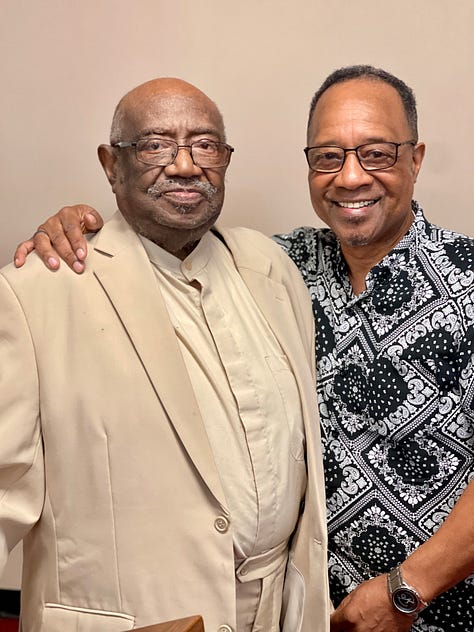
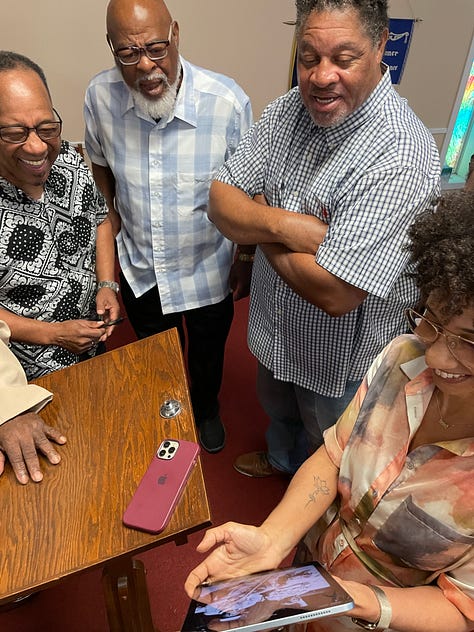
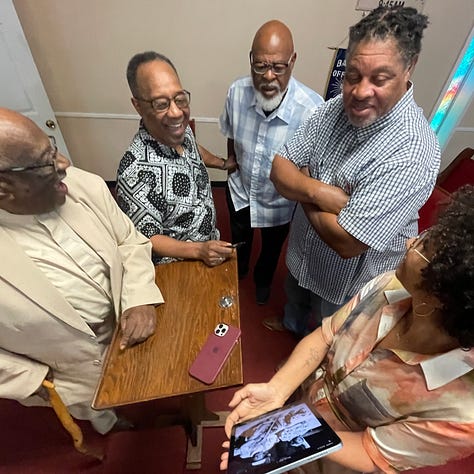
We weren’t sure exactly how everyone in the building was related, but it was clear these were all cousins, descendants of the people who had been freed from slavery and first lived in Clow. Over time those descendants spread out through the county—my more recent ascendants living in nearby Columbus. I was with family. My heart was singing.
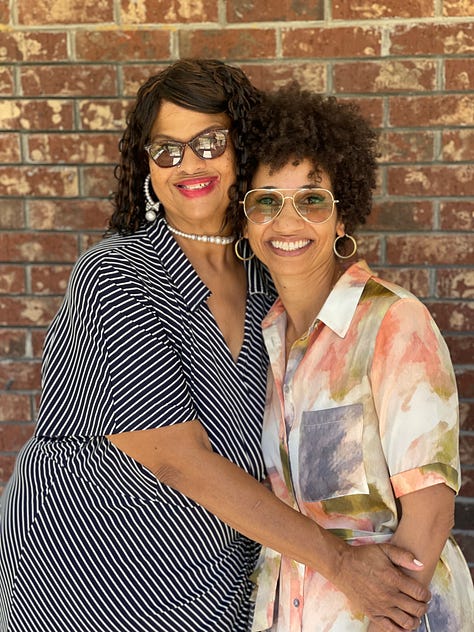
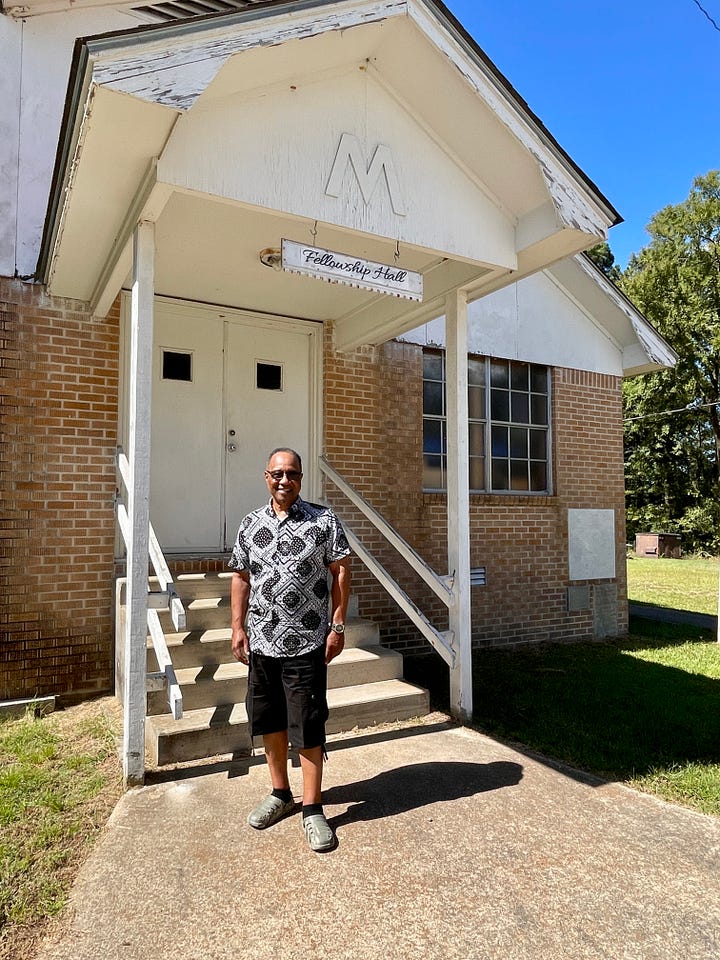
After promising to keep in touch with Deacon Trotter, we stayed inside the church chatting with the pastor and his wife, and a few others who lingered, until we were nearly the last ones there. We then took photos outside the church with a lovely and friendly church member.
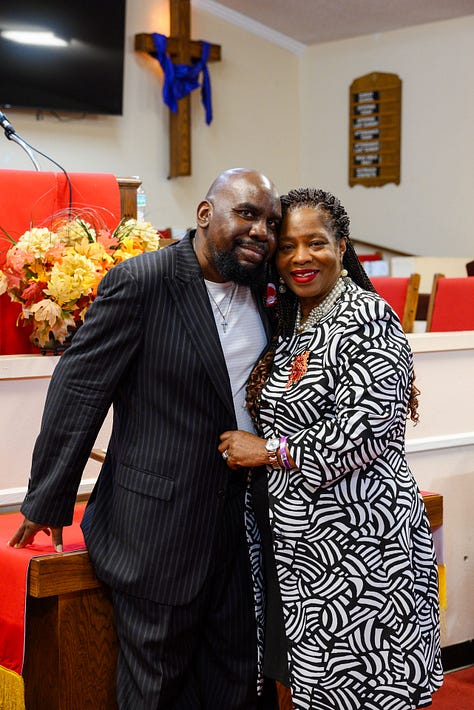
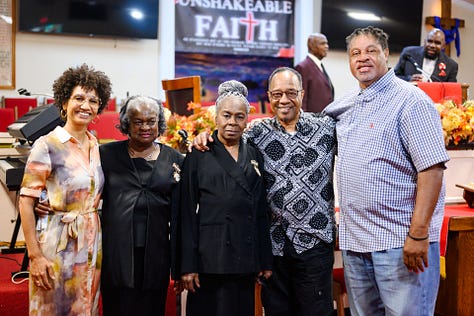
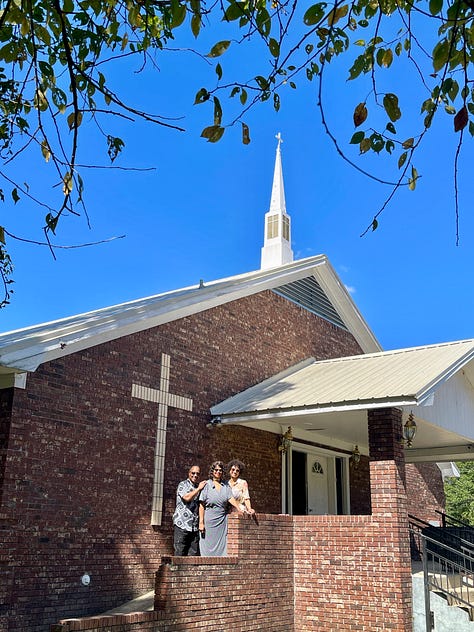
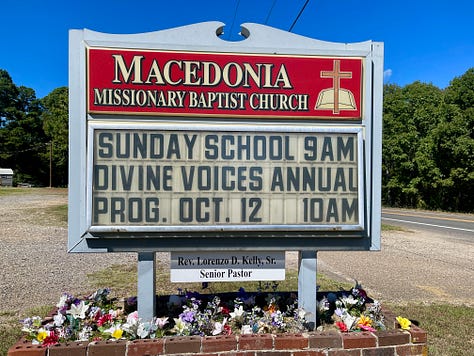
Macedonia is now housed in a newer building, but the previous church still stands behind it. We wandered over to take a look, and saw that family names were etched into stone markers near the front door that honored former church deacons. That building had officially opened in 1949, which meant that my uncle Robert would have certainly gone to church there as a two year old, along with my birth father Willie Ray who would have been a babe in arms.
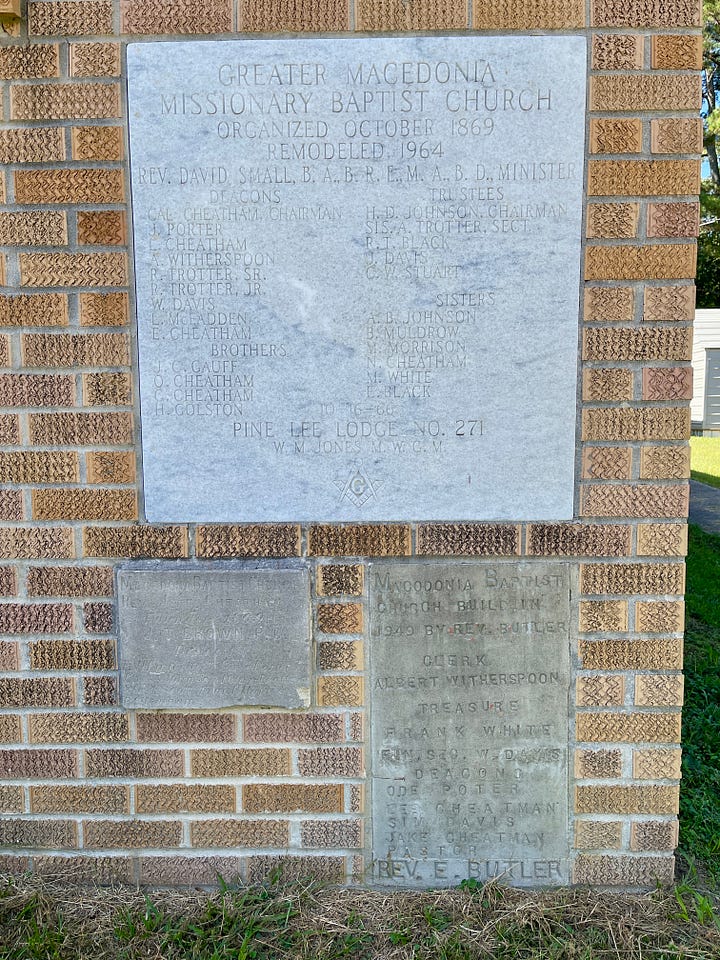
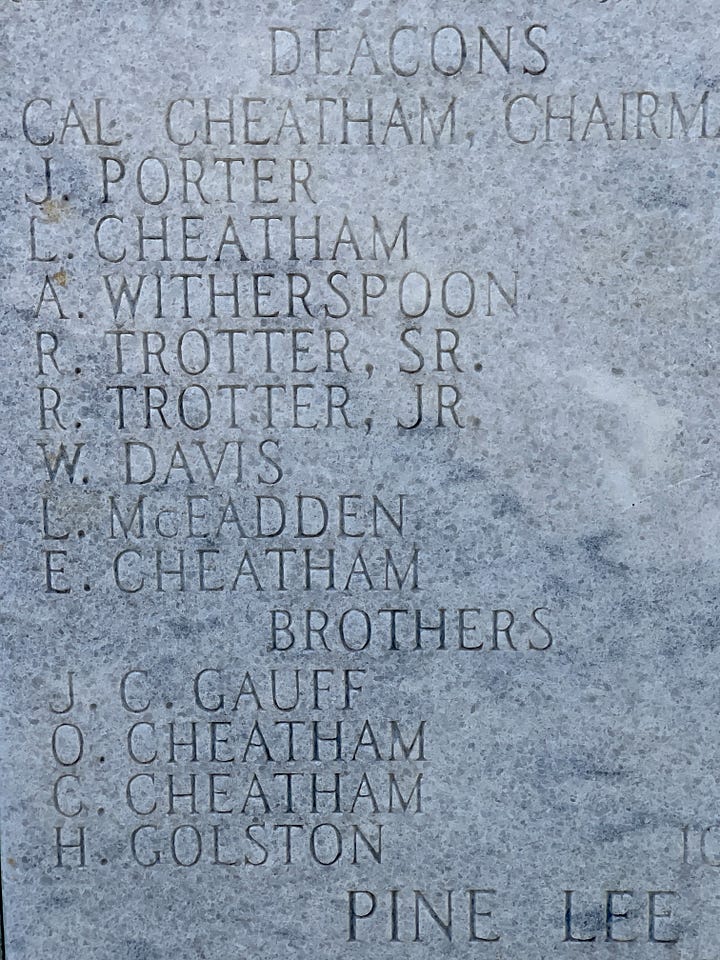
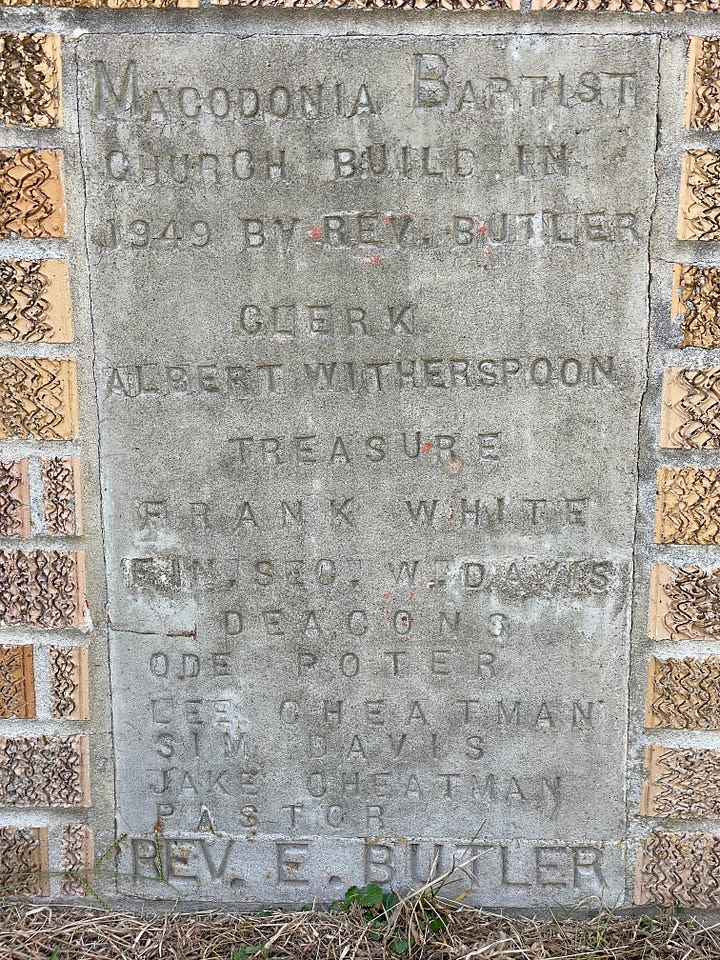
Nearly 2 and half hours after we first arrived, we pulled out of the church parking lot and onto the highway, headed back to Hope for lunch. I marveled at how fortunate we were to have attended church on the same day as Deacon Trotter. He now lived in Texarkana and only went to Macedonia once a month, if that.
I thought back to our dinner with cousin James Davis in Texas a few days prior. James had grown up in Hempstead County, and had been a member of the church. I had first spoken to James five years ago, after successfully identifying my birth father using DNA matching and genetic genealogy. Uncle Robert had mentioned back then that James was also into family history and put us in touch.
James had prayed over the phone to welcome me into the family, and he prayed for all of us the first night of this trip, just before we ate dinner together. He had asked for the way to be made smooth as we traveled to Arkansas, for us to find a way to know more about our forebears. And it was clear to me now that his prayers had been answered. The way everything had flowed yesterday during our explorations of Washington and Clow. The way we had accidentally picked the right day to come to church and meet someone who was an invaluable connection to the past.
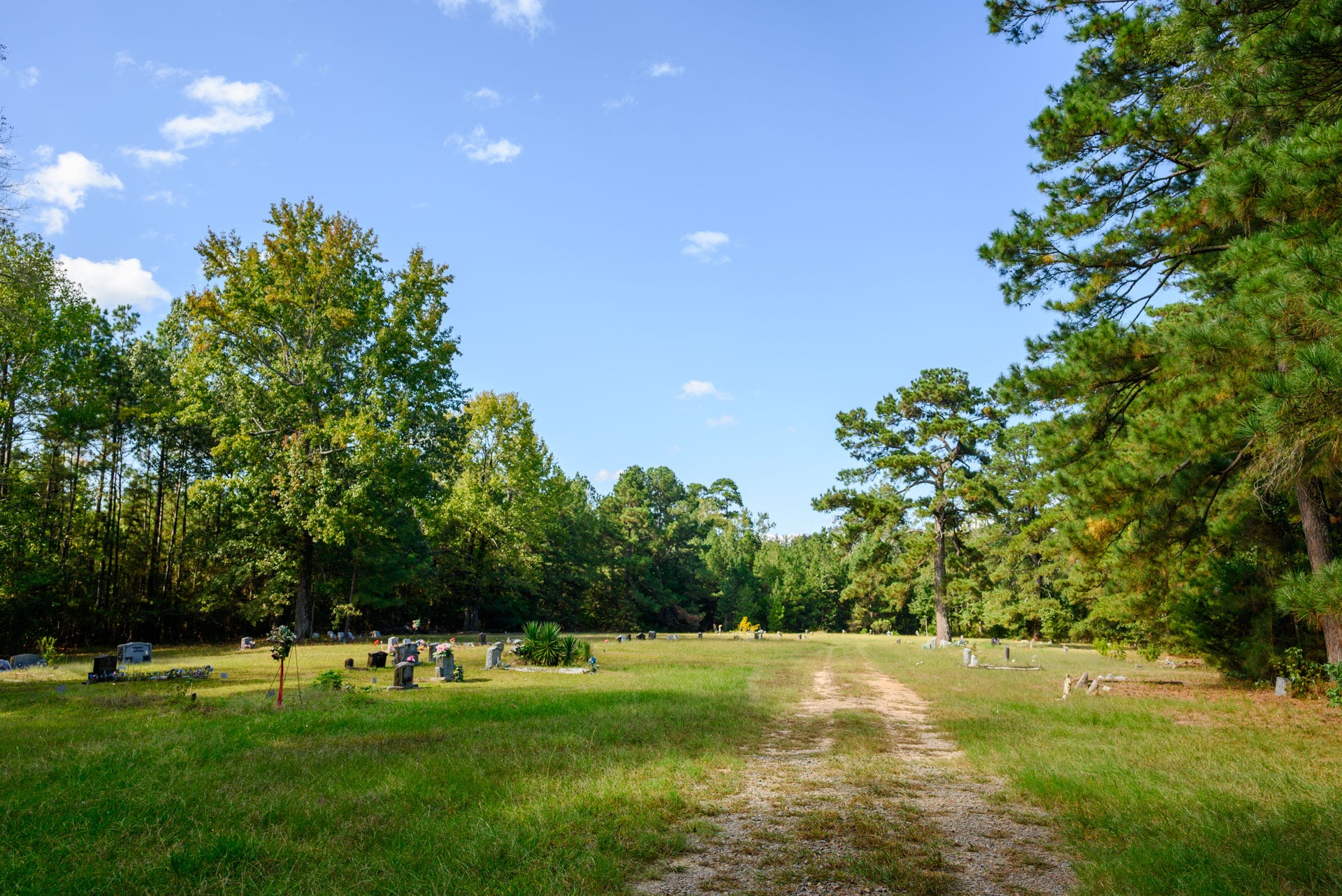
After lunch we returned to Macedonia, but this time went across the highway to the cemetery. Here were buried Trotters, Cheathams and people with other last names I recognized. I found the graves of Jack and Mary Jane Trotter and paid my respects. James had sent me their photo five years ago, and I never tired of looking at it. It had even inspired me to write a poem. They were sharecroppers, living a hard life that showed on their worn leathery faces, and equally hard worn shoes and clothing. Mary Jane had lived to be 107 years old.
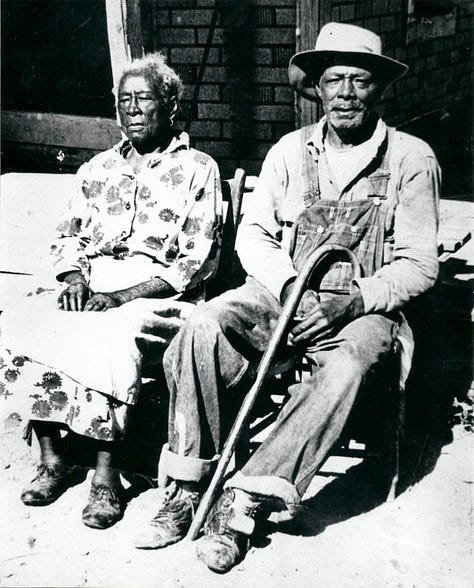
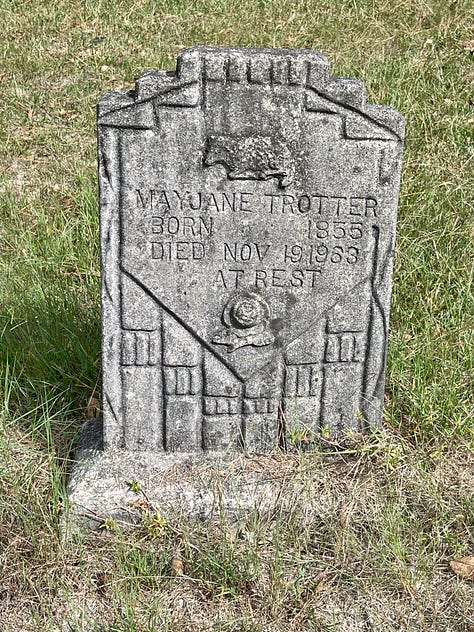
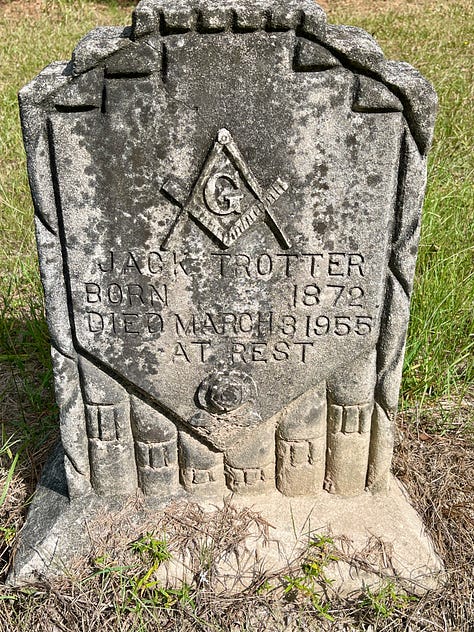
Jack and Mary Jane had taken in my great-grandfather Joe B. when he was baby, for reasons unknown—a mystery I’m still trying to solve. They later adopted him. Rumor has it that Joe B. was a player and a bad boy, eventually being “kicked out of the Gamble family” according to James, who was one of Joe B.’s grandchildren. Joe B. was a true rolling stone. And he loved the ladies. The photo I have of him shows a handsome man dressed in dapper clothes and a jaunty fedora hat, with a cigar in one of his meaty hands. He had fathered children with many different women. The old church members apparently used to say: Wherever he lay his hat was home—and when he left, she was pregnant.
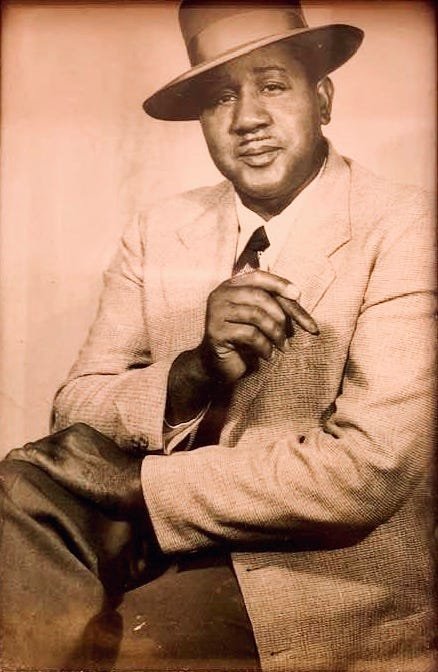
I liked that Joe B. and I had adoption in common. And I was proud that I made the connection that we descended from the Gamble family, through DNA matches and conversations with a Gamble family historian who confirmed that Joe B. Trotter was originally Joe B. Gamble. This was new information for my immediate biological family in Seattle.
Standing in front of the graves of the people who raised Joe B. felt meaningful. They became more real, especially after meeting people who remembered them when they were alive. The past was drawing nearer to me, I felt like I could almost reach out and touch it. And I somehow felt more real now too, standing here in Arkansas. I knew where I came from. Finally.
Comments
Nothing yet. Say the first thing.
Sign in to join the conversation.