
There is something that happens when a human being withdraws from the ordinary channels of stimulation. When food is withheld and pleasure set aside and the constant stream of sensation that fills normal life is reduced to something close to silence. The body does not simply grow hungry or restless, though these arise. Something else occurs. Something the wisdom traditions of every continent have recognized and built ritual structures around. Something our overstimulated modern life makes nearly impossible to notice.
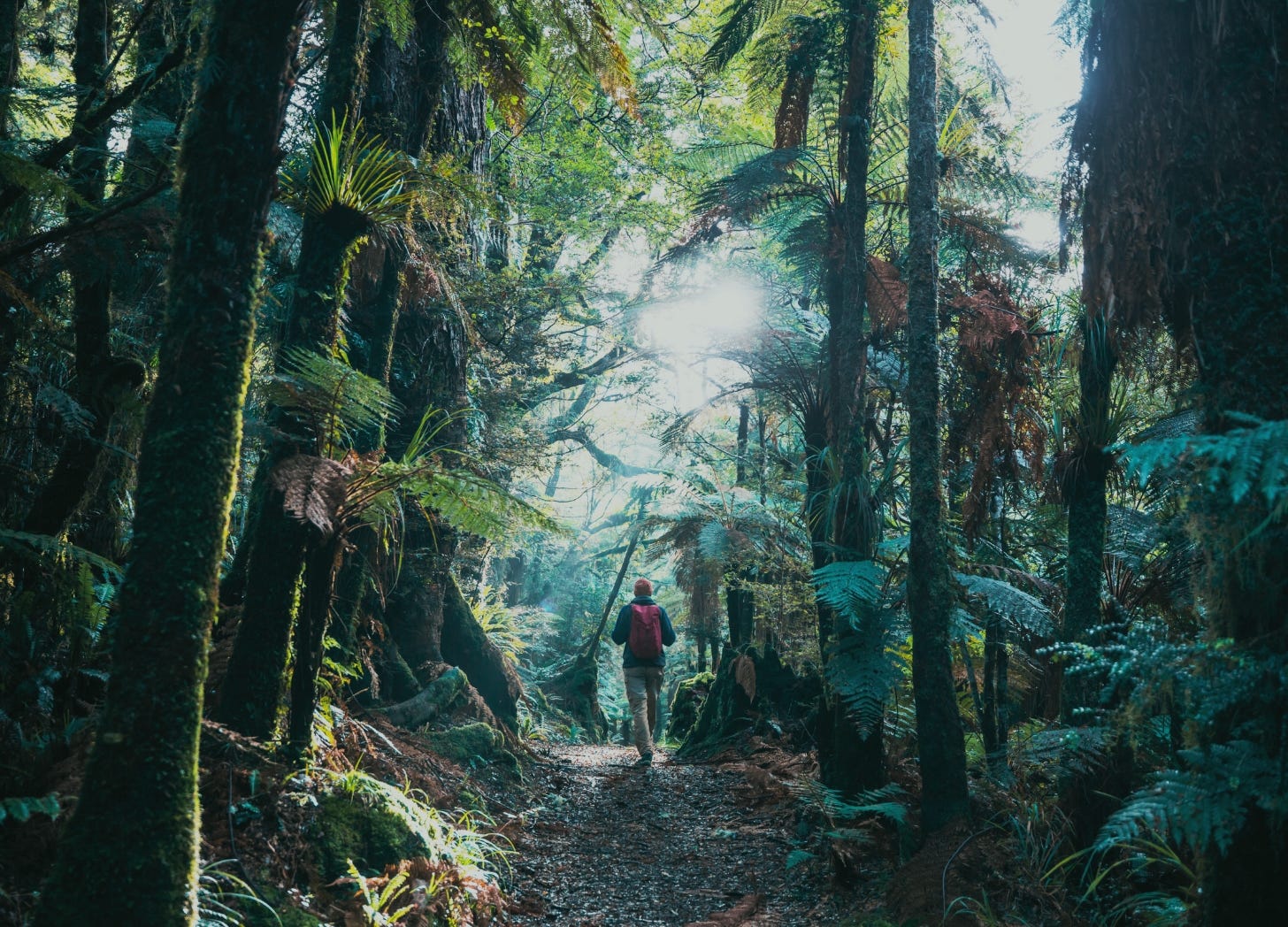
In 2015 I undertook a fourteen-day fast in the jungle outside Iquitos, Peru, working with the Shipibo people. The practice involved abstaining from food, from pleasure, from conflict, from sex (or masturbation), from physical exertion, from conversation, from everything that might add unnecessary sensory input to the nervous system. As an overachiever, and someone truly dedicated to “having the full experience a true shaman might,” I had begun this process 3 months prior, eliminating sugar, salt, sex, caffein, meat, added fats, and much more from my life. Once in Peru, in the jungle at the camp, Amazonian purgatives emptied my body of toxins and blockages at levels of intensity I didn’t expect. The point was to prepare my body for what was to come. Before you can receive, you must become capable of receiving. That capacity depends on creating an interior spaciousness that ordinary life, with its constant filling, never permits.
We’re living in a world we can’t feel, numb to the vastness of experience right in front of us.
When I broke my water fast by eating a cucumber, the experience was so far outside anything I had known that I find myself, a decade later, still returning to the memory of it. The flavor of the cucumber exploded across my tongue with dimensions of flavor I had no framework for. Sweetness and salt and something mineral, and beneath it a green aliveness I can only call the taste of the plant itself. Not cucumber as backdrop. Cucumber as cucumber. I had eaten thousands of cucumbers in my life and never actually tasted one the way I tasted it that day.
What becomes obvious is that too much sensory input causes a decay in sensory awareness and perception. This extends from our muted awareness of our own body, our thoughts, emotions, and sensations, to awareness of others, and awareness of our environment. It is impossible to be aware of something when our system is overwhelmed with input. We, out of a necessity of brain function, become numb to ourselves, each other, and our world.
What stays with me now, what I have been sitting with for years, is a different question. Not what happens to sensation when sensitivity returns, but what becomes possible when it returns. What capacities come online. What perceptions become available. What ways of being in relation to other people and to the world open up when the organism is no longer running at diminished capacity.
If you study the world’s wisdom traditions with any seriousness, you begin to notice a pattern that repeats with remarkable consistency. The seeker withdraws. Moses on Sinai, Jesus in the desert, the Buddha beneath the bodhi tree, the shaman in initiatory process, the mystic in the cave, the yogi in retreat, the vision quester alone on the mountain. The withdrawal involves some form of constraint, some deliberate reduction of ordinary input, some period of what the world would call deprivation but what the many traditions understand as a form of clearing. And from this clearing, something emerges. A different capacity. A way of perceiving and knowing that was not available before.
Awareness is the common denominator in all of these stories and wisdom traditions.
What interests me is how consistent this pattern is across cultures that had no contact with one another. The Shipibo and the Desert Fathers, the Zen monks and the Plains Indians, the Kabbalists and the Sufis, these cultures did not share notes. They did not read each other’s manuals. Yet they converged on something similar. A recognition that ordinary consciousness is occluded. That we move through our lives perceiving far less than we are capable of. That certain practices of reduction can restore capacities that have been present all along but drowned out.
Every guru, every enlightened master, every wisdom keeper across every tradition has taught the same thing through their unique cultural and historical context. This is true because the ailment humans live with remains the same, and the answer remains the same, we are just too blind to see it.
People chase different masters, different cultures, different traditions, but the principle beneath them is identical.
Become sensitive to your soma and you become sensitive to the world. From this, everything else follows.
This is not one path among many. This is the path that every path points toward when you strip away the cultural clothing.
The somatic pioneers of the twentieth century arrived at this understanding through many different means. Reich tracking the movement of what he called life energy hour after hour in his laboratory, training his perception to register phenomena that most practitioners never notice. Feldenkrais slowing movement down to such infinitesimal increments that the nervous system could detect differences it had been blind to for decades. Gendlin teaching people to attend to the vague, bodily felt sense of a situation, the meaning that lives in the organism before and beneath anything the mind can articulate. They were not thinking in the vocabulary of mystical withdrawal. But they were working with the same fundamental insight. Human beings possess capacities for perception and response that normal life systematically suppresses. These capacities can be recovered through practices that interrupt the usual patterns.
This brings me to the question I have been circling for years. If the capacity for aliveness, for full sensory and emotional presence, can be restored through practices of reduction and sensorimotor learning, this implies that ordinary life is characterized by a systematic diminishment of that capacity. We are moving through our days in something like a trance of numbness. Perceiving and feeling far less than we are capable of. And this diminishment is not incidental. It is being actively produced.
The ultimate goal for humanity is to live this way globally. For each person to realize this for themselves as the answer that has never changed. Not as belief or philosophy but as lived experience. A body awake to itself is awake to others. A body numbed to itself is capable of things that a fully alive body could never do.
Comments
Nothing yet. Say the first thing.
Sign in to join the conversation.