
We've all heard the recent discourse trying to assert that transgender and nonbinary identities are somehow a new phenomenon being pushed on youth, completely discrediting the vast history of nonbinary and gender diverse traditions globally. For October’s LGBTQIA2S+ history month, we honored many of those diverse traditions:
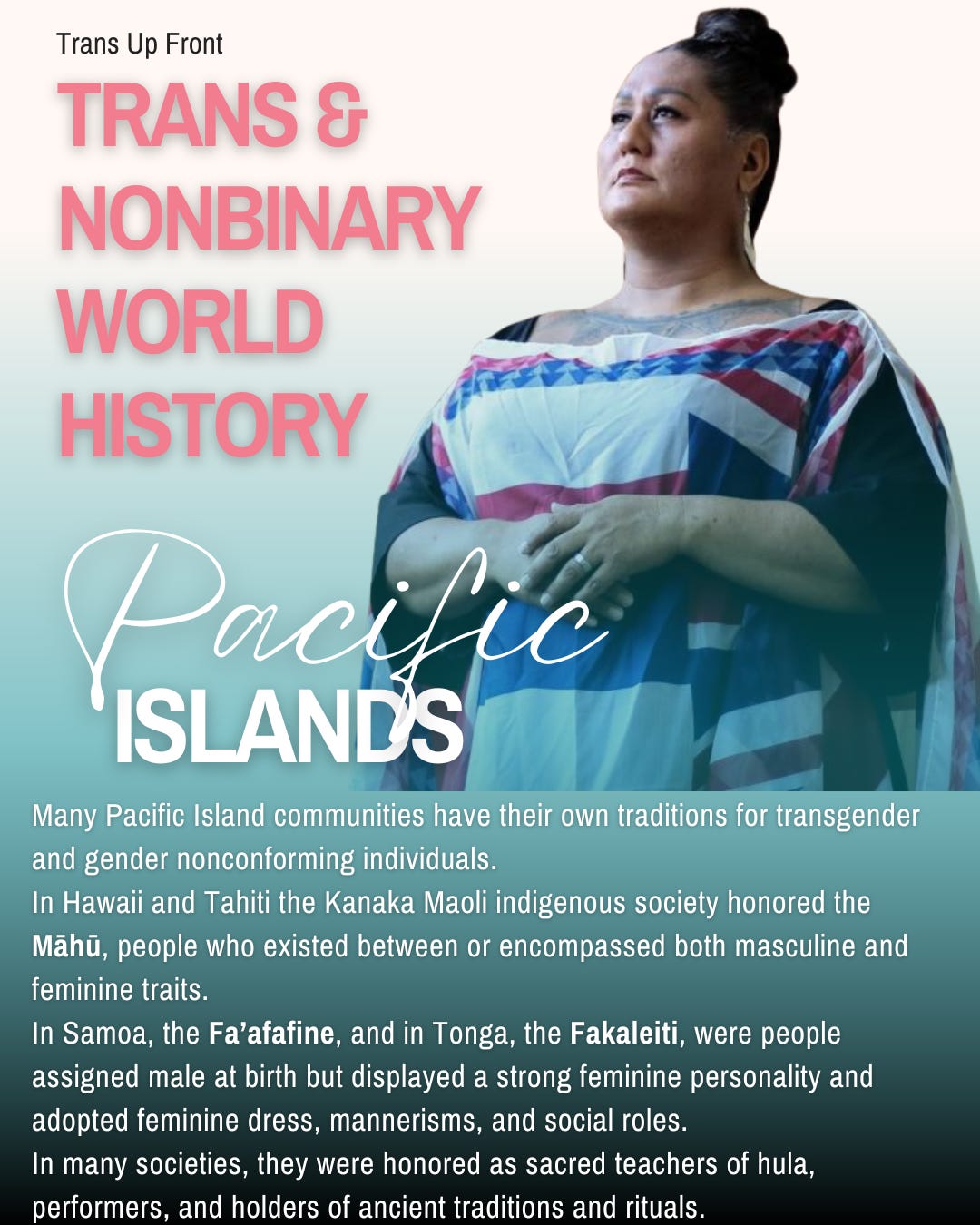
Many Pacific Island communities have their own traditions for transgender and gender nonconforming individuals.
In Hawaii and Tahiti the Kanaka Maoli indigenous society honored the Māhū, people who existed between or encompassed both masculine and feminine traits.
In Samoa, the Fa’afafine, and in Tonga, the Fakaleiti, were people assigned male at birth but displayed a strong feminine personality and adopted feminine dress, mannerisms, and social roles.
In many societies, they were honored as sacred teachers of hula, performers, and holders of ancient traditions and rituals.
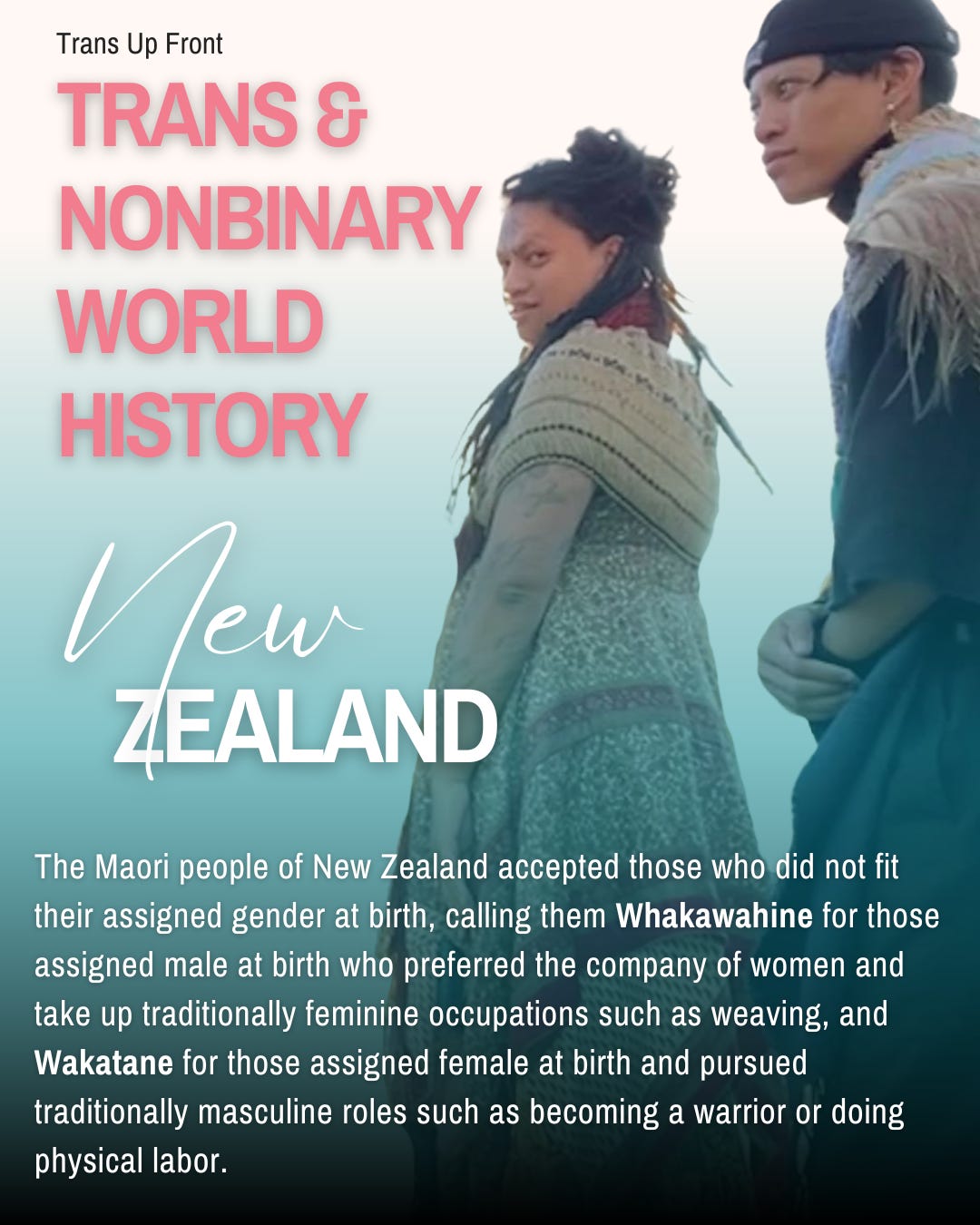
The Maori people of New Zealand accepted those who did not fit their assigned gender at birth, calling them Whakawahine for those assigned male at birth who preferred the company of women and take up traditionally feminine occupations such as weaving, and Wakatane for those assigned female at birth and pursued traditionally masculine roles such as becoming a warrior or doing physical labor.
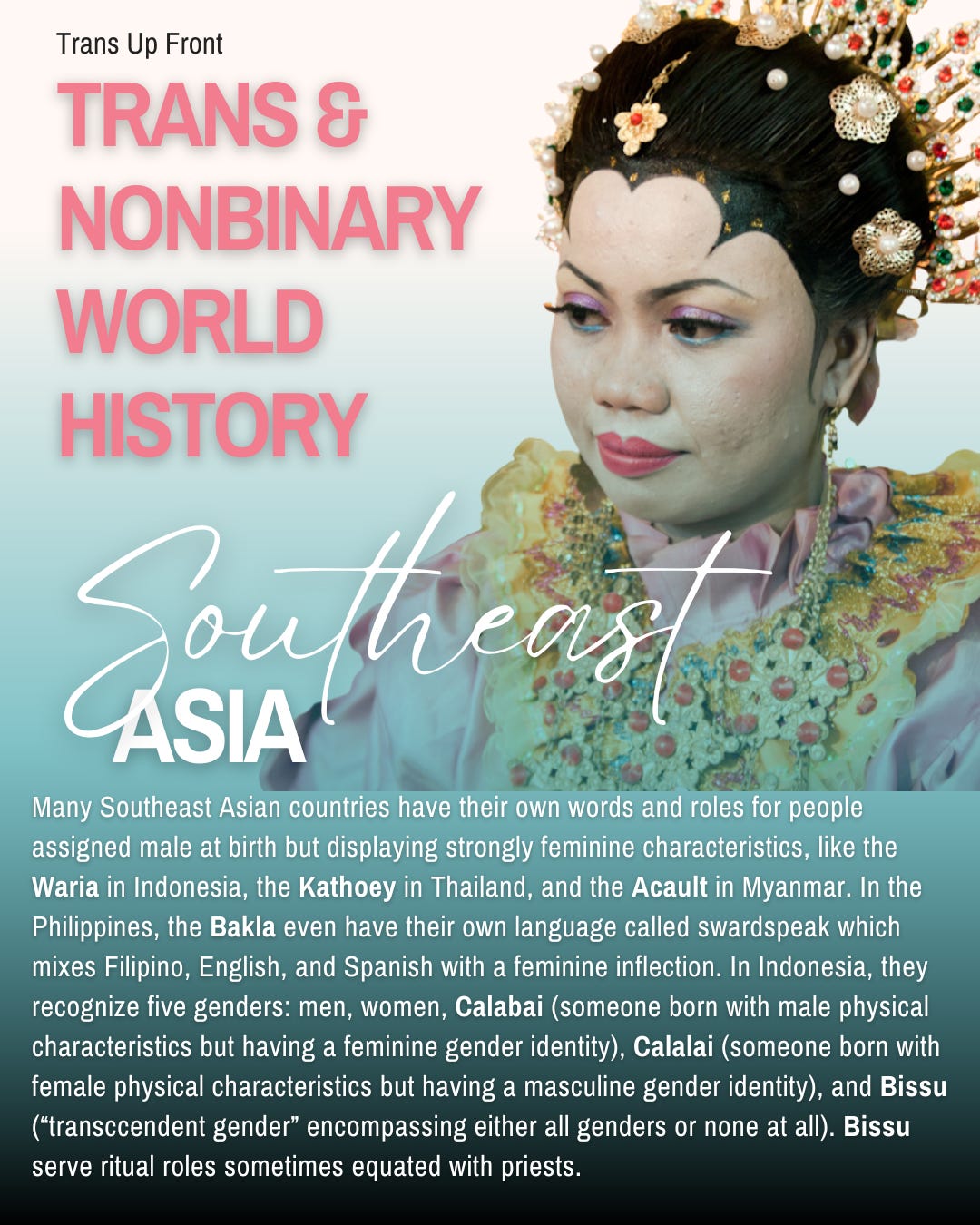
Many Southeast Asian countries have their own words and roles for people assigned male at birth but displaying strongly feminine characteristics, like the Waria in Indonesia, the Kathoey in Thailand, and the Acault in Myanmar.
In the Philippines, the Bakla even have their own language called swardspeak which mixes Filipino, English, and Spanish with a feminine inflection.
In Indonesia, they recognize five genders: men, women, Calabai (someone born with male physical characteristics but having a feminine gender identity), Calalai (someone born with female physical characteristics but having a masculine gender identity), and Bissu (“transccendent gender” encompassing either all genders or none at all). Bissu serve ritual roles sometimes equated with priests.
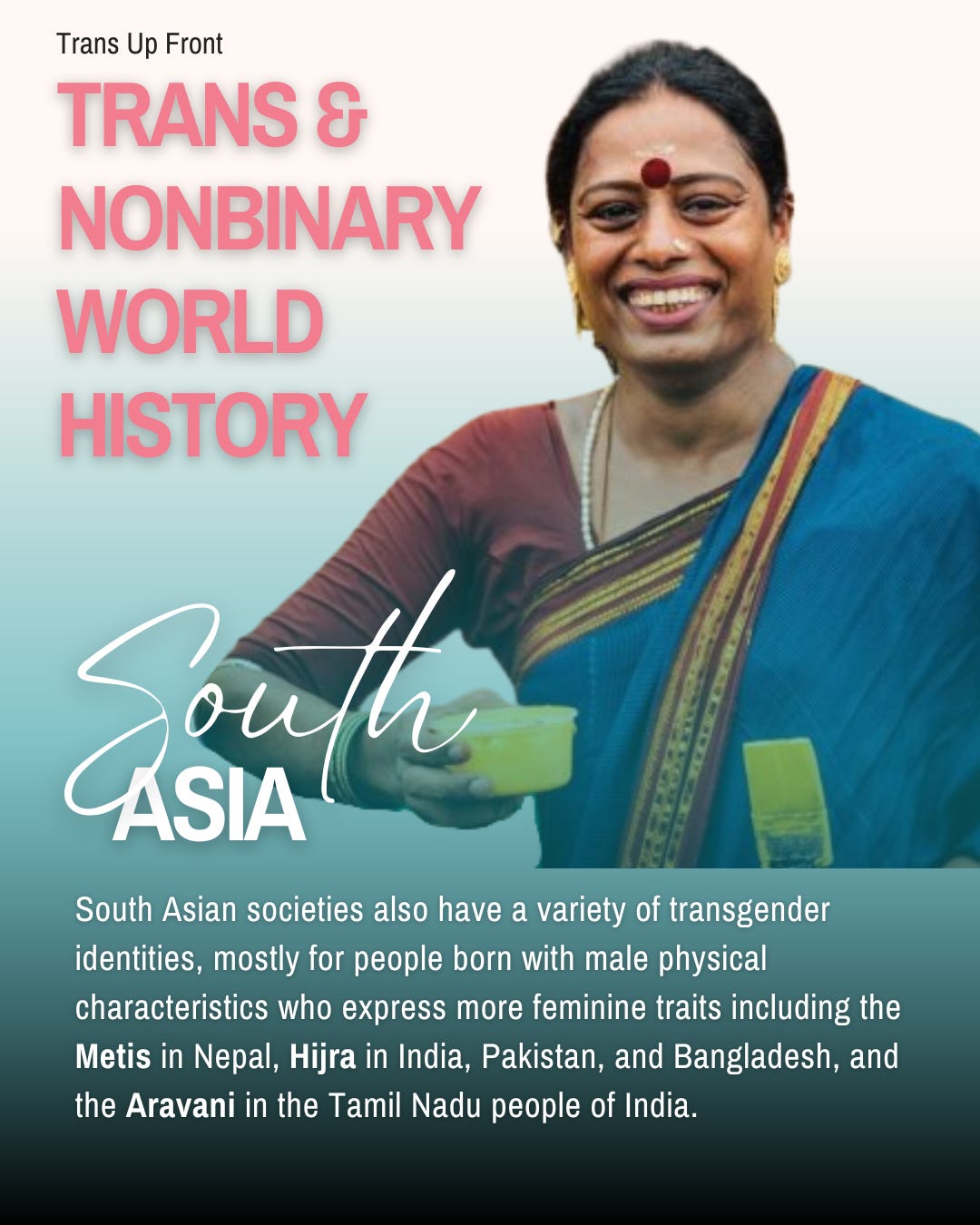
South Asian societies also have a variety of transgender identities, mostly for people born with male physical characteristics who express more feminine traits including the Metis in Nepal, Hijra in India, Pakistan, and Bangladesh, and the Aravani in the Tamil Nadu people of India.
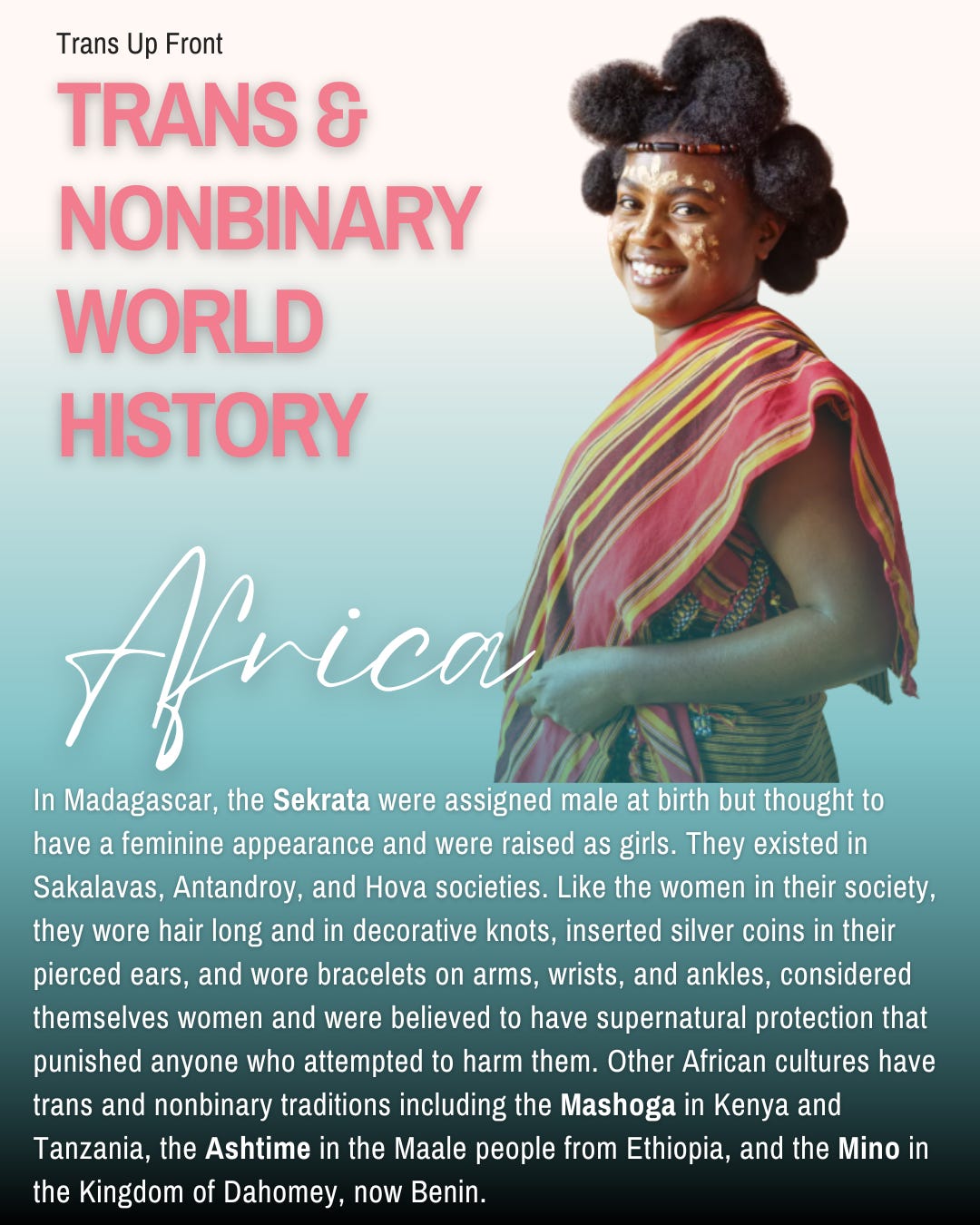
In Madagascar, the Sekrata were assigned male at birth but thought to have a feminine appearance and were raised as girls. They existed in Sakalavas, Antandroy, and Hova societies. Like the women in their society, they wore hair long and in decorative knots, inserted silver coins in their pierced ears, and wore bracelets on arms, wrists, and ankles, considered themselves women and were believed to have supernatural protection that punished anyone who attempted to harm them.
Other African cultures have trans and nonbinary traditions including the Mashoga in Kenya and Tanzania, the Ashtime in the Maale people from Ethiopia, and the Mino in the Kingdom of Dahomey, now Benin.
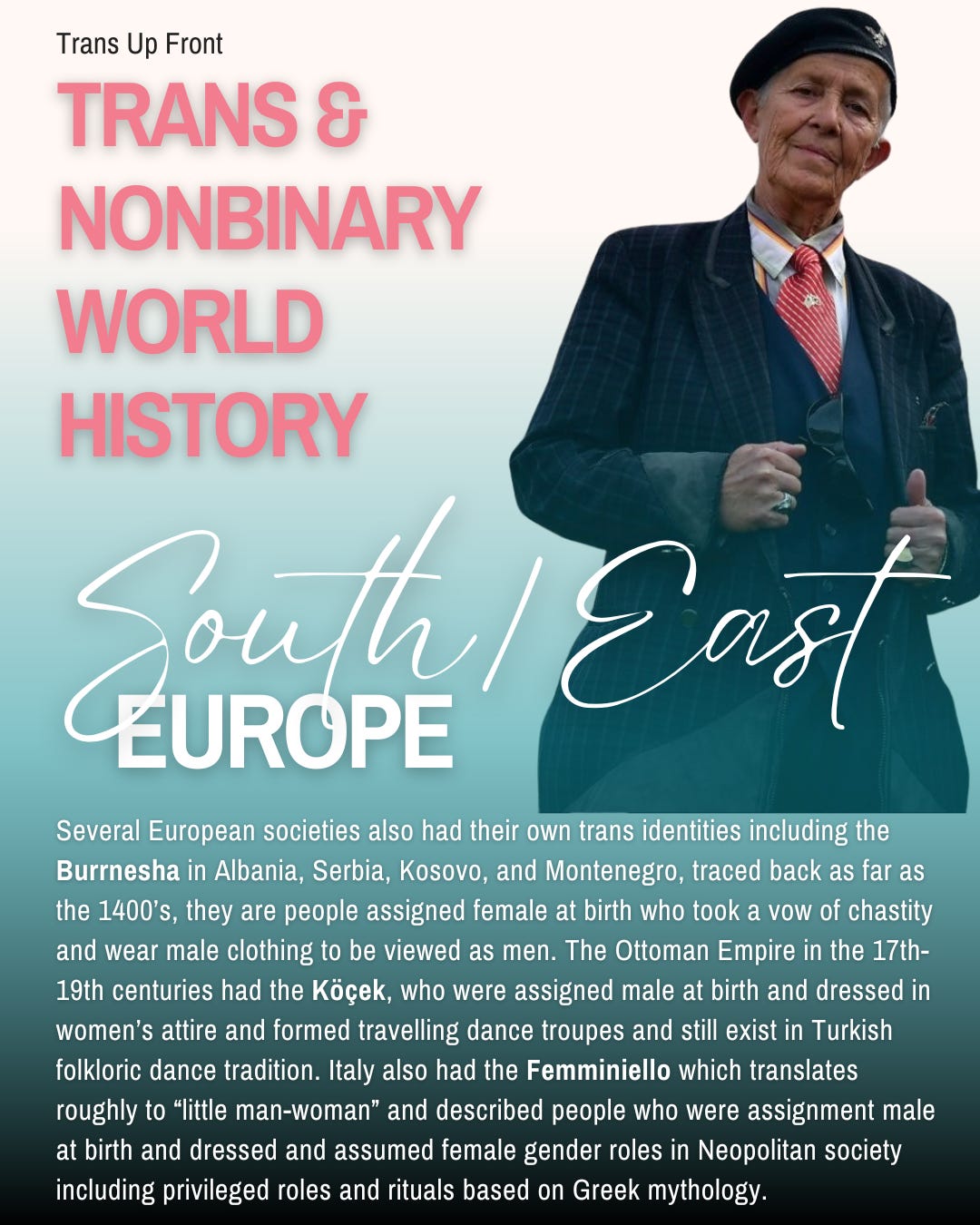
Several European societies also had their own trans identities including the Burrnesha in Albania, Serbia, Kosovo, and Montenegro, traced back as far as the 1400’s, they are people assigned female at birth who took a vow of chastity and wear male clothing to be viewed as men.
The Ottoman Empire in the 17th-19th centuries had the Köçek, who were assigned male at birth and dressed in women’s attire and formed travelling dance troupes and still exist in Turkish folkloric dance tradition.
Italy also had the Femminiello which translates roughly to “little man-woman” and described people who were assignment male at birth and dressed and assumed female gender roles in Neopolitan society including privileged roles and rituals based on Greek mythology.
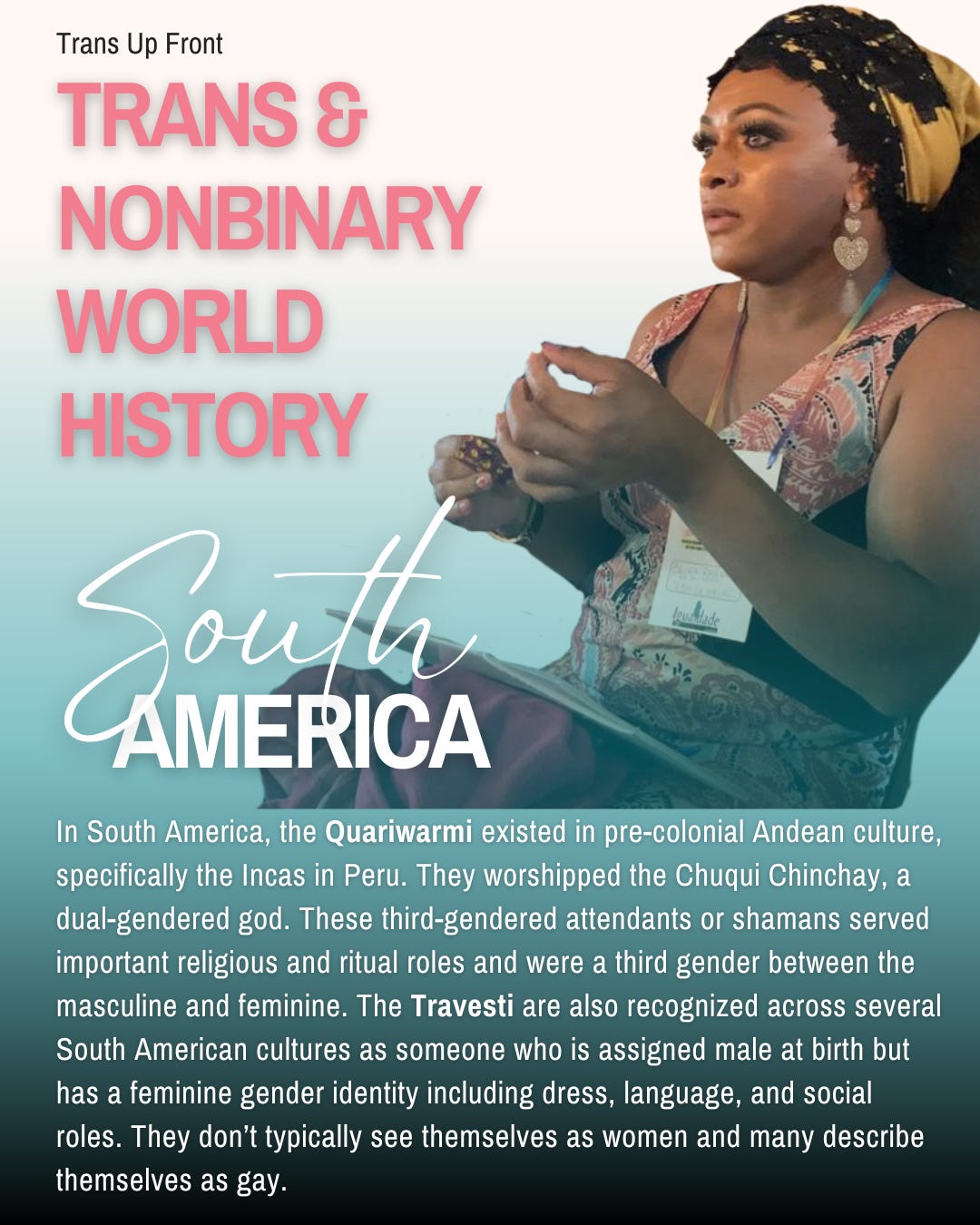
In South America, the Quariwarmi existed in pre-colonial Andean culture, specifically the Incas in Peru. They worshipped the Chuqui Chinchay, a dual-gendered god. These third-gendered attendants or shamans served important religious and ritual roles and were a third gender between the masculine and feminine.
The Travesti are also recognized across several South American cultures as someone who is assigned male at birth but has a feminine gender identity including dress, language, and social roles. They don’t typically see themselves as women and many describe themselves as gay.
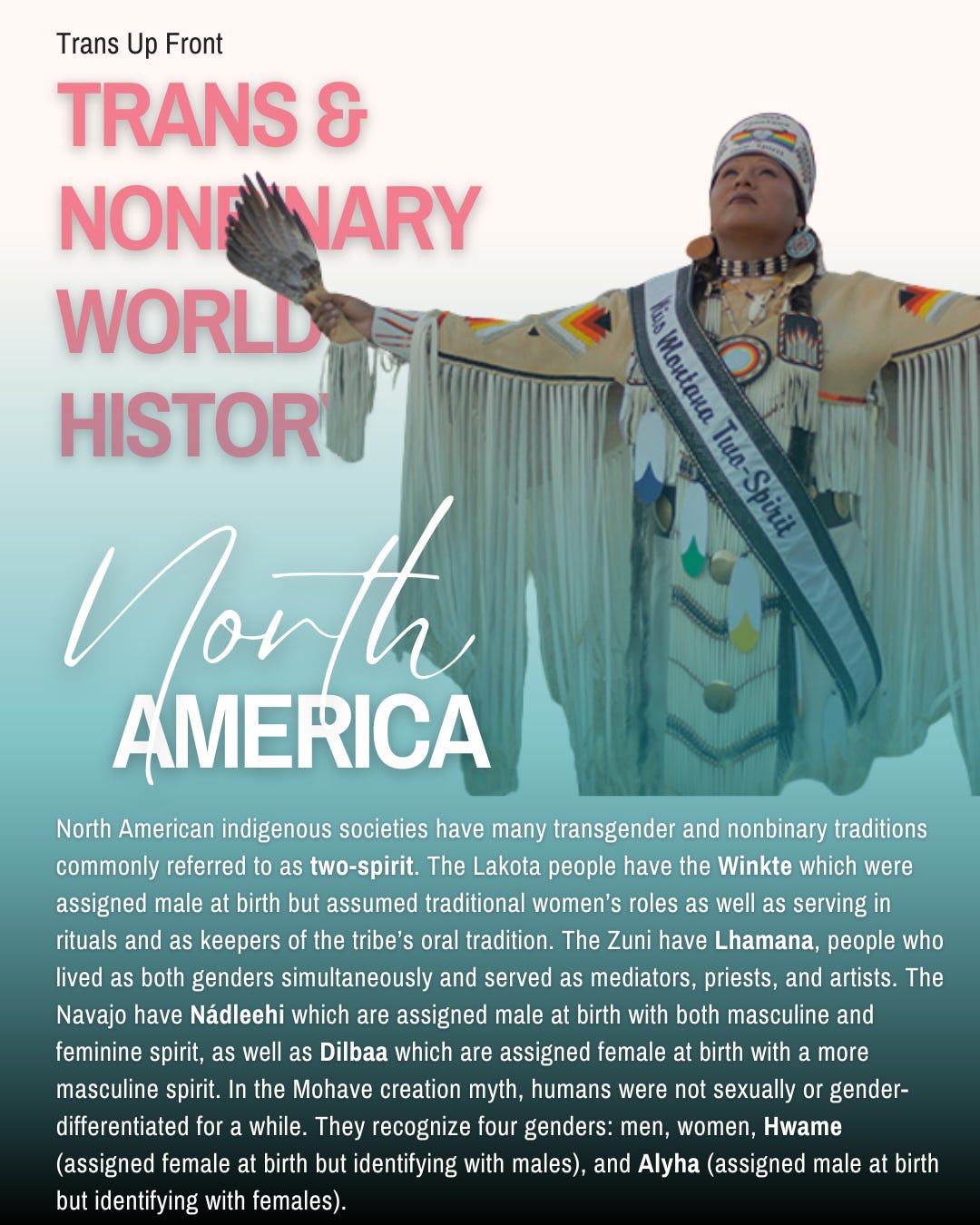
North American indigenous societies have many transgender and nonbinary traditions commonly referred to as two-spirit.
The Lakota people have the Winkte which were assigned male at birth but assumed traditional women’s roles as well as serving in rituals and as keepers of the tribe’s oral tradition.
The Zuni have Lhamana, people who lived as both genders simultaneously and served as mediators, priests, and artists.
The Navajo have Nádleehi which are assigned male at birth with both masculine and feminine spirit, as well as Dilbaa which are assigned female at birth with a more masculine spirit.
In the Mohave creation myth, humans were not sexually or gender-differentiated for a while. They recognize four genders: men, women, Hwame (assigned female at birth but identifying with males), and Alyha (assigned male at birth but identifying with females).
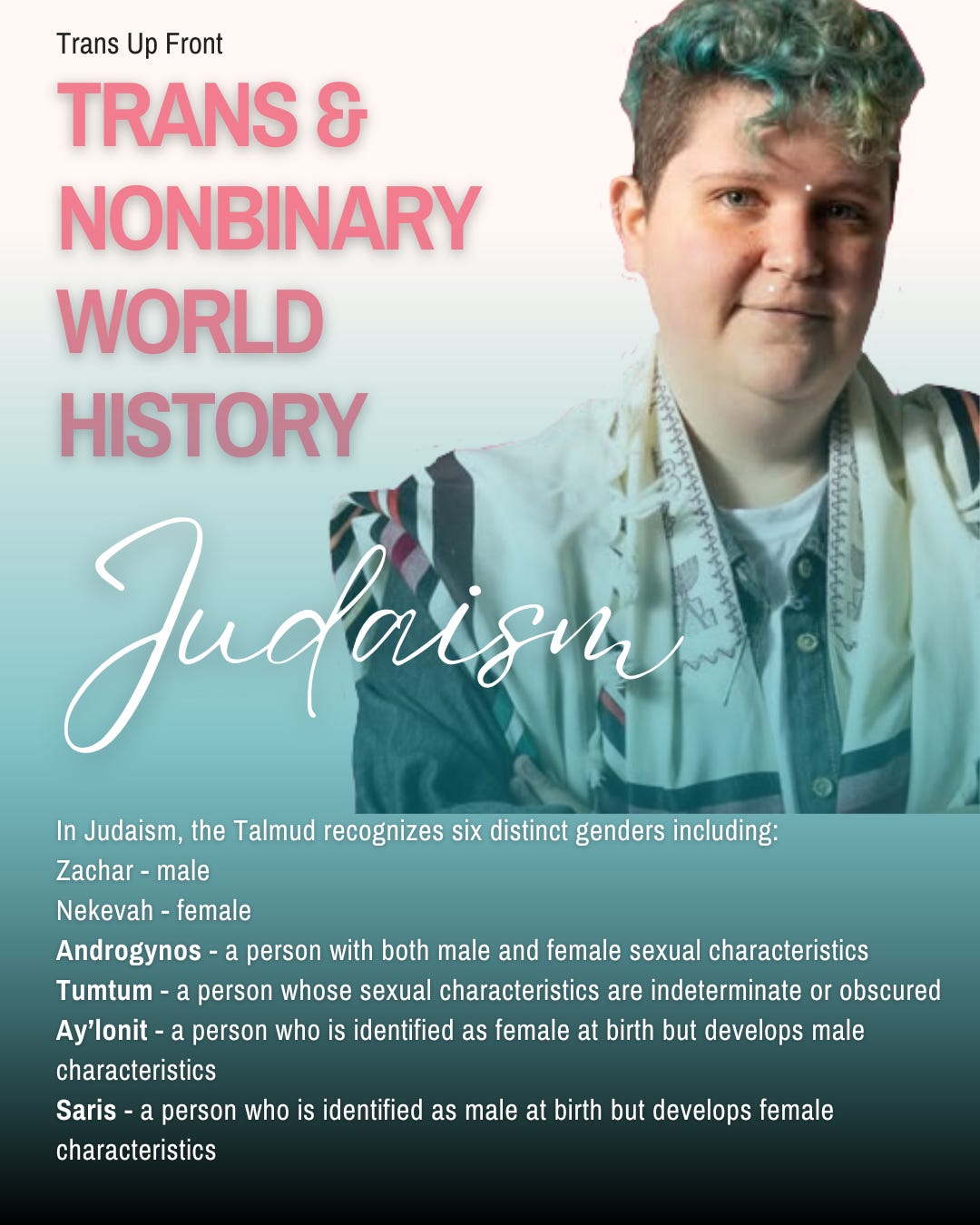
In Judaism, the Talmud recognizes six distinct genders including:
Zachar - male
Nekevah - female
Androgynos - a person with both male and female sexual characteristics
Tumtum - a person whose sexual characteristics are indeterminate or obscured
Ay’lonit - a person who is identified as female at birth but develops male characteristics
Saris - a person who is identified as male at birth but develops female characteristics
Transgender, nonbinary, and other diverse identities are not new and they are not a western invention. Colonialism has repeatedly attacked gender diversity both historically and currently.
Comments
Nothing yet. Say the first thing.
Sign in to join the conversation.