
Hello and welcome to the Dispatch.
Our team has been hard at work wrapping up Issue #4 of our print magazine and planning the final details of our massive summer launch event party on Wednesday, September 9 at the October Gallery in London. We hope to see you all there!
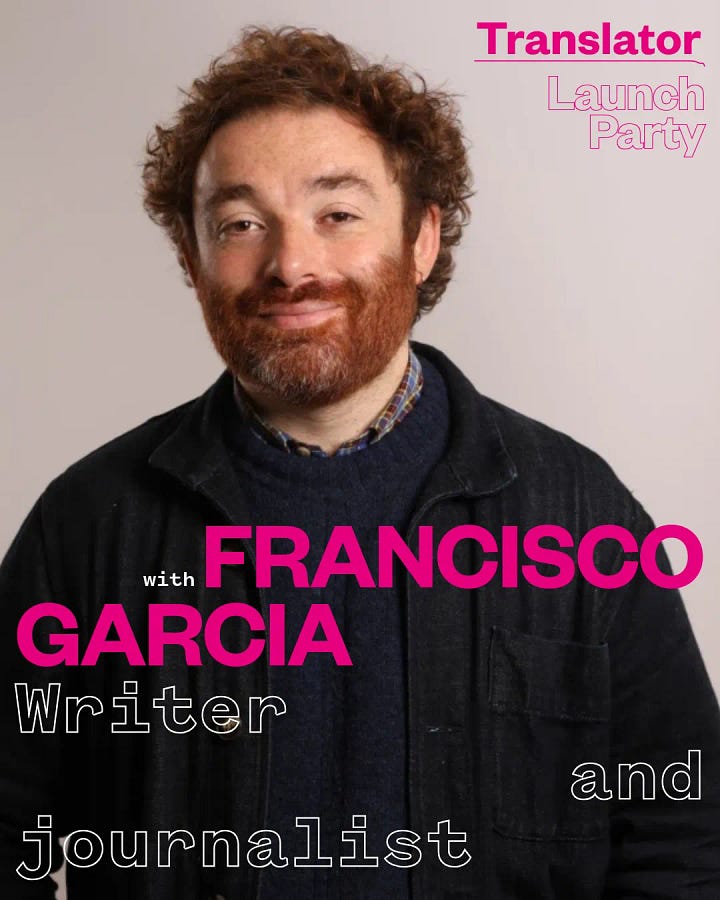
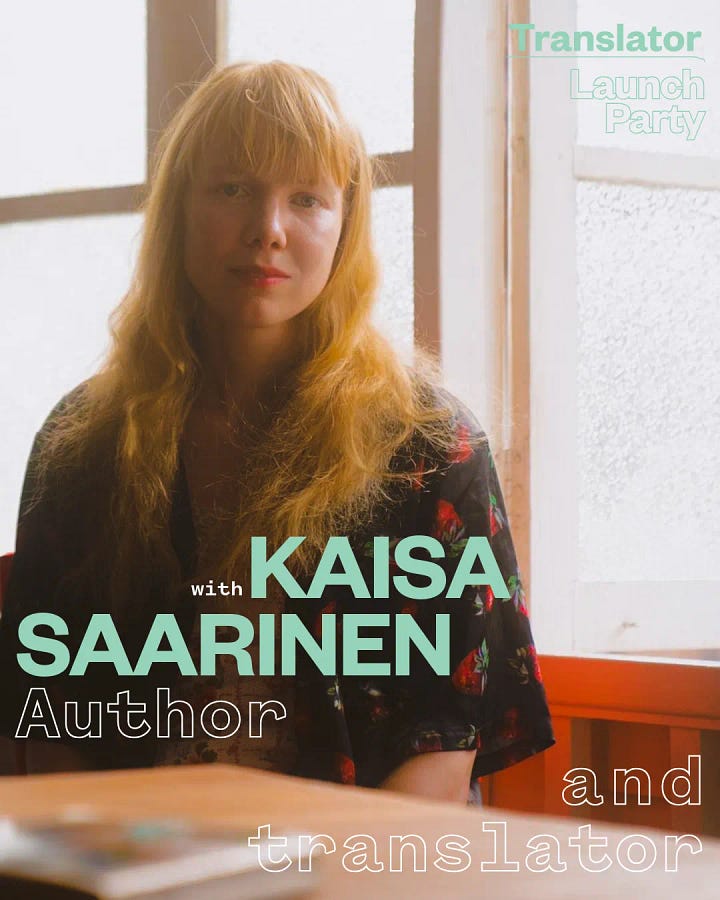
We’re delighted to share that we have an exciting line up of speakers and performers confirmed for the event, which will feature readings by multidisciplinary artist Sirui Chang (aka rapper Princess Xixi), writer and journalist Francisco García, and author and translator Kaisa Saarinen. There will also be music from Mariia Petrovska, who plays traditional songs on the Ukrainian bandura, as well as food and drinks.


Now, on to the Dispatch, with English summaries of stories from Albania and Sudan – and our word of the week.

The chilling reality of life inside an Italian migrant return hub in Albania.
Migrant repatriation centres are the latest chapter in the European block’s long effort to try and manage immigration by outsourcing it to third countries. Last March, the European parliament approved a new draft law to establish “return hubs” in third countries, where migrants can be sent against their will.
The logic is simple, if inhumane: speedier repatriations, costs and responsibilities shifted to neighbours with a laxer humanitarian record, and, most of all, a powerful deterrent for those seeking a better life in Europe. But what’s the reality inside these facilities?
In an investigation for the monthly Italian magazine Altreconomia, journalist Luca Rondi takes us inside the Centro di permanenza per il rimpatrio (CPR) in Gjadër, one of two Italian migration facilities in northwestern Albania. The centre opened under a controversial arrangement between the two countries in 2025.
Rondi obtained a document kept secret by the Meloni government for over a year – a logbook of “critical events” kept by staff at the facility that details extensive violence in the first two months of the centre’s opening. According to the document, much of the violence is self-inflicted by migrants as a form of protest against their living conditions. “At 11:30, a detainee engages in acts of self-harm because he wants a ‘higher dosage of the current treatment’” reads one entry.
“At 10:35 p.m., a detainee threatens ‘to cut his carotid artery with a piece of glass’ … The reason? He wants more psychiatric medication” reads another.
The document logs 54 violent incidents in a 48-day period, including 22 instances of self-harm, 12 of attempted suicide, and 11 of unrest due to poor living conditions.
But these numbers only provide half the story. What sets the Gjadër facility apart from the 11 other “return hubs” on Italian soil is the dodgy legal fiction by which Albania is considered an extraterritorial border zone just like Lampedusa, the infamous island off the coast of Sicily, which is often the first point of entry for migrants crossing the Mediterranean. As the author writes, violence is a mainstay of Italy’s domestic CPRs as well. He cites similar cases of violence, self-harm, and protest in Macomer in Sardinia, San Gervasio in Basilicata, and Bari and Brindisi in Puglia, which show that the frequency of incidents in these facilities is comparable, if not higher.
Rondi also questions the point of all this suffering. Out of the 536 Egyptians sent to Gjadër between April 11, 2025 and April 20, 2026 – mostly as a propaganda stunt “to show to public opinion that those centres were active” – only a few were repatriated to Cairo from Tirana on May 9, 2026. “Everyone else was sent back to Italy, only to be released or repatriated at exorbitant costs and under what remains a legal grey area,” he notes.
According to Silvia Carta, an advocacy officer for Brussel-based NGO Platform of Undocumented Migrants, the viability of these repatriation centres rests on ambiguous legal interpretations. As a result of provisions passed in the recent draft law in the European parliament, a migrant “country of origin” has come to mean any country willing to receive them, irrespective of where they are actually from.
As Europe’s political spectrum takes a swift rightward turn, this malpractice and maltreatment of migrants risks becoming increasingly normalised.
The original article ‘La vita degradante nel CPR in Albania che il governo voleva nascondere’ was published in Italian by Luca Rondi in Altreconomia on June 1, 2026.
Altreconomia is an Italian monthly magazine. Since 1999, it has shone a light on economic alternatives, including fair trade, ethical finance, and the protection of the environment and human rights.
Summary by Bartolomeo Sala
Thanks for reading Translator! This post is public so feel free to share it.

An Arabic investigation reveals how one of Sudan’s richest wildlife sanctuaries has been stripped of its wildlife and protections
In Sudan’s remote southwestern corner, where the country meets South Sudan and the Central African Republic, lies the Radom Biosphere Reserve. Covering some 12,500 square kilometres, it was once home to elephants, white rhinoceroses, antelope, leopards and migratory birds, making it one of Sudan’s most important protected ecosystems.
In an investigation for Khatt30, Sudanese journalist Heba Abdel Azim documents how three years of war have transformed the reserve into an open landscape for gold mining, military activity and wildlife exploitation.
The investigation opens with the testimony of a former park ranger who spent decades working in Radom. Looking back on the reserve today, he describes a landscape where animal tracks have been replaced by military vehicles and open-pit mines. Many rangers have left since the outbreak of civil war in 2023, while others reportedly joined the Rapid Support Forces (RSF), leaving the reserve without meaningful protection against illegal mining, logging or poaching.
Abdel Azim traces the expansion of gold mining inside the reserve to before the current war, arguing that the RSF had already established control over a mining concession there between 2020 and 2021. Since fighting erupted, mining has accelerated dramatically. The investigation estimates that more than 200,000 people now work in gold mining and related activities in and around the reserve. In contrast, gold leaves the area through constantly shifting smuggling routes before being exported abroad, often after its origin has been disguised in neighboring countries.
Because access to the reserve is now almost impossible, the investigation combines interviews with residents, government officials and environmental experts with satellite imagery and AI-assisted image analysis. Together, these sources point to expanding dirt roads, widespread tree loss, growing mining sites and shrinking vegetation cover. Residents also describe hidden military training camps, child labour at mining sites, cross-border gold traders and recurring fires linked to mining operations.
The environmental consequences extend well beyond deforestation. Experts interviewed by Abdel Azim warn that mercury, cyanide and other chemicals used in gold extraction are contaminating soil and water, while unchecked hunting has devastated wildlife populations. Some animals are killed to feed mining communities; others enter regional trafficking networks dealing in ivory, animal skins and rare species. One recent example cited in the investigation is the reported hunting of a pangolin, prized for both its meat and scales.
The investigation argues that Radom’s destruction reflects a wider transformation in Sudan’s wartime economy. Since South Sudan’s independence in 2011 deprived Sudan of most of its oil reserves, gold has become one of the country’s most valuable resources, and, according to experts and reports cited by Abdel Azim, one of the principal sources of financing for the conflict. As environmental governance has collapsed alongside state authority, one of Sudan’s oldest biosphere reserves has been left vulnerable to competing armed and commercial interests.
Abdel Azim also presents Radom as a case study in how conflict reshapes entire ecosystems. The reserve’s forests, wildlife and waterways are disappearing alongside the institutions that once protected them, raising questions about whether recovery will still be possible long after the fighting ends.
The original article ‘عن حرب الذهب الصامتة.. كيف فقدت محمية الردوم أسوارها؟’ was published in Arabic by Heba Abdel Azim for Khatt30 on June 15, 2026.
Khatt30 is an independent digital and visual platform capturing human experiences and daily life from communities located along the 30th parallel north (latitude 30) region.
Summary by Cendrella Azar

Thanks for reading Translator! This post is public so feel free to share it.
And finally, our Word of the Week:
Our editor Trà My Hickin recently contributed to Vittles magazine’s feature on untranslatable food-related words and idioms and idioms. Writing on the Vietnamese word ‘nhậu’, which she translates to “eating and drinking for no particular purpose,” she highlights how the word contains a whole cultural and social practice that bends time.
We’ll be back next week.
Translator
No posts
Comments
Nothing yet. Say the first thing.
Sign in to join the conversation.