
We all may now have seen Tomi Adeyemi’s statement distancing herself from Paramount’s forthcoming adaptation of Children of Blood and Bone, but there was something about it that I could not quite shake, and it was not because I was trying to work out who was right, because in truth, none of us has enough information to make that judgement.
Unless we were in the room during development, negotiations or the creative discussions that followed, we are working from the same limited public information as everyone else. What interested me was not necessarily the disagreement itself, but what the disagreement revealed about the way Hollywood is changing, the growing power creators have to speak directly to their audiences and the increasingly difficult position those audiences find themselves in when a creator and a studio stop telling the same story.
As a publicist, I spend a lot of time thinking about communications strategy, messaging and reputation, but as someone who genuinely loved the Children of Blood and Bone books, I was also approaching this as a fan. Those two perspectives kept colliding because I was not asking myself whether I agreed with Tomi; I was trying to understand what, exactly, I was being invited to respond to.
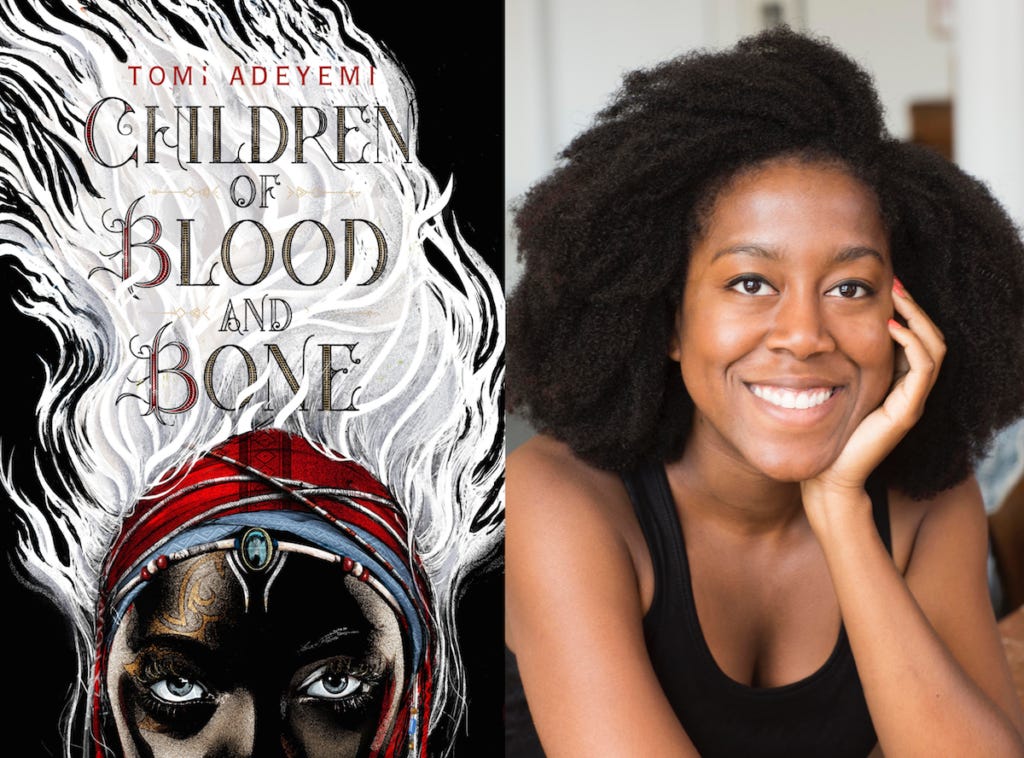
Her statement made it clear that she wanted to distance herself from the film, but it stopped short of explaining why. It revealed that something had gone wrong without revealing the nature of the disagreement and, in doing so, created something communications professionals generally try very hard to avoid: an information vacuum.
She was equally clear that audiences should still support the film if they wanted to, so this was not a call for a boycott. However, that creates its own contradiction, because publicly declaring that you will not watch or support the adaptation of your own work will inevitably influence the audience, even if you then tell them that the decision is theirs.
Information vacuums rarely stay empty for long, particularly in an industry as visible, interconnected and fuelled by gossip as Hollywood, because when audiences are told that something significant has happened but are not given enough information to understand it, theories, assumptions and speculation quickly begin to replace whatever facts are actually available.
Within hours, people were no longer simply discussing Children of Blood and Bone; they were debating whether Paramount had overridden Tomi’s vision, whether she had misunderstood the realities of adapting a novel into a studio film, whether creative relationships had broken down, whether contractual promises had been broken, whether the finished film would betray the books, and even whether she had become difficult to work with. None of those conclusions came directly from the statement itself, yet all of them became part of the conversation because audiences had been told there was a problem without being given enough information to understand what that problem actually was.
One of the most common misconceptions about modern publicity is that audiences simply want transparency, but I do not think that is completely true; I think audiences want clarity, and there is an important difference between the two.
Transparency does not necessarily mean sharing every private conversation, contractual disagreement or difficult meeting that took place behind closed doors, because some things genuinely should remain private. However, if you are going to publicly signal that something significant has happened, audiences will naturally expect enough context to understand why they are being told, what they are being asked to make of that information and whether there is any response expected of them. Otherwise, they do what people have always done: they fill in the blanks themselves, which can create a far greater reputational challenge than saying nothing at all.
Tomi may have entirely legitimate reasons for distancing herself from the adaptation, and perhaps, if we knew everything that happened behind the scenes, many of us would arrive at exactly the same conclusion she did. Or perhaps we would not.
The point is that we do not know, and from a publicity perspective, that is not a comfortable place for any story to sit because uncertainty has a habit of becoming its own narrative.
Once audiences begin filling in the gaps, the conversation moves away from facts and towards assumptions, which can harden into reputations long before anyone has had the opportunity to establish the truth. Tomi risks being perceived as naïve, unreasonable or difficult, Paramount risks being seen as another major studio that sidelined the Black woman whose work it acquired, and the film itself risks being treated as creatively compromised before most audiences have seen a single frame.
Rather than clarifying what had happened between Tomi and Paramount, the statement created further questions about loyalty, creative relationships and who had said what to whom, none of which brought audiences any closer to understanding the substance of the original disagreement.
Over the last decade, the changing media landscape, and Hollywood’s response to it, has encouraged creators to build direct relationships with audiences in a way we have never really seen before. Authors have Substacks, directors have Instagram, actors have TikTok, and almost everyone now has a platform through which they can “own their narrative” without relying entirely on traditional media or studio-approved publicity campaigns.
That has largely been a positive shift because creators no longer have to depend solely on carefully managed press cycles to speak directly to the people who support their work, correct misinformation or challenge more powerful institutions. However, direct access is also a double-edged sword, because while it gives creators unprecedented control over their own narrative, it places responsibility for the wider reputational effect of that narrative squarely on their shoulders, not only for themselves but often for the project and everyone attached to it.
When a creator chooses to speak publicly about a disagreement, that communication does not exist in isolation. It shapes headlines, influences public perception and can quickly become the story itself, particularly when the message leaves enough room for the audience to construct its own version of events.
Reading Tomi’s statement, I found myself asking one very simple question that I still do not know the answer to: what was the intended outcome?
Was the objective simply to explain why she would not be participating in the film’s promotional campaign, or was it to publicly separate herself from the finished adaptation and prepare readers for a version of the story that had moved significantly away from her vision? Was she attempting to put pressure on Paramount, establish a record of her dissatisfaction before the film was released, warn her readers, or encourage them to reconsider whether they wanted to support it? Or was the statement simply an emotional expression of hurt, published without a clearly defined strategic outcome?
Hollywood has spent years encouraging authors, filmmakers and actors to cultivate loyal personal audiences that studios can later use to market their work, particularly when adapting recognisable intellectual property. That relationship is commercially useful when the creator and studio are aligned, because the author’s endorsement gives the adaptation legitimacy and offers the studio direct access to an established fanbase; however, when that creator no longer supports the finished product, the same relationship becomes a rival communications channel that the studio cannot manage, mediate or control.
What makes this situation particularly complicated is that Children of Blood and Bone isn’t just another adaptation…
It’s one of the most ambitious Black fantasy films a major Hollywood studio has produced.
It’s directed by Gina Prince-Bythewood, the acclaimed director of Love & Basketball, The Old Guard and The Woman King, who is widely regarded as one of Hollywood's most influential Black filmmakers and a leading voice in bringing ambitious Black stories to the screen.
It’s being brought to life by an extraordinary ensemble of Black actors from across the globe, including Thuso Mbedu, Amandla Stenberg, Damson Idris and Tosin Cole alongside Viola Davis, Cynthia Erivo, Idris Elba, Lashana Lynch, Chiwetel Ejiofor and Regina King. And a stellar craftspeople team such as Oscar-winning production designer Hannah Beachler, Grammy-winning composer Terence Blanchard, Emmy-winning casting director Aisha Coley, editor Terilyn A. Shropshire, cinematographer Polly Morgan and costume designer Charlese Antoinette Jones, who all have collectively spent years making this project a reality.
Where this becomes even complicated is that both the book and upcoming film carries cultural significance.
The cultural scarcity surrounding the film makes those consequences feel even heavier.
Black fantasy at this budget level is incredibly rare in Hollywood, and so audiences are not simply weighing one author’s dissatisfaction against one studio’s commercial interests; they are also thinking about what this film represents, from giving Black filmmakers the opportunity to work at a different scale and experiment with genres we are still too often excluded from, to allowing Black actors and craftspeople to do ambitious work at the highest level, to giving young Black audiences the chance to see themselves centred in a world that is expansive, imaginative and not defined by whiteness, while also, inevitably, becoming another test of whether Hollywood believes Black stories can attract large audiences and succeed at the box office, particularly when audiences have spent years asking for more films exactly like this.
When one conventional blockbuster underperforms, the industry rarely concludes that audiences have lost interest in white action heroes, white romances or white fantasy worlds; another version is commissioned almost immediately, usually with a different star, director or marketing strategy. When a major Black film underperforms, however, the failure is often treated as evidence that the audience was never there, that the budget was too ambitious or that the supposed demand for greater representation was overstated.
This creates an unfair burden for Black audiences, who are repeatedly told that the commercial future of an entire category may depend on whether they show up for one particular film, even when that film may not satisfy them creatively, politically or personally. It means that going to the cinema can become less about whether someone genuinely wants to see a film and more about whether they feel responsible for proving that films like it deserve to exist.
None of this means Tomi should be silenced, or that she has to support the film simply because it features Black talent. The importance of Children of Blood and Bone does not mean every decision made behind the scenes was fair or that she has no right to be disappointed. If something serious happened, she is entitled to step away.
However, once she chose to make that distance public without explaining the substance of the disagreement, the audience was placed in an almost impossible position, because readers who have supported her books are naturally inclined to take her concerns seriously, yet they are being asked to do so without knowing what those concerns are. At the same time, many Black filmgoers will be reluctant to withdraw their support from a project that represents the kind of ambitious, globally cast Black filmmaking they have spent years demanding, particularly when the director, actors and craftspeople attached to it may have had little or nothing to do with whatever went wrong.
The audience is therefore not choosing simply between Tomi and Paramount. It is being asked, implicitly or otherwise, to balance its support for a Black female author against its support for a Black female director, a predominantly Black cast, an accomplished creative team and the broader possibility of seeing more Black fantasy financed at this scale. That is not a clean moral choice, regardless of how easily social media attempts to frame it as one.
Supporting Tomi does not have to mean rejecting the work of everyone who brought her world to the screen, just as supporting the film does not have to mean dismissing whatever concerns led her to walk away from it. Both positions can coexist, although the ambiguity of her statement has made that nuance harder.

Whatever happened privately, the fallout is now part of the film’s public narrative, which means both Tomi and Paramount need a clear strategy before the marketing campaign begins in earnest.
From a communications perspective, Tomi had credible options: keep the disagreement private and quietly step away from the campaign; professionally distance herself by acknowledging that the adaptation had developed but she is dedicating her time to working on her next project; or offer enough transparency for audiences to understand whether the issue was creative, contractual, personal or something more serious. Instead, the statement sat awkwardly between all three, revealing the emotional consequences of the fallout without explaining the disagreement itself.
My question is not whether she should have spoken, because she may have exhausted every private route available to her, but what she wanted the statement to achieve. If the intention was simply to explain her absence, it revealed too much but if it was to expose wrongdoing, it revealed too little. Although Tomi explicitly told audiences to support the film if they wanted to, her own public rejection of it inevitably shaped the choice she was asking them to make.
Tomi will now need a consistent response for future interviews, because journalists promoting her next book will inevitably ask about the adaptation, and repeatedly improvising an answer risks creating a new headline every time she speaks. The aim should not be to pretend the film does not exist, but to establish a boundary that acknowledges her position without allowing the fallout to dominate every future conversation about her work.
Paramount’s challenge is different, because the studio needs to protect the film without appearing to attack or quietly erase the Black woman whose imagination made it possible. It should have a brief that acknowledges Tomi as the creator of the world, respects her decision not to participate in the campaign and declines to discuss private creative or contractual conversations, while ensuring that Gina, the cast and the wider filmmaking team are prepared for the questions they will inevitably receive.
The campaign can also no longer rely on the idea that this is Tomi’s vision faithfully transferred to the screen with her endorsement. Paramount will need to establish the film as a collective interpretation by foregrounding Gina’s direction, the performances, the scale of the world and the craft involved, while still honouring the source material rather than attempting to write its creator out of the story. That narrative will become even more important once audiences have seen the film, because every departure from the books is likely to be interpreted as evidence of whatever people already believe happened behind the scenes.
Creators now have direct access to their audiences in a way that would have been unimaginable twenty years ago, giving them greater independence from studios, publicists and traditional media, as well as the ability to correct misinformation, challenge powerful institutions and speak about their experiences without waiting for permission from the people controlling the project.
That access is valuable, but it does not remove the need for strategy; it makes strategy more important, because once an audience is invited into a personal or professional dispute, even partially, the creator loses control over how the information left out will be interpreted.
The question is therefore not whether creators should be allowed to speak openly, because of course they should, but what responsibility comes with doing so when their words can affect their own career, the wider project, their colleagues and the communities invested in the work.
Saying something publicly is not the same as communicating clearly, and transparency is not achieved simply by revealing that a problem exists. Hollywood may have spent the last decade encouraging creators to build and own their audiences, but that does not guarantee control of the narrative once those audiences have been invited into a dispute without enough information to understand it.
At that point, the story belongs to everyone trying to fill in the gaps, and once uncertainty becomes the story, it is remarkably difficult to take it back.
No posts
Comments
Nothing yet. Say the first thing.
Sign in to join the conversation.