
Programming note: the longer than usual delay between Trade Notes posts is due to my change of jobs back in April. I’m no longer a lawyer. Instead I am excited to now be leading Global Shield’s advocacy work in Australia for ambitious action to reduce global catastrophic risk. Please do get in touch if you have connections to the issues we work on (including AI risk, food supply security, catastrophic crisis planning, and national resilience and preparedness) - I’m always keen to share notes. Trade Notes will continue, but perhaps more intermittently (I am still regularly posting to the Trade Notes chat for those that haven’t checked that out yet).
We are now about halfway into Australia’s year chairing the Comprehensive and Progressive Agreement for Trans-Pacific Partnership (CPTPP),1 so I thought this might be an opportune time to offer up some suggestions for what would be useful potential wins for the agreement in the last half of the year.
Australia’s theme for its chair year was “Delivering Sustainable Trade and Resilient Growth” and it said it would focus on:2
Increasing trade: leveraging the “gold standard” of the Agreement to further boost trade between members, bringing economic gains to our communities.
Facilitating trade: we aim to make it easier for members to trade with each other by improving processes.
Spreading the benefits of trade: Australia is committed to ensuring that CPTPP supports inclusive and sustainable trade practices.
I’m not sure any of my suggestions really fit into these higher level aims, although perhaps ‘resilient growth’ and ‘inclusive trade’ are a broad enough themes to capture some of these.
First, these is clear momentum behind the CPTPP Parties cooperating with the EU and ASEAN to support the rules-based trading system.3 New Zealand, Singapore and the United Kingdom seemed to take the lead on this within the CPTPP group. Australia has not said much publicly, but the 16 May 2025 CPTPP Joint Ministerial Statement included a decision to “work towards dialogues as soon as possible in 2025” with both groups. The EU’s recent even stronger messaging on this shows the desire for this is real and ASEAN has also discussed it. Getting these dialogues underway should be a key priority and there are lots of good ideas of what these could involve.
Although, I do agree with Peter Ungphakorn and Robert Wolfe that constant talk of the WTO being dead, defunct or irrelevant is both wrong and unhelpful (it gives the US an excuse to withdraw further among other things). Reform is needed, but there are important functions that continue to deliver for Members, but if the WTO dies the impact would be devastating (particularly for developing countries) and hard to undo.
Second, Australia’s Trade Minister has said he “will be pleased to mark continued progress on the General Review of the CPTPP agreement”, hopefully we can see something substantive delivered to lay the groundwork for CPTPP modernisation in 2026. Under the Terms of Reference for the General Review, the CPTPP General Review Report is meant to go to the 2025 CPTPP Commission with recommendations on next steps. These need to be substantive, reflective of input received from stakeholders, and identify concrete areas for upgrade and what needs to be added to the agreement.
Third, the CPTPP needs more robust institutional backing, such as through a proper Secretariat. This seemed unlikely in recent years - with no-one wanting to provide the funds. However, the work to be done under CPTPP is only increasing, and the current ad hoc administrative arrangements are likely one of the bottlenecks. RCEP’s Secretariat is also slowly emerging from the ASEAN Secretariat in Jakarta. I recently saw reporting in January that Japan might now be willing to host a CPTPP Secretariat and that this is part of the agenda for the General Review. Getting this locked in would be a substantive achievement for Australia’s chair year.
Fourth, the CPTPP accessions process needs to be fixed. It was understandable why the United Kingdom had to be done as a singular process and we are only six months into the formal part of Costa Rica’s accession negotiation. However, lessons from the United Kingdom’s experience should have been learned and implemented by now. Revision of the 2019 Accession Process is needed, particularly given parts of it are almost dead letters (e.g. the Commission is supposed to make a public determination of “whether to commence the accession process with the aspirant economy within a reasonable period of time after the date on which the aspirant economy made the Accession Request”). More agile, efficient and public processes are needed to get the CPTPP accession pipeline moving (perhaps managed by that new Secretariat).
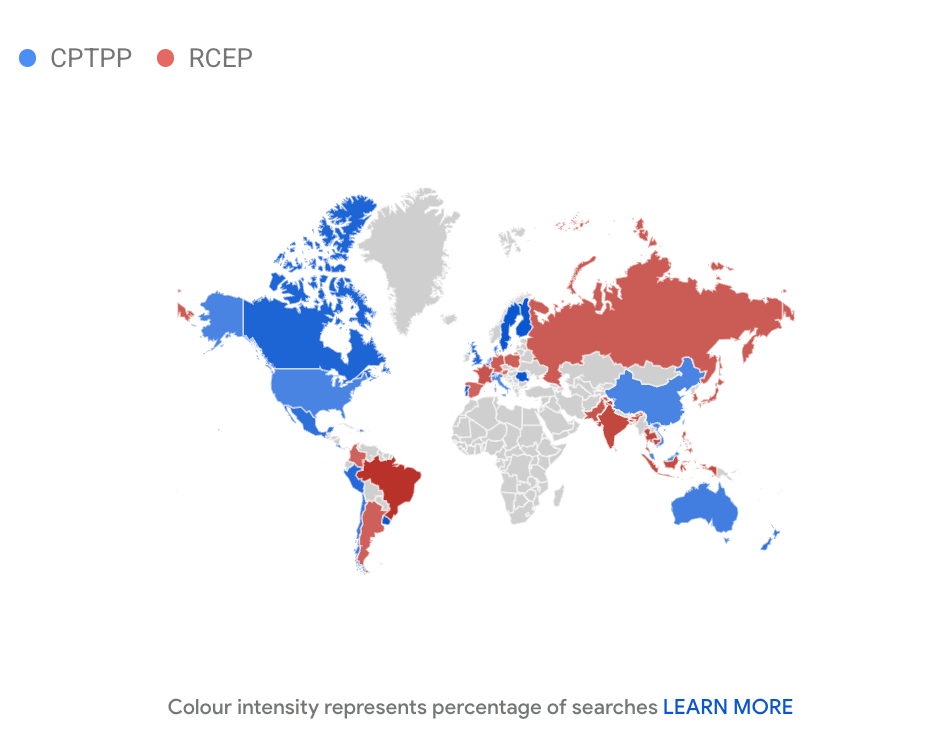
There is some potential competition in the region too. After a long delay, RCEP’s Procedures for Accession were agreed late last year. It also looks like the RCEP Parties are potentially working on Terms of Reference for a Hong Kong accession, which could be ready by September (if the politics don’t prevent agreement being reached).
Fifth, and more substantively, with IPEF slowly fading from view, lessons and mechanisms from its Supply Chain Agreement should not be lost. Supply chain resilience and economic security are front of mind for many governments now. CPTPP could pick up some of the useful pieces of this prior work such as IPEF’s ‘Action Plans’ to improve resilience in critical sectors, better engagement with the private sector, crisis response mechanisms, and table-top and stress tests to simulate supply chain disruptions.
This doesn’t necessarily require amending the treaty text - although this could also be done as part of the General Review - but could start with specific CPTPP Committees starting initiatives using their existing powers. Indeed, in 2023 Canada led work under the CPTPP’s Committee on Competitive and Business Facilitation that resulted in The Growth of Supply Chain Trade within the Comprehensive and Progressive Agreement for Trans-Pacific Partnership report.4
And finally, I can’t mention the CPTPP without mentioning the need for increased transparency. Trade institutions cannot continue with the business-as-usual opaque approach to their meetings, this wasn’t tenable before January of this year and it becomes less tenable as the need to demonstrate the value of these institutions only continues to grow under the pressure of Trump’s second presidency.
On this it looks like Australia is actually falling behind one past Chair, New Zealand, which had a far more detailed online presence for its chair year. Hopefully we’ll see more material come online as the year progresses. While social media posts and communication directly with stakeholders is useful, creating a durable and accessible public record would go a lot further (including given Australia’s focus on inclusiveness!).
Thanks for reading Trade Notes! This post is public so feel free to share it.
With just six months remaining in Australia’s CPTPP chair year, it may be too late to realistically deliver on much of the above, except where work is already underway. My guess is that we will see something on at least EU-CPTPP cooperation and the General Review report. Hopefully these can be substantive and the ground is laid to do more next year with Vietnam as chair.
Noting that the first six months of 2025 included an Australian federal election and a constant flow of trade policy disruption from the United States.
While the Australian site setting this out also says “More information on the activities and meetings for 2025 will be published shortly”, this has sadly not been forthcoming since this language was added back in February.
Not to create new binding trade agreements or have the EU accede to the CPTPP (at least in the short term).
Comments
Nothing yet. Say the first thing.
Sign in to join the conversation.