
I know the Arkansas Machine because I used to work inside it. For six years, I was the Legislative and Communications Director for the Arkansas Association of Counties. I wrote messaging, shaped narratives, and watched how political influence actually works.
The most effective political influence strategies rarely look like a direct quid pro quo. It looks like relationships, access, and the right message being delivered by the right person at the right time.
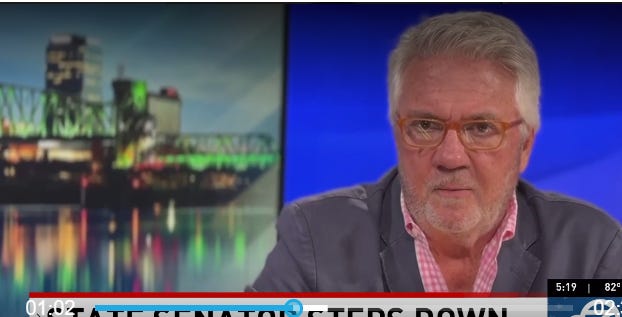
That is why KATV’s recent coverage of Attorney General Tim Griffin’s hiring of Sen. Ben Gilmore deserves more scrutiny than a routine personnel story.
The problem is not that KATV covered the hire; it’s that KATV presented Bill Vickery as a political analyst to provide commentary without telling viewers the full context of who he is and why his perspective matters.
Vickery is not merely a radio host and observer of Arkansas politics. He is a lobbyist, and his firm represents clients with a direct interest in one of the most significant unresolved policy questions before Griffin’s office: whether Arkansas will enforce Amendment 100 against prediction markets like Kalshi and Polymarket.
In 2024, the Arkansas Department of Finance and Administration sent cease-and-desist letters to Underdog Sports Holdings and PrizePicks for offering what DFA determined was unlicensed online sports betting.
In the press release issued at the time, DFA Regulatory Administrator Trent Minner warned that the internet could become a “wide open town” where unlicensed gambling operates outside the protections required by Arkansas law.
Those protections matter. Licensed sportsbooks operate under Arkansas’ regulatory framework as authorized under Amendment 100 of the state constitution. They are subject to licensing requirements, age verification rules, consumer protections, and taxation.
Prediction markets operate outside that system, creating a competitive disadvantage for licensed operators that must comply with Arkansas’s regulatory requirements while unlicensed platforms do not.
That difference is why licensed gaming interests have pushed Arkansas officials to act.
The National Football League raised concerns with Arkansas regulators. Casino operators provided examples of enforcement actions from other states. The horse racing industry met at Oaklawn in Hot Springs to discuss how to address the issue. Arkansas Racing Commission members have asked questions at public meetings.
And yet, as previously reported, Arkansas did not move forward with enforcement, with DFA stating in response to an April Tracking Arkansas query: “The Arkansas Racing Commission and DFA oversee the state’s three licensed casinos along with live racing. Enforcement authority does not extend to a third party operating independent of our licensed casinos.”
Meanwhile, Griffin joined amicus briefs supporting other states’ challenges against Kalshi but did not file an Arkansas action of his own. As the state’s chief legal officer, Griffin has the authority to represent Arkansas in litigation and pursue legal remedies when he concludes state law is being violated.
This is where Vickery’s role becomes relevant.
According to Arkansas Secretary of State lobbying records, Vickery’s Capitol Advisors Group represents major companies and organizations in the sports and gaming industries.
His client list includes major sportsbook operators such as DraftKings, FanDuel, BetMGM, and Bally’s, as well as Major League Baseball and the Sports Betting Alliance.
These are not neutral observers of the prediction market debate; they are businesses operating within the regulated sports betting system Arkansas created through Amendment 100. They have an interest in maintaining a market where competitors are subject to the same rules, taxes, and regulatory requirements, and they are looking to Arkansas officials, including the attorney general, to enforce the law.
So when someone introduced as a “political analyst” praises the AG and his hiring of a state senator on local TV news, the public deserves to know that he also represents clients directly affected by the state’s selective enforcement of Amendment 100.
During KATV’s coverage of Griffin hiring Gilmore, Vickery’s analysis was overwhelmingly positive and sounded a lot like sports-color commentary.
Vickery called Gilmore’s hiring “a major pickup for the attorney general.”
He compared the hire to Griffin getting “a five-star through the transfer portal,” adding:
“The attorney general has not been shy about talking about being governor of Arkansas one day … you’re clearly sending a signal that Tim Griffin is going to be a very formidable person when the next governor’s race comes open.”
Those comments were less about a staffing decision and more a political narrative about Griffin’s strength and future.
And the person delivering that message is someone whose professional world is deeply connected to the sports betting industry and whose clients have interests affected by decisions made by Griffin’s office.
Vickery’s relationship with Griffin is not limited to his clients. Campaign finance records show a broader political relationship. Since 2023:
Capitol Advisors Group’s PAC contributed $5,000 to Griffin’s Jobs and Growth PAC and $6,600 to Griffin’s campaign.
Vickery personally contributed $6,600 to Griffin’s campaign.
In addition, FanDuel, a client of Capitol Advisor’s Group, made its own $10,000 contribution to Griffin’s PAC.
All of this is legal; the issue is transparency. The public cannot evaluate a message if the messenger’s relevant relationships are hidden.
A viewer who hears a “political analyst” praise a powerful official is entitled to know if that analyst is also a lobbyist with a professional stake in maintaining a good relationship with that official.
Political influence is rarely just one thing. It is the accumulation of relationships across institutions through money, family and loyalty. That’s how a lobbyist builds relationships with elected officials, a donor gains access, a trusted insider becomes a media source, and a favorable narrative is repeated.
That is why transparency matters. The question is not whether Vickery is allowed to have an opinion; it’s whether Arkansans were given the information necessary to understand whose interests surrounded that opinion.
The media’s job is not simply to repeat what powerful people say; it’s to provide context.
Who is this person?
Who do they represent?
What interests do they have?
Why should the audience know?
Calling someone a “political analyst” when they are also a lobbyist with clients affected by policy decisions made by the official under discussion removes essential information.
The Arkansas Machine does not require a conspiracy. It works through relationships that become invisible: the lobbyist presented as an analyst, the political message presented as independent analysis, and the relevant context left out of the story.
We’re currently suing the AG and Arkansas Children’s Hospital for alleged FOIA violations regarding their refusal to release records related to a $50 million donation of opioid settlement funds. To support our legal efforts, please donate to and share our GoFundMe. This is active citizen advocacy in real time for Arkansans.
Comments
Nothing yet. Say the first thing.
Sign in to join the conversation.