
This week Harvard University was forced to pay $53 million to settle a lawsuit after the medical school’s morgue manager sold donated body parts on the black market.
Last month Robert Bush, a funeral director from the English city of Hull, was jailed for 20 years after admitting multiple counts of preventing lawful and decent burials.
In today’s Substack I am going to delve into these cases, and explain the grotesque industry in America which allowed one woman to sell the bodies of two stillborn babies.
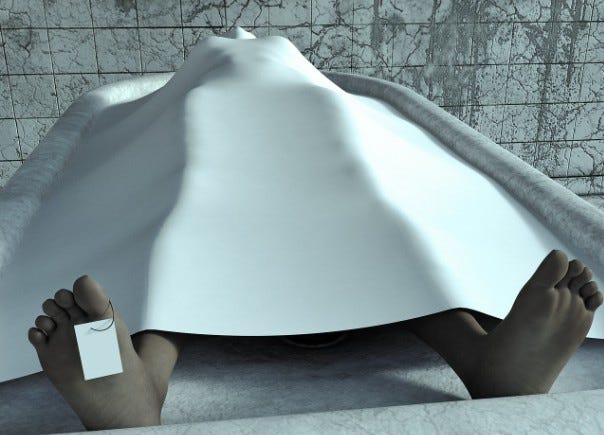
Have we not learned anything in the last 200 years?
In 1828 – when Edinburgh was the world’s leading centre for anatomical study - the notorious grave-robbers and murderers Burke and Hare made a fortune selling bodies to Scotland’s medical schools with no questions asked.
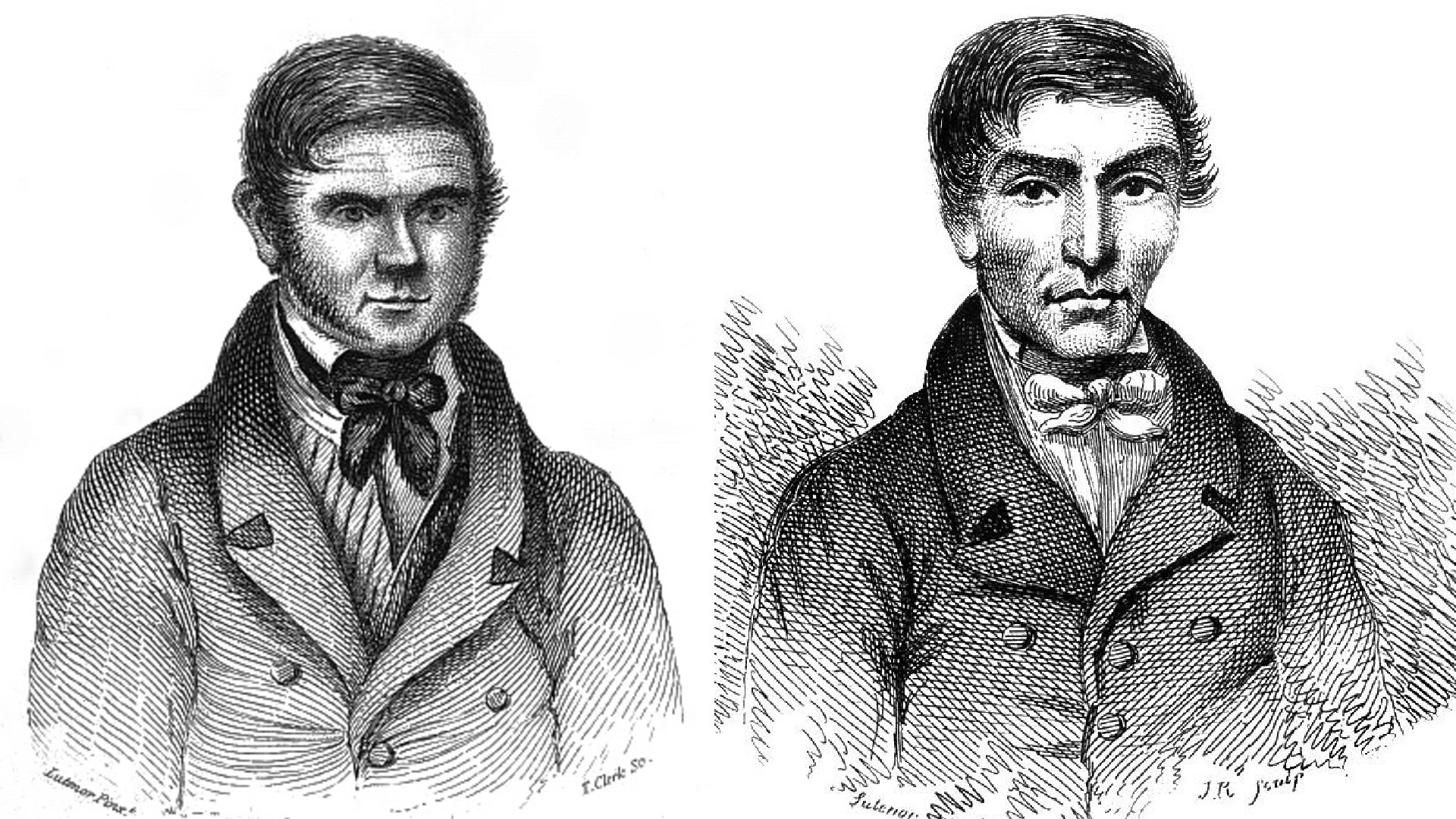
After being caught, Burke (pictured below, left) was hanged on 3 January 1829 but Hare (right) – who turned King’s evidence and grassed up Burke – walked free a month or so later.
The celebrated anatomist Robert Knox – who bought a lot of Burke and Hare’s bodies – was never charged with any offence but his academic reputation was destroyed.
The furore over the case led to Britain introducing the Anatomy Act in 1832, which allowed people to legally donate their bodies to science and also gave medical schools the right to use unclaimed bodies from prisons and city morgues.
We will return later to offences involving bodies and body parts donated to science, but first let’s look at another important offence – “preventing a lawful and decent burial”.
It is an offence under common law – like murder and manslaughter – in other words, an offence which has been around forever and is not dated to any particular piece of legislation.
Those convicted of it can range enormously.
At one is the case of Hans Kristian Rausing.
In August 2012 Rausing – a multi-millionaire thanks to his family’s TetraPak packaging empire – was given a suspended prison sentence for failing to bury his 48-year-old wife Eva, whose body was found at his home in Belgravia, central London.
A statement from Rausing, a drug addict, was read out in court and in it he said: “I did not feel able to confront the reality of her death.”
But at the other end is Robert Bush, who was jailed for 20 years last month after he admitted 30 counts of preventing a lawful and decent burial of a body, 30 counts of fraud by false representation in relation to the bodies and several other fraud and theft charges.
Bush, 47, had run a company called Legacy Independent Funeral Directors and in March 2024 Humberside Police raided its premises in Hull and discovered 35 bodies and more than 100 urns or other containers of ashes.
Prosecutor Steven Ball would later tell a court the police found a “horror scene” with dozens of bodies on racks in a cold storage area and one on a stretcher on the floor.
It turned out Bush took from grieving relatives – a total of £562,117 - but he pocketed the money without providing proper burials or cremations.
As the bodies mounted up, Bush spent £42,000 on holidays, £21,000 on motorbikes and £17,000 on various home improvements.
Jasmine Beverley – whose daughter Sunny-Beverley was stillborn in 2022 – told the court that finding out her baby’s body had been found in a brown paper bag on the floor of the funeral parlour two years later would “stay with me for the rest of my life”.
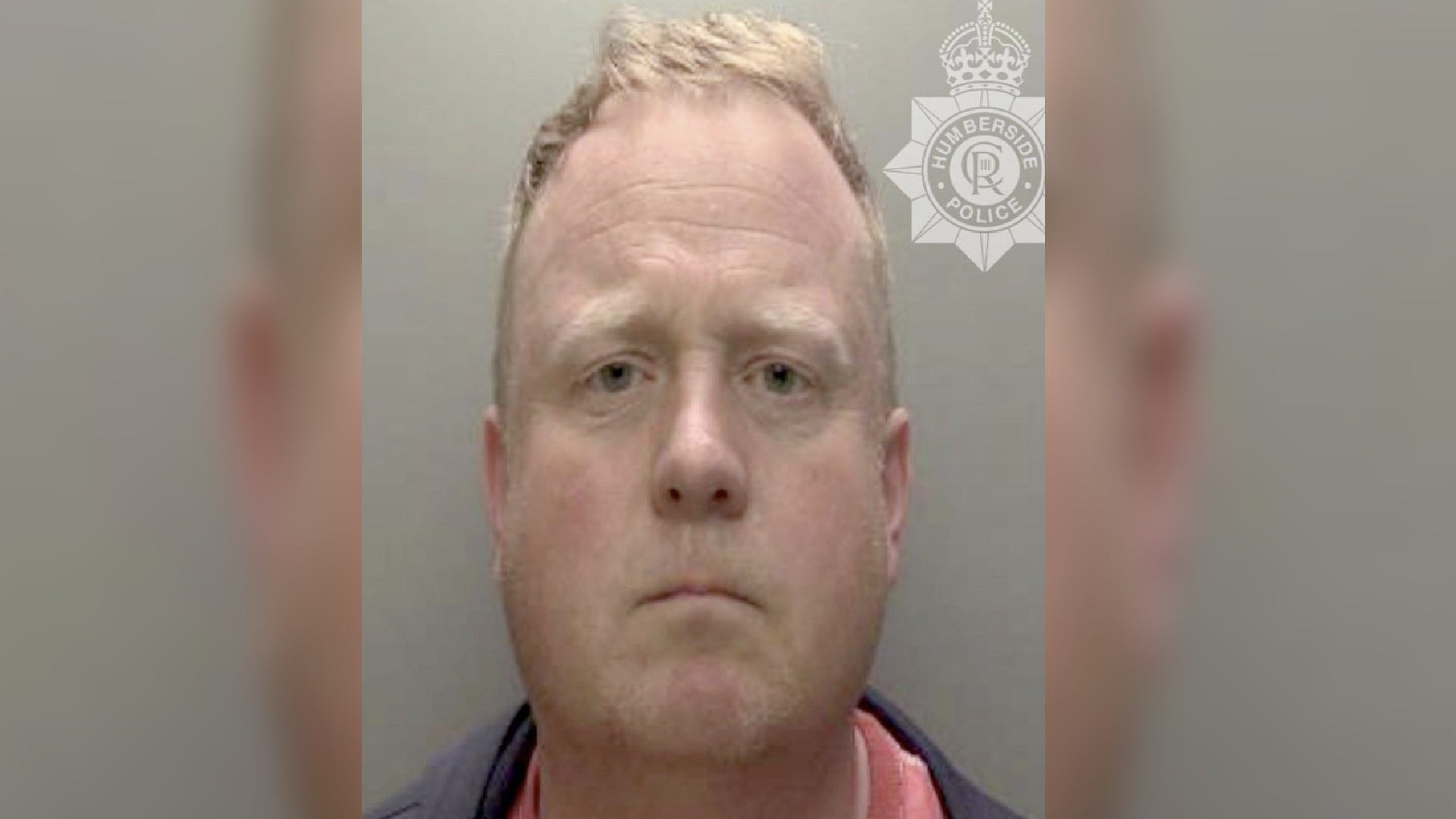
Sentencing Bush (pictured below), Mr Justice (Nicholas) Hilliard said he had “caused anguish and pain on a scale beyond comprehension”.
Detective Superintendent Alan Curtis, who led the investigation, said: “Thirty-one families believed that their loved one had been cremated, when in fact they remained on site within the Legacy premises on Hessle Road.”
The Department of Health and Social Care later announced it was working on proposals for formal regulation of the funeral industry.
Health Secretary Yvette Cooper said: “In the wake of this horrific case, we will now bring forward comprehensive proposals to ensure respect and dignity for the deceased in every setting, including proper regulation of the funeral sector.”
In the United States, there is no federal regulation of the funeral industry or morgues, and all oversight is at state level and is apparently a bit of a zip code lottery.
Earlier this month 56 decomposing bodies were found at a funeral home in Chicago.
But if you think that is shocking, just wait until you hear what was happening at the Sunset Mesa funeral home in Montrose, Colorado.
Welcome to the world of “body brokers”.
In 2020 I first stumbled on the Sunset Mesa story, and spoke to some of the victims.
Debbie Schum, whose best friend Lora-Lee had died of bladder cancer, told me she had been sent a pot of ashes but was later told by the FBI they did not belong to Lora-Lee.
Ms Schum told me: “Body brokers present to families that the bodies will be used for disease research, then change cause of death on the paperwork when selling the bodies to researchers, who don’t want diseased bodies. Mostly they want the bodies for sales props at medical seminars.”
Terri Reid’s husband Bill, a retired US Navy submariner, died of cancer in 2016 and she agreed to donate his body for medical research.
“We both believed strongly in education and the need for research but we lived far away from any companies that did that. We were told Sunset Mesa did some donations,” she told me.
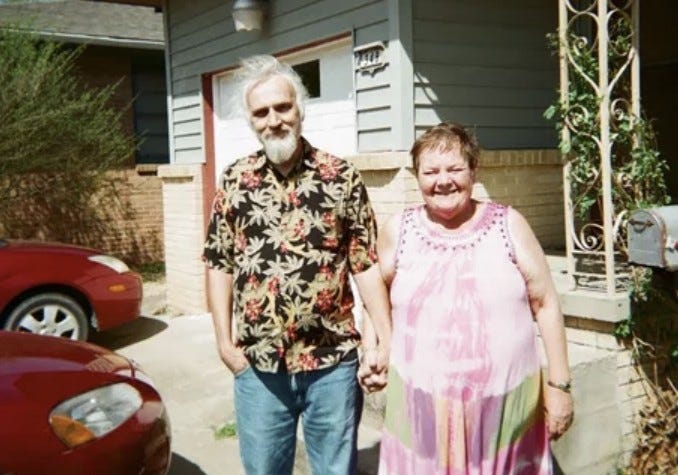
Terri (pictured above, with Bill) then recalled the day she found out from the FBI that the ashes she had been given by Sunset Mesa were not those of Bill.
“There I sat clutching my little box of ashes, confused and scared. I was told that they were not my husband’s ashes. I was in such shock I sat there stupidly crying,” she told me.
Terri said: “I was told that by her own records Megan Hess had sold him whole and had his body shipped out at 8am the morning after she had just picked him up. So she must have had him sold before he passed.”
The Feds told other victims their loved ones’ remains – usually only a small part - had been sold to a companies in Canada, China, the Netherlands and Saudi Arabia.
Jennifer Noe found a photograph of the body of her father, Charlie, in an online medical catalogue produced by the American Plastination Company.
Plastination is a method used to preserve bodies and body parts. It was invented by Dr Gunther von Hagens, the inventor of the “Body Worlds” exhibition, who died last month, aged 81.
As I explained in this article, Megan Hess and her mother Shirley Koch, who together ran the Sunset Mesa funeral home in a small town 265 miles west of Denver, had been tricking relatives into signing papers which handed over their loved ones’ bodies in return for free or discounted funeral expenses.
The preserved heads, torsos, and other body parts were sold to specialist companies who had buyers around the world who wanted them for a variety of purposes, often unrelated to medical training or research.
Hess and Koch never went to trial.
Instead their lawyers reached a plea agreement with the federal government and were sentenced in January 2023.
Hess, 46, was jailed for 20 years and Koch, 69, got 15 years.
The US Attorney’s Office for Colorado said: “Despite lacking any authorization, Koch and Hess recovered body parts from, or otherwise prepared entire bodies of hundreds of decedents for body broker services.”
U.S. Attorney Cole Finegan said: “The defendants’ conduct was horrific and morbid and driven by greed.”
“They took advantage of numerous victims who were at their lowest point given the recent loss of a loved one…We sincerely hope this punishment deters like-minded fraudsters in the future,” Finegan said.
But that same year – 2023 – another horrific case emerged, again in the United States.
This time the scene of the crime was one of the country’s most prestigious universities – Harvard.
On 14 June 2023 George Q. Daley, the Dean of Harvard Medical School published a statement under the title: “An abhorrent betrayal.”
“It is with profound sadness and distress that we write to share with you that federal authorities have accused a former Harvard Medical School employee of having engaged in activities that are morally reprehensible,” it goes on.
The man in question was Harvard’s former morgue manager, Cedric Lodge, and the Ivy League school was quite rightly “throwing him under a bus”.
Because it would emerge that between 2018 and August 2022 Lodge and his wife Denise had been involved in a grim little side-hustle.
“Lodge…removed human remains, including organs, brains, skin, hands, faces, dissected heads, and other parts, from donated cadavers after they had been used for research and teaching purposes but before they could be disposed of according to the anatomical gift donation agreement between the donor and the school,” said the US Attorney’s Office in Pennsylvania in December 2025 when Lodge was jailed for 96 months.
The body parts were sold to customers in Salem, Massachusetts, New Hampshire, and Pennsylvania – hence the involvement of the US Attorney’s Office there.
Civil lawsuits ensued and on Monday (17 August) Harvard agreed to a $53 million settlement with 47 people involved in a class action – relatives of those who had donated their bodies to the Anatomical Gift Program (AGP).
In a fresh statement, Daley and Bernard S. Chang, the school’s
Dean for Medical Education, said Cedric Lodge’s actions were “despicable, abhorrent, and a flagrant betrayal of our values as a medical community.”
“These events do not reflect the reverence we hold for the altruistic individuals who selflessly donate their bodies to our Anatomical Gift Program (AGP) to provide essential educational opportunities to medical and dental students, practicing surgeons, and allied health professionals,” they said.
“We reaffirm our deep sorrow and empathy for the families of donors who may have been impacted,” said Daley and Chang.
One of Cedric Lodge’s best customers had been Katrina Maclean, who ran Kat’s Creepy Creations, a shop in the small town of Peabody, Massachusetts which sold “dolls, oddities and bone art.”
Unfortunately the US Attorney’s Office in Pennsylvania told me: “Unfortunately, due to DOJ [Department of Justice] policy, we are unable to provide mug shots of defendants.”
So I have no photograph of Cedric Lodge or Katrina Maclean to show you.
But I would recommend clicking through to the Boston Globe website where you will find a great photograph of Maclean selling witch hats in the run up to Halloween Haunted in Salem, Massachusetts – a town forever linked with witchcraft and the supernatural because of the infamous trials of 1692/3.
You couldn’t make it up.
On Tuesday (18 August) Maclean was jailed for 24 months for “interstate transportation of stolen property.”
Maclean admitted to her role in a nationwide network of individuals who bought and sold human remains, including remains stolen from Harvard Medical School.
Maclean, Cedric and Denise Lodge all ended up in jail, as did Joshua Taylor, Angelo Pereyra, Andrew Ensanian, Matthew Lampi and Jeremy Pauley.
Pauley – who lived in the tiny town of Thompson in rural Pennsylvania - was a man who “bought human remains purchased human remains from multiple individuals knowing that those remains were stolen,” said prosecutors.
He was jailed for 72 months in December 2025 but before he “self-surrendered” to serve his first day in custody in January 2026 Pauley sat down for this cosy interview (see YouTube link below) with local TV station Fox56Wolf.
Personally I find the tone of it quite odd, considering his crimes, but it is fascinating.
Pauley runs an “oddities” shop in Honesdale, Pennsylvania called The Wunderkammer, which he claimed thrived on “ethical sourcing.”
He said: “I definitely felt I was always careful vetting people.”
Pauley goes on to say that collecting bones and body parts was just a harmless hobby.
“I wish more people understood that this is not creepy,” Pauley said. “It’s most collectors, not all, and many shops thrive on education, ethical sourcing. It’s just another hobby at the end of the day.”
I beg to disagree.
But the longest sentence – quite rightly – was dished out to 37-year-old Candace Chapman Scott.
She worked at a mortuary and crematorium in Little Rock, Arkansas.
There she had access to cadavers which were supposed to have cremated after being used for research and educational purposes at a local medical school.
She contacted Pauley through a Facebook* group and arranged to sell him a skull, several brains, an arm, an ear, some lungs and hearts, numerous breasts, testicles and a belly button.
But Chapman Scott’s most heinous crime was that she stole the bodies of two stillborn babies who were awaiting cremation.
She shipped them to Pauley who paid her – in total - $10,625 (£7,800).
What he did with them is not clear, but the grieving parents were given ashes which they wrongly believed belonged to their lost children.
Jonathan D. Ross, United States Attorney for the Eastern District of Arkansas said: “Imagine learning that the cremated remains of your child given to you after their death were not actually those of your child, because instead the FBI recovered the body of that child in another state. That is the shocking truth that happened in this case for the family of ‘Baby Lux’.”
Ross said: “Baby Lux was named ‘Lux Siloam,’ which means ‘light sent,’ and now his light has illuminated an evil and dark underworld of criminals who engage in the trafficking of stolen human bodies and body parts.”
Baby Lux’s mother and grandmother gave powerful testimony at a sentencing hearing in January 2025, when Chapman Scott was jailed for 15 years.
FBI Special Agent in Charge Alicia D. Corder said: “This was a truly incomprehensible and detestable crime.”
Ain’t that the truth.
Main picture courtesy of Kalhh on Pixabay.
No posts
Comments
Nothing yet. Say the first thing.
Sign in to join the conversation.