
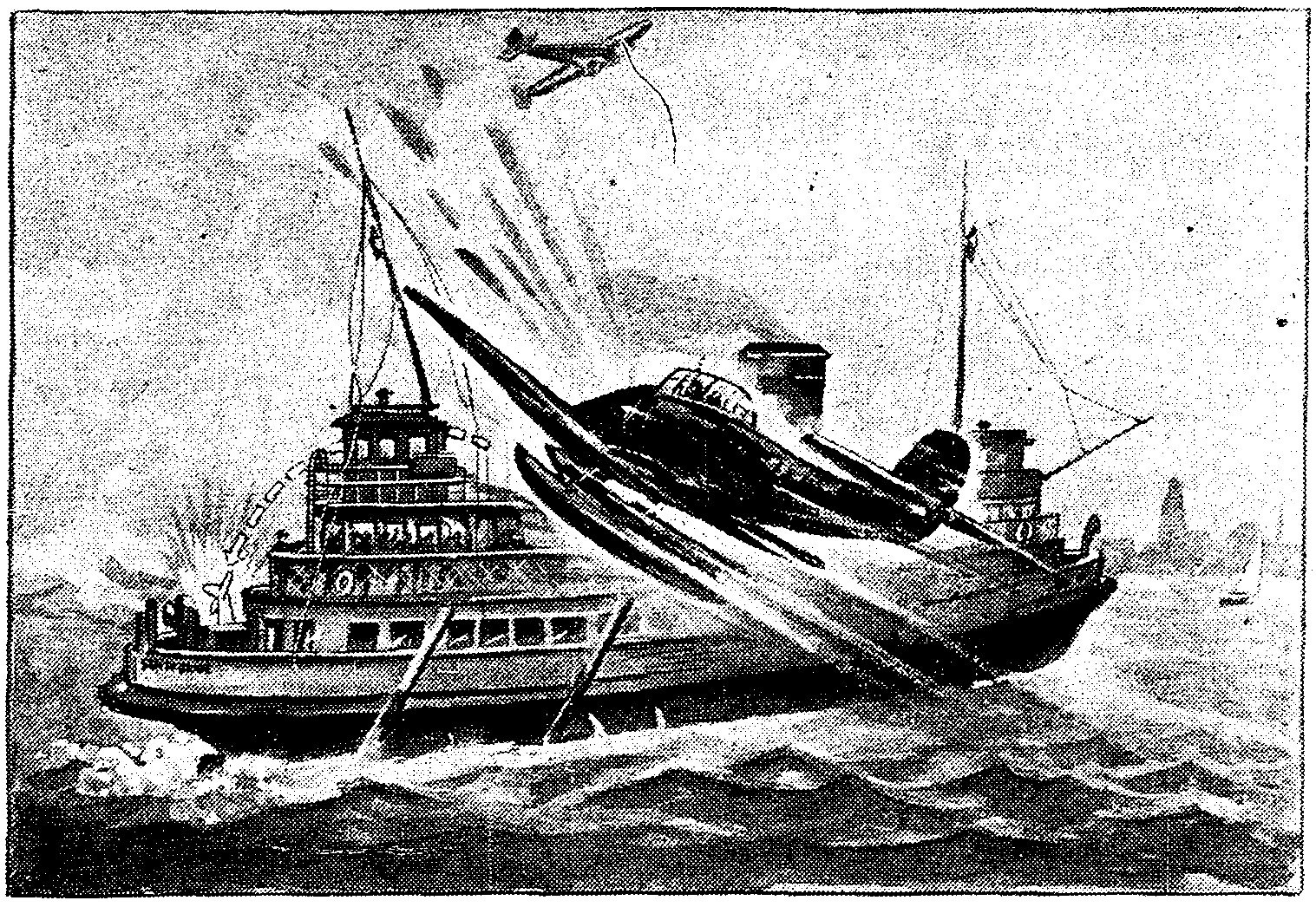
The ferry captain could see the plane coming. Captain Ernest Straher was alone at the wheel as the aircraft approached, the only person on the top deck of the Sam McBride at the time. The ferry had just dropped a load of passengers off at the Centre Island dock and was now making the return trip into the city. The boat was about halfway across the bay when a seaplane began to race across the waves, picking up speed for its take-off. It was June 1941, two years into the Second World War, and the plane was a bomber based out of the island airport. There were plenty of warplanes flying around the harbour that summer. But this one was behaving strangely. As it lifted off the water into the air, it was headed straight for the ferry. It was as if the pilot didn’t see the boat at all. The airplane and the Sam McBride were about to collide.
Captain Straher spun his wheel, trying to swerve out the way. But it was too late. “There was a sickening moment,” he later remembered, “when I knew that the men in the bomber would be dead in a fraction of a second.”
Both of the pilots in that plane were members of the Norwegian air force. Finn Kjos was the better-known of the two. He was just twenty-nine years old, but was already an experienced pilot with a history of flying dangerous missions. As Hitler invaded Norway, Finn and his brother Kaare had escaped their homeland in dramatic fashion. They heard of a German seaplane that had run out of fuel and been forced to land in a nearby harbour. And so, they climbed into a boat belonging to the coast guard and headed out to the stranded aircraft. Toronto newspapers would later report two different versions of what happened next. According to one, the German crew had gone ashore for a few minutes, giving the brothers just enough time to steal the bomber while they were gone. In the other version, the crew was still there. The Kjos brothers captured them, quickly painted a Norwegian flag on the side of the plane, flew to a military base where they could refuel, and then took off across the North Sea toward Scotland. Worried that British soldiers might spot the swastika on the side of their plane, they flew low across the sea as they approached the Shetland Islands to safely deliver both the bomber and their services into Allied hands.
The brothers would return to the skies above Norway in the months to come, flying missions against the Nazis who were occupying their country. They would battle the Luftwaffe in rickety old planes. Drop homemade bombs cobbled together from sticks of dynamite onto German targets. At one point, Finn Kjos was forced to make an emergency landing and stayed in Norway for a while, seizing the opportunity to spy on the Nazis before escaping the country once again.
It was in the summer of 1940 that the brothers were sent to Canada. And they didn’t come alone. Toronto was chosen as the headquarters for the Norwegian air force in exile. Driven out of their own country, they needed a new home. A military base called Little Norway was built at the foot of Bathurst Street. There, in the shadow of the Canada Malting Silos, just beyond the outfield walls of Maple Leaf Stadium (where our minor league baseball team played), they built barracks to house hundreds of recruits and instructors, plus mess halls, offices, a hospital and school buildings. It was the perfect spot, just across the water from the island airport.
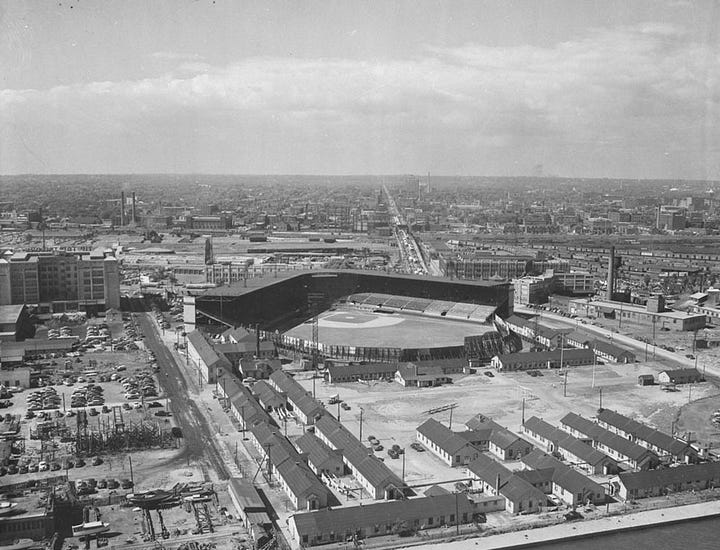

By then, planes had been flying out of Hanlan’s Point for a quarter of a century. It was during the First World War that Canada’s first pilot — J.A.D. McCurdy, who flew the Silver Dart back in 1909 — opened Canada’s first flight school. They built the country’s first aerodrome in Long Branch and flew seaplanes out of Hanlan’s. But it wasn’t until the 1930s that construction on the current island airport began.
It was a controversial project right from the start. There was plenty of opposition, led by the mayor of Toronto himself; the same Sam McBride in whose honour the ferry is named. He had a cottage on the island. Construction started and then stopped. It didn’t resume until McBride died in office. As the work went ahead, it brought big changes to the islands. To make way for the airport, the old Hanlan’s Point ballpark and amusement parks were demolished, the boardwalk was ripped up, and island residents were forced to move. About fifty cottages were floated over to Algonquin Island, where you’ll still find them today.
It was nearly a decade after the project was first proposed before the construction was finished. But the timing was perfect. The airport finally opened at the beginning of 1939. By the end of the year, Canada was at war with the Nazis. A year after that, the Norwegians arrived.
The first commander of Little Norway was a legendary pilot named Hjalmar Riiser-Larsen. Today, he’s considered one of the founders of the Royal Norwegian Air Force. He’d been flying since he was a teenager, having enlisted during the First World War. And once the fighting was over, he joined some of the most famous polar expeditions of the 1920s. He’s credited with the first confirmed flight over the North Pole and he mapped much of Antarctica, claiming a big chunk of it for Norway. When the Second World War broke out and the exiled air force was sent to Canada, he was sent along with them to run the camp.
The Kjos brothers would both serve under him as instructors in Toronto. But neither of them would live long enough to return home to fight the Nazis again.
Kaare was the first to die. In the winter, when the waters of Toronto Bay froze over, the Norwegians headed to British Columbia so they could continue training in a warmer climate. It was there, in Victoria, that Kaare Kjos took a student out for a training flight that ended in disaster. The recruit made a turn that was too low over the water. He lost control and couldn’t recover in time. The plane crashed into the sea, killing both of them while another officer on board was seriously injured.
That tragedy would soon be followed by another. Finn Kjos would only outlive his brother by three months. When spring arrived and the ice melted, the Norwegians returned to Little Norway and to the island airport. So it was there, one Friday in June, that Kjos found himself climbing into the cabin of a bomber.
The Northrop N-3PB was an impressive plane. The Toronto Daily Star called it “the fastest and most heavily armed of all military seaplanes.” It could fly 400 km/h, was equipped with a cannon and five machine guns, and had the capacity to carry two thousand pounds of bombs beneath its wings. It had specifically been developed for the Norwegians to patrol the fjords along their coast. But Hitler invaded before the first new planes could be delivered by the American company building them. So, the bombers were sent to Canada instead, to join the Norwegian air force here.
As Kjos’ bomber roared above our harbour that June day, it attracted plenty of attention. Workers in downtown officer towers watched as it soared through the air, floated down out of the sky to make a smooth landing on the water, and then taxied into position for another take off.
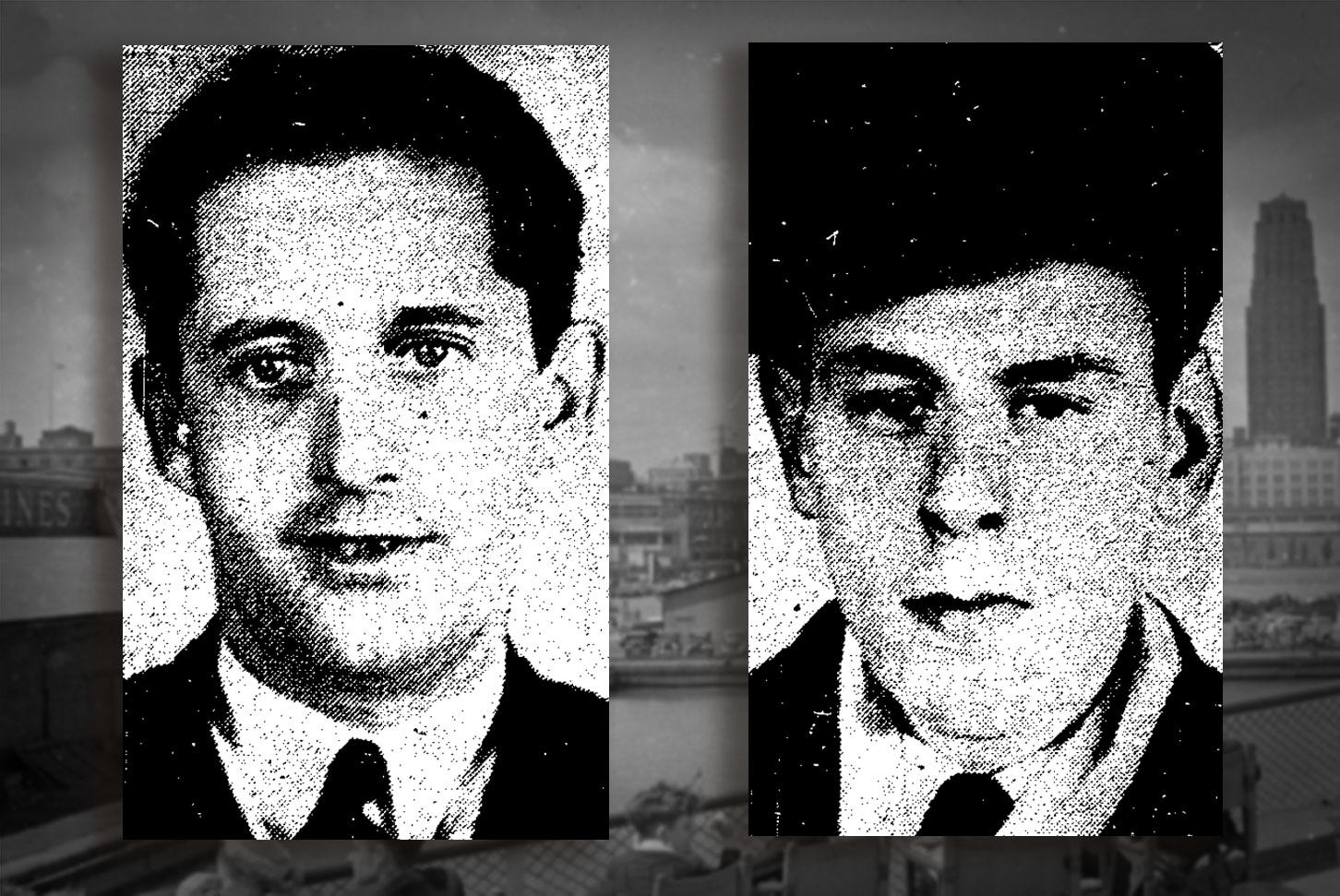
Kjos had taken one of his students out on a training flight. Trond Harsvik was twenty-two. He’d made his own escape from Norway after the Nazis invaded, fleeing across the North Sea on a steamer filled with refugees. Once he’d reached safety, he enlisted and was sent to Toronto to join the exiled air force. By June, he was well into his training, with more than a hundred hours of flying under his belt. He’s thought to have been at the controls of the Northrop that day, gaining even more experience. Having landed on the harbour successfully, he sent the plane gliding along the water on its pontoon floats. Then, as the office workers of Yonge Street looked on, he picked up speed, going faster and faster and faster until the craft began to lift out of the water into the air.
Some of the passengers on board the Sam McBride were watching too. As the ferry headed back toward the city, people gathered along the railings to get a good view of the Northrop as it lifted off the lake toward them. As first, it seemed as if everything was fine. There was plenty of room for the plane to soar up over the boat. But by the time the bomber took off, it was only a few hundred feet from the ferry and that distance was shrinking quickly. The plane was going at least a hundred kilometres an hour as it began to climb above the waves; some estimates put it as high as a hundred and sixty. And it was still heading straight for the Sam McBride.
Today, that ferry still plies the waters of Toronto Bay, part of the historic fleet that’s about to be retired and replaced with electric vessels. But in the summer of 1941, it was still brand new. It had been built in the Port Lands and brought into service during the opening months of the war. The city’s ferries had often been named after flowers, a custom that stretched back to the days when the service was run by the private Toronto Ferry Company. There was the Trillium (still around today, it’s now our oldest ferry), the Bluebell, the Primrose and the Mayflower. Those last two boats had just been condemned, causing problems with overcrowding (including a dangerous stampede at the Centre Island dock). So, the TTC — which had taken over the service — would be getting a new ferry. The municipal board in charge announced they were sick of the floral theme. They decided to name the boat in honour of the dead mayor McBride — despite the fact he was a bully (known to physically attack city council members) and a bigot (”We should wipe the yellow peril out of Toronto,” he once declared about Asian-Canadians). The name was meant to commemorate his role as the founding chairman of the TTC and his contributions to the development of the island. But now a plane based out of the airport he’d tried to block was in danger of destroying the ferry named in his honour.
The Sam McBride is a big boat, with a capacity of nearly a thousand passengers. But neither of the Norwegian fliers seem to have noticed the ferry was there. As their plane lifted off the lake and tilted up toward the sky, they must have been blinded by the sun. They were racing toward the boat at high speed, getting faster and faster and closer and closer, without any sign they realized disaster was only moments away.
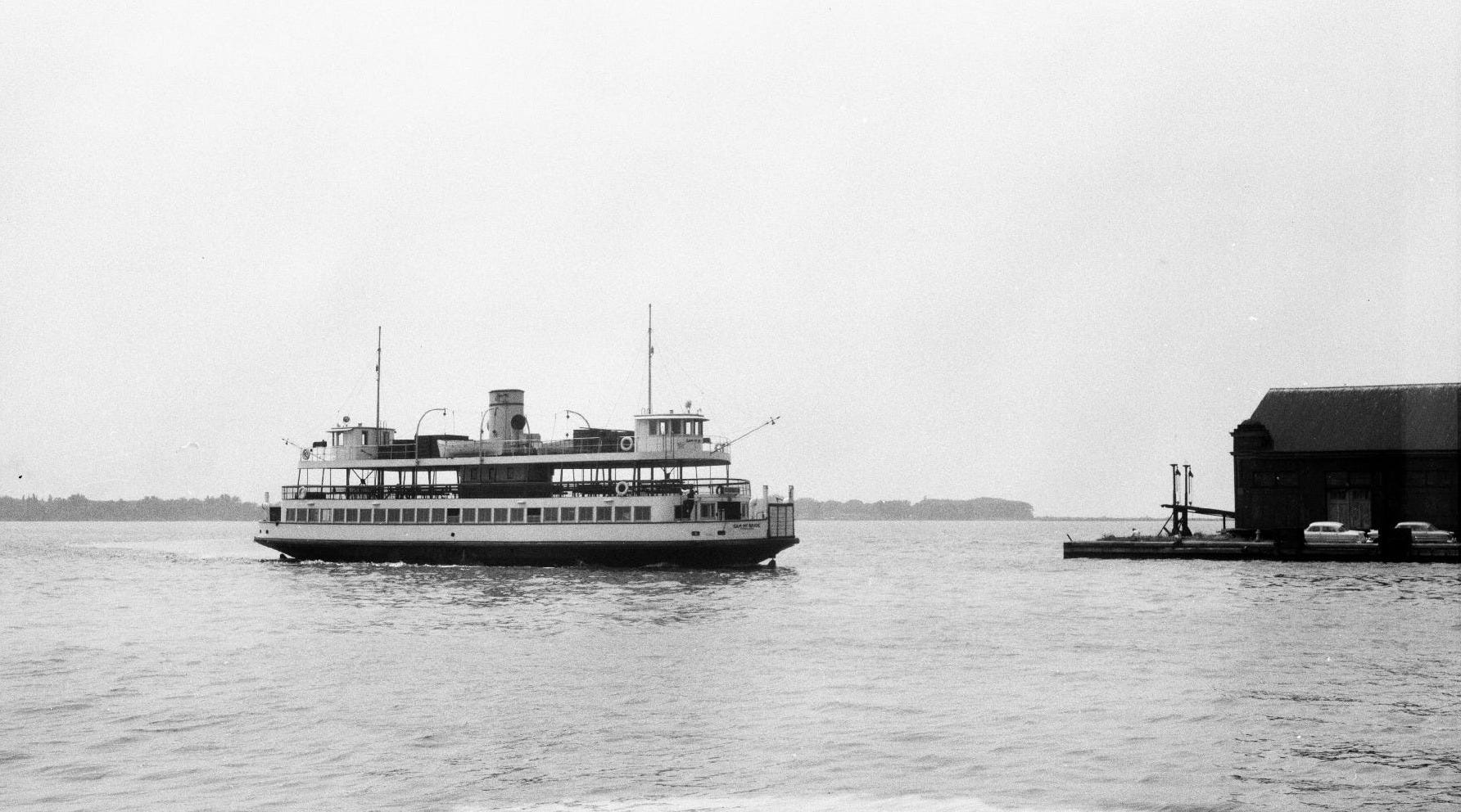
On board the Sam McBride, some passengers braced themselves for impact. “The plane headed right for the ferry,” one woman later remembered, “and I thought we were all gone. I clutched my daughter, Cynthia, tighter.”
It was only at the last moment that the Norwegians seem to have caught sight of the boat. The bomber suddenly pitched upward, trying to avoid the crash. The press would later credit that action for saving the lives of those on board the ferry. But for the Norwegians themselves, it came too late.
The passengers were all on the lower deck, so they lost sight of the plane as it swerved up and away from them. Captain Straher, alone on the upper deck, was the only person on board to witness the collision. Spinning the wheel in his own attempt to save lives, he watched in horror as the plane smashed into the top of the boat. “It was all over in a twinkling,” he reported. “The impact was terrific.”
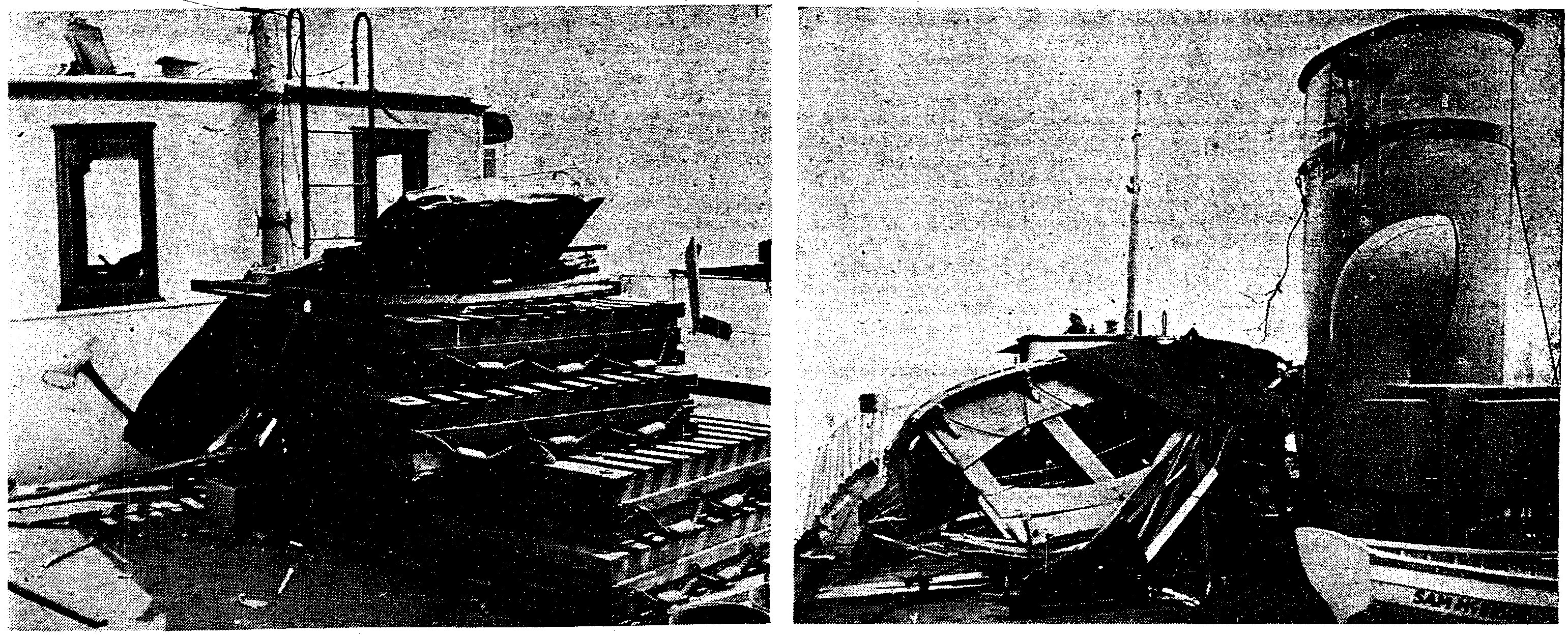
The bomber smashed into one of the cranes holding up the lifeboats, snapped it off, sliced through a ventilation pipe, crashed into the ferry’s funnel, tore part of the roof off one of the boat’s pilot houses, bent the metal mast, and tore both its wings off in the process. Then it plunged into the lake below. What was left of the plane floated there, nearly upright, for maybe as long as fifteen seconds before it began to sink beneath the waves.
The ferry was damaged, but no one on board had been injured. Debris was strewn across the upper deck: broken glass, splintered wood, twisted metal. Captain Straher reversed the engines and brough the boat to a halt as rescuers raced into action. People on both sides of the harbour had seen what had happened. Staff at a life-saving station at the foot of John Street rushed to the site in speed boats. A sailboat from the Royal Canadian Yacht Club did the same. But the bomber had already been swallowed by the lake — taking Finn Kjos and Trond Harsvik down with it.
Initial reports worried the pilots might have still been alive after the crash, unconscious or stunned, doomed to slow death by drowning. But authorities determined both pilots had been killed instantly. As the airplane sank to the bottom of our harbour, the Norwegians were already dead. The Northrop came to a rest on the lakebed, more than ten metres beneath the surface.
In the days to come, an inquiry would investigate the crash. A coroner’s jury came back with recommendations meant to avoid future tragedies. “We as Canadians,” they acknowledged, “greatly appreciate the part the Norwegian fliers are playing in this war... [But] we cannot emphasize too greatly the hazards involved when inexperienced fliers are maneuvering in and around Toronto Bay and its environs.” The chief coroner summed up the findings. “[It] would be a miracle,” he said, “if some day these inexperienced pilots don’t crash into a Toronto street.” He singled out the head of the island airport for particular criticism, accusing him of failing to introduce sufficient safety measures.
As for the immediate cause, no one could say for certain why it had happened, why a plane with a veteran pilot on board had made such a fatal error. The Northrop had dual controls; even if Harsvik made a mistake, Kjos should have been able to take over. The crash couldn’t be fully explained by inexperience. It seemed to be a fluke, a stroke of bad luck brought on by the unfortunate positioning of the sun and the plane and the ferry. One Norwegian officer considered it a “pure accident which might not happen again for 100 years.” He spoke those words 85 years ago now.
That crash was far from the only one. Kjos and Harsvik weren’t the only fliers from Little Norway who lost their lives here. A couple of months earlier, Corporal Preben Rasmussen, a Danish volunteer flying with the Norwegians, had slammed into the lake just outside the harbour’s eastern gap. A year later, so did student flier Kaara Moe; his crash happened on a hot summer afternoon, so that thousands of beach-goers witnessed his fatal dive. Trygve Nalki vanished during a flight over Lake Ontario; his plane must still be down there somewhere beneath the waves. Sergeant Harold Bjoernstad and Private John Anderson were both killed when their bomber plunged into the ground near Port Credit and burst into flames; they missed a house by just twenty feet. The death of Erling Jorgensen was one of the most heartbreaking: he fell in love with a Toronto woman during a party hosted at Little Norway, married her here, and then died in a crash in British Columbia just weeks later.
Eventually, the authorities decided Little Norway just wasn’t safe. Fears of further accidents are said to have been among the reasons the camp in Toronto was shut down and moved to Muskoka. Still, more deadly crashes would happen there too. By the time the war finally ended, nearly two dozen Norwegians had been killed while flying in Canada.
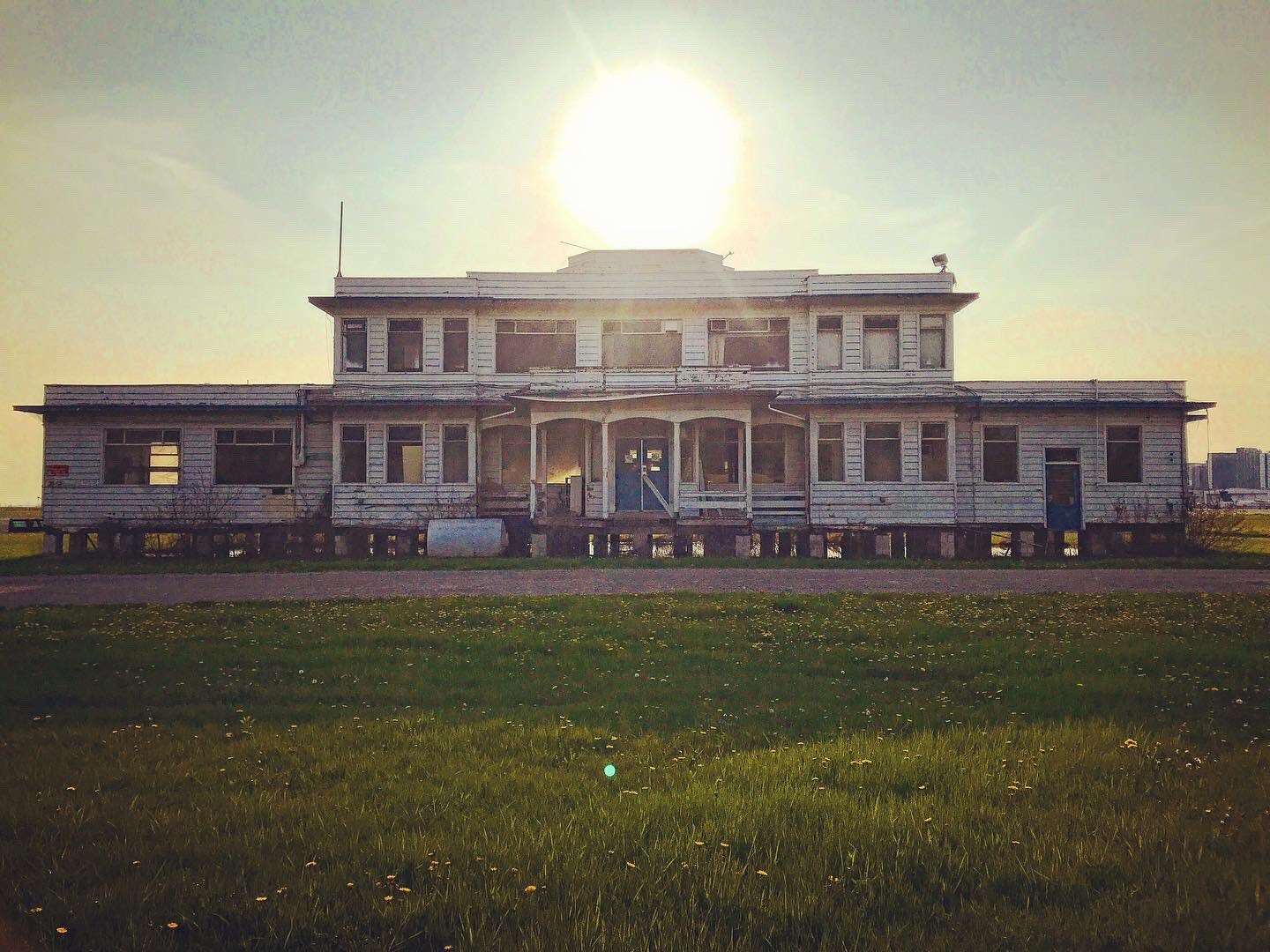
It’s now been nearly a century since the camp closed, but there are still connections to its history in Toronto today — though some of them may soon be lost. The Sam McBride is scheduled to keep sailing to the islands until the early 2030s, but it will then be replaced. The original island airport terminal is a protected National Historic Site, still standing near the ferry dock at Hanlan’s Point. But it has largely been left to rot in a secluded spot next to the modern runways. Just across the water, in the place where the Norwegians’ camp once stood, there is now a public park named Little Norway in honour of those who served there. But as Doug Ford’s provincial government pushes ahead with their secretive plans to expand the island airport, the park now seems to be in danger of being turned into a parking lot.
On the northern edge of Little Norway Park, you’ll find a memorial erected in tribute to those Norwegians, including Finn Kjos and Trond Harsvik. The day they died, it took hours before the rescuers were able to lift part of the wreck from the water and recover their bodies. They had both been crushed by the impact. They would end up being taken to a funeral home on Sherbourne and were both cremated, awaiting the day when their homeland would be liberated, so their ashes could be returned to the country they died trying to defend.
That day would finally come four years later, a day the fliers of Little Norway helped bring about.
During the Second World War, more than 2,500 exiled Norwegians trained in Canada. They would go on to fly fighter planes and bombers above the battlefields of Europe. They would help defend Britain, join the Allied occupation of Iceland, and protect the North Atlantic against U-Boats. They escorted convoys through the Arctic. Carried out reconnaissance missions. Flew behind enemy lines to support the Norwegian resistance and deploy secret agents. They fought in the skies above Normandy on D-Day and were there in the air above Germany as the Allies pushed toward Berlin. A Norwegian pilot from Little Norway was even among the prisoners of war who escaped in the famous Great Escape.
Finn Kjos and Trond Harsvik were just two among more than ten thousand Norwegians who died in the war. But with the help of those pilots who risked their lives training in Toronto, and then over and over again in the skies above Europe, the Nazis would eventually be defeated, the war would come to an end, and the Germans would be driven out of Norway.
The Norwegian fliers could finally go home.
If you’d like more stories about death and disaster on the waterfront, I’ll be leading a tour filled with them next week. You’ll find the full details below.
I wrote a bit about the island airport and its unexpected connection to the first ever Billboard #1 hit here.
There is an extraordinary newsreel about Little Norway, with extensive footage of the fliers and their planes, which you can watch via YouTube in two parts.
Part One:
Part Two:
The first two of Toronto’s new electric ferries have already been launched. The Lady of the Quays hit the water in May and is scheduled to enter service later this year. The Toronto Islander was launched on July 7 and will arrive next Spring. You can watch clips from the side launch ceremonies here and here.
I’m very sorry for how quiet things have been around here lately! It turns out I was bit burnt out by the end of the Festival of Bizarre Toronto History and that has conspired with some life stuff to force me into taking a bit of an unscheduled break. But I’m now back at it and am expecting to be posting more regularly now.
Apologies especially to everyone who supports the newsletter with a paid subscription! If you’d like to make the switch yourself, you can do that right here:
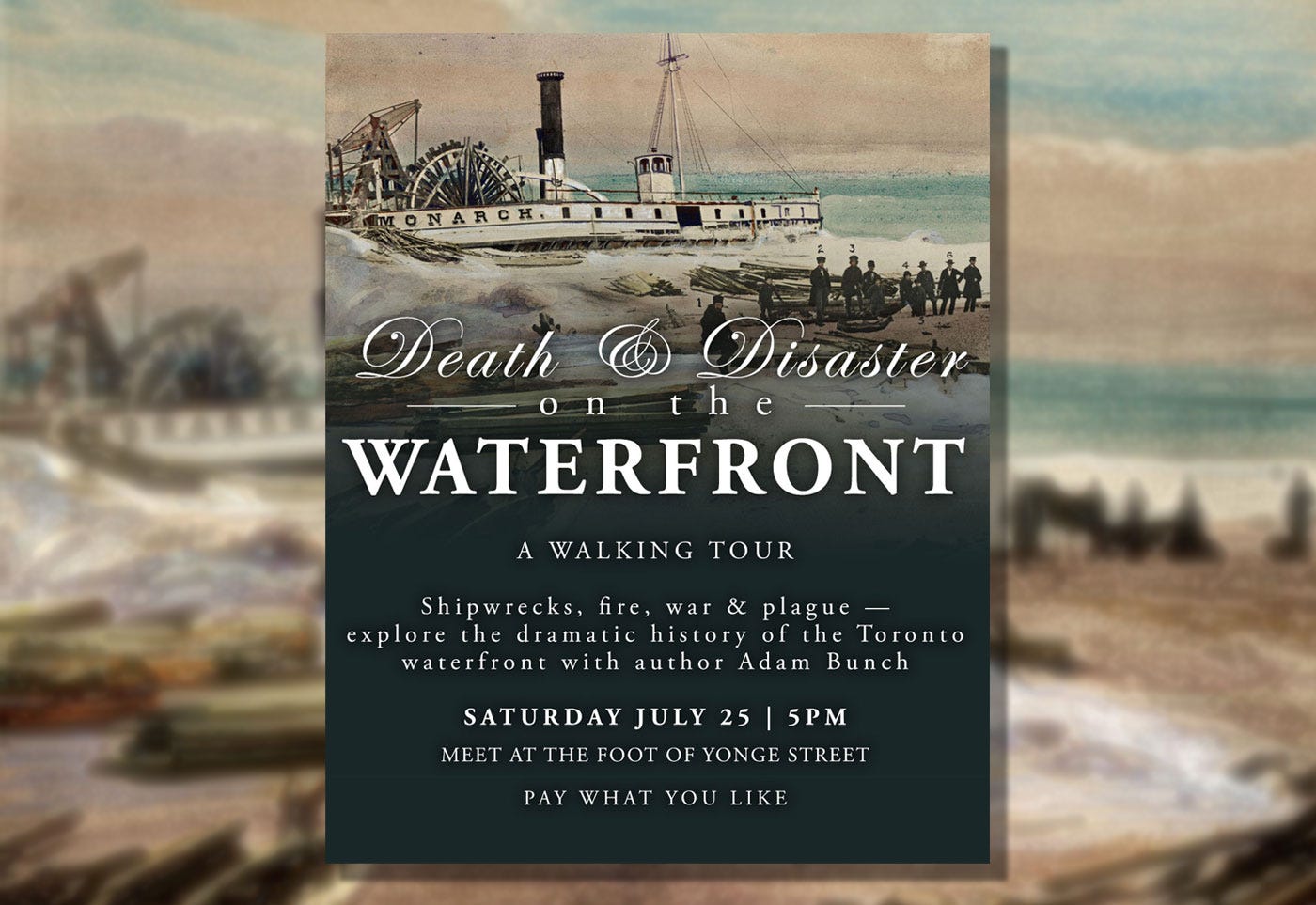
My waterfront walking tour is finally happening! I’d originally planned to do it last fall, but had to cancel at the last second due to an ailing foot — but now it’s back!
Description: Toronto has been deeply shaped by its waterfront. Many of the city’s most dramatic tales have played out in the place where land meets lake. So, on this walk, we’ll spend a couple of hours diving into that history — from Victorian shipwrecks to blazing infernos, from bizarre accidents to heroic rescues. And in the process, we’ll learn a bit about how events along the shoreline have helped mould the city beyond it.
When: Saturday, July 25 at 5pm.
Where: Meet at the foot of Yonge Street (on the south side of Queen’s Quay). We’ll end near the foot of Bathurst Street.
Length: About 2 to 2.5 hours.
Price: Pay what you like!
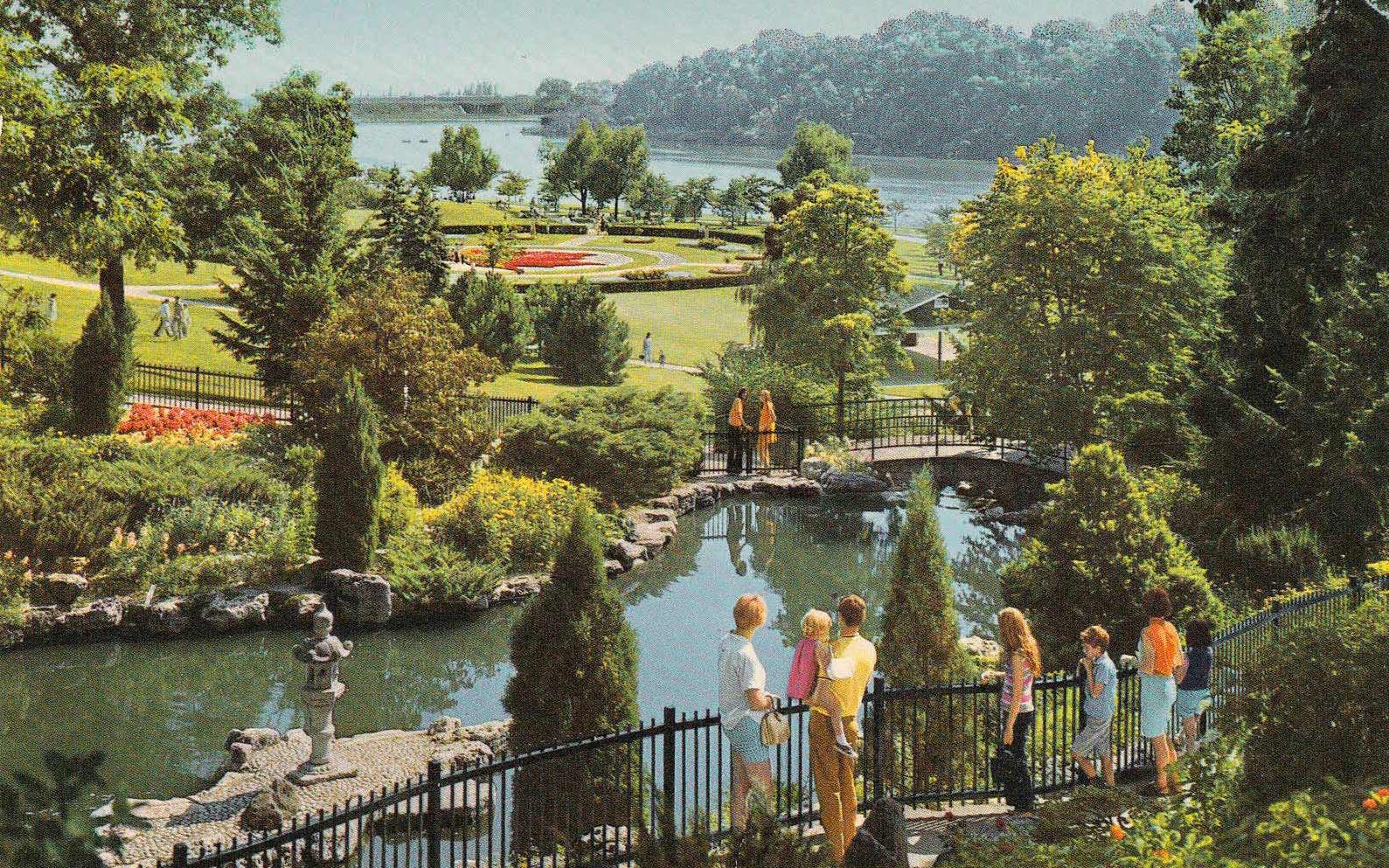
I’m offering another course through the LIFE Institute this summer, for students 50+. It will be taking the form of six weekly walking tours that will explore the historical stories connected to some of Toronto’s most fascinating parks. We’ll be heading out every Wednesday afternoon starting on July 22!
Description: They call Toronto “a city within a park” — and with good reason! There are more than 1,500 parks to explore within the city’s borders, each of them filled with fascinating histories. In this series of six walking tours, we’ll visit some of the most interesting parks in Toronto, spending a few summer afternoons uncovering historical true tales connected to these green spaces — from the dramatic to the bizarre to the unexpected. There are lots of hidden stories waiting to be found in Toronto’s parks!
LEARN MORE ABOUT THE LIFE INSTITUTE
The best of everything else that’s new in Toronto’s past…
SLAVERY & PUBLIC SPACE NEWS — Natasha Henry-Dixon writes about the history of slavery in Toronto and the ways in which the stories of the people enslaved here have too often been overlooked, while those who enslaved them have been commemorated in monuments, street names, and more. “Memorializing the enslaved in Toronto and Upper Canada in various forms, including permanent, public, and physical markers and digital markers, is a critical intervention and catalyst for public memory making and community building.” Read more. (The article begins on page 23 of the PDF.)
TO BE BANNED OR NOT TO BE BANNED NEWS — In his Downtown Theatre newsletter, Eric Veillette shares the history of film censorship in our province, which includes the days when Toronto Police took aim at Shakespeare and some memorable footage of footage being destroyed in 1914. Read more.
REBELLIOUS NEWS — The most recent edition of Bob Georgiou’s Toronto History Curiosities newsletter is filled with tidbits about the infamous rebel mayor, William Lyon Mackenzie, including a map of the rebels’ march, a rebel grave, and a museum in Niagara dedicated to Mackenzie’s history. Read more.
ROUND UP NEWS — Jamie Bradburn has been busy over the last few weeks with lots of new work posted in various places including the story of Oronhyatekha, the trailblazing Victorian journalist Kit Coleman, the history of the CN Tower, and how the creation of Canada’s first postage stamp reflected tensions with our neighbours to the south. It’s all rounded up in a recent edition of the Jamie Bradburn’s Greatest Hits newsletter. Read more.
AN AMERICAN IN PARIS TORONTO NEWS — In Not Smooth Steve’s most recent episode on YouTube, he takes a look at the history of famous and infamous Americans in Toronto, including Amelia Earhart, Ernest Hemingway, Muhammad Ali and James Earl Ray. Watch it.
HEMINGWAY IN TORONTO NEWS — One of those Americans in Toronto is getting a whole conference dedicated to it. The International Hemingway Conference is being held at Toronto Metropolitan University from July 20–25 and will include a public exhibit, including Hemingway-in-Toronto-related artifacts, at the Reference Library. Nicola Brown wrote about it all for Toronto Life. Read more.
HIDDEN GEMS NEWS — Heidi Reitmaier, Museum of Toronto’s CEO, was recently a guest on the Hidden Gems podcast to talk about the work the museum does and their recent exhibit about 52 women who helped change the city. (And I’m not just sharing the link because I get a nice shout out.) Listen.
THE GRAND OLD LADY OF SHUTER STREET NEWS — In their most recent episode, the Muddy York podcast dives into the history of Massey Hall. Listen.
THEY GATHERED HERE: ROYAL CANADIAN LEGION CENTENARY OPEN HOUSE
July 8 — 12pm — Royal Canadian Legion Branch 101 (3850 Lakeshore Boulevard West)
“A collaboration of Legion 101, Long Branch and They Walked These Streets for the 100’ anniversary of the Royal Canadian Legion. Learn about soldier and veteran stories through historic objects and documents. Discover how Long Branch, New Toronto, Mimico and Lakeview supported the war efforts in World War I and World War II and beyond. Speak with military historians, published authors and community partners. Connect with Legion members and neighbours as we celebrate 100 years! Light refreshments and snacks will be served!”
Free!
THE GRIM HISTORY OF THE DEATH PENALTY IN CANADA
July 25 — 2pm — Riverdale Library
& August 26 — 7pm — Deer Park Library
“Death by hanging was a grim realty within the Canadian criminal justice system until its abolition in 1976 (now 50 years ago). But what did capital punishment look like in Canada? Author Lorna Poplak will discuss the history of the death penalty in Canada, with a focus on topics such as the inconsistent application of the death sentence, the treatment of women, wrongful conviction, the difficult journey toward abolition, and the last two hangings at Toronto's notorious Don Jail.”
Free!
LEARN MORE (July 25)
& LEARN MORE (Aug 26)
100 YEARS OF THE UPS AND DOWNS OF THE BICYCLE: FROM THE BICYCLE CRAZE TO DOUG FORD
July 27 – 6:30pm — Palmerston Library
”Cities around the world, including Toronto, are embracing the bicycle as a response to the climate crisis. This is not the first time the bicycle has come to our rescue, proving itself a loyal friend during times of crisis, including the world wars and the COVID pandemic. In Wheeling Through Toronto, author Albert Koehl takes the audience on a 130-year ride through the rich history of the bicycle in Toronto. By understanding how we got here, we can begin mapping a way forward, one in which the potential of cycling is maximized.”
Free!
SIMCOE DAY IN TORONTO
August 3 — 1–4pm — St. Matthew’s Clubhouse in Riverdale Park — The York Pioneer & Historical Society, Toronto’s First Post Office, and the Riverdale Historical Society
*** I’ll be part of this one! ***
“Come celebrate Toronto’s history and the people who help keep its stories alive Celebrate Simcoe Day 2026 with Toronto history authors, booksellers, podcasters, and historical societies… Browse curated artifact displays, meet and chat with local authors and podcasters, connect with historical societies, and take part in guided neighbourhood walks. Whether you’re a lifelong history enthusiast or simply curious about Toronto’s past, you’ll discover something new and meet others who share your interest!”
Free!
BEFORE THE BLUE JAYS: PROFESSIONAL BASEBALL IN TORONTO PRIOR TO 1977
August 6 — 6pm — North York Central Library
“Harvey Sahker presents his book, "Before the Blue Jays" (Dundurn, 2026). Discover the fascinating history of professional baseball in Toronto before 1977, when the Blue Jays first took flight. Learn about the major events, venues, and people who trail-blazed the way to the arrival of Major League Baseball in Toronto.”
Free!
THE TORONTO HISTORY LECTURE
August 4 — 7:30pm — Zoom — Toronto Branch, Ontario Genealogical Society
“This year’s lecture will be: ‘A Grocery Store, a Library, and the Struggle for Space: Black Community-Building in Toronto, 1920s–1960.’ Presenter Dr. Melanie Knight will tell us about her research on the Home Service Association.”
Free! Registration appreciated.
FIELD OF DREAMS: COMMEMORATING THE CHRISTIE PITS RIOTS
August 15 — 2pm — North York Central Library
“CeCe Fortier, scholar and author, brings together organizers of the Field of Dreamers Cooperative Softball Association to commemorate the 93rd anniversary of the Christie Pits riots and discuss what they mean for queer/trans, Black, Jewish, and other communities today.”
Free!
BOOK LAUNCH: YORKVILLE BY MIKE DALEY
September 30 — 7pm — Church of the Redeemer
“Please join us in celebrating the release of Mike Daley's much-anticipated book, Yorkville: How a 1960s Coffeehouse Scene Rewrote Popular Music. Admission is free, but you can add on a book and/or a small donation to Church of the Redeemer's Common Table homeless outreach programme. The event will feature a book reading, a live interview with Rob Bowman, a Q&A, book signing and reception. Books will be available for purchase at the event.”
Free! Donations welcome.
HERITAGE TORONTO WALKING TOURS
Various dates and locations until November — Heritage Toronto
“Our 2026 Tour Season will run from May to November, presenting over 60 experiences throughout Toronto. This year, we’re bringing back some of our greatest hits: the best-selling and most beloved tours that people have returned to time and again. From walks uncovering Black history along King Street to explorations of the bustling streets of Little India, we invite you to experience some of Toronto’s most compelling stories. Alongside our classics, we’re also introducing a range of new tours that offer fresh perspectives on the city’s heritage: from stories of food and migration in Little Manila, to explorations of Toronto’s architectural legacy, to journeys through the natural heritage of Toronto’s beaches. We hope to see you this season!”
HEMINGWAY IN TORONTO
July 20–26 — Monday to Friday 9am–8:30pm; Saturday 9am–5pm; Sunday 12–5pm — Toronto Reference Library (Baillie Special Collections Centre reading room on the fifth floor)
“Hemingway-related artifacts—including a 1924 copy of the Toronto Daily Star containing Hemingway’s final article for the paper—exhumed from the special collections of the Toronto Public Library. The objects provide a portal into understanding just how foundational Toronto was to Hemingway’s legacy.”
Free!
50 YEARS OF ETOBICOKE CIVIC CENTRE ART GALLERY
Until August 8 — Monday to Friday (8am–6pm) — Etobicoke Civic Centre Art Gallery
“Visit us to discover the history of art at the Etobicoke Civic Centre with artifacts, archives, and paintings pulled from the City of Toronto's permanent collections. Celebrate the present by witnessing a commissioned piece by early career artist Lise Round. Envision the future with new designs of the updated Etobicoke Civic Centre Art Gallery. Established in 1976, the Etobicoke Civic Centre Art Gallery has served the local community for 50 years. Etobicoke Civic Centre Art Gallery has presented more than 500 exhibitions and continues to nurture emerging talent, spotlight established artists and celebrate creativity at the community level. To celebrate this milestone, the City of Toronto’s Arts and Culture Services have created an exhibition that honours the past, celebrates the present, and looks forward to the future of the gallery.”
Free!
THE T.O. YOU DON’T KNOW — MUSEUM OF TORONTO
Until December 30 — Tuesday to Friday (12–6pm), Saturday (10am–6pm) — Museum of Toronto
“Discover how interesting Toronto really is, through a new exhibition that reveals the city’s hidden stories. The T.O. You Don’t Know uncovers hidden stories Toronto has long overlooked—through 50+ historic sites, forgotten events, and fascinating local narratives and unique objects. It surfaces the ignored, the hyperlocal, and the quietly radical, reinforcing that history is not fixed, but layered and still unfolding.”
Free! Donations welcome.
No posts
Comments
Nothing yet. Say the first thing.
Sign in to join the conversation.