
Three days. 35+ of the most brilliant regenerative minds on the planet. Thousands of you showing up live, from every time zone, 24+ countries, asking the same question I’ve been asking for over a decade: what would it look like if we actually designed our lives, our neighborhoods, and our cities to help us thrive?
We called it Generation Regeneration for a reason. This wasn’t a conference about someday. It was about right now — about the fact that regeneration doesn’t start with a policy or a masterplan. It starts with you. Then it moves to your street. Then your neighborhood. Then, if enough of us do the work, it becomes the way we build cities altogether.
I want to share what this summit actually felt like from where I was standing, because the replays capture the content — but they can’t quite capture the current that ran through all three days.
We opened with Bill Reed — one of the original co-founders of LEED — and it was the right way to start. Bill’s whole point is that regenerative design isn’t about doing less harm; it’s about leaving a place more alive than you found it.
That reframe set the tone for everything that followed:
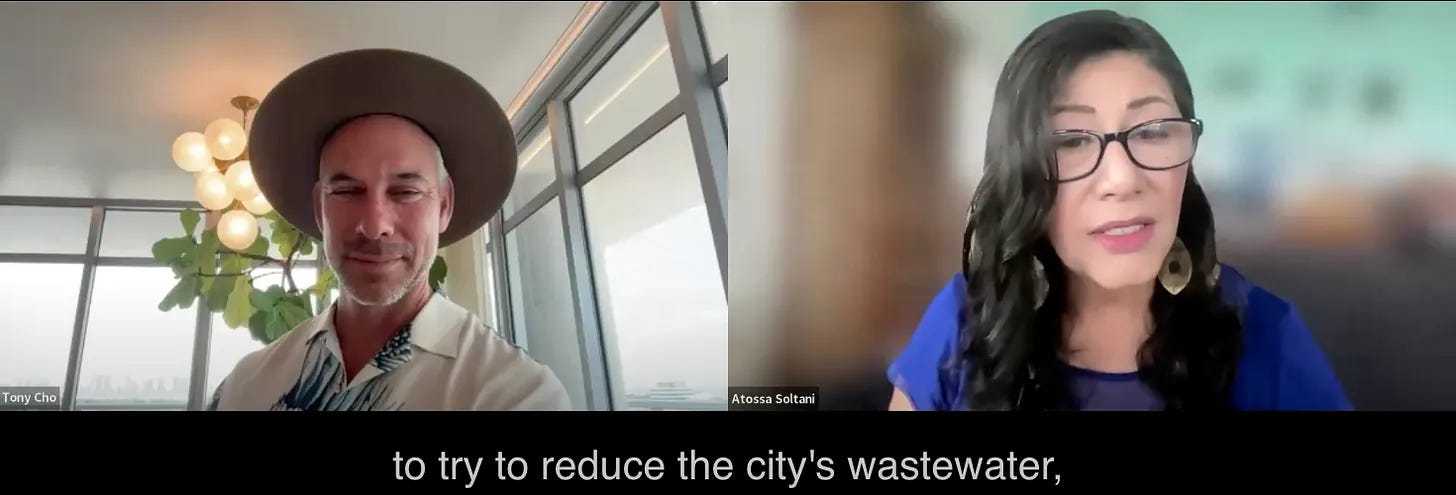
Ocean Robbins on designing neighborhoods that actually nourish people, Atossa Soltani bringing the Amazon and indigenous regeneration into the conversation, Regan Hillyer on turning consciousness into creation, Dr. Zach Bush on the soil-microbiome-human health connection, and Paul Stamets, who has this way of talking about mycelial networks that makes you rethink what “community” even means at a biological level. We closed the day the way it needed to close — with Sah D’Simone holding space somatically for everything we’d just taken in.
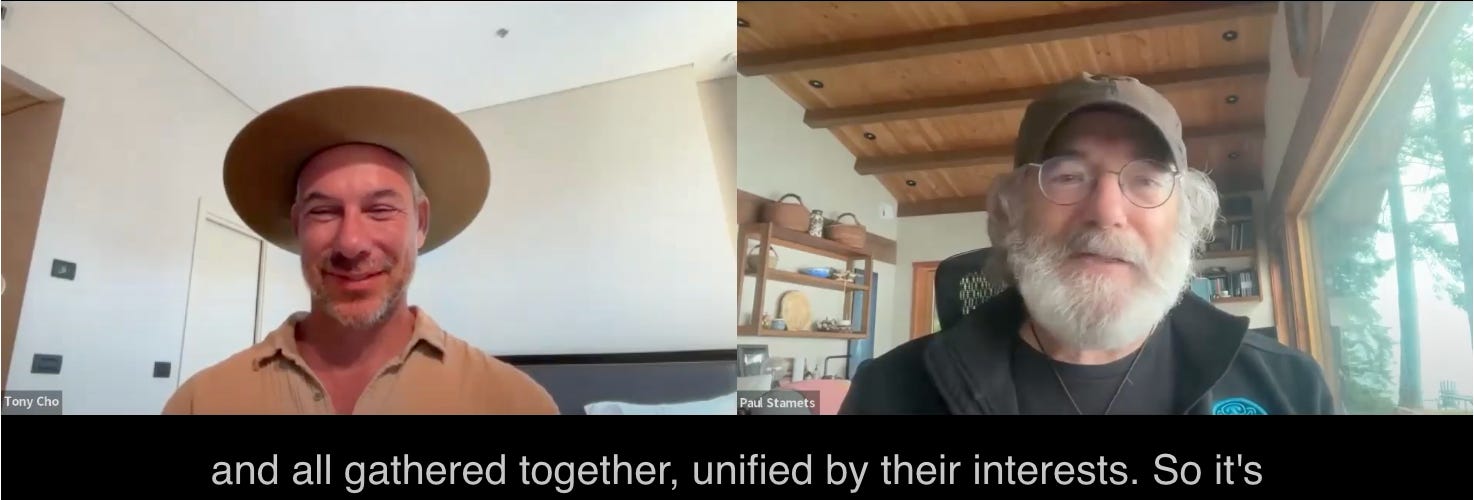
By the end of Day 1, our team sent a note around the office: “what a beautiful Day 1.” That’s exactly what it was. Not polished. Beautiful.
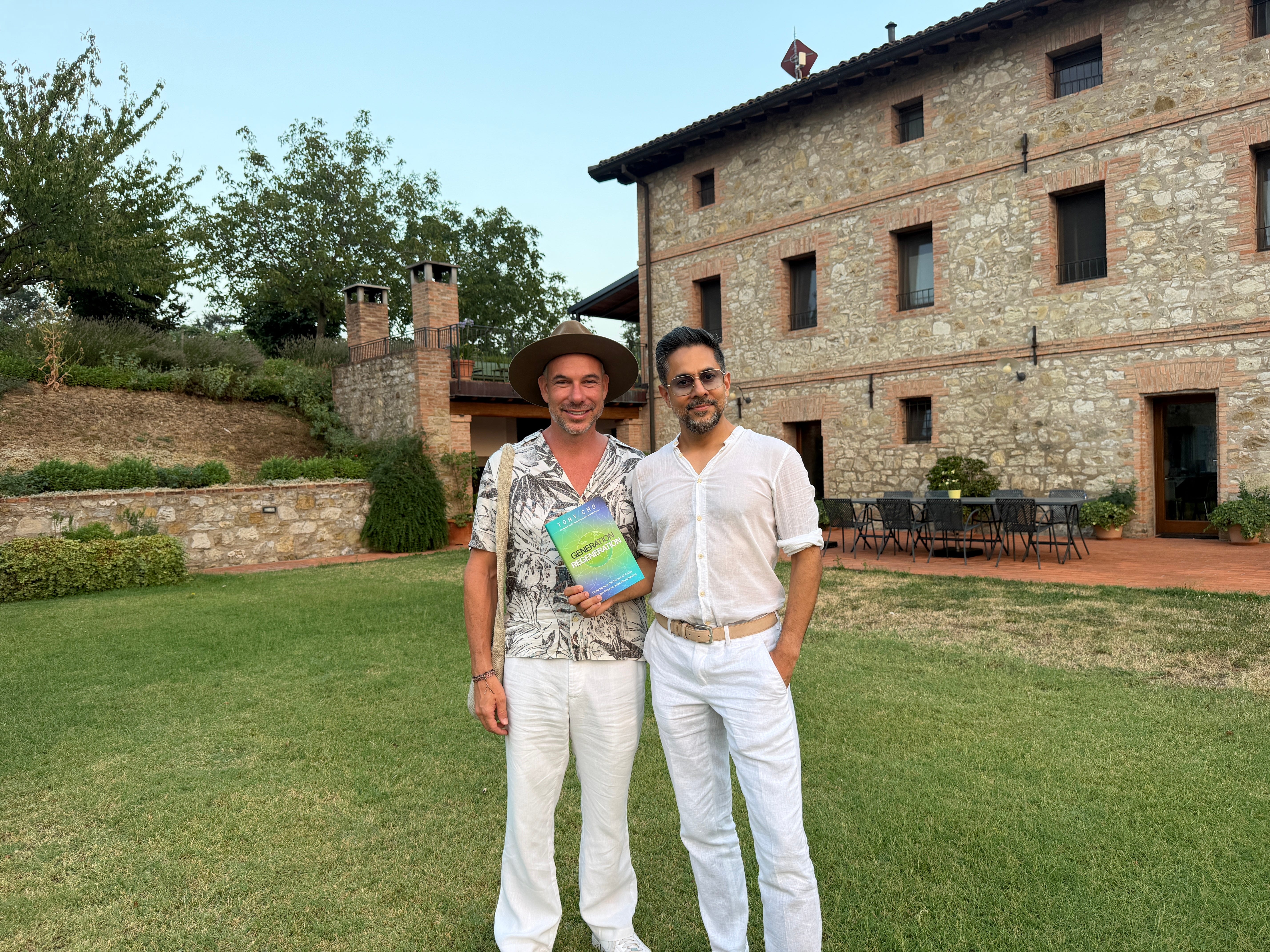
Day 2 turned outward, toward place. Ethan Kent, from the global placemaking movement, made the case that public space and public life are the actual heart of regeneration — not an amenity bolted onto a development. Majora Carter pushed on green space justice and what it means to build real community power, not just green paint over old inequities. Dan Buettner brought the Blue Zones lens — the actual, researched conditions that let people live to 100 not through willpower, but because their environment made the healthy choice the easy one. And Vishen Lakhiani connected exponential technology back to regenerative placemaking in a way that made the whole room think differently about what’s actually possible in the next decade. That distinction Dan named — environment over willpower — might be the single idea I heard most echoed back to me all week.
Day 3 opened with a session Amanda Joy Ravenhill and Roxi Shohadaee co-hosted called “The Architecture of Change: Building the Regenerative Future” — and it set exactly the tone we needed for a day about culture and collective reimagining. From there we moved into Carlos Moreno on the 15-Minute City — the idea that everything you need for a full life should be a short walk or bike ride away, which is wild how radical it still sounds even though it’s really just describing how neighborhoods worked for most of human history before we designed cars into the center of everything — and then into a personal highlight: a live conversation with Peter Diamandis.
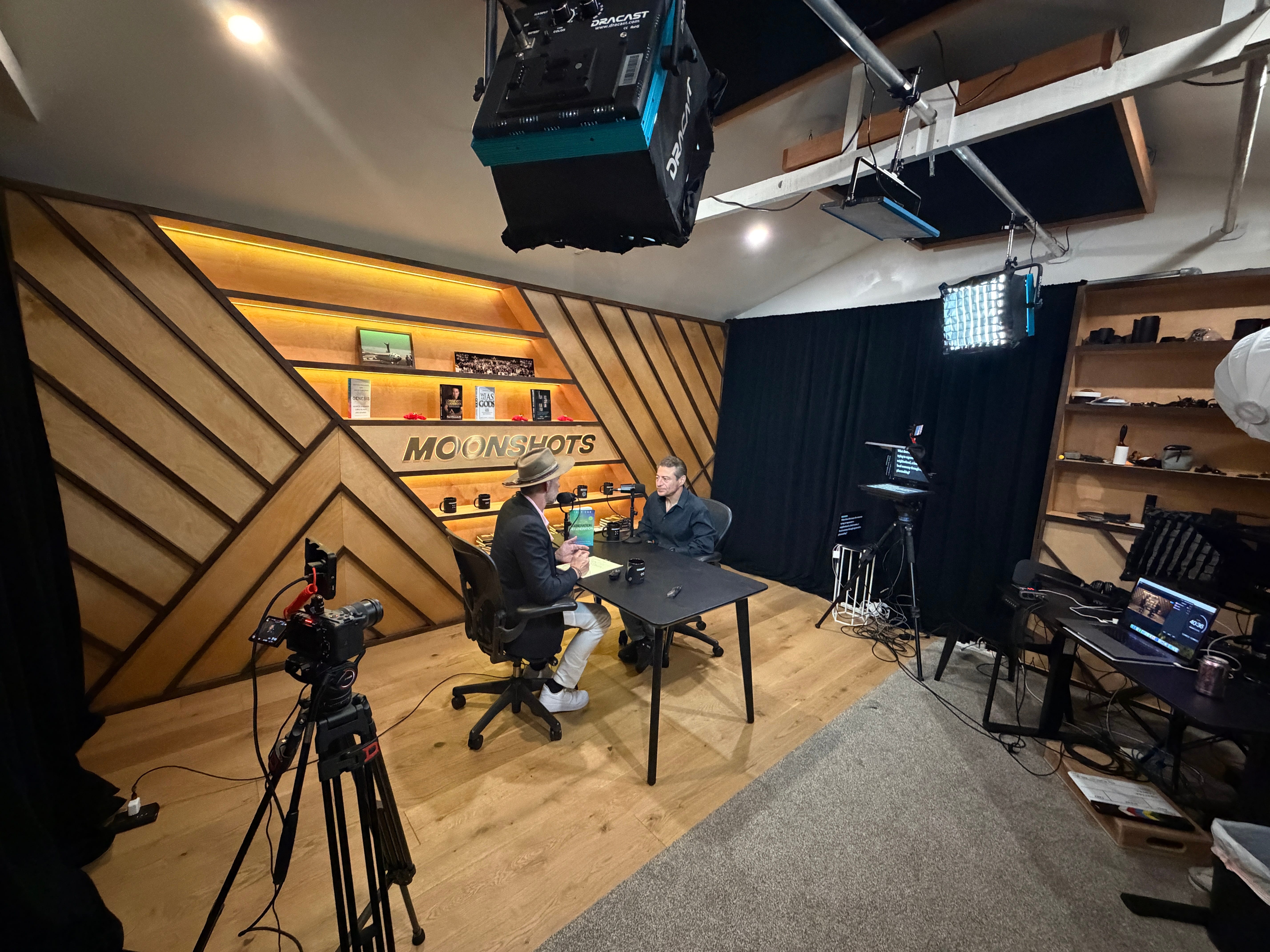
I won’t try to summarize that one in a paragraph. But I’ll say this: when Peter talks about technology becoming “automagical” — quietly personalizing your life so the healthy, regenerative choice becomes the default choice instead of the hard one — it’s the same idea Dan Buettner was describing about Blue Zones two days earlier, just coming from an entirely different discipline. When two people from completely different worlds land on the same insight independently, that’s usually a sign you’re looking at something true. One attendee, building his own 14-district regenerative community in Florida, wrote to me afterward that the conversation put language to things his team had been building for two years already. That’s what these three days were for.
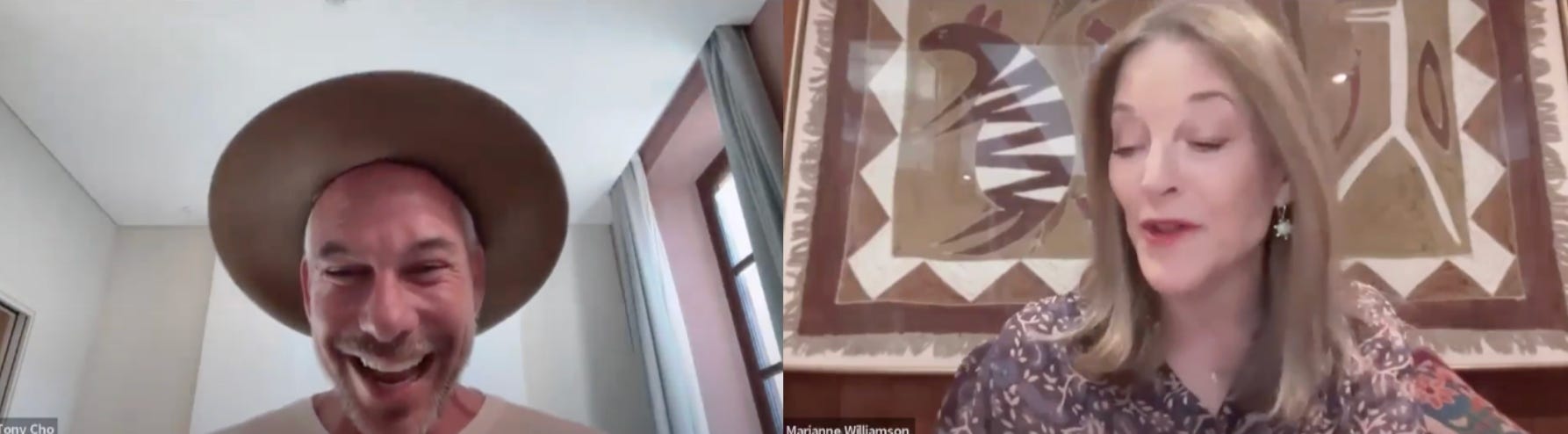
We closed the entire summit with Marianne Williamson on returning to love as the foundation for cultural regeneration — which is exactly where a week about rebuilding cities needed to land: not on policy, but on the state we’re building from.
Here’s what I keep coming back to: 35 of the best minds in this space just spent three days building a shared language for something a lot of us have been circling alone for years. That’s not something you let evaporate the week after a summit ends.
What’s stayed with me most, though, isn’t a single talk — it’s how people showed up for all three days. One woman joining us from Australia stayed up through the night three nights in a row, live, so she wouldn’t miss a single conversation — more than 21 hours of programming, on the other side of the world from most of our speakers. She told our team that each session felt like its own masterclass in regenerative placemaking, each one coming at the same questions from a completely different angle. That’s not a level of commitment you get from a normal webinar. That’s what happens when something is actually true for people.
“Making the invisible visible. The summit gave me hope in a way that nothing has before; we really can build a thriving future. I’m looking forward to meeting everyone and participating in this regenerative community.” — Founding Co-Designer
“…The conversations are all masterclasses and game changers. I look forward to following what happens next, from British Columbia, Canada. I found it very inspiring.”
— Founding Visionary
“Many Summit speakers reinforced that regenerative placemaking is inherently aspirational. It requires engaging deeply with a community’s unique context, values, and lived experiences. The same holds true for creating a whole-person, mind-body approach to healthcare and community wellbeing. It isn’t about creating and implementing a fixed model or delivering a set of buildings — it’s about co-creating a shared aspiration, one that is interpreted differently by each individual, organization, and community it serves.” — Founding Visionary
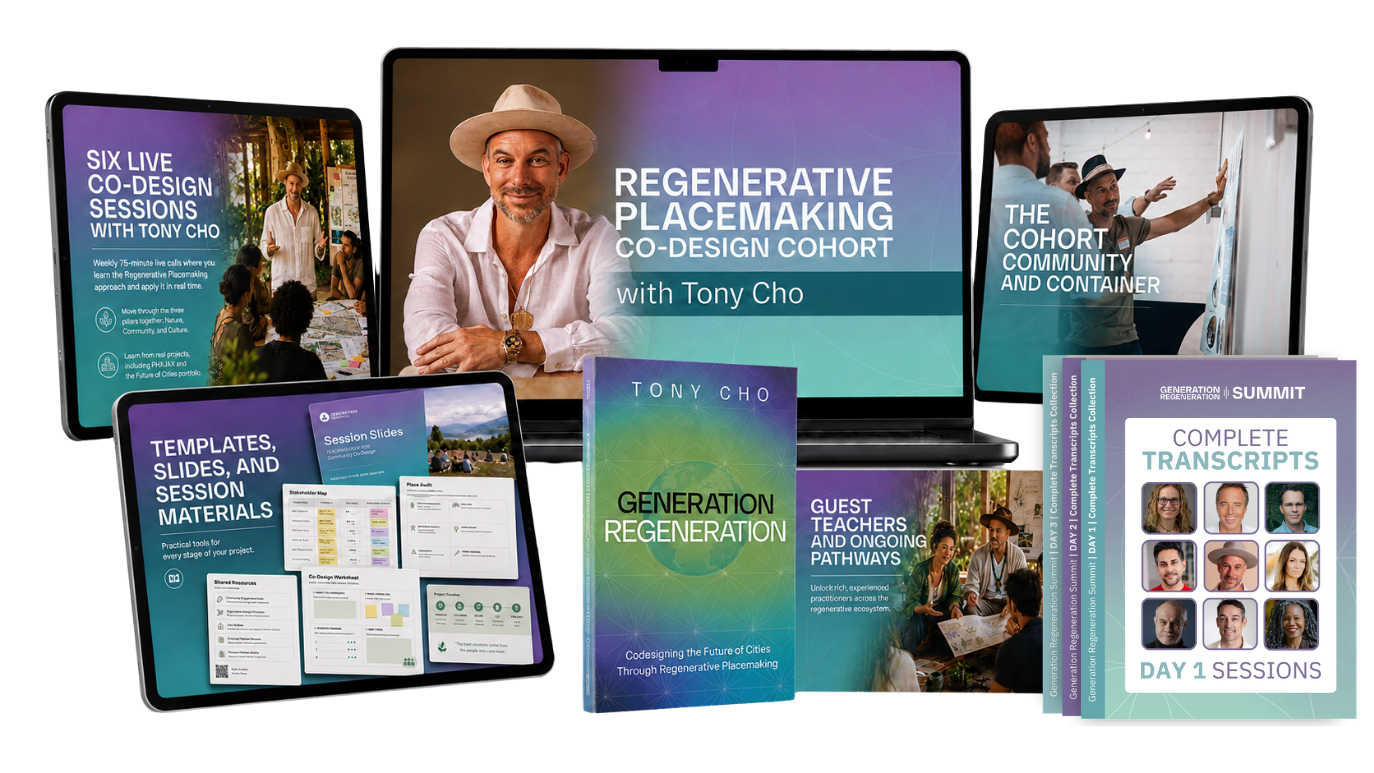
JOIN THE FIRST CODESIGN COHORT
This is why I wrote Generation Regeneration: Codesigning the Future of Cities Through Regenerative Placemaking — to put a full framework behind everything we explored this week, from the inner work of Day 1 through the collective action of Day 3. It publishes August 11, and everything from the summit was really the live, human version of what’s inside these pages.
If you were with us for all three days — or even just caught pieces of it live — the replays are now available, and they include a pre-order of the book.
If you’re just finding us now, you can start with pre-ordering the book alone, and I’d be glad to have you. Either way, this is an invitation to come cocreate, codesign and build with us. Regeneration was never meant to be a spectator sport.
With gratitude for everyone who showed up last weekend. We’re only just getting started,
Tony
Founder, Future of Cities · Co-Founder, ChoZen · PHXJAX
Comments
Nothing yet. Say the first thing.
Sign in to join the conversation.