
There is a particular kind of anticipation that arrives just before spring fully opens—quiet at first, then impossible to ignore.
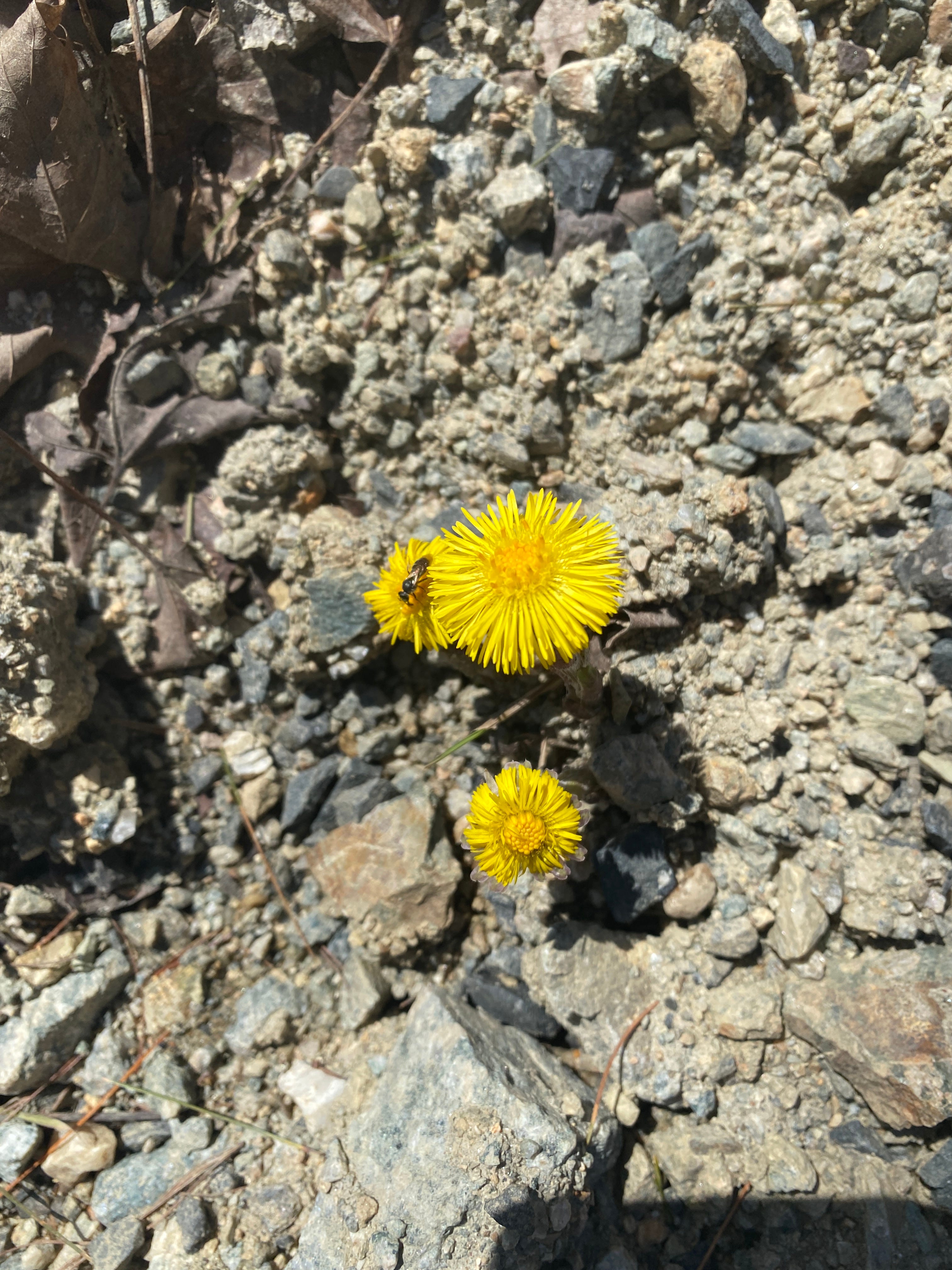
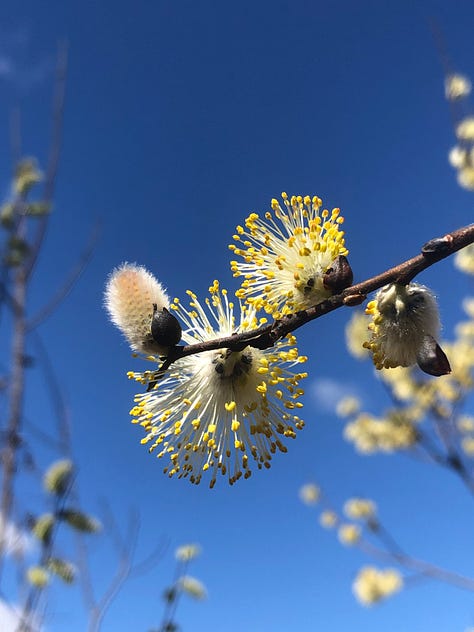
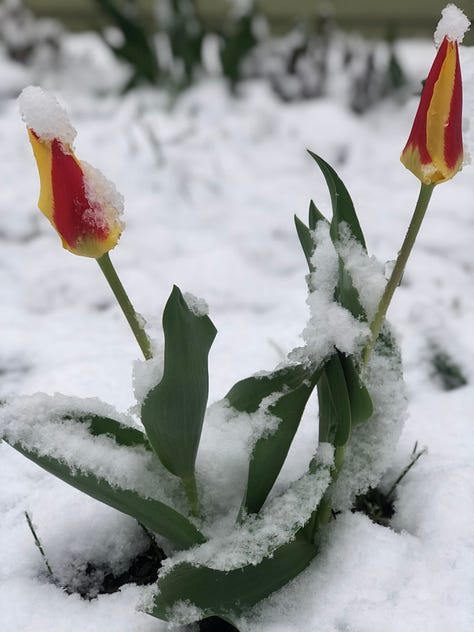
For those of us who live close to plants, who listen for their timing, this season begins long before the landscape turns green. It begins in noticing. The first coltsfoot pushing through the thawed edges of the gravel road. The brief, luminous appearance of spring ephemerals (bloodroot is my favorite! also tritium, lady slipper if you are lucky! trout lily all here and gone before the canopy fills in. Then, closer to home, the familiar joy of crocuses and daffodils returning in the garden, small but insistent declarations that the season has shifted.
This is a threshold time.
In the world of herbalism and in practices like Art that Breathes, spring carries a particular kind of excitement. Summer gatherings begin to take shape, conferences, classes, workshops; names and places appearing on calendars. There is the quiet thrill of knowing we will find each other again. That conversations will pick up where they left off. That knowledge will be shared not just in words, but in walking, harvesting, making.
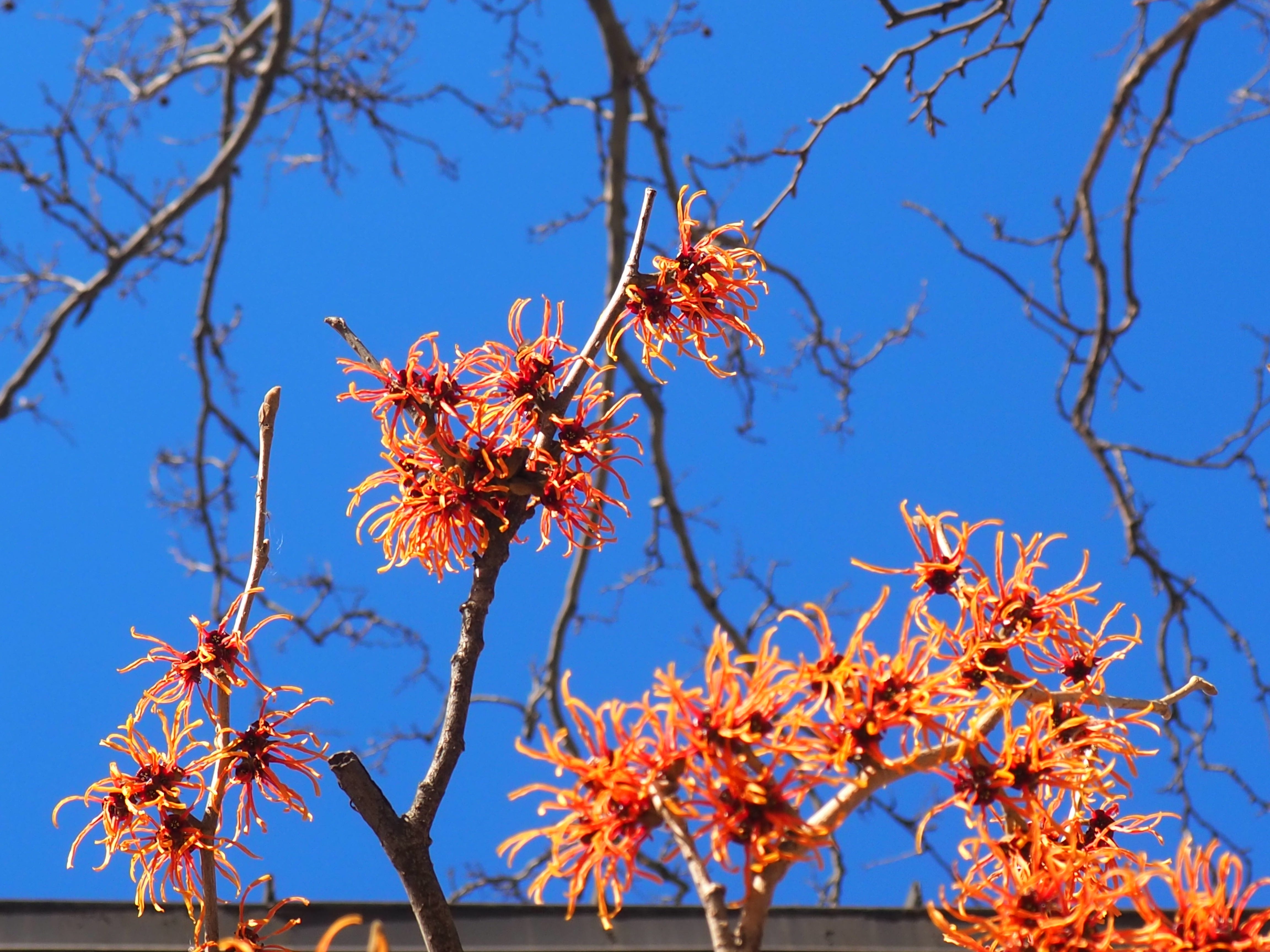
The body feels it too, this turning outward. Time for those spring tonics and bitter greens. More time spent outside. Hands in soil. Eyes adjusting again to the subtle differences in green.
And alongside all of this: planning. Projects begin as small sparks this time of year. Ideas held through winter start to stretch toward form. What wants to be made? What wants to be tended? What is ready to emerge, and what still needs time beneath the surface?
And with this turning, a reminder.
As the first wild foods appear, especially ramps; we are called to move with care. To gather in ways that ensure continuity, not depletion. To leave enough for the generations that follow, human and more-than-human alike. To remember that we are not the only ones in relationship with these plants. You can read more about ethical wildcrafting here.
Spring abundance can give the illusion of endlessness. It is not. Reciprocity asks something of us: restraint, attention, gratitude, and the willingness to leave what we could take.
Spring does not rush, even when it feels urgent. It unfolds in sequence, in relationship, in response.
Coltsfoot. Then ephemerals. Then the garden.
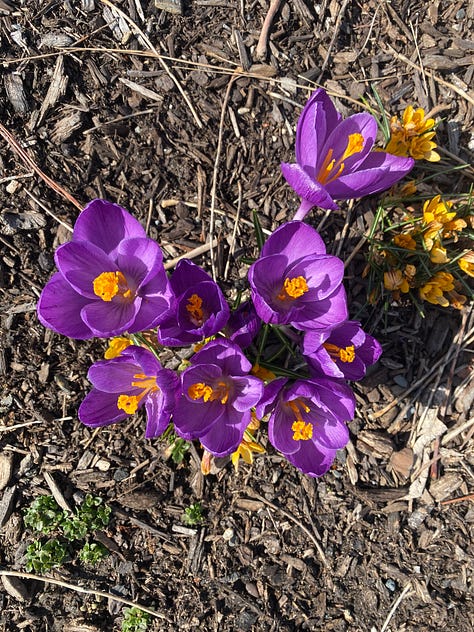
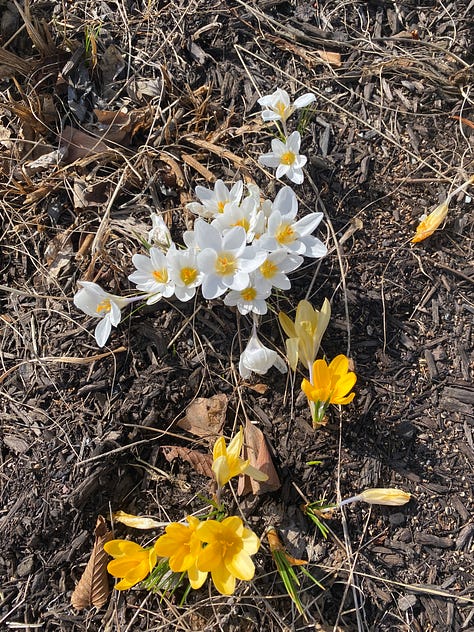

A reminder, perhaps, of how to begin.
And perhaps this too: to remain in relationship with the living world, to notice, to tend, to refuse indifference; is not neutral. It is a quiet refusal of the systems that depend on our disconnection.
We are living within economies that treat land as commodity, plants as product, and attention as something to be captured and sold. In that context, choosing to slow down, to learn the names of plants, to harvest with restraint, to leave enough, is not just personal, it is political.
It interrupts the logic of extraction.
It insists on interdependence over ownership, continuity over profit, care over convenience.
To kneel beside a patch of ramps and decide to take less, or not at all, is a small act, but it pushes against a much larger pattern. It says: not everything is here for me. Not everything must be taken. Not everything can be replaced.
This kind of attention reshapes us. It asks us to be accountable to place, to season, to the more-than-human world not as an idea, but as a lived practice.
This, too, is part of the work.
Underlying all of this is something many of us who work with plants already know, even if we don’t always name it: our thinking is not separate from the living world around us.
What we notice, what we feel, what we come to understand these do not arise in isolation. They are shaped in relationship. With place. With season. With the plants themselves.
To spend time with coltsfoot at the edge of the road, to kneel among spring ephemerals, to taste the first bitterness of the season are not passive acts. They are participatory. They shape perception. They shift awareness.
In this way, connection to the natural world is not just restorative and it is formative. It changes how we think, what we value, and how we move through the world.
Which is precisely why it matters.
There is a way of understanding this spoken about by thinkers like Gregory Bateson and James Gibson that suggests mind and perception do not live solely inside us, but arise through relationship with the world around us. Not as abstraction, but as lived exchange.
Many herbalists have always known this in practice: that what we perceive, and even how we think, is shaped through our encounters with plants, with place, with season.

Because when systems depend on disconnection, on speed, on abstraction, on the idea that we are separate from the sources of life, then choosing relationship becomes more than personal preference. It becomes a quiet, ongoing refusal.
A refusal to be severed from context. A refusal to see the living world as inert. A refusal to forget that we are shaped, constantly, by what we are in relationship with.
And from that remembering, different choices become possible.
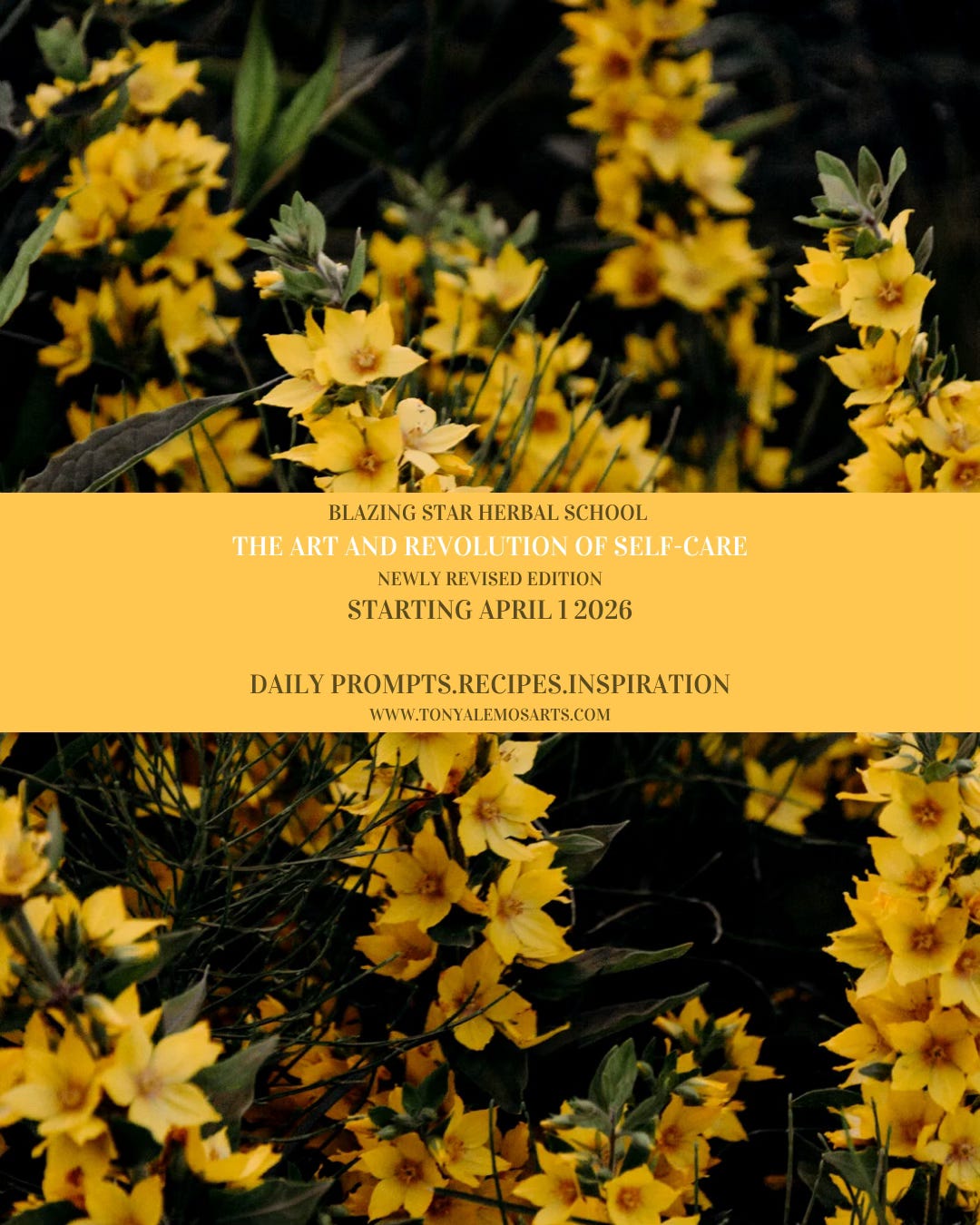
As a special thank you to anyone who upgrades to a paid subscription from this post (and all my already paying patrons will receive a PDF with my 30 days of Nettle program! (a Spring Nettles Challenge) Why Nettles? read all about Nettles (here) You will also receive “the Art and Revolution of self care” which begins tomorrow April 1st!
** IMPORTANT **Please can all paid subscribers new and old send me their email address!
Art That Breathes is a reader-supported publication. To receive new posts and support my work, consider becoming a free or paid subscriber. Become a paid subscriber and receive Art and Revolution of Self Care course for free
Self-care is crucial during challenging times because it allows us to effectively manage stress, maintain mental resilience, and better cope with challenging situations. By prioritizing our health, physical, emotional as well as spiritual and creative well-being we are giving ourselves greater capacity to handle adversity and support each other around you. Neglecting self-care can lead to burnout and further exacerbate existing problems. During times like when so many people are feeling so vulnerable this it may seem counterintuitive to focus within on self care but as Audre Lorde so famously said “self-care was a political act of self-preservation” Which she outlined in her 1988 book “A burst of Light”
Self-care is a political act of self-preservation, not self-indulgence
Self-care is a defense against a hostile culture
Self-care is especially important for marginalized groups
Self-care can help people survive adversity
Self-care can help people confront systems that cause harm
Transform your daily routine with “The Art and Revolution of Self Care (revised edition) a 30-day journey designed to help you craft a personal self-care toolkit that fits seamlessly into your busy life. Dive into daily prompts, recipes, and inspiration delivered straight to your inbox, inviting you to rest, reset, and grow in a community of like-minded folks.
This is such a unique event:
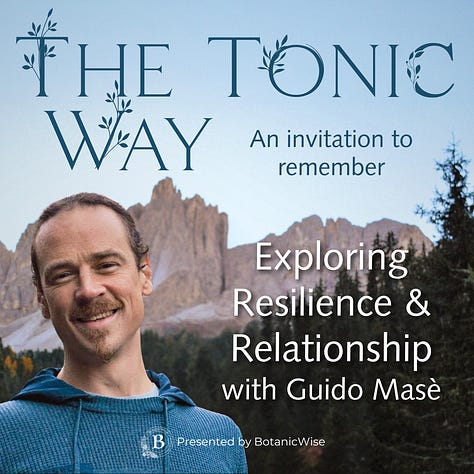



As I am sure many of you know any class with Guido Mase is enlightening - he is such a generous teacher! Wise and entertaining. He will address the question, why we need to connect with nature at this moment in time?
Guest teachers include Kate Gilday, Krista Nelson, Naila Francis and myself
Sign up here Botanicwise
And here is a link to a free webinar with Guido to get you excited about the upcoming course. I personally cannot wait to attend all the sessions
Other fun events:
🌿 Western MA Herbal Symposium May 9th
🌿Wild Indigo Herb Fest in Kentucky in June
🌿Misty Meadows Women’s Herbal Conference in VT in August
🌿 BotanicWise Herbal Gathering Sept 18-20 Kempton PA


And if this topic is your jam let me also recommend Pam Montgomerys latest offering. Pam is the author of some of my favorite books about plant and beyond human connection. I’ve known Pam a long time and her work never fails to inspire me.
You will find a link to her books here
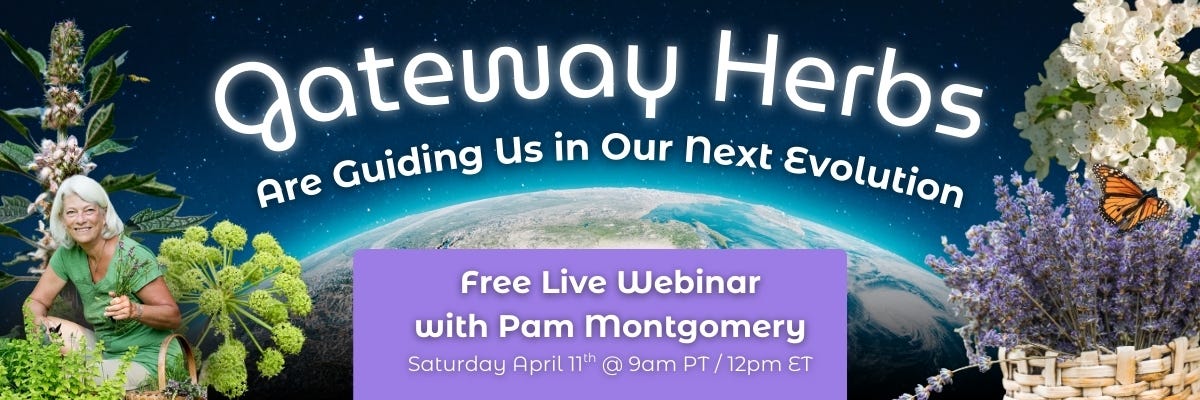
Gateway Herbs Are Guiding Us in Our Next Evolution
Free webinar with Pam Montgomery
Saturday, April 11th, 2026 @ 9:00am PT/ 12:00pm ET
Gateway herbs Link for more info
Four of these Gateway Herbs are:
Hawthorn: Opens the heart to both joy and grief
Angelica: Provides divine guidance and celestial light
Motherwort: Offers courage and protection through change
Lavender: Brings peace and nervous system restoration
In an upcoming free webinar, Pam will share how these plants are actively helping us move into “the New Earth story of Interbeing,” where we remember ourselves as kin within the great web of life.
No posts
Comments
Nothing yet. Say the first thing.
Sign in to join the conversation.