
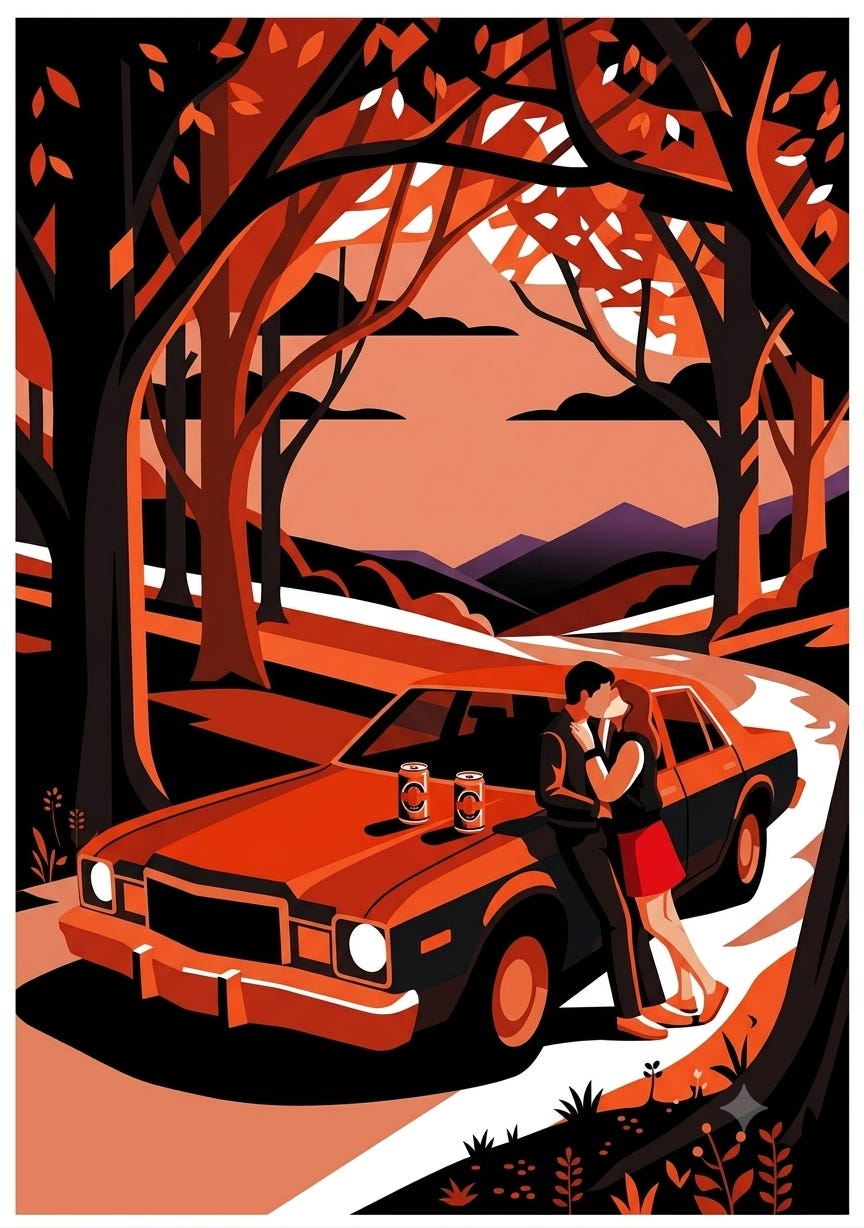
This article is about sex…and the human condition…and 1984….and alcohol. It delivers bad news…and a little bit of good news.
In 1979, on February 20, I had an appointment with the Department of Motor Vehicles to take my driving test that would earn me a license to drive. I remember it was that day because it couldn’t be any other day since that was the precise date I turned the age of legal driving in California: 16. Why would I wait one day longer? With that license, freedom and opportunity were mine!
I was no different than my other friends, none of whom waited more than a week beyond their 16th birthday to obtain their California driver’s license. The things we could do with that document included taking ourselves to parties or cruising the boulevard in Petaluma, California and ogling the girls while peering at our competitors to see if their cars looked cooler than ours (it almost always did). We could finally drive ourselves to the movies, to each other’s homes, to the mall, and, eventually, to bars. That license provided me, my friends, and nearly every other teenager access to a new era in our lives: The Era of Socialization.
We didn’t call it that. We just called it freedom. But it was both.
Having the freedom to meet other people (and especially the opposite sex) outside the confines of school was liberating. It opened up all sorts of possibilities, from new friends, to sex, to testing our mettle against others. Access to the car meant our options opened drastically. Nothing less than a rite of passage; a nod toward adulthood and responsibility…and freedom.
It certainly made illegal drinking easier, and that couldn’t come at a better time since alcohol came in handy when we more frequently found ourselves in the company of others (well, girls, really), in unfamiliar places. And it worked. The alcohol lubricated social interactions as well as provided the excuses we’d all need at one point or another. There were moments when we overused the stuff. But for the most part, the beer, Seven-Sevens, and wine coolers did the trick of lessening our inhibitions, loosening our tongues, and deepening our well of courage.
But after a couple of years of gaining and using that freedom, we were still blocked from what then seemed to be the real den of adulthood: The Bar.
By the time I turned 18, the joke of being able to vote, drive, be considered an adult under the law, and be able to join the military, but not be able to legally drink or enter a bar, began to weigh on us. The bar was where the adults gathered. Also, hiding our drinking, while we became better at it, was getting old too. So, it was about this time when my friends and I began the process of procuring fake IDs.
This was a pretty easy thing to do. You either knew a guy or knew a guy who knew a guy. In any case, as soon as we had access to the guy, we forked over the $25 bucks or so and hoped for the best—which wasn’t always that good. But we knew the older and wiser women were in those bars and we were going to get in there too—crappy fake ID or not.
By the time I turned 21 in 1984, I’d figured out bars. I figured out the protocols for ordering, tipping, and tabs. I learned how to spot the crazy people. I learned how and why to befriend the bartender. But more importantly, I learned how to interact and spend time with people I did not know and to enjoy it. The lessons didn’t come easy, but you had to learn them. You had to learn them because in 1984, if you wanted to socialize, meet people, learn about life, entertain yourself or just participate in humanity, you pretty much had to come face to face with humans, and preferably, outside the context of work. And that usually meant places where alcohol was served.
And here is a fact that pretty much everyone learned at a very young age: A little alcohol diminished the fear, the self-doubt, and the shyness, while at the same time puffing up one’s courage to engage. This is the role alcohol played over the centuries in aiding social interaction and social cohesion, and its importance can’t be underestimated. And if you want to suggest that this phenomenon led to some people indulging too much, forming dependency, and harming their lives, I’ll agree it happened and it’s a problem for many. But I’ll also tell you that the positive role played by responsible, alcohol driven lubrication outweighs the harm…by a wide margin.
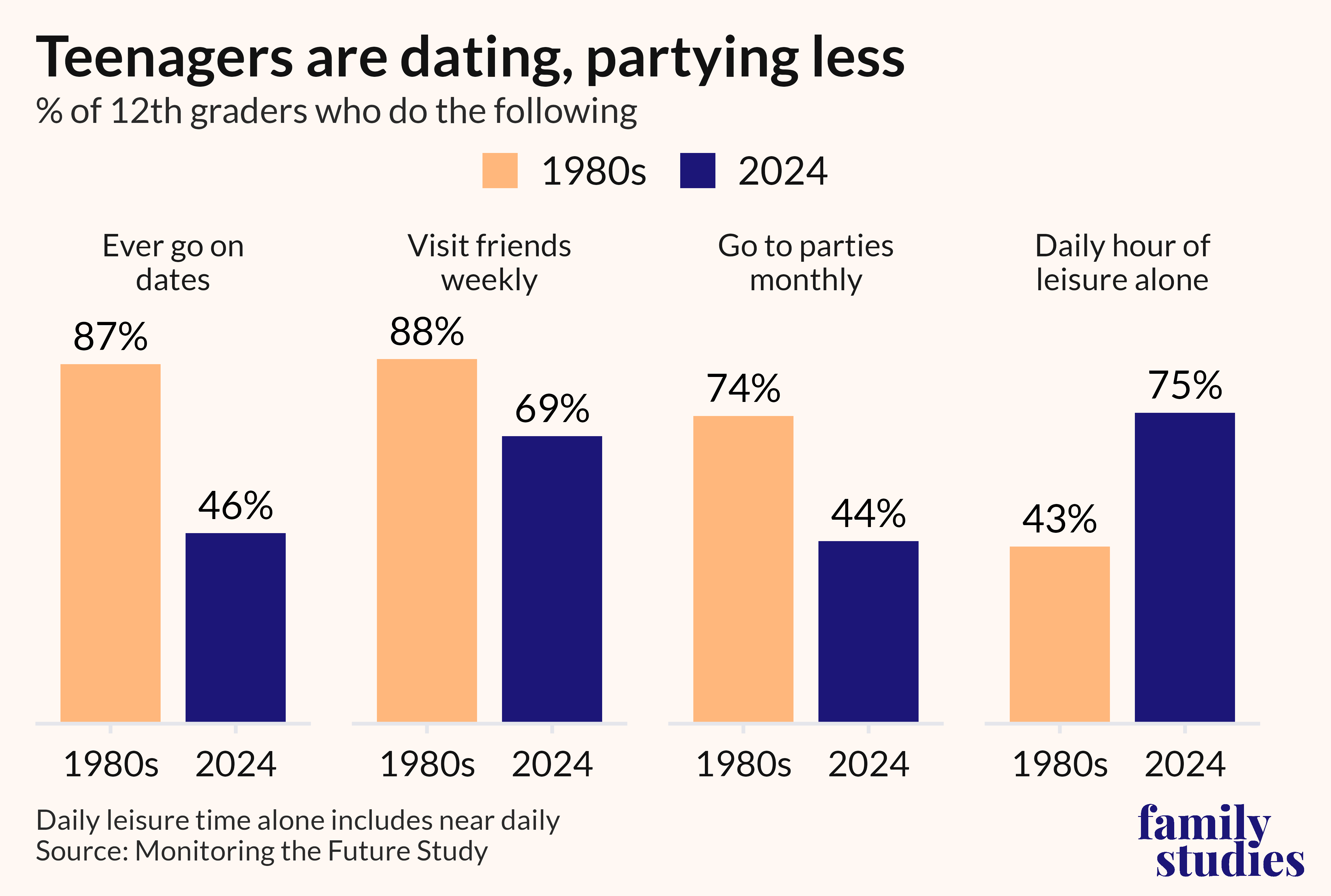
This is the chart that explains both why my coming of age and socialization experience described above is long gone and the primary reason for the decline in alcohol sales over the past two decades.
You see those blue bars? They represent the group of people who would have been considered suspect when I was in my teens and early 20s. Today, the Blue Bar group sets the standard for what is socially acceptable; for what is the norm.
The crisis of social isolation depicted in the above graph is the primary cause of the decline in alcohol sales. And without delving too deeply into what caused this crisis (Cough: cell phones, Cough: Social Media), it is the primary reason why sales of wine will never return to their 2010s-era peaks. It is the result of one of the most fundamental changes to society in centuries: the atomization of society and culture.
The fact is, as people of all ages (but particularly young people) forgo in-person socializing and choose isolating screen-based interactions and mistake social media friendships for personal relationships, alcohol loses its primary utility. Alcohol has always had the social role of both easing and smoothing interpersonal interactions. It has helped overcome the awkwardness of young love, supported procreation, made the annoying among us palatable, and helped us laugh with others when we might otherwise not. Moderate inebriation has helped build trust among people and between persons. Moderate inebriation has been so fundamentally connected to the smooth working of the human condition (which is a social condition) that alcohols of various sorts have been important cultural touchstones for people across the globe for millennia.
When coming of age, adulthood, and even middle and old age are marked far less by personal interactions, carnal exploration, and acceptance by the crowd, we simply don’t need alcohol to lubricate the natural friction. When we choose, instead, to embrace a more isolated digital life, alcohol and inebriation are less useful. So, drink less. We buy less.
It doesn’t matter if you slice it by sex, race, age, income or education. Everyone is spending less time navigating face-to-face interactions.
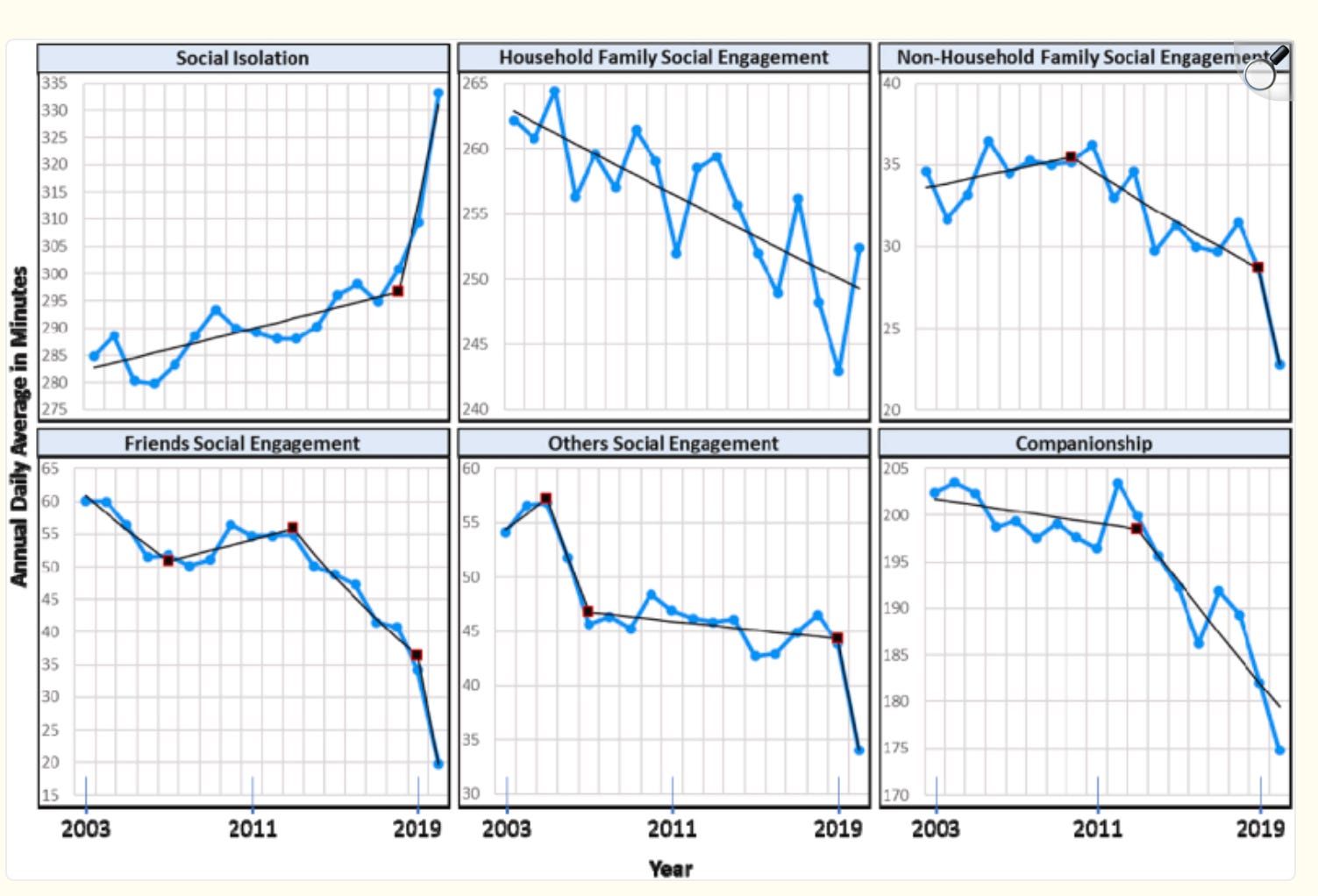
Read these graphs carefully. They all, individually and together, explain why wine and alcohol sales have been in decline and will likely continue to decline. Now, add to this a robust effort to categorize wine as a poison, a difficult economy defined by inflation and the uncertainty of AI, the documented suppression of an appetite for alcohol created by the use of GPL-1 drugs, and the easy access to cannabis.
In fact, the same social and cultural change that killed the mall, the church, the libraries, the strip malls, Christmas shopping, dining out, movie going, dating, and backseat sex is what finally pressured alcohol into a years-long and still ongoing decline in sales.
The goal here is not to be Debbie Downer. Rather, the goal is to be specific about the conditions that are leading to a substantially smaller wine marketplace. And one thing is absolutely true: the problem is not about talking about wine differently. It’s not that the vocabulary surrounding wine isn’t inclusive or doesn’t speak to younger people. It’s not that wine needs to be simpler. It’s not that people are confused or intimidated by wine. It’s the crisis of isolation that has built over the past two decades and has blanketed the whole of society, leading to fewer occasions and reasons to drink; fewer reasons to get a buzz.
Now, here’s the good news for those who sell and make wine. We know precisely what makes wine desirable. We know precisely what sets it apart from beer or spirits or Buzz Balls. We have a brilliant and robust vocabulary for communicating the complexity of wine and the places and ways it is grown and made. We know that once on the property or inside the well-appointed wine shop, people respond to the diversity of wine just fine when a practiced guide offers to pull back the curtain.
We don’t need to reinvent anything.
While the consumption of alcohol has not and will not go away, the number of occasions that people want to use it has declined considerably. A healthy economy can increase sales and consumption. The right kind of cultural moment/icon/shift can positively impact sales of wine or alcohol in general. But I can’t imagine the digital atomization of society and culture being reversed and, with that reversal, an increase in person-to-person interactions and the increase in alcohol consumption necessary to support it.
What is the wine industry and the individuals and groups within it to do? This is the easy part. Even as some vineyards, wineries, restaurants, wholesalers and merchants fail and disappear, you simply keep on serving the people and the market. You make the case for needed reform. You communicate the diversity of wine. You invest in new tools and technology. You put hospitality first. You point your efforts at the places where people still gather.
For years I wondered why there was no daily email that curated the best, new consumer wine content on the web. So I built it. It’s free. It’s daily. It’s human-curated. I call it The Spill. I hope you’ll consider subscribing.
No posts
Comments
Nothing yet. Say the first thing.
Sign in to join the conversation.