
In 2019, Tomorrow's Women created Gaza Girls, an innovative 10-week program that in spite of the harsh circumstances and limitations on travel and opportunity young women in Gaza faced every day, connected them with a peer-to-peer support network and skills building. The Gaza Girls program has been led by expert Palestinian facilitators and has included the following opportunities:
A peer-to-peer support network with Palestinians living in the West Bank
Safe spaces to build understanding, gain confidence, and inspire action
Leadership, compassionate listening, authentic speaking, and emotional resiliency skills-building
Global connections with teenage peers in New Mexico, U.S. participating in Tomorrow's Women’s U.S. Peace Ambassador program
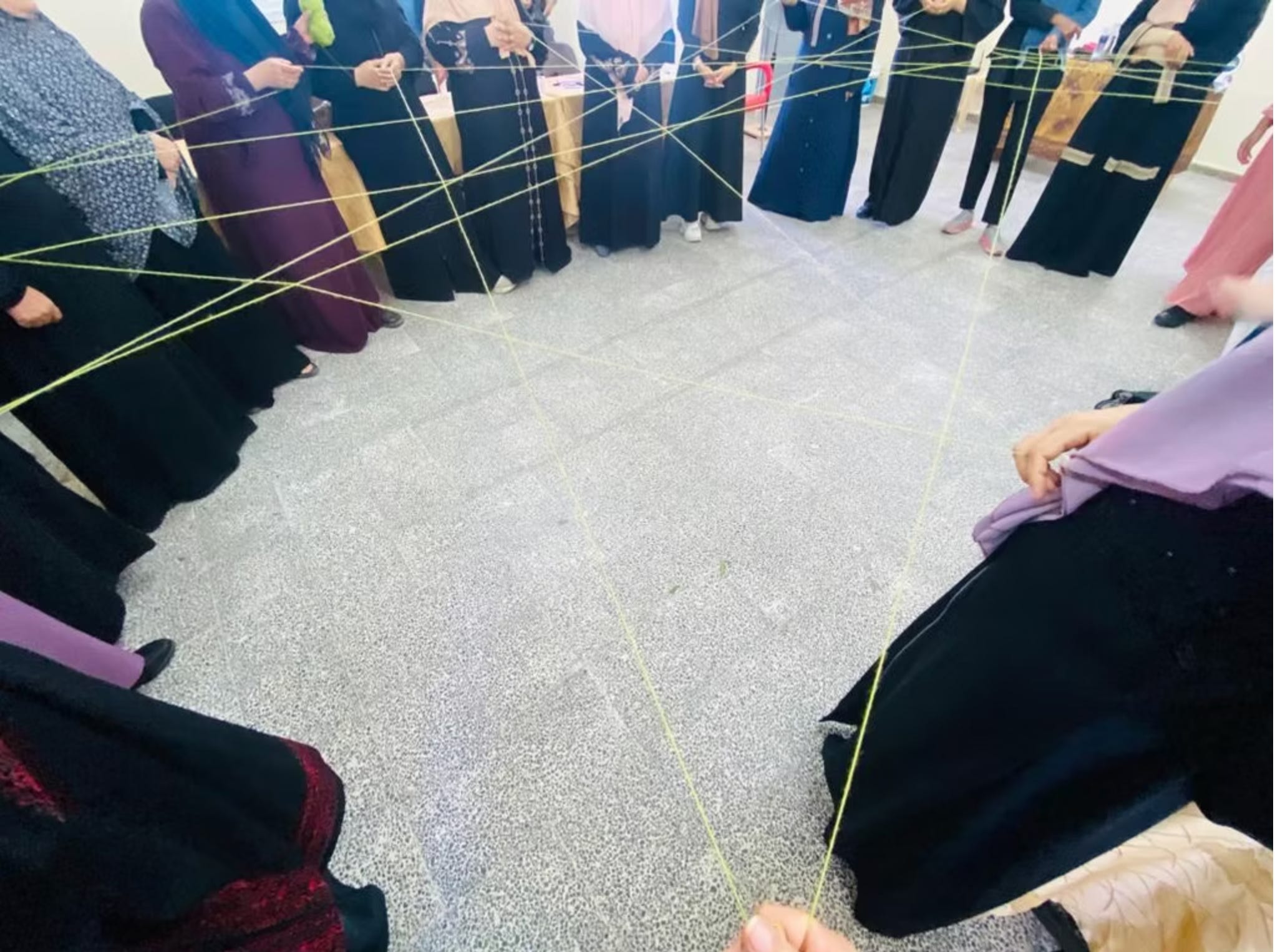
Due to the current situation, our Gaza Girls program is currently suspended. We mourn our three alumnae who have been killed in Gaza.
Here are stories from our 2024 participants.
My name is Jamila Ibrahim, a Palestinian girl specifically from the northern part of Gaza. Today I want to talk about my life before October 7th. Before the war, my life was like heaven. I worked hard to become a teacher and I loved it so much that I memorized the names of the students. We had a home where my family and I lived together, where we laughed and were happy, and where we created many beautiful memories. The year 2023 was one of the best years for me. Life was very good with my family, friends, and new adventures. I even raised a cat, despite my family’s initial resistance. I insisted on getting the cat, and it became like a daughter to me. I experienced many beautiful moments, but then everything changed.
On October 7th, I woke up in the morning to get ready for work, only to be startled by the sounds of rockets and bombs. I was shocked to realize that the war had actually started. My siblings and I decided not to leave the house since our neighborhood in the northern Gaza Strip was the first place to be attacked. Bombs, fire belts, and air raids began targeting us. We decided to stand firm, but suddenly, on the third day of the war, we heard noises in the neighborhood—a whole building was screaming, and we didn’t know where the sound was coming from. My father told us to get out of the house quickly. We didn’t take any belongings, just wearing our prayer clothes, and ran into the street, not knowing where to go.
Suddenly, the whole neighborhood gathered in one place. We started to realize that the biggest building in the neighborhood was threatened. Then, the neighboring area started to evacuate, and many people fainted, causing panic to spread.
We tried to figure out what to do and decided to split into two groups: the boys went to our house at the beach, and the girls went to my sister’s house. We did this so that if something happened, we wouldn’t all be killed, and at least some members of the Ibrahim family would survive to tell our story to others.
We stayed at my sisters house but communication with my other siblings was cut off. After five days, the house next to my sister’s was threatened, and we were scared again.
We were scared and ran in the middle of the night at 1:00 AM to my uncle’s house. Living at my uncle’s place was harder than you could imagine. There were so many strict rules: don’t use the water, don’t eat much so you don’t use the bathroom a lot, and everything had to be done according to specific rules because basic resources were limited. It was very exhausting for us. We stayed there for a while, but then the Israeli Army dropped warning leaflets on us. We thought we had already been displaced enough and didn’t want to leave again.
Our situation continued to worsen. Our neighbors died in front of us. We were terrified and didn’t know where to go. We were forcibly displaced to go to the beach area. However, the situation at the beach was very difficult. There was a severe water shortage, and we had to walk long distances to get water. There was also a scarcity of food. Many attacks were happening around us; we could see the dead and injured from our house.
The situation at the beach intensified, and they started throwing gas bombs at us to the point where we couldn’t breathe. We had to get masks and wear them to sleep. Things got worse when they bombed the neighborhood in front of us, collapsing the house on us and covering us in dust. Out of fear, I grabbed a blanket and put it over me to protect myself from shrapnel and ran. We went to another house and stayed there for a night.
Then, tanks entered the beach area. We were forced to go to the UNDB (United Nations building). We stayed there and built a tent. After some time, the third floor of the UNDB was bombed, and people started running in the streets, fleeing south. We hesitated about this idea because we had no relatives in the south and wondered where we would go. This question lingered among us. We decided to leave and see what would happen to us, so we walked through the “safe road” according to the Israeli Army.
We didn’t bring anything with us because the Israeli Army instructed us not to carry anything except for one bag. As we walked through the road, there were bodies and bombed cars with body parts. One of the instructions was not to walk in groups and not to pick up anything that fell.
We went to my sister-in-law’s mother’s house, but she treated us poorly and didn’t welcome us, so we had to leave and go to a school. It was our first time sheltering in a school. The school lacked cleanliness and every basic need.
All the essentials of life were lacking. The tanks reached near the school, and we were scared, forcing us to flee to Rafah. We moved all our belongings and evacuated to Rafah. Living there was very difficult, especially since we lived in a tent without a bathroom. We had to use the mosque bathroom twice a day, once in the morning and once at night, and we had to wait in line at 5 AM. We’d wake up early to reserve a spot in the long line to use the bathroom. After we somewhat adapted to life, the Israeli army decided to invade Rafah. People started to flee, and we took down our tent. The car didn’t come, and we stayed a whole day in the street under the scorching sun.
The next day, we went to Khan Younis. In every place we evacuated to, we had to replace our mattresses and blankets because we couldn’t take them all with us. We lived under very tough conditions. Even life in Khan Younis was very hard, especially living in tents. The temperature in the tents is almost unbearable, and in the winter, it was extremely cold. Water would enter the tent, flooding it and soaking our belongings.
“This is my experience in the war, and I am still suffering from it. We have flies in the tents that spread diseases, food supplies are not always available, and we constantly suffer from dizziness, fatigue, and exhaustion. Our day starts early in the morning with cooking, baking, and washing dishes. Our entire life revolves around the fire because we don’t have gas. This life is very hard. We are living through the worst conditions; there has been no electricity for ten months. We haven’t slept peacefully because the temperature in the tent is very hot. Each of us only has two sets of clothes because we couldn’t bring more. We wash them, let them dry, and by the end of the day, we bathe and wear the dry set of clothes.
These conditions are very difficult. Imagine living a life lacking all the necessities. We have to use alternatives to survive. We are suffering, we lost our home, I lost my job, I lost my friends, I lost my students, and even my cat was killed. When I think about it, I wonder how we are managing to live through it all. This is a small part of my suffering; if I wanted to write about all of it, a thousand pages wouldn’t be enough.”
My name is Walaa Abd Albari and I am currently living in Gaza. I live in a tent in Rafah with my parents and 7 siblings. In the summer, we have to endure intense summer heat, and in the winter we get wet from the rain. We travel long distances to get clean water. We go days without healthy food.
Before the war, I was a local youth and community activist during the day, and at night I would study English at the Oxford Language Center. I was studying to gain a scholarship for a master’s degree abroad. In my free time, I would go to the beach with my friends, and do volunteer work to try to put a smile on the faces of children and those in need.
But since the war, my only dream is to escape with my family and make it out alive. Our only source of income, my father’s sewing factory, was bombed along with our home. We are now homeless and without income, and we are unsure if we will survive. Here in Gaza, Israeli bombings are everywhere. Neither Muslims nor Christians are safe. Everyone has lost their homes and jobs. We are forced to constantly relocate, and because of this, we have no time to grieve. There is a dire need for water, food, medical care, and shelter.
Women specifically in Gaza are experiencing unfathomable suffering. Many of them have lost their fathers and husbands and have had to step up and take their roles. Some of us women have been arrested and tortured. In the occupation prisons, women are forced to take off their veils, and some of them were even raped in the Al-Shifa Hospital. Women have seen their children, brothers, and fathers killed. I do not think the human mind can bear all of this.
Because of how much suffering I have seen and experienced, it is hard for me to have hope. But despite this, I feel lucky to have supportive friends. My friends Amira, Julie, and Jonothan have created a GoFundMe and have helped me collect donations to evacuate Gaza. Currently, I am still volunteering to put smiles on children’s faces, and I hold awareness sessions for displaced people to raise awareness of the remnants of war. I also work in a hospital as a health educator, to educate people about diseases. I believe that by helping people I help myself, because I cannot see all this and not take action.
I have learned that where I live, international law and human rights are lies. I have learned to live without even the basic necessities in life. There is no one here in Gaza who has not lost a friend or relative. I have become familiar with the feeling of loss because I have lost so much. I hope the war will end and we can rebuild our home and work as it was before. I wish to see my living friends and give graves to the dead. If the war does not end, I hope my family and I can travel to a safer place.
My life after October 7th cannot be described in words. I woke up to news of the war, and everything stopped—no work, no ambitions, no hope. For eight months, rockets have fallen, and I’ve been displaced five times, each move harder than the last.
As someone who loves hope and work, my life now revolves around finding food, washing clothes by hand, and going out under shelling to get necessities. My family is split: my parents are on one side of the country, and the rest of us are in Nuseirat Camp in Gaza, where no place is truly safe. I dream of the war ending so I can feel secure, eat and drink healthily, and enjoy basic living standards.
Women here have lost their sense of security. We carry heavy responsibilities, acting as caregivers, cooks, workers, and providers under very difficult conditions. We have lost many health and nutritional needs.
Despite these challenges, I’ve seen incredible resilience among women, drawn from faith and acceptance of fate. We believe this situation carries reward and recompense.
I want the world to know that the women of Gaza don’t know the impossible. We create solutions from nothing and endure difficult circumstances with incredible patience and sacrifice. We shouldn’t have to adapt to this reality, but we have. However, we are shocked by the international community’s silence about our suffering.
My hopes are simple: to live in safety, find work again, and maybe travel temporarily to escape these harsh conditions. Support for women’s projects could help us rebuild our lives.
The war has taught me patience and endurance. I’ve learned to make life out of the impossible, to live despite pain, hunger, poverty, and fear. Faith has kept me strong. I was living a life of travel and experiences just a week before the war. I’ve escaped death more than once, certain that I have a life to live and that I will remember all of this.
I haven’t mentioned everything yet. I’ve moved from my home to a shed with a sandy floor, to tents, and gathered my belongings into a suitcase and a plastic bag, fearing I might never return to my room and memories. I moved to supposedly safer places but faced bombardment and rockets there too. I lived in a tent in Rafah, near the Egyptian border, and mourned the loss of a close friend without being able to say goodbye.
After months, the Israeli occupation decided to invade our new camp. Shells hit the school where I lived, forcing me to move again. The joy of returning home turned to pain as I saw rubble and destruction. On April 20th, shells started falling near my house. My brother Mohammed was hit by shrapnel and was killed. I reached the hospital in terror, only to find my little brother among the martyrs.
Through all this, I have learned that nothing is more important than human life. I keep my faith through prayer and reading the Quran, certain that patience will bring reward from God. Despite everything, I will continue to live and remember.
My name is Amal from al Bureij refugee camp in central Gaza strip. I am a dedicated social development and youth activist. On September 29, 2023 I participated in a Youth Program Impact Competition in Cairo, Egypt.
I had my bags packed by October 6 but unfortunately, on October 7, the war started in Gaza, leading to the closure of roads and borders. Initially anticipated to be for a short time, the situation extended for months, leaving me stranded in Egypt.
I faced numerous challenges, especially after trying to enter Gaza unsuccessfully. Because of this, I committed myself to aiding my people in whatever way possible, navigating the paths of survival in Gaza and recovery in Cairo. So, I established the Sanad Initiative. Sanad, meaning support in Arabic, is a volunteer-led Community initiative committed to helping Palestinians in Gaza as well as Palestinians who have been evacuated from Gaza to Egypt due to the devastating impact of the ongoing war.
The war has been particularly challenging for women in Gaza. As my mother and sister say, it’s a nightmare. There is a severe shortage of food, medical supplies, and health supplies, and women struggle with a lack of privacy and basic facilities. Even finding a clean bathroom or a place to change clothes is difficult, especially during their menstrual period.
What I want the world to understand is that the people of Gaza, especially women, deserve to live a life filled with dignity, and live in peace. We have endured multiple wars over the past two decades, and yet nothing has changed. My hope is that one day, my family and all the people in Gaza can enjoy the simple pleasures of life once again.
One eye is watching my life and the other eye is watching my people getting hurt. I’m trying to weave hope in my people’s hearts during this hard situation. These challenges increase our strength and add to the story of our resilience. We are the symbols of strength in these dire moments that bring us deep pain. Everyday fear intersects with our hope. Every tear is a victory over despair and every smile tells an unbreakable story of our resilience.
My name is Nashwa, and I am from Gaza. I want to share my suffering in this war. Before October 7, I had a job, I had a life, and friends. I was planning to travel and prepare for my wedding. October 7 was supposed to be my day off to rest and go out with my friends that I hadn’t seen in a long time.
Today I am living in this war. I am living the worst days of my life. We lost our homes and were displaced from our home under bombardment and intimidation. We were displaced to Khan Younis which the Israeli Army declared a “safe zone” but we were not safe. The bullets of the Israeli Army almost killed us several times.
My father is a cancer patient. We cannot provide him with the minimum necessities of life. Even water is contaminated and undrinkable. There is no health care; all of the hospitals have been bombed.
I suffer from kidney stones and need mineral water for my condition but if it is available I cannot afford it because it’s very expensive.
My mother suffers from severe depression after the destruction of our home. I can’t do anything except try to comfort her with kind words. We lived in a building with more than 60 people and now we are all displaced and live in tents. I have lost many family members and friends. This war has greatly affected everyone’s mental health— especially the mental health of the children. Israel stole their right to learn at school with other kids as most of the schools in Gaza have been bombed.
I lost my job. Now, my daily routine is waiting to hear for the increasing number of martyrs and for who we will lose next. Will it be my turn to die next or will I survive? My family is always worried. I can’t even talk with my fiance who lives abroad because of the lack of internet and service. My marriage was supposed to take place in December, and my fiancé was supposed to come from Sweden so that we could get married, but now it has become impossible. My wedding clothes were destroyed along with the rest of my belongings, I can’t travel and my fiancé cannot even enter Gaza.
We cook food on firewood because there is no gas and it takes a whole day to make ONE meal. Every day we sit together and remember what we used to do before the war. Now, we play games with the sand.
Because of the war women live with the painful reality of loss and pain with no safety or security including having access to food, clean clothes, or other basic necessities. They are forced to adapt to life in a tent, cooking on firewood, and washing clothes by hand. Now, there are no proper bathrooms for women to use in Gaza– the only available bathrooms are on the street without proper doors but beside a thin curtain. Women fear this will continue for a long time which means more loss, more death, threats of detention, and surviving alone without their families.
This is what living in a tent looks like: in the winters our tents flood and we freeze, in the summers we suffocate from the heat. On top of all of this, we deal with insects and rodents that spread disease among us. Our psychological torture doesn’t end here– day and night the Israeli drones above our heads watch us and don’t allow us to rest. The human mind cannot bear this.
I hope that this war will soon come to an end. I wish this was just a nightmare from which we could wake up from and say it never happened.
This war has taught me many lessons. I learned nothing lasts forever and that true happiness is having the people I love most by my side, some friends are like family, and that violence is unbearable and ugly.
I do not know how the buildings will be rebuilt but I am very confident and certain that Gaza will rise again more beautifully than before. I believe the international community will help restore the Gaza Strip.
My faith in God is strong and I know that nothing is permanent and everything has an end. I believe this war will end one day.
No posts
Comments
Nothing yet. Say the first thing.
Sign in to join the conversation.